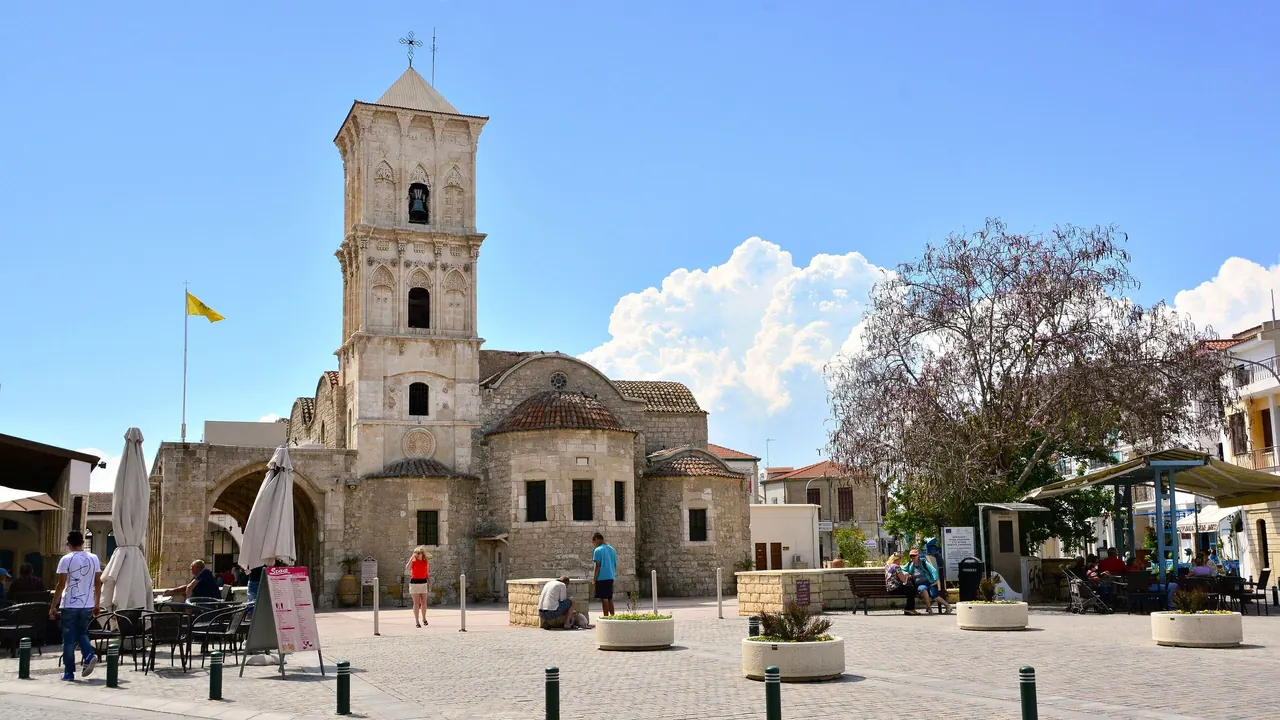
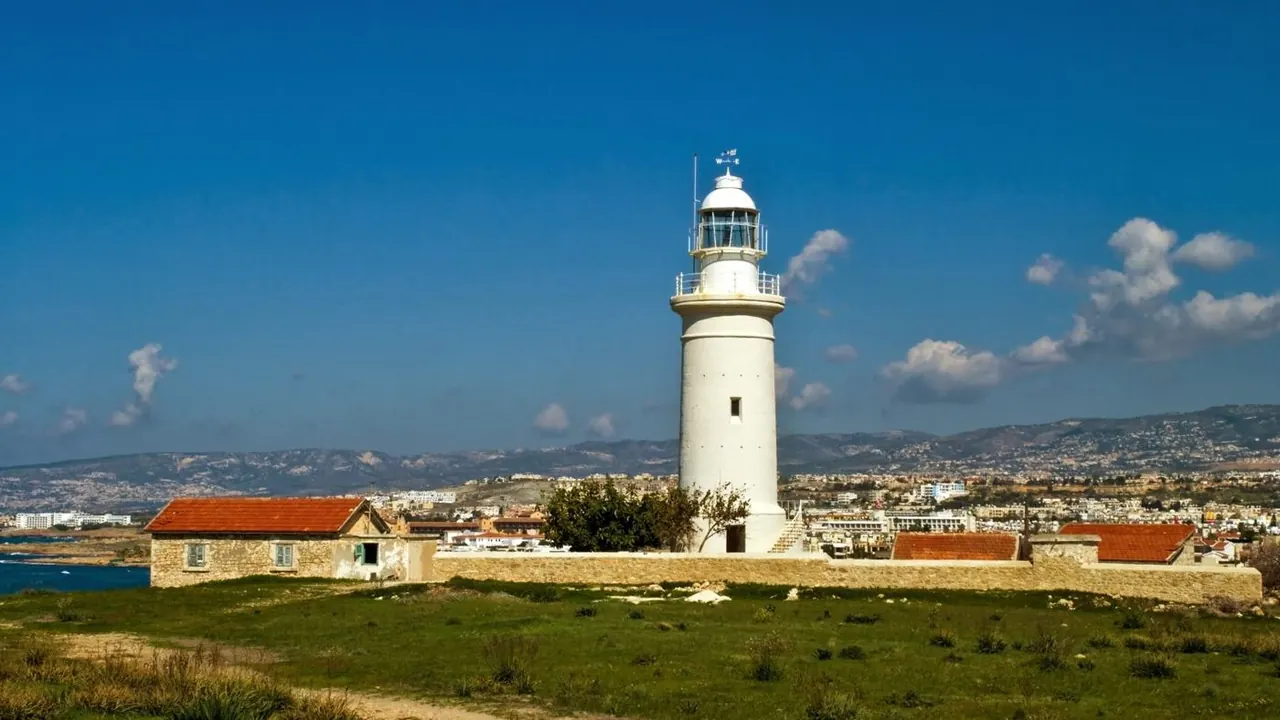
Photos: Larnaca by Mike McBey, CC BY 2.0, cropped; Paphos by Nikodem Nijaki, CC BY-SA 3.0, cropped.
Larnaca or Paphos?
Our verdict in twelve categories, each scored against the same fixed benchmark cities, and the climate month by month, so you can choose for your trip.
Choose Larnaca for
- getting around
- day trips
- shopping
Larnaca suits a simple, low-effort beach stay. The airport is minutes from the seafront, the town beach starts right at the edge of the old centre, and everything in town is within walking distance. Its position in the middle of the south coast also puts Nicosia, Lefkara and the far eastern beaches within easy reach, so it makes a good base for seeing the island without long drives.
Choose Paphos for
- culture and sights
- nature and the outdoors
- nightlife
Paphos is the better choice if you want more than sun and sea. The Roman mosaics and rock-cut tombs give it real depth for history, and the wild Akamas coast, the gorges and the forest behind it give walkers and families more to do. You will need a car more often here, but the west of the island repays the effort.
Scoreboard
Twelve categories on one fixed scale from 0 to 100. The shaded stretch is the gap between the two.
Your match
Pick a travel style or drag the sliders, and both match scores follow your weighting.
Wins on getting around and day trips with your weighting.
Wins on culture and sights and nature and the outdoors with your weighting.
What matters to you?
Category by category
What the scores mean for a trip.
Beaches & swimming
Both are beach towns first, and the sea is just as warm in each. What differs is where the sand is. In Larnaca the beach is right in town: Finikoudes runs in front of the old centre, with fine greyish sand and shallow water, and Mackenzie has livelier beach bars further south.
The town beaches in Paphos are short, shingly and often rocky to get into, so the good beach days happen elsewhere. Coral Bay's sandy crescent is about 13km north, and Lara Bay on the Akamas is wild and undeveloped. From Larnaca, the white sand of Ayia Napa and Protaras is a longer trip east.
Food & drink
The food is much the same in both: Cypriot meze, kleftiko and grilled meats, with a tourist-facing seafront to avoid. The difference is where you go to eat well. Larnaca's strength is fish, cooked near the old fishing harbour and along the coast towards Mazotos.
In Paphos the better meals are inland, in the tavernas of Ktima and the hill villages, with local wine from Laona and Kathikas. Neither has fine dining, and from Larnaca it is easier to get to Nicosia or Limassol when you want more variety.
Culture & sights
Here Paphos has much more to offer. The Kato Paphos archaeological park, inscribed by UNESCO, has Roman villas whose floor mosaics, above all in the House of Dionysus, rank among the finest in the Mediterranean. Add an odeon, the Tombs of the Kings by the shore and St Paul's Pillar, and you have several days of sightseeing.
Larnaca's highlights fit into a day or two: the ninth-century Church of Saint Lazarus, Hala Sultan Tekke on the edge of the Salt Lake, the foundations of ancient Kition and a stroll through the old Skala quarter. These are worthwhile, but they are not a reason to plan a trip.
Nightlife
Neither is a big night out, but Paphos has a bit more going on. Its Bar Street in Kato Paphos packs pubs, karaoke and a few clubs into one strip that stays open into the small hours in summer, which suits groups.
Larnaca's evenings mean cocktail bars along Finikoudes and DJs at the Mackenzie beach bars. For proper clubbing you have to go to Ayia Napa, about forty minutes away. Both towns go quiet in winter.
Nature & outdoors
Paphos has the wilder and more varied landscape. The protected Akamas peninsula has roadless coast, sea caves and turtles nesting in summer, Avakas Gorge cuts between limestone walls, and the Paphos Forest shelters mouflon and the Cedar Valley.
The country around Larnaca is flatter and drier. Its main draws are the flamingos on the winter Salt Lake and the Zenobia wreck offshore, one of the world's best-known dives. Cape Greco's cliffs and sea caves are an hour east.
Day trips
Both make good bases for touring, but they open up different halves of the island. From Larnaca, Nicosia is only about forty minutes away. Lefkara's lace village, the Neolithic site at Choirokoitia and the Stavrovouni monastery are close, and you can cross north to walled Famagusta.
Paphos looks west and up into the mountains. Along the coast road are the Sanctuary of Aphrodite, Kourion and Kolossi, and inland are the wine villages around Omodos and the painted Troodos churches. Nicosia is a much longer drive from here.
Good for families
Paphos gives families more to do. Coral Bay's shallow sand suits small children, resort hotels along the coast have kids' clubs, and there is a water park, a zoo near Peyia, boat trips, and mosaics and tombs that keep older children interested.
Larnaca makes the travel easier: the airport is minutes away and the gently shelving town beach is right on the promenade. Once you are there, though, there is less to do, and the waterpark is in Ayia Napa. The midsummer heat is hard on children in both towns.
Getting around
Larnaca is the easier town to manage without a car. The seafront, old town, Saint Lazarus and the fort are all a flat walk apart, the airport is a short ride, and intercity buses link it with Nicosia, Limassol and Ayia Napa.
Paphos is more spread out. Hotels stretch a long way along the coast, the upper town of Ktima is a steep climb from the harbour, and buses do little for the gorges and villages. Most visitors hire a car in both, and Cyprus drives on the left.
Shopping & style
Shopping is thin in both, and the best buys are local crafts. Larnaca has a little more of the ordinary kind, with high-street chains on Ermou and Zinonos Kitieos and a mall, plus pottery workshops in Skala and Lefkara lace nearby. Paphos has the old covered market in Ktima, and you buy honey, carob products and wine in the villages where they are made.
Affordability
The two cost about the same, and they follow the same pattern: meze is generous for what you pay, sights and buses are cheap, seafront hotels cost more in July and August, and winter is clearly cheaper. In Larnaca you save by eating a few streets back from Finikoudes. Paphos spreads further, so car hire is more of an essential than an option.
Live music & performing arts
Neither town has a regular programme to plan a trip around, but each has one summer or autumn event worth timing a visit for. Larnaca has the summer Larnaca Festival, with open-air music and dance at the fort, and Nicosia's concerts and theatre are close. Paphos has the Aphrodite Festival, open-air opera in front of the harbour castle in early autumn, and an occasional performance at the ancient odeon.
Wellness & relaxation
In both towns a spa means a large resort hotel, and the slow pace does most of the relaxing. In Larnaca those hotels are east of town, and the appeal is long seafront coffees and a mild, quiet winter. In Paphos the spas are on the seafront itself, and the calm is in the villages a short drive inland, best outside the summer peak.
When should you go?
Pick your month. The climate figures are measured averages, not a forecast.
Larnaca in July
Paphos in July
Daytime high, °C
Rainfall in the month, mm
Where the figures come from
Paphos has no rain gauge within 25 km of the centre, so its rainfall comes from a gridded climate dataset read at the city rather than from a gauge further away.
Temperature and rainfall are climate normals, averaged over the years shown. Larnaca: 1991-2020 normals, Larnaca Airport (3.7 km from centre). Paphos: 1991-2020 normals, Paphos Airport (8.4 km from centre).
The two towns share the Cypriot pattern of long, dry summers and short, wet winters. From June to September there is almost no rain in either. Larnaca has the hotter summer, with highs around 33°C in July and August, which makes walking the streets in the middle of the day hard work. Paphos, on the west coast, stays a few degrees cooler. In both, the sea is warm enough for an easy swim from June to October, reaching about 27°C in late summer, and it is still pleasant in November.
December and January are the wettest months in both towns, with close to 100mm in December in each. Paphos stays wet for longer, though. Its rain starts earlier in autumn and lasts further into February and March, while Larnaca dries out sooner and has long sunny days through spring and autumn. In both towns, April, May and October are the best months for walking and sightseeing, warm and dry without the midsummer heat.
Which traveller are you?
On a culture and arts trip, Larnaca's sights fill a day or two, and after that you are driving to Nicosia for more. Paphos suits better, with its ancient remains a walk from the harbour and enough depth for two or three unhurried days.
For an outdoors trip, Larnaca suits divers more than walkers, because its best moments are underwater. Paphos is the better base for walkers, with protected coast, gorge and forest a short drive away, so each day can bring a different landscape.
For a short city break, Larnaca is the easier choice. You can see its sights on foot in a day or two, the airport is minutes away and the town beach is right there for a swim. In Paphos, much of the appeal needs a car.
Before you go
| Measure | Larnaca | Paphos |
|---|---|---|
| Official language | Turkish, Greek, Modern Greek | Turkish, Greek, Modern Greek |
| Currency | Euro (EUR) | Euro (EUR) |
| Sockets | G240 V, 50 Hz | G240 V, 50 Hz |
| Driving side | Left | Left |
| Time zone | UTC+2, UTC+3 in summer | UTC+2, UTC+3 in summer |
| Emergency number | 112 | 112 |
| Elevation | 26 m | 72 m |
| Main airport | Larnaca International Airport (LCA)5 km from centre112 non-stop destinations | Paphos International Airport (PFO)8 km from centre55 non-stop destinations |
| Public holidays this year | 17 days | 17 days |
By the numbers
| Measure | Larnaca | Paphos |
|---|---|---|
| City population | 59,200 | 35,961 |
| People per km² | 1,868 | 1,987 |
| Museums within 10 km | 4 | 4 |
| UNESCO World Heritage sites within 50 km | 2 | 2 |
| Swim season, months above 21 °C | 6 months | 6 months |
Where else could you go?
Every comparison below shares a destination with this one, so you can follow Larnaca or Paphos somewhere new.