Photos: Ankara by Batuhan Kocabaş, Pexels License; Fethiye by rheins, CC BY 3.0, cropped.
Ankara or Fethiye?
Our verdict in twelve categories, each scored against the same fixed benchmark cities, and the climate month by month, so you can choose for your trip.
Choose Ankara for
- live music and the arts
- culture and sights
- prices
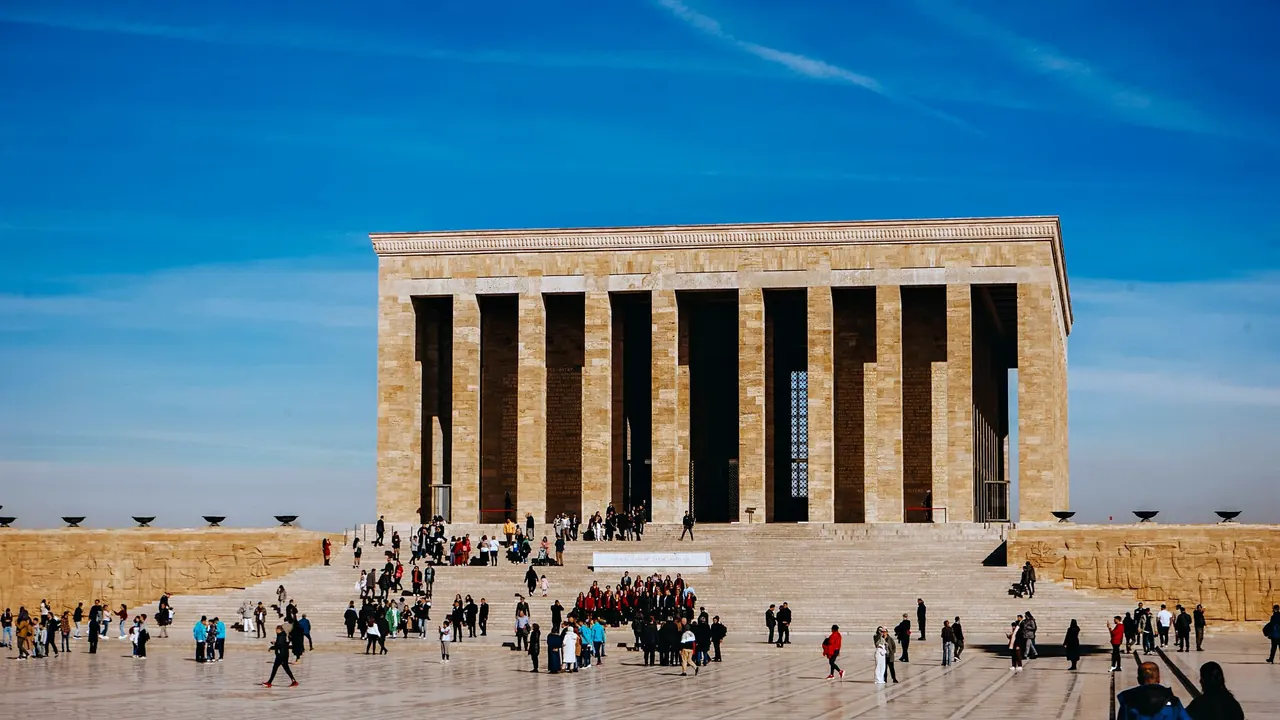
Ankara suits a traveller who wants to understand Turkey rather than lie beside it. Its archaeology museum and Atatürk's mausoleum are among the most important sights in the country, the state opera, ballet and orchestras give it a real concert season, and it is one of the cheapest places in Turkey to stay and eat well. High-speed trains to Konya and Eskişehir add easy day trips. It makes a good few days for a curious, budget-minded visitor, best in spring or autumn.
Choose Fethiye for
- beaches
- nature and the outdoors
- day trips
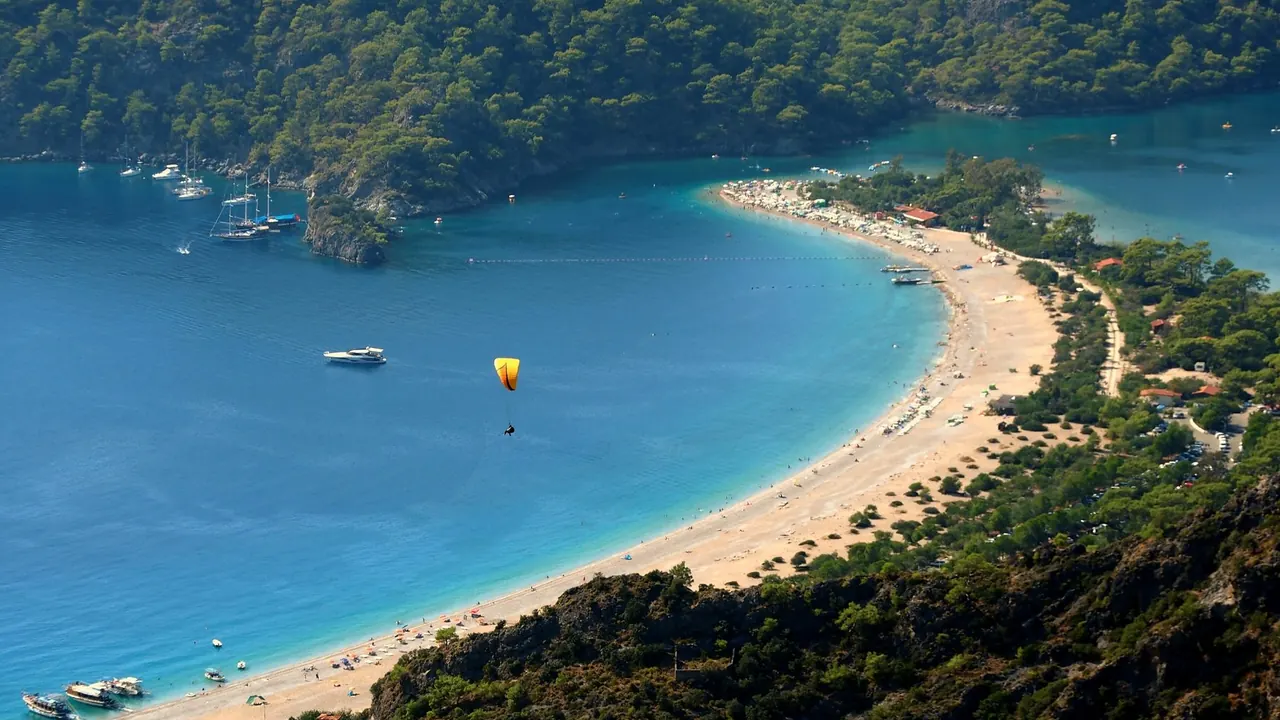
Fethiye is the choice for a summer of sea and mountains. The Oludeniz lagoon, boat days around the islands, paragliding off Babadag and the start of the Lycian Way give it an outdoor life that Ankara cannot offer, and ancient Lycian cities lie in every direction. Families with small children, walkers and anyone who measures a vacation in swims will be happier here, as long as they accept thinner food, almost no formal arts and resort prices in the beach strips.
Scoreboard
Twelve categories on one fixed scale from 0 to 100. The shaded stretch is the gap between the two.
Your match
Pick a travel style or drag the sliders, and both match scores follow your weighting.
Wins on live music and the arts and culture and sights with your weighting.
Wins on beaches and nature and the outdoors with your weighting.
What matters to you?
Category by category
What the scores mean for a trip.
Beaches & swimming
There is no contest here. Ankara is an inland capital on the plateau, and swimming means a hotel or municipal pool; the lakes at Eymir and Mogan are for rowing, not bathing.
Fethiye is built around the water. Calis is the town's own breezy strip of sand and pebble, Oludeniz offers a sheltered turquoise lagoon beside an open bay, and beyond them come the cove at Kidrak, cliff-walled Butterfly Valley and the island coves reached on day cruises.
Food & drink
Ankara gives a hungry visitor more to work with. Its esnaf lokantası canteens, kebab and pide houses, long breakfasts and the local Ankara tava cover everyday Turkish cooking well, and Kızılay, Tunalı Hilmi and Çankaya add meyhanes and some upmarket restaurants for the diplomatic crowd.
Fethiye's strongest card is something Ankara cannot match: picking fish at the town market and having it cooked with meze at the tables around the square. Beyond that and the weekly canal market, the resort strips at Hisaronu and Oludeniz lean towards package-tourist menus, so good eating means staying in town.
Culture & sights
Ankara holds the heavier sights. The Museum of Anatolian Civilizations follows Anatolia from Çatalhöyük through the Hittites and Phrygians, and Anıtkabir shows the Republic at its most monumental, with the citadel, the Temple of Augustus and the Roman baths filling out two or three days.
Fethiye's interest is concentrated and atmospheric rather than broad: Lycian rock tombs in the cliff above town, sarcophagi standing in ordinary streets and the roofless stone houses of Kayakoy over the ridge. It is an afternoon or two, not a programme.
Nightlife
Neither is a party destination, but they peak at opposite times of year. Ankara's going out is driven by students, with beer bars, rock bars and meyhanes stacked in the multi-storey buildings off Kızılay and calmer, older places in Tunalı Hilmi, and it is busiest in term time and quietest in the summer break.
Fethiye is a summer scene. Paspatur offers cocktail bars and rooftop terraces over the harbour, while Hisaronu's strip of karaoke bars and late clubs runs into the early hours for package visitors, then largely shuts from November to April.
Nature & outdoors
Fethiye is one of the great outdoor bases on the Turkish coast. Babadag rises almost straight out of the sea behind Oludeniz for tandem paragliding, the Lycian Way sets off along the cliffs past Faralya and Kabak, and Saklikent Gorge, sea kayaking and diving are all close.
Ankara's setting is open, treeless steppe. Atatürk Forest Farm and the lakes give room to walk and cycle, Soğuksu National Park has pine forest an hour north, and Tuz Gölü draws flamingos in spring, but serious hiking means going much further.
Day trips
Fethiye sits in the heart of ancient Lycia, with Tlos, Pinara, Xanthos and Letoon, Patara and the river tombs of Dalyan all within easy reach, plus Kas, Kalkan and, in season, a ferry to medieval Rhodes. Many of the inland ruins, though, are easiest with a hire car or a tour.
Ankara's outings are fewer but quick to reach thanks to fast trains: the Mevlana Museum in Konya and the painted Ottoman houses of Eskişehir are comfortable day trips, and Gordion, with King Midas's burial mound, is a short drive west. Hattusa is possible but makes a long day.
Good for families
For young children, Fethiye has the advantage of the Oludeniz lagoon, shallow, sheltered and warm, plus pool hotels around Hisaronu and Ovacik and boat trips with swimming stops. The catch is the heat of July and August, which makes June and September the better months.
Ankara welcomes children just as warmly but offers a city vacation instead. Dinosaur skeletons at the MTA Natural History Museum and climbable trains and boats at the Rahmi M. Koç Museum are highlights, while hilly, traffic-heavy streets and serious museums suit older children more.
Getting around
Both are manageable, in very different ways. Ankara is a big city with metro and Ankaray light rail running along its Ulus to Çankaya spine on one card, but broad boulevards and steep climbs make walking between districts hard work, and taxis fill the gaps.
Fethiye has no rail at all. Its centre and harbour are compact and flat enough to walk, and shared dolmuş minibuses run out to Oludeniz, Hisaronu and Kayakoy, with water taxis across to Calis.
Shopping & style
Ankara offers more range, with big malls, mid-range boutiques and bookshops around Tunalı Hilmi and Kızılay, and its old quarter below the citadel adds coppersmiths, spice shops and angora wool goods around Samanpazarı.
Fethiye is mostly markets and souvenirs. The weekly canal market is worth a morning for honey, spices and peshtemal towels, and Paspatur's lanes sell carpets, leather and ceramics, but the beach resorts offer little beyond beachwear and imitation brands.
Affordability
Ankara is the cheaper stay because it barely caters to tourists: comfortable hotels, canteen meals, metro rides and taxis all keep prices low, with heavily taxed alcohol and the international chains in Çankaya the main exceptions.
Fethiye can be good value if you sleep and eat in town, but the costs climb in the beachfront hotels of Oludeniz and Hisaronu, and the things people come for, such as paragliding, boat cruises and diving, add up fast.
Live music & performing arts
This is one of Ankara's real strengths as the capital. The State Opera and Ballet, the Presidential Symphony Orchestra and the Bilkent Symphony Orchestra give it a proper season with easy tickets, and the State Theatres perform too, though in Turkish.
Fethiye has nothing comparable. Live music there means a saz player in a meyhane, cover bands in Hisaronu and the odd open-air summer show.
Wellness & relaxation
Fethiye is the easier place to unwind. A historic Ottoman hammam in Paspatur offers the full scrub and foam ritual, larger hotels add spas, and the terraced slopes above Kabak and Faralya hold small yoga retreats with sea views, best in spring and autumn away from the resort noise.
Ankara's bathing is everyday rather than a draw: neighbourhood hammams in Ulus and Hamamönü, and thermal springs at Kızılcahamam and Haymana about an hour out. In town, the tea gardens and lake parks are the only real pause in a working capital.
When should you go?
Pick your month. The climate figures are measured averages, not a forecast.
Ankara in July
Fethiye in July
Daytime high, °C
Rainfall in the month, mm
Where the figures come from
Fethiye's temperatures are measured 31 km from the centre, at Dalaman.
Fethiye has no rain gauge within 25 km of the centre, so its rainfall comes from a gridded climate dataset read at the city rather than from a gauge further away.
Temperature and rainfall are climate normals, averaged over the years shown. Ankara: 1991-2020 normals, Ankara / Central (4.1 km from centre). Fethiye: 2000-2020 (rainfall 1991-2020) normals, Dalaman (30.8 km from centre).
Ankara sits high on the plateau, so its year has hard edges. Winters are cold, with daytime highs around 5°C in January and snow fairly common. Spring warms up quickly but brings the city's wettest spell, with regular showers through April and May. July and August are dry, very sunny and hot at about 31°C. For walking between the citadel and the museums, late May and June give warm days with some showers, while September and early October are the most settled months, still warm and much drier.
Fethiye is mild in winter but very wet, with about 187mm of rain in January, and from June to August it is almost rainless and hot, around 32°C in the afternoons. The sea is warm enough for comfortable swimming from late May into October and peaks at about 27°C in August. Spring and autumn suit hiking and the ruins, and summer suits the beach. September is the month when both cities are at their best, with Fethiye's sea still warm and Ankara dry and pleasant for walking.
Which traveller are you?
For a beach and sun trip, Fethiye is the only real option. Ankara is hours from any coast, while Fethiye has the shallow Oludeniz lagoon, the cove at Kidrak, Butterfly Valley by boat and warm, clear water from late May into October.
On a culture and arts trip, Ankara comes out well ahead. The Museum of Anatolian Civilizations, Anıtkabir and the Roman temple fill two days, and evenings can go to the State Opera and Ballet or a symphony concert, which Fethiye has no equivalent for.
For an outdoors trip, Fethiye wins easily. Tandem paragliding from Babadag, cliff paths on the Lycian Way, wading through Saklikent Gorge and kayaking in the bay make up a full week, against Ankara's bare steppe and lakeside parks.
Before you go
| Measure | Ankara | Fethiye |
|---|---|---|
| Official language | Turkish | Turkish |
| Currency | Turkish Lira (TRY) | Turkish Lira (TRY) |
| Sockets | CF230 V, 50 Hz | CF230 V, 50 Hz |
| Driving side | Right | Right |
| Time zone | UTC+3 | UTC+3 |
| Emergency number | 112 | 112 |
| Elevation | 938 m | 0 m |
| Main airport | Esenboğa International Airport (ESB)25 km from centre92 non-stop destinations | Dalaman International Airport (DLM)30 km from centre61 non-stop destinations |
| Public holidays this year | 14 days | 14 days |
By the numbers
| Measure | Ankara | Fethiye |
|---|---|---|
| City population | 5,803,482 | 182,200 |
| Museums within 10 km | 51 | 1 |
| UNESCO World Heritage sites within 50 km | 0 | 1 |
| Swim season, months above 21 °C | - | 6 months |
Where else could you go?
Every comparison below shares a destination with this one, so you can follow Ankara or Fethiye somewhere new.