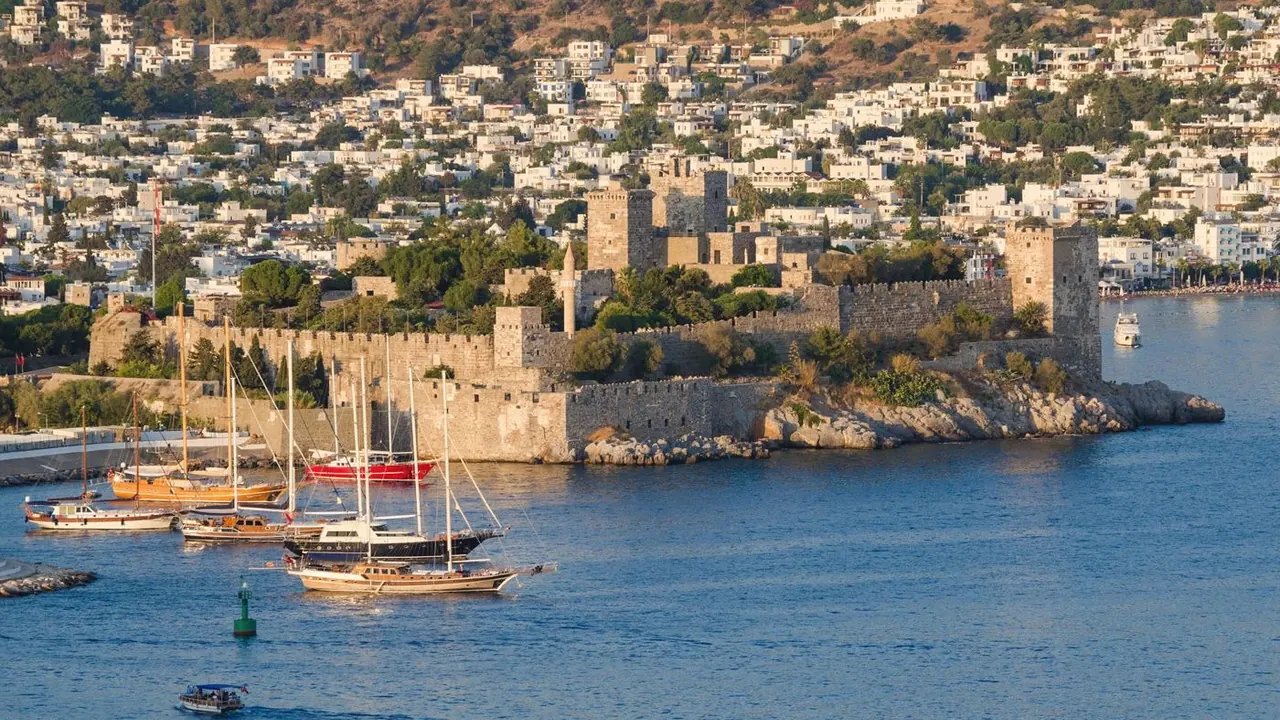
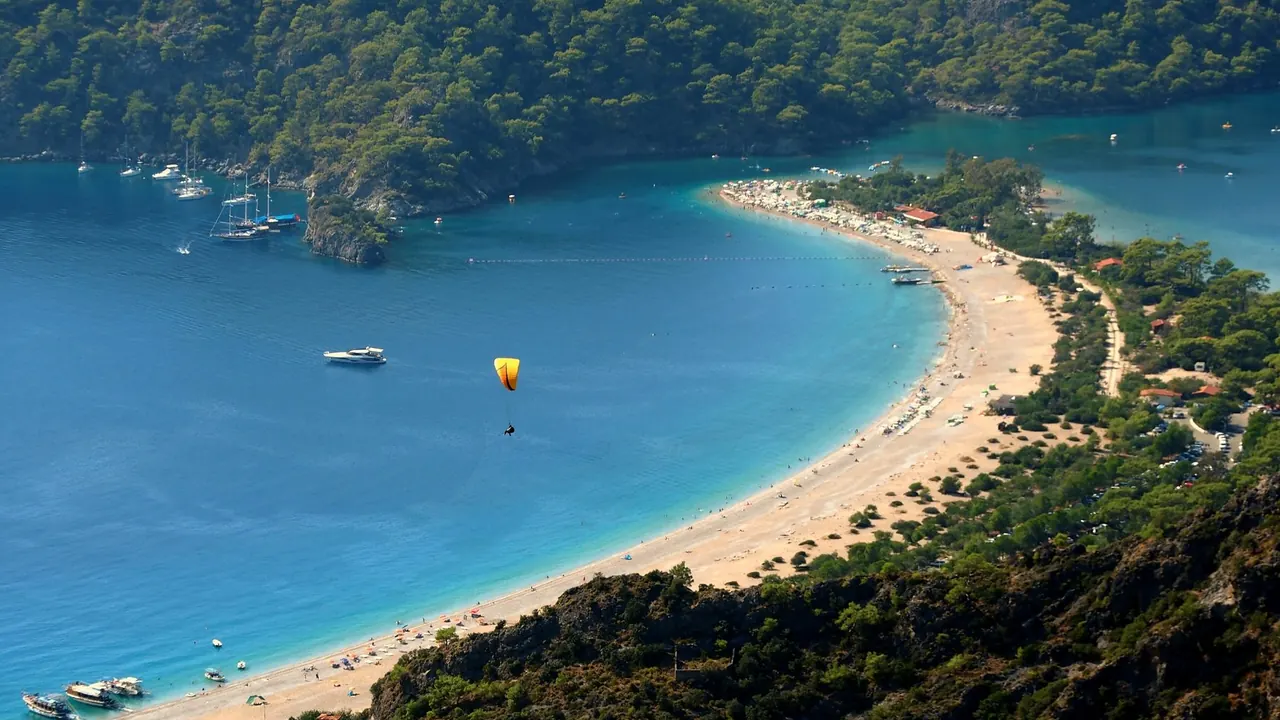
Photos: Bodrum by Serhio Magpie, CC BY 4.0, cropped; Fethiye by rheins, CC BY 3.0, cropped.
Bodrum or Fethiye?
Our verdict in twelve categories, each scored against the same fixed benchmark cities, and the climate month by month, so you can choose for your trip.
Choose Bodrum for
- nightlife
- live music and the arts
- food and drink
Bodrum suits travellers who want the evenings to matter as much as the days. Its waterfront bar street and the beach clubs of Türkbükü and Yalıkavak make it the livelier summer base, the Aegean cooking runs deeper, and the castle with its shipwreck museum gives it a real sight. Expect to pay for all of this, especially on the polished north coast.
Choose Fethiye for
- nature and the outdoors
- prices
- getting around
Fethiye is the choice for an active, outdoor stay that costs less. The mountains rise straight from the sea here, so the Lycian Way, the paragliding flight from Babadag and the gorge at Saklikent all lie close to the Oludeniz lagoon. Staying in town and eating at the lokantas keeps costs down, while the nights are quieter and the food simpler.
Scoreboard
Twelve categories on one fixed scale from 0 to 100. The shaded stretch is the gap between the two.
Your match
Pick a travel style or drag the sliders, and both match scores follow your weighting.
Too close to call, 1 point apart
Wins on nightlife and live music and the arts with your weighting.
Wins on nature and the outdoors and prices with your weighting.
What matters to you?
Category by category
What the scores mean for a trip.
Beaches & swimming
Both offer excellent swimming in clear water, but the beaches are of different kinds. Bodrum's strength is variety. Its peninsula is ringed with bays, from the shallow shores of Bitez and Ortakent to the jetties and decks of Türkbükü, and much of the best frontage belongs to beach clubs.
Fethiye has one showpiece: the turquoise lagoon at Oludeniz, sheltered by its shingle spit, with pine slopes and mountains behind. Around it are cliff-walled Butterfly Valley, reached by boat, and the sandy cove at Kidrak. Choose Bodrum for hopping between bays, and Fethiye for scenery and slightly warmer water.
Food & drink
Bodrum eats better. Its Aegean table of olive-oil vegetables, wild greens and octopus is a real regional cuisine. Village breakfasts in the hills, the slow waterfront fish tables of Gümüşlük and the refined seafood of Yalıkavak give a food lover plenty to seek out.
Both towns have the same pick-your-fish market ritual. Beyond it, though, Fethiye's good eating is mostly gozleme from the canal market and stews in plain lokantas. The resort strips at Hisaronu and Oludeniz lean towards full English breakfasts and pizza.
Culture & sights
Neither is a culture destination, but Bodrum has the stronger centrepiece. The Knights' Castle of St Peter holds the Museum of Underwater Archaeology, with shipwrecks raised from the Bronze Age onwards. The town also has the foundations of the Mausoleum and an ancient theatre.
Fethiye's sights are fewer but striking: the Lycian rock tombs in the cliff above the streets, sarcophagi standing among ordinary houses, and the deserted stone village of Kayakoy over the ridge. You can see them all in a day, because the town itself was rebuilt after the earthquake of 1957.
Nightlife
Bodrum is the place for going out. In summer the bar street behind the harbour fills from late evening, Gümbet runs loud and young, and the beach clubs of Türkbükü and Yalıkavak turn into dressed-up parties that last until sunrise.
Fethiye offers a pleasant drink rather than a big night: rooftop terraces and cocktail bars in the lanes of Paspatur, or the karaoke and package-crowd clubs of Hisaronu. In both, the scene shuts down in winter.
Nature & outdoors
Fethiye wins clearly on landscape. Babadag rises almost 1,970m straight behind the Oludeniz lagoon, the Lycian Way follows cliff paths past Faralya and Kabak, and Saklikent Gorge lets you wade between high canyon walls. Sea kayaking and diving round out the days.
Bodrum's dry peninsula of scrub and olive groves is best seen from a gulet, cruising to Kara Ada or into the greener Gulf of Gökova. The summer meltem makes Bitez good for windsurfing, but walking on land, along village paths and parts of the Carian Trail, is limited.
Day trips
Both are fine bases for ruins, but they lead into different ancient regions. From Bodrum you head north into Caria and Ionia: the Temple of Apollo at Didyma, Miletus and Priene make one long day. Kos, a Greek island, is under an hour away by ferry.
Fethiye sits in the heart of Lycia, so Tlos, Pinara, Xanthos and Letoon, and Patara with its dune-backed beach are all close. It also has Dalyan's river boats and the coastal towns of Kas and Kalkan. Its island hop to Rhodes takes longer than Bodrum's to Kos.
Good for families
Bodrum is a little better set up for children. Many hotels have kids' clubs and water slides, the peninsula has large water parks, and the shipwrecks in the castle make an outing that holds children's interest. Families do best in the calm, shallow bays of Bitez and Ortakent, away from Gümbet and the bar district.
Fethiye has the gentler single beach for small swimmers, the warm, sheltered Oludeniz lagoon, along with pool hotels around Hisaronu and Ovacik, but only a small water park. Families with teenagers get an extra that Bodrum doesn't have: watching the paragliders come down over the lagoon and wading up the gorge at Saklikent.
Getting around
Fethiye is the easier of the two. The centre is flat, a waterfront path curves round the bay, dolmuş minibuses run regularly to Oludeniz, Hisaronu and Kayakoy, and water taxis cross to Calis. You only need a car or a tour for inland sites such as Tlos and Saklikent.
Bodrum's centre is walkable but steep in places. Going from one bay to another usually means going back through town by minibus, and summer traffic makes the north coast feel far away, so many visitors end up hiring a car or scooter.
Shopping & style
Bodrum has more to buy. It has its own craft, leather sandals made to measure in small workshops, and lively weekly markets. At the top end, the marina at Yalıkavak has international luxury boutiques for the yachting crowd.
Fethiye is a place for gifts rather than a shopping trip. Look for peshtemal towels, spices and honey at the canal market, and browse carpets and ceramics in the lanes of Paspatur. Both bazaars carry plenty of copied brands.
Affordability
Fethiye is clearly the cheaper stay. Family guesthouses, lokanta meals, minibus fares and modest entry fees at the ancient sites keep a stay in town inexpensive. Costs climb in the Oludeniz resort strip and with paid extras such as paragliding and diving.
Bodrum does not feel like a cheap country in midsummer. Yalıkavak, Türkbükü and Gölköy are priced for a wealthy crowd, and taxis and sunbed fees add up. Packages in Gümbet and Turgutreis and the shoulder months of May, June and late September are the way to make it work on a budget.
Live music & performing arts
Neither town has a year-round cultural season, but Bodrum's summer programme is real. Turkish pop and jazz concerts fill the restored ancient theatre, a long-running ballet festival uses the castle as its stage, and chamber music is played in a stone quarry at Gümüşlük.
In Fethiye, live music mostly means a saz player in a meyhane or a cover band in the Hisaronu bars, with only occasional events at the cultural centre.
Wellness & relaxation
Both offer rest if you stay out of the party strips, but the style differs. Bodrum's wellness is mostly in hotels, with elaborate spa floors in Türkbükü and Yalıkavak and quiet corners in Gümüşlük and the western villages.
Fethiye has something Bodrum lacks: a historic Ottoman hammam in the Paspatur quarter. It also has small yoga retreats on the terraced slopes above Kabak and Faralya, where the sea views are the main entertainment.
When should you go?
Pick your month. The climate figures are measured averages, not a forecast.
Bodrum in July
Fethiye in July
Daytime high, °C
Rainfall in the month, mm
Where the figures come from
Bodrum's temperatures are measured 43 km from the centre, at Kos Airport.
Bodrum has no rain gauge within 25 km of the centre, so its rainfall comes from a gridded climate dataset read at the city rather than from a gauge further away.
Fethiye's temperatures are measured 31 km from the centre, at Dalaman.
Fethiye has no rain gauge within 25 km of the centre, so its rainfall comes from a gridded climate dataset read at the city rather than from a gauge further away.
Temperature and rainfall are climate normals, averaged over the years shown. Bodrum: 1993-2020 (rainfall 1991-2020) normals, Kos Airport (42.7 km from centre). Fethiye: 2000-2020 (rainfall 1991-2020) normals, Dalaman (30.8 km from centre).
Both follow the same coastal year of hot, dry summers and wet winters. In Bodrum the sea is warm enough for most swimmers from June, reaches about 25°C in August and stays pleasant through October. Fethiye runs a degree or two warmer all year. Its sea reaches about 27°C in August, and late May is already comfortable for a swim. Midsummer highs of 31°C in Bodrum and 32°C in Fethiye make walking the streets or exploring ruins hard going in the middle of the day.
The heat matters more in Fethiye, where the trails and inland ruins are much of the reason to come, so April, May and October are its best months for walking. The rain comes back in October, a little more heavily in Fethiye. It builds through November and peaks in December and January, when both towns get close to 180mm a month. From November to March neither works as a beach trip, though the mild, dry days in between suit sightseeing.
Which traveller are you?
On a food and nightlife trip, Bodrum gives you more to do after dark and a deeper regional cuisine to explore. You can also choose between a dressed-up evening and a cheap, loud one. In Fethiye you give most of that up for a relaxed drink and simple, pleasant meals.
For an outdoors trip, Fethiye is far ahead. Mountains, forest trails and a canyon are all a short ride from your bed, so you can be active on land every day. Bodrum suits sailors and windsurfers better than walkers, and in summer its hills are too hot to enjoy.
On a trip on a tight budget, Fethiye lets you stay longer for the same money, as long as you base yourself in town rather than by the lagoon. Its biggest costs are optional extras. In Bodrum, a small budget means a plainer resort or a cooler month, and giving up the glamorous coast that draws most visitors.
Before you go
| Measure | Bodrum | Fethiye |
|---|---|---|
| Official language | Turkish | Turkish |
| Currency | Turkish Lira (TRY) | Turkish Lira (TRY) |
| Sockets | CF230 V, 50 Hz | CF230 V, 50 Hz |
| Driving side | Right | Right |
| Time zone | UTC+3 | UTC+3 |
| Emergency number | 112 | 112 |
| Elevation | 10 m | 0 m |
| Main airport | Milas Bodrum International Airport (BJV)32 km from centre83 non-stop destinations | Dalaman International Airport (DLM)30 km from centre61 non-stop destinations |
| Public holidays this year | 14 days | 14 days |
By the numbers
| Measure | Bodrum | Fethiye |
|---|---|---|
| City population | 175,000 | 182,200 |
| People per km² | 314 | - |
| Museums within 10 km | 4 | 1 |
| UNESCO World Heritage sites within 50 km | 0 | 1 |
| Swim season, months above 21 °C | 5 months | 6 months |
Where else could you go?
Every comparison below shares a destination with this one, so you can follow Bodrum or Fethiye somewhere new.