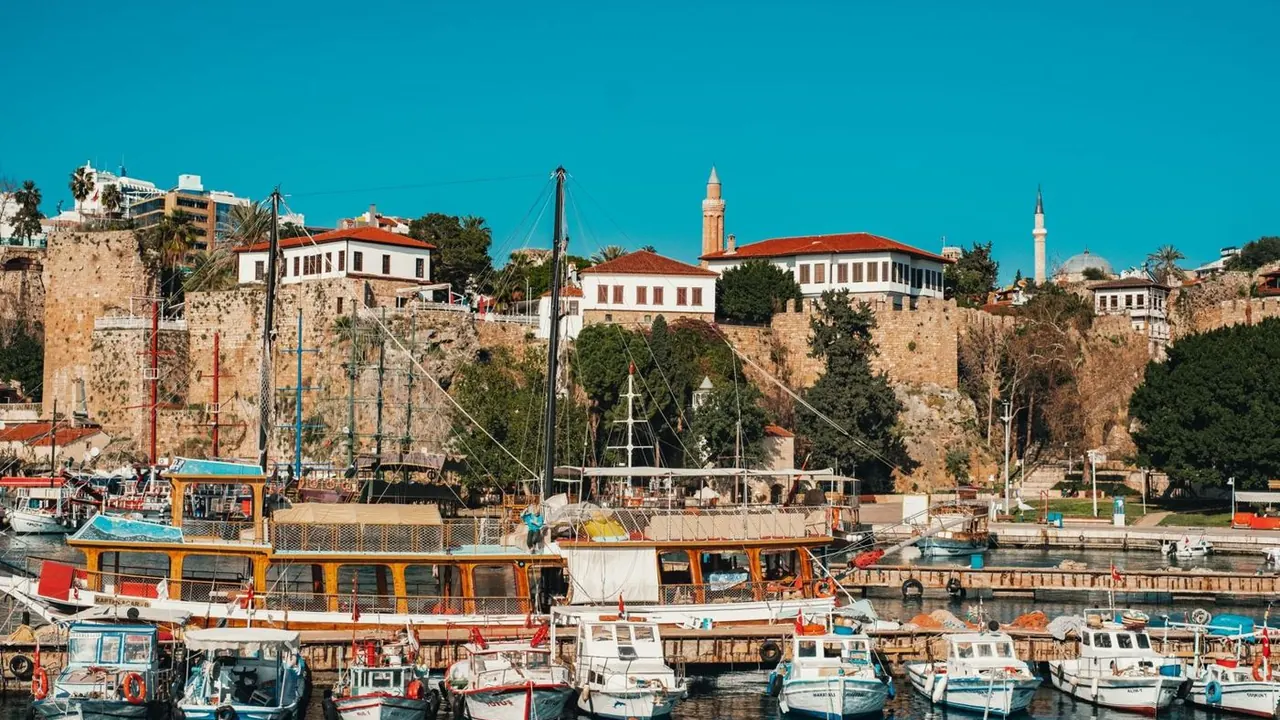
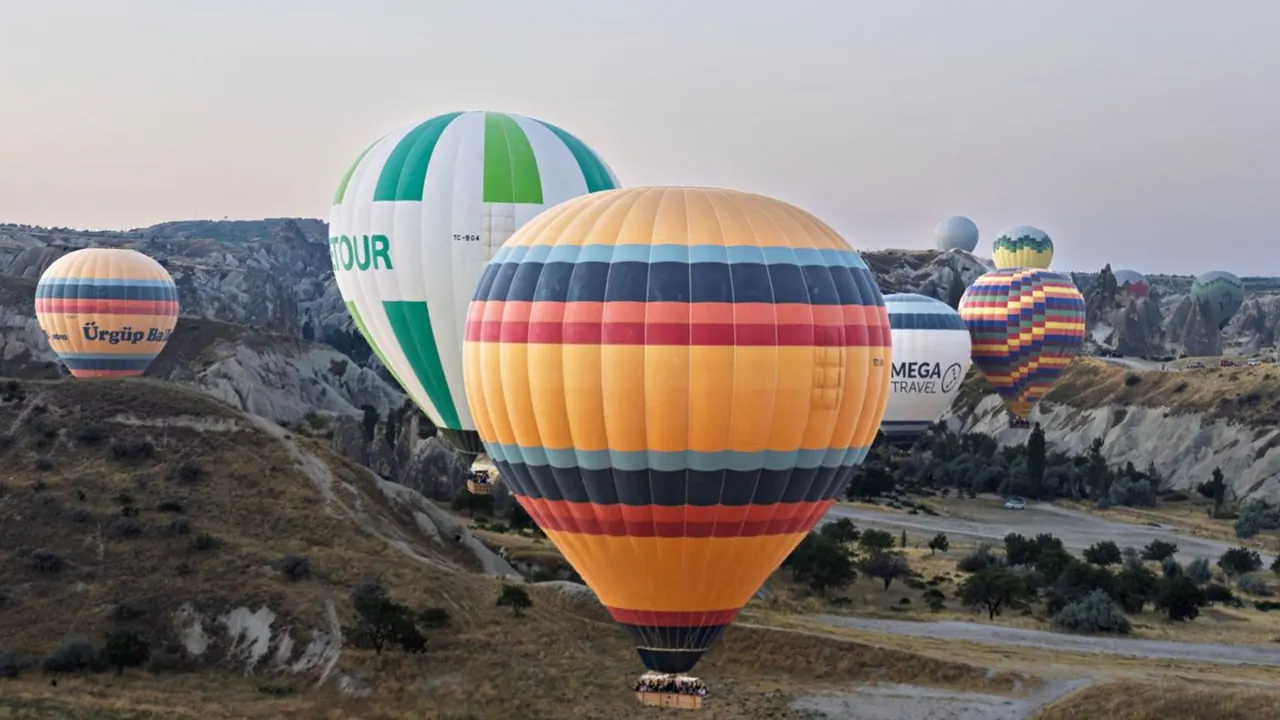
Photos: Antalya by Furkan Tumer, Pexels License; Goreme by Guerrero De la Luz, Pexels License.
Antalya or Goreme?
Our verdict in twelve categories, each scored against the same fixed benchmark cities, and the climate month by month, so you can choose for your trip.
Choose Antalya for
- beaches
- nightlife
- food and drink
Antalya is the better choice for a longer, more varied trip. It has beaches on both sides of the city, the Taurus mountains and the Lycian Way behind them, and a string of Roman cities within a drive. The resorts make life easy with children, the evenings have more going on, and the food is better once you leave the hotel buffet.
Choose Goreme for
Goreme does not lead in any category we score.
Goreme suits a shorter stay built around one extraordinary landscape. Go for the dawn balloons, the walks through Rose and Red valleys, the frescoed churches of the Open Air Museum and a night in a cave room, and accept that there is no sea and the evenings are quiet. Many travellers spend a few days inland here and then move on to the coast.
Scoreboard
Twelve categories on one fixed scale from 0 to 100. The shaded stretch is the gap between the two.
Your match
Pick a travel style or drag the sliders, and both match scores follow your weighting.
Wins on beaches and nightlife with your weighting.
Has no clear advantage with the weighting you have chosen.
What matters to you?
Category by category
What the scores mean for a trip.
Beaches & swimming
Beaches are one of the main reasons to choose Antalya. Konyaaltı's long pebble beach runs under the mountains west of the centre, and Lara's sand lies to the east. Within an hour you can also reach pine-fringed coves near Kemer and the long resort shores of Belek.
Goreme has no beach at all. It sits on a dry inland plateau, the river near Avanos is not for swimming, and the only water is in cave-hotel pools. If you want both, add a few days on the coast to a Cappadocia trip.
Food & drink
Antalya gives you more to eat. Look for piyaz in a tahini dressing served with grilled köfte, slow-cooked tandır lamb, fish from the Gulf, and weekly markets full of citrus and pomegranates from the plain. The best meals are in plain köfte houses in the modern city, not in Kaleiçi.
Goreme's eating is narrower and mostly aimed at visitors. The usual meals are testi kebab cracked open at the table, manti and roadside gozleme. Local Cappadocian wine helps, but in such a small village the menus start to look alike after a couple of nights.
Culture & sights
Antalya has more to see. Kaleiçi's Ottoman lanes start at Hadrian's Gate and pass below the Yivli Minare. The Antalya Museum, with its marble statues from Perge and its sarcophagi, ranks among the better archaeological collections in Turkey.
Goreme's culture is narrower but very strong in one area: Byzantine rock-cut churches. The Open Air Museum, the deep colours of the Dark Church and the painting in the Tokali Church can all be seen well in a day or two, along with the fairy-chimney houses and dovecotes of the village.
Nightlife
Antalya has a real night out, at least in summer. You will find courtyard bars and terraces in Kaleiçi and around the harbour, plus beach clubs along Konyaaltı and Lara, though you need taxis between them. Goreme has almost no nightlife: the balloons launch before dawn, so the village is quiet soon after dinner, with a glass of wine or raki on a terrace as the most there is.
Nature & outdoors
Antalya has the wider outdoor range because mountains and sea meet there. You can walk the Lycian Way past Phaselis and Olympos, take the cable car up Tahtalı Dağı, raft in Köprülü Canyon, dive and sail along the coast, and ski at Saklıkent in winter. The Düden falls even drop straight into the sea within the city.
Goreme has one landscape, but a remarkable one. Its valleys of pink and pale tuff start at the edge of the village and are ideal for long walks, horse rides and bike trips. There is no water to paddle on and little forest, so the variety is far narrower than on the coast.
Day trips
Both towns are good bases for exploring, and Antalya's day trips cover more ground. You can see the theatre at Aspendos, the colonnaded street at Perge, Termessos high on its peak, Side by the sea, and on a longer day Myra and the sunken city at Kekova. They run along the coast and up into the mountains.
Goreme's outings are closer together, and most are under an hour away. They include the underground cities of Kaymakli and Derinkuyu, Uchisar's citadel, the abandoned cave villages of Zelve, and the potters of Avanos. Most of them are rock-cut heritage, so a few days covers the circuit. In both places a car or a tour makes things much easier.
Good for families
Antalya is far easier with children. The resorts in Lara, Belek and Kemer are built for families, with pools, water slides and kids' clubs, and there is a theme park at Belek. Lara's shallow sandy water suits small children, and the city aquarium is a good outing in the heat.
Goreme works for older children on a short stay. They can sleep in a cave room, crawl through underground tunnels and ride horses in the valleys. Toddlers fare badly, with steep paths, unfenced drops, hard going for pushchairs and minimum ages on balloon flights.
Getting around
Inside the city, Antalya is the easier of the two to move around. Trams run from the airport and the bus station to Kaleiçi and the Konyaaltı side, buses use the same card and taxis are plentiful. The resort strips of Lara, Belek and Kemer stretch for tens of kilometres, though, so most guests there rely on hotel transfers.
Goreme is a village you can cross on foot in minutes, and the Open Air Museum and several valley trailheads are a short walk from the centre. Beyond it, the buses to Uchisar, Avanos and Urgup are slow and infrequent. The airports at Nevsehir and Kayseri are both about an hour away, so you arrive by a transfer timed to your flight.
Shopping & style
Antalya is the better place to shop, though it is practical rather than stylish. Kaleiçi's lanes sell carpets, ceramics, Turkish delight and leather, with plenty of haggling. The malls of the modern city are a cool escape in summer, and the weekly neighbourhood markets are the place for spices, olives and dried fruit to take home.
In Goreme the main street sells mostly souvenirs, from fairy-chimney ornaments to evil-eye charms. The crafts worth buying are hand-knotted carpets, woven kilims and the red-clay pottery of Avanos, where you can watch it being thrown on the wheel. There are no malls or boutiques, only a small weekly village market.
Affordability
The two cost about the same overall, but the money goes in different places. In Antalya, köfte houses, markets and city transport are cheap, and all-inclusive packages can work well for families. Kaleiçi restaurants, beach clubs and summer rooms by the sea cost much more, and spring and autumn bring lower room rates.
In Goreme the basics are cheap: hostels in cave houses, gozleme stalls and free walks in the valleys. What pushes up the bill is the reason most people come, the boutique cave hotels and the dawn balloon flight, with tours and entry fees on top.
Live music & performing arts
Only Antalya has resident companies of its own. A state opera and ballet company and a state theatre perform through the winter, mostly in Turkish, but ballet and opera are easy to follow without the language. In summer the opera and ballet festival moves into the Roman theatre at Aspendos.
Goreme's performances are put on for visitors. There is a Turkish night of folk and belly dancing in a large cave venue, and the more rewarding Sema ceremony of the whirling dervishes in an old caravanserai near Avanos. There is no theatre and no regular live music.
Wellness & relaxation
For hammams and spa days, Antalya is well ahead. The old hammams of Kaleiçi offer the full scrub and foam massage on warm marble, and almost every large resort in Lara, Belek and Kemer has its own spa and sauna, some of them very extensive. The summer crowds in the centre are not restful, so spring and autumn are the calmest seasons.
Goreme offers quiet rather than treatments. Once the tour groups are back, the evenings are still. There are a few village hammams and small spas in the better cave hotels, but the pre-dawn balloon starts cut into sleep, and for thermal water you have to drive to spa towns elsewhere in Nevsehir province.
When should you go?
Pick your month. The climate figures are measured averages, not a forecast.
Antalya in July
Goreme in July
Daytime high, °C
Rainfall in the month, mm
Where the figures come from
Goreme's station stands 160 m above the city centre, so the centre is likely a little warmer than the figures say.
Temperature and rainfall are climate normals, averaged over the years shown. Antalya: 1991-2020 normals, Antalya (23.4 km from centre). Goreme: 1991-2020 normals, Nevsehir (10.2 km from centre).
Antalya's beach season runs from May into October. The sea is warm enough for long swims through that whole stretch and reaches about 28°C in August. July and August are hard work on foot, with afternoons around 35°C, so Kaleiçi and the ruins are best seen in April, May, October and early November. Winter is mild but wet, with heavy rain from November to February and around 273mm in December alone.
Goreme sits high on the plateau and is cooler than the coast in every month. January highs are around 5°C, and snow can settle on the rocks. July and August reach about 30°C and are almost dry, but the valleys have little shade by late morning. The best walking months are late April to June and September to October. Goreme's rain is spread more evenly through the year than Antalya's, and its wettest month is May, not midwinter.
Which traveller are you?
On a beach and sun trip, Antalya is the only real choice. It has Konyaaltı's pebble beach and Lara's sand on either side of the city, with Kemer and Belek within an hour. Goreme is a long day's drive from any sea, so you are limited to hotel pools.
On a family trip with children, Antalya is much easier. The resorts in Lara, Belek and Kemer have water slides and kids' clubs, and the aquarium fills a hot afternoon. Older children enjoy a few days in Goreme, but it has little for toddlers.
For travellers set on a hot-air balloon flight, Goreme is the place to go. At sunrise dozens of balloons lift off over the valleys at the edge of the village, which Antalya cannot offer, although the coast has the wider range of outdoor activities overall.
Before you go
| Measure | Antalya | Goreme |
|---|---|---|
| Official language | Turkish | Turkish |
| Currency | Turkish Lira (TRY) | Turkish Lira (TRY) |
| Sockets | CF230 V, 50 Hz | CF230 V, 50 Hz |
| Driving side | Right | Right |
| Time zone | UTC+3 | UTC+3 |
| Emergency number | 112 | 112 |
| Elevation | 30 m | 1,100 m |
| Main airport | Antalya International Airport (AYT)9 km from centre172 non-stop destinations | Kayseri Erkilet International Airport (ASR)60 km from centre22 non-stop destinations |
| Public holidays this year | 14 days | 14 days |
By the numbers
| Measure | Antalya | Goreme |
|---|---|---|
| City population | 2,426,356 | 2,000 |
| People per km² | 1,712 | 20 |
| Museums within 10 km | 5 | 5 |
| UNESCO World Heritage sites within 50 km | 0 | 1 |
| Swim season, months above 21 °C | 7 months | - |
Where else could you go?
Every comparison below shares a destination with this one, so you can follow Antalya or Goreme somewhere new.