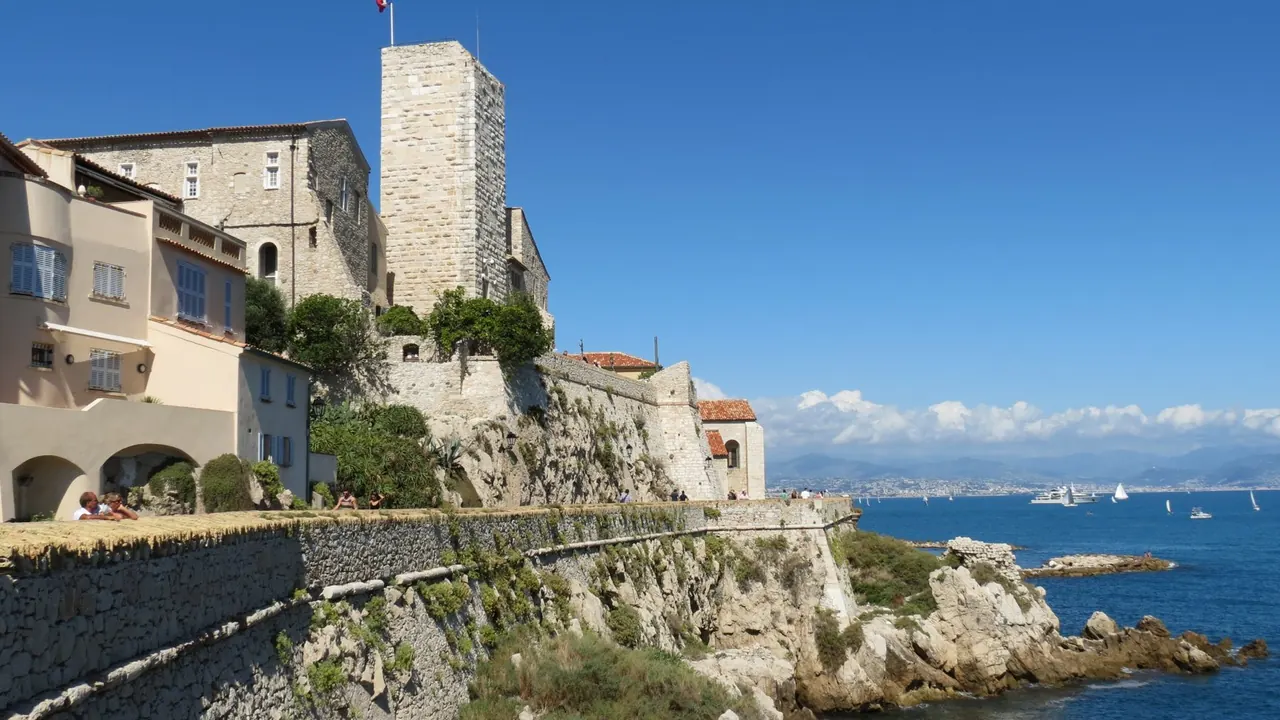
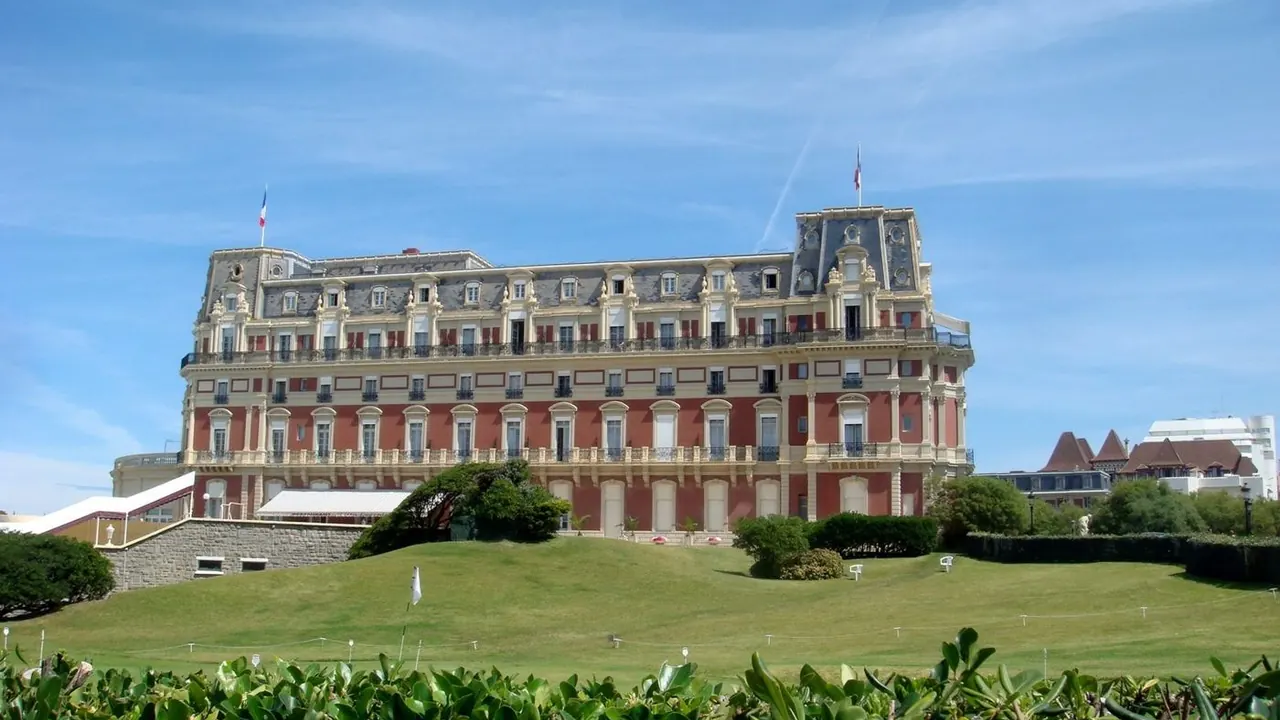
Photos: Antibes by Johan Allard, CC BY-SA 4.0, cropped; Biarritz by Lilipiapia, CC BY-SA 3.0, cropped.
Antibes or Biarritz?
Our verdict in twelve categories, each scored against the same fixed benchmark cities, and the climate month by month, so you can choose for your trip.
Choose Antibes for
- beaches
- culture and sights
- day trips
Antibes suits a classic Mediterranean beach vacation. It has soft, gently shelving sand, a calm and warm sea, and a long dry summer. It also sits right in the middle of the Riviera, so Nice, Cannes, Monaco and the hill villages are easy days out by train or car. The Picasso Museum on the sea wall gives it a stronger cultural core than its rival. Choose it if you want sun, swimming and plenty of variety close by.
Choose Biarritz for
- wellness
- food and drink
- families
Biarritz is the better pick for travellers who want the Atlantic. That means surf lessons and big waves, Basque cooking at the market counters, and a seawater spa tradition that people still build whole trips around. It is greener, cooler and wetter, and Spain is within reach. It works especially well for active families, food lovers and anyone coming to unwind in spring or autumn.
Scoreboard
Twelve categories on one fixed scale from 0 to 100. The shaded stretch is the gap between the two.
Your match
Pick a travel style or drag the sliders, and both match scores follow your weighting.
Too close to call, 2 points apart
Wins on beaches and culture and sights with your weighting.
Wins on wellness and food and drink with your weighting.
What matters to you?
Category by category
What the scores mean for a trip.
Beaches & swimming
Antibes has the more inviting water. Its long sandy beaches at Juan-les-Pins and La Salis shelve gently into a calm, warm sea, and the rocky coves around Cap d'Antibes, such as La Garoupe, add swimming in very clear water. The catch is that beach clubs take much of the sand at Juan-les-Pins.
Biarritz's Grande Plage and Côte des Basques are dramatic, but this is the open Atlantic. Waves are big and currents strong, so swimming means staying between the lifeguard flags. The sheltered Port Vieux cove is the only easy dip. The sea is cooler too.
Food & drink
Biarritz is the better place to eat. Basque cooking is a cuisine in its own right, and Les Halles is at the heart of it: Bay of Biscay fish, sheep's cheese, Bayonne ham and Espelette pepper, with bars around the market serving pintxos and Txakoli from mid-morning. Chipirons, axoa and gâteau basque give meals a clear local identity.
Antibes has a lovely Provençal market on Cours Masséna and good Niçoise staples such as socca and pissaladière. Beyond that its range is limited, and the streets near the port lean on tourist menus, so eating well takes more care.
Culture & sights
Antibes has more to see. The Picasso Museum in the Château Grimaldi holds the work he made there in 1946, and around it are the sea ramparts, the old town lanes and the star-shaped Fort Carré above Port Vauban. Villa Eilenroc and the Garoupe chapel on the cape add a second morning.
In Biarritz the heritage is the resort itself: the Second Empire imperial villa, the Art Deco casino, the Russian Orthodox church and the footbridge out to the Rocher de la Vierge. Its museums lean towards the ocean, with the aquarium in the Musée de la Mer and the Cité de l'Océan, and only a small Asian art collection besides. For an old town with real history, people go next door to Bayonne or over the border to San Sebastián.
Nightlife
Both towns go quiet out of season, and in summer they offer nights of a similar size but a different style. Antibes splits in two: the beach bars, lounges and late clubs of Juan-les-Pins, and the English-speaking pubs near Port Vauban where yacht crews drink.
Biarritz's evenings centre on wine and pintxos at the counters around Les Halles, with surfers' sundowners above the Côte des Basques and the casino for the late hours. For a bigger night, Antibes looks to Nice and Biarritz to Bayonne or San Sebastián.
Nature & outdoors
Both towns are strong for the outdoors, but the sea plays a different part in each. Around Antibes it is clear and calm, so snorkelling, diving, sailing and paddleboarding off the cape take the lead. On land there is the limestone coastal path, with the red Esterel cliffs and the Gorges du Loup further out.
Biarritz is built around surfing and the swell. Ashore, the cliff path runs along the Basque Corniche towards Spain, and the green Pyrenean foothills start within half an hour. La Rhune, climbed on foot or by rack railway, looks out over the whole coast.
Day trips
Antibes has the richer choice close at hand. The coastal railway links it to Nice, Cannes, Villefranche, Monaco and Menton. Boats go to the Lérins Islands, and the hill villages of Saint-Paul-de-Vence, Eze and Grasse are close inland, so many days out need no car at all.
Biarritz's appeal is two countries. San Sebastián is under an hour away, Bayonne is next door, and Saint-Jean-de-Luz, Hondarribia and the Basque villages of Espelette and Ainhoa are close. Bilbao's Guggenheim makes a full day out. More of these trips are easier with a car.
Good for families
Biarritz offers children more to do. The aquarium in the Musée de la Mer and the Cité de l'Océan cover rainy days, and surf schools teach children on the beach. Little ones need the sheltered Port Vieux, though, and the steep streets are hard going with a pushchair.
Antibes wins on one point: its gentle sandy shallows suit toddlers better than any Atlantic beach. Beyond the sand, the ramparts and the boats in Port Vauban, there is little laid on for children.
Getting around
Both towns are easy on foot at the centre and harder further out, but the ground differs. Antibes is flat: the old town, the market and the port sit together, and Juan-les-Pins is an easy level walk away. The coastal railway handles most day trips, though summer traffic on the coast road is heavy.
In Biarritz the walking is steep, with steps between the cliffs and the beaches. Buses run to Anglet and Bayonne and the airport is on the edge of town, but most visitors hire a car for the villages and mountains.
Shopping & style
Biarritz is the better town for browsing. Fashion boutiques and surf shops fill the streets between Place Clemenceau and the market, and striped Basque linen, handmade espadrilles and chocolate make distinctive things to take home.
Antibes is mostly about the Provençal market, with olive oil, herbs and soaps, plus a few linen and ceramics boutiques in the old town. For clothes, visitors go to Cannes or Nice.
Affordability
Neither town is cheap, and both charge resort prices in July and August. The ways to save differ. In Antibes, come in spring or autumn when hotel rates fall, use the inexpensive coastal trains and self-cater from the market.
In Biarritz, eat pintxos at the counter or at the market bars rather than on seafront terraces, and consider staying in Anglet or Bayonne and travelling in.
Live music & performing arts
The two towns are on a par, each with one standout. Antibes has Jazz à Juan, running since 1960, with July concerts under the pines of the Pinède Gould by the sea at Juan-les-Pins. Biarritz's strength is dance: a national choreographic centre with its own ballet company at the Gare du Midi, and an autumn dance festival. Jazz fans should come to Antibes in July, and dance lovers to Biarritz in autumn.
Wellness & relaxation
Biarritz is far stronger for unwinding. Sea bathing has been treated as a cure here since the nineteenth century, and its large seafront thalassotherapy centres offer heated seawater pools and multi-day programmes that people plan a whole stay around.
Antibes has a single thalassotherapy centre and the grand hotel spas on Cap d'Antibes. Rest there comes more from slow market mornings and walks on the ramparts in May, June or September.
When should you go?
Pick your month. The climate figures are measured averages, not a forecast.
Antibes in July
Biarritz in July
Daytime high, °C
Rainfall in the month, mm
Temperature and rainfall are climate normals, averaged over the years shown. Antibes: 1991-2020 normals, Nice (9.9 km from centre). Biarritz: 1999-2020 (sunshine 1991-2020, rainfall 1991-2020) normals, Biarritz (2.5 km from centre).
Antibes has a true Mediterranean summer. From June to August it is warm, dry and very sunny, with highs of 28°C in July and August and very little rain. The sea is good for swimming from June into early October and is warmest in August at around 25°C. Midday in high summer is hot for walking the old town and the cape path, so May, June and September are more comfortable for sightseeing. The rain returns in September and builds through October and November, the wettest months. Winters are mild but cool.
Biarritz is milder and much wetter all year. Summer highs stay near 24°C, so its steep streets are still pleasant to walk in August. The Atlantic only reaches about 22°C in late summer, though, and there are clearly fewer sunny hours than on the Riviera. Rain falls in every month, even July, and late autumn and winter are very wet, with November the wettest at around 224mm. July to September is the beach window, while spring and early autumn suit walking and spa days better.
Which traveller are you?
On a beach and sun trip, Antibes is the clear choice. It has sandy, gently shelving beaches at Juan-les-Pins and La Salis, a warmer and calmer sea, and far more sunshine through the summer than the wave-washed Atlantic shore at Biarritz.
For a relaxing and wellness trip, Biarritz wins easily. It is one of the homes of French thalassotherapy, and its seafront spas run full multi-day seawater cures. In the quieter seasons the headlands and promenades slow to an easy resort pace.
For surfers, from first-timers to experienced riders, Biarritz has something Antibes does not. There are beginner waves on the Côte des Basques and at Anglet, surf schools all along the seafront, and well-known reef breaks further down the Basque coast.
Before you go
| Measure | Antibes | Biarritz |
|---|---|---|
| Official language | French | French |
| Currency | Euro (EUR) | Euro (EUR) |
| Sockets | CE230 V, 50 Hz | CE230 V, 50 Hz |
| Driving side | Right | Right |
| Time zone | UTC+1, UTC+2 in summer | UTC+1, UTC+2 in summer |
| Emergency number | 112 | 112 |
| Elevation | 0 m | 0 m |
| Main airport | Nice-Côte d'Azur Airport (NCE)11 km from centre130 non-stop destinations | Biarritz Pays Basque airport (BIQ)3 km from centre25 non-stop destinations |
| Public holidays this year | 11 days | 11 days |
By the numbers
| Measure | Antibes | Biarritz |
|---|---|---|
| City population | 77,637 | 26,206 |
| People per km² | 2,930 | 2,240 |
| Museums within 10 km | 14 | 8 |
| UNESCO World Heritage sites within 50 km | 2 | 2 |
| Swim season, months above 21 °C | 4 months | 2 months |
Where else could you go?
Every comparison below shares a destination with this one, so you can follow Antibes or Biarritz somewhere new.