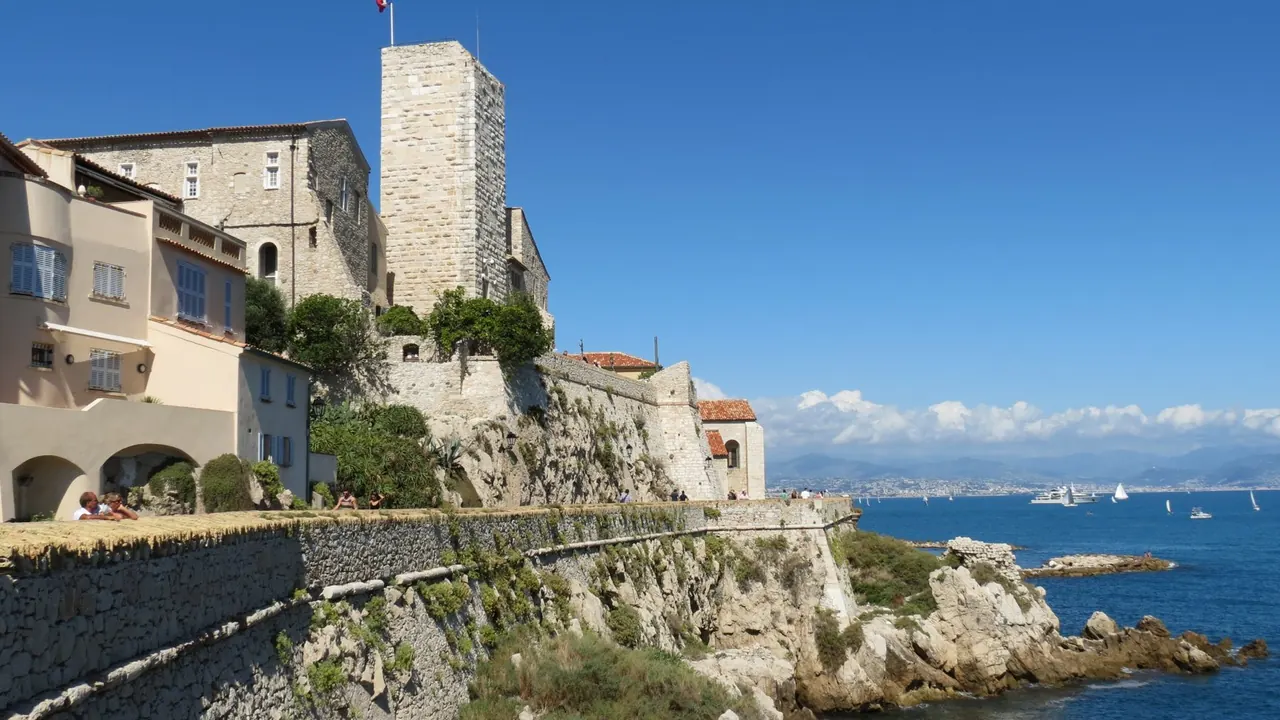
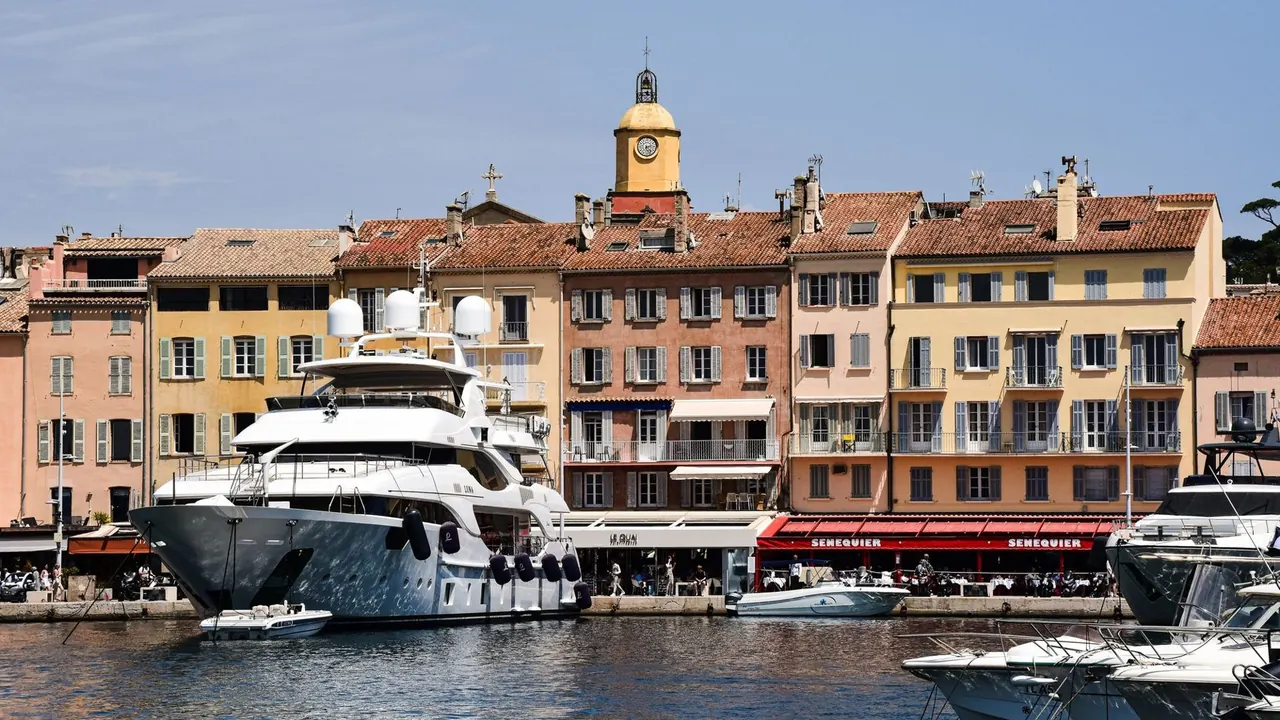
Photos: Antibes by Johan Allard, CC BY-SA 4.0, cropped; Saint-Tropez by AXP Photography, Pexels License.
Antibes or Saint-Tropez?
Our verdict in twelve categories, each scored against the same fixed benchmark cities, and the climate month by month, so you can choose for your trip.
Choose Antibes for
- day trips
- getting around
- prices
Antibes is the better base for travellers who want to see the Riviera as well as lie on it. Trains run along the coast to Nice, Cannes, Monaco and Menton, there is sand within the town, and the Picasso Museum and Jazz à Juan give it more to do than swim. It is also the easier choice for families, and it costs less, though it is not cheap.
Choose Saint-Tropez for
- shopping
- nightlife
- beaches
Saint-Tropez is for a short, glamorous summer trip built around Pampelonne. You get long lunches at beach clubs, evenings on the harbour, clubs that stay open until dawn and luxury boutiques in the lanes behind the port. In return you will need a car or boats to get around, and you will spend a lot more. The town is at its best when you stay put rather than travel around the region.
Scoreboard
Twelve categories on one fixed scale from 0 to 100. The shaded stretch is the gap between the two.
Your match
Pick a travel style or drag the sliders, and both match scores follow your weighting.
Wins on day trips and getting around with your weighting.
Wins on shopping and nightlife with your weighting.
What matters to you?
Category by category
What the scores mean for a trip.
Beaches & swimming
Both towns have real sand, which much of this coast lacks. The difference is where it is. In Antibes the sand is in town: La Salis looks across the bay to the ramparts, Juan-les-Pins is a short walk or bus ride away, and around Cap d'Antibes you can swim from flat rocks in very clear water.
Saint-Tropez's great beach is Pampelonne, a long stretch on the Ramatuelle side of the peninsula that you need transport to reach. The town itself has only small spots such as Les Graniers. What Saint-Tropez has instead is wilder coves further south, at Escalet and Cap Taillat, reached by car or along the coast path.
Food & drink
Neither town is worth travelling to for the food alone. In both, eating centres on a morning market and rosé outdoors. Antibes leans on Niçoise dishes such as socca, pissaladière and stuffed vegetables, found around the covered market on Cours Masséna, and its old-town bistros are good if you choose carefully.
Saint-Tropez serves Provençal cooking with more polish and higher bills: bouillabaisse, aïoli, long lunches on the sand and serious hotel dining rooms, with the tarte tropézienne as the local treat. Where it falls short is the middle range, since simple, good-value meals are scarce and many quayside places are selling the view.
Culture & sights
Antibes has more to see. The Picasso Museum in the Château Grimaldi leads, and the sea ramparts, Fort Carré, Villa Eilenroc and the Garoupe lighthouse chapel add enough for two days. Saint-Tropez has the Musée de l'Annonciade, with a fine collection of pointillist and Fauvist paintings from Signac's time, and a maritime museum in the citadel, but you will see it all in a day. Both towns have links with painters, but an art lover will find more to do in Antibes.
Nightlife
Saint-Tropez is the place for a big night out, as long as it is high summer and your budget stretches to table service. Afternoon parties at the Pampelonne beach clubs lead into champagne on the harbour and a handful of famous clubs that stay open until dawn. The style is glamour rather than bar-hopping.
Antibes is smaller and more casual. Juan-les-Pins has beach bars and a few late clubs in July and August, and the lanes by Port Vauban have pubs and wine bars full of yacht crews. Both go quiet out of season, but from Antibes a bigger night in Nice is a short train ride away.
Nature & outdoors
Both suit walkers, snorkellers and sailors, and each has a well-known coastal path. Antibes has the shorter circuit around Cap d'Antibes over wind-carved limestone. For real hiking you go further, to the red cliffs of the Esterel under an hour west or the gorges and pre-Alps above Grasse.
Saint-Tropez has more wild country close by. The Sentier du Littoral runs out to the capes of Camarat and Taillat, the cork-oak forests of the Massif des Maures lie inland, and the national-park islands of Port-Cros and Porquerolles are within reach. The catch is summer, when heat and fire risk can close trails.
Day trips
Antibes is by far the better base for day trips. The coastal railway puts Nice, Cannes, Monaco and Menton within easy reach without a car, and boats cross to the Lérins Islands. The hill villages from Saint-Paul-de-Vence to Eze and Grasse are close by, and Biot and Vallauris are next door.
From Saint-Tropez the trips are short and pleasant: Ramatuelle, Gassin, Grimaud, the canals of Port Grimaud, wine tastings, and a full day on Porquerolles. These places are charming rather than major sights, and nearly all of them depend on roads that jam in July and August.
Good for families
Antibes is the easier choice with children. The sand at La Salis is in town rather than a drive away, the town is small and safe, and the boats in Port Vauban, Fort Carré and a trip to the Lérins Islands fill the time between swims.
Saint-Tropez has equally gentle sand at Pampelonne and Gigaro, but its harbour and beach clubs are aimed at adults, summer traffic makes every outing harder, and the prices make a long family stay difficult. Many families stay in Sainte-Maxime instead and come over by boat.
Getting around
Antibes is much easier without a car. The old town, market and port are all within walking distance, and two stations on the coastal line connect it to the rest of the Riviera. You only really need a car for Grasse, the gorges and the Esterel.
Saint-Tropez is just as walkable in town, but it has no railway, the buses are slow and the main beaches are several kilometres out, so most visitors rely on cars, scooters or taxis. In summer the single road along the gulf jams for hours, and the passenger boats from Sainte-Maxime and Port Grimaud are often the quickest way in.
Shopping & style
Saint-Tropez is the better town for shopping, which is unusual for somewhere so small. The big fashion houses open summer boutiques behind the port, and the hand-made Tropézienne sandal is a local craft worth looking for. The Place des Lices market adds linen, baskets and vintage finds.
Shopping in Antibes is small-scale: olive oil and soaps from the covered market, and Provençal linens in the independent shops on Rue de la République. Anyone after fashion goes on to Cannes or Nice, though Biot glass and Vallauris pottery are close by.
Affordability
Neither town is cheap, but Antibes costs noticeably less. The old town has cheaper places to eat, the regional trains keep day trips inexpensive, and the market makes self-catering easy.
Saint-Tropez is in another league. Rooms, harbour meals and even coffee on the port cost far more, and taxis or parking come on top. Budget travellers tend to sleep inland or across the gulf and visit for the day. In both towns, spring and autumn bring lower rates.
Live music & performing arts
Antibes has more on, and most of it comes from Jazz à Juan. Founded in 1960, it is one of Europe's oldest jazz festivals. It is held each July under the pines of the Pinède Gould, a few steps from the sea, on a stage that has hosted Ray Charles and Miles Davis. The rest of the year the Anthéa theatre puts on a regional programme of plays, dance and concerts, though for opera you go to Nice.
Saint-Tropez has less to offer. Summer brings open-air concerts in gardens and on the citadel. In May the Bravade fills the streets with townspeople in costume carrying muskets, which is a local tradition rather than a show. Out of summer there is almost nothing to go to, and opera or theatre means a long drive to Toulon or Nice.
Wellness & relaxation
The two are much alike here. Neither has a bathing tradition, and both are restful only in May, June and September, when the crowds thin out.
What differs is access to spas. Antibes has a seawater thalassotherapy centre, and the hotel spas on Cap d'Antibes often take bookings from non-guests, while Saint-Tropez's polished hotel spas are aimed at their own guests. Saint-Tropez's quiet months have their own charm, with pétanque under the plane trees of the Place des Lices and morning walks up to the citadel.
When should you go?
Pick your month. The climate figures are measured averages, not a forecast.
Antibes in July
Saint-Tropez in July
Daytime high, °C
Rainfall in the month, mm
Where the figures come from
Saint-Tropez has no rain gauge within 25 km of the centre, so its rainfall comes from a gridded climate dataset read at the city rather than from a gauge further away.
Saint-Tropez's sunshine is measured 62 km from the centre, at Nice.
Temperature and rainfall are climate normals, averaged over the years shown. Antibes: 1991-2020 normals, Nice (9.9 km from centre). Saint-Tropez: 1999-2020 (sunshine 1991-2020, rainfall 1991-2020) normals, Le Luc (24.2 km from centre).
Both towns get the same long, sunny summer, with July and August the driest months. Saint-Tropez runs noticeably hotter. Its afternoons reach about 32°C, against 28°C in Antibes, which makes walking around town at midday hard work there, while Antibes stays more comfortable for sightseeing. In both, the sea is warm enough for most swimmers from June to September, peaking at about 25°C off Antibes in August.
Rain picks up in September and is heaviest in October and November, when both towns get well over 100mm a month, Saint-Tropez slightly more. Winter highs of about 13°C suit coastal walks, not swimming. For a mix of walking and swimming, late May, June and September are the best months in either town, and Saint-Tropez warms up a little sooner in spring.
Which traveller are you?
On a family trip with young children, Antibes asks less of the parents. Swims fit around naps with no drive to the beach, a train ride to Nice or Monaco rescues a restless afternoon, and a week or two there costs less.
For a food and nightlife trip, Saint-Tropez is the pick, as long as it is July or August and money is no object. Days go on long beach-club lunches with local rosé and evenings on dressing up. Antibes offers a quieter, more casual night.
On a shopping trip, Saint-Tropez packs the labels of a capital city into a few short lanes, with leather sandals made by hand locally to take home. Antibes suits buyers of market goods and gifts. For fashion, you take the train elsewhere.
Before you go
| Measure | Antibes | Saint-Tropez |
|---|---|---|
| Official language | French | French |
| Currency | Euro (EUR) | Euro (EUR) |
| Sockets | CE230 V, 50 Hz | CE230 V, 50 Hz |
| Driving side | Right | Right |
| Time zone | UTC+1, UTC+2 in summer | UTC+1, UTC+2 in summer |
| Emergency number | 112 | 112 |
| Elevation | 0 m | 0 m |
| Main airport | Nice-Côte d'Azur Airport (NCE)11 km from centre130 non-stop destinations | Nice-Côte d'Azur Airport (NCE)64 km from centre130 non-stop destinations |
| Public holidays this year | 11 days | 11 days |
By the numbers
| Measure | Antibes | Saint-Tropez |
|---|---|---|
| City population | 77,637 | 3,582 |
| People per km² | 2,930 | 320 |
| Museums within 10 km | 14 | 4 |
| UNESCO World Heritage sites within 50 km | 2 | 0 |
| Swim season, months above 21 °C | 4 months | 3 months |
Where else could you go?
Every comparison below shares a destination with this one, so you can follow Antibes or Saint-Tropez somewhere new.