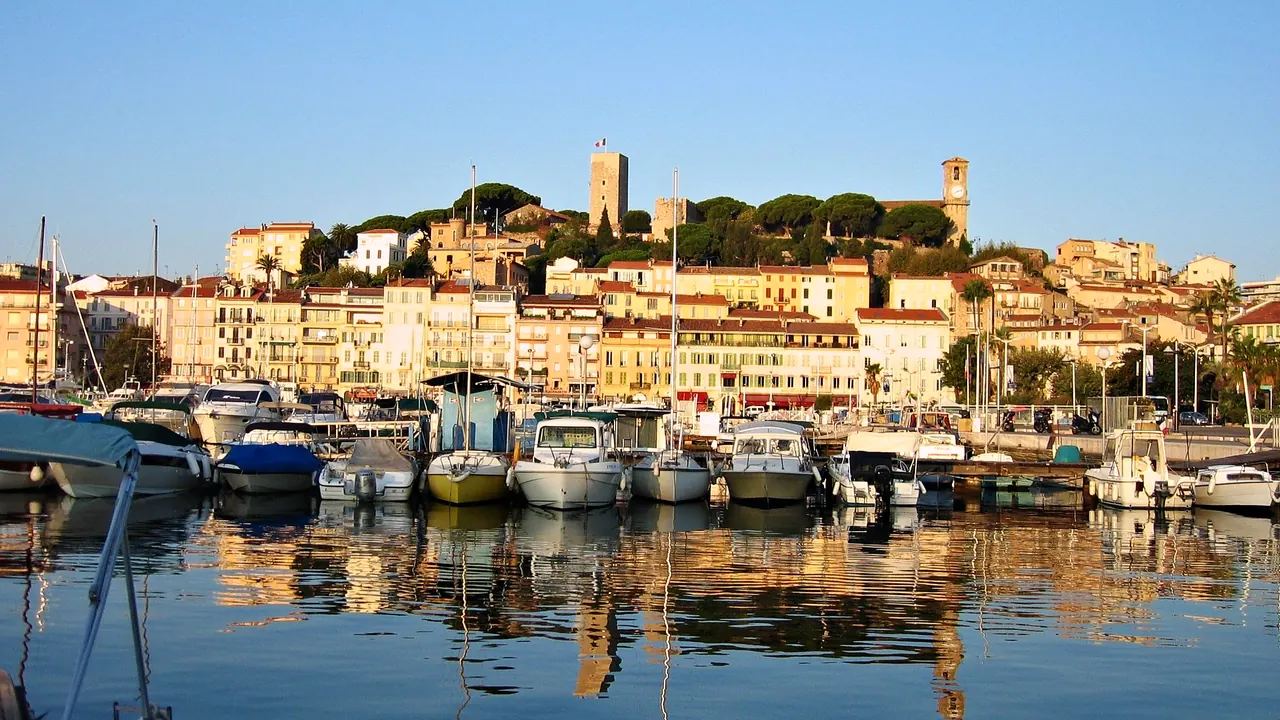
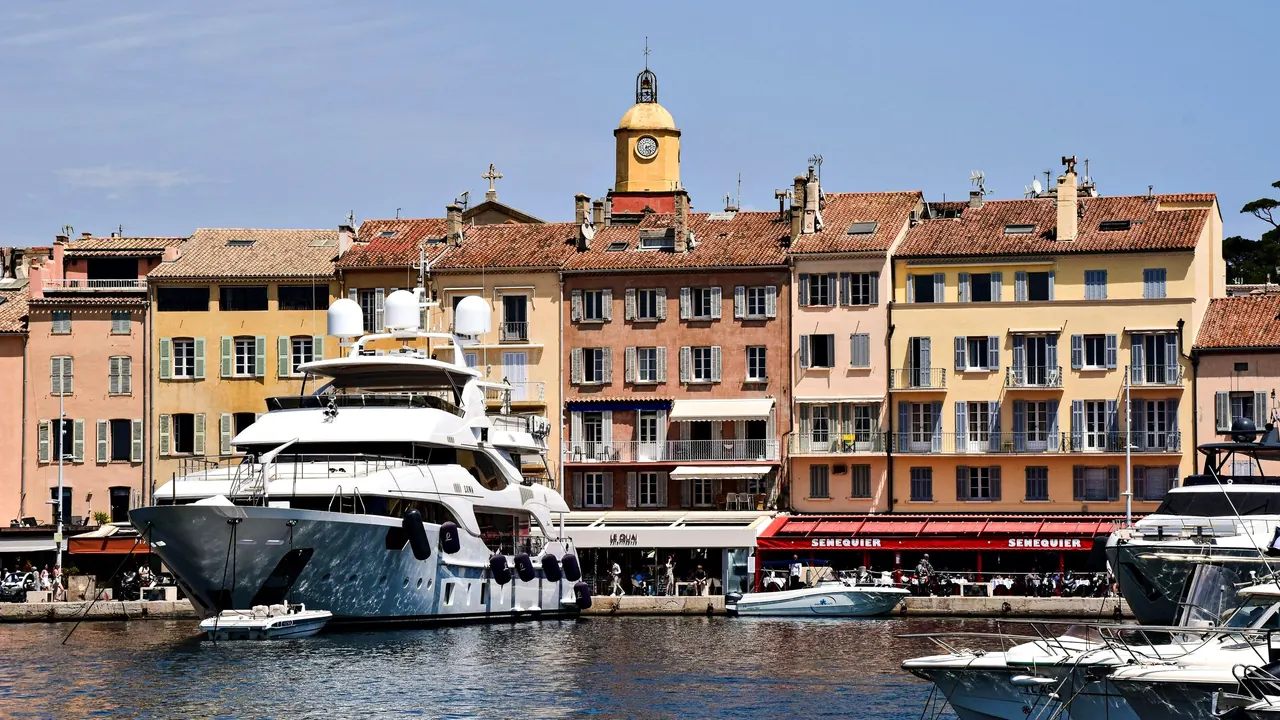
Photos: Cannes by qwesy qwesy, CC BY 3.0, cropped; Saint-Tropez by AXP Photography, Pexels License.
Cannes or Saint-Tropez?
Our verdict in twelve categories, each scored against the same fixed benchmark cities, and the climate month by month, so you can choose for your trip.
Choose Cannes for
- getting around
- day trips
- live music and the arts
Cannes suits the traveller who wants the Riviera as a base rather than a single resort. Its station sits in the middle of town, so Antibes, Nice and Monaco are easy outings by train. It also has more going on through the year, with a working market, a concert season and calmer shoulder months. Families and anyone travelling without a car will find it much simpler.
Choose Saint-Tropez for
- nightlife
- shopping
- beaches
Saint-Tropez is the place to choose for a summer of beach clubs by day and the harbour at night. Pampelonne, the coast path round the peninsula and the July and August party scene are the draw, and the town makes little effort to be anything else. Come with a car or a boat transfer and a generous budget, and don't plan to range far.
Scoreboard
Twelve categories on one fixed scale from 0 to 100. The shaded stretch is the gap between the two.
Your match
Pick a travel style or drag the sliders, and both match scores follow your weighting.
Wins on getting around and day trips with your weighting.
Wins on nightlife and shopping with your weighting.
What matters to you?
Category by category
What the scores mean for a trip.
Beaches & swimming
Both have fine sand, clear warm water in August and the same mix of private beach clubs with public stretches between them. The difference is where the sand lies. In Cannes it runs along the Croisette in the middle of town, and the wide, mostly free Plage du Midi stretches west of the port, so a swim is a short walk from your room. The Lérins islands add rocky swimming under the pines.
Saint-Tropez's great beach, Pampelonne, is several kilometres out on the Ramatuelle side, and the wilder coves at Escalet and Cap Taillat lie further south. In town there are only small spots such as Les Graniers and La Ponche. It has the longer and more beautiful strand of the two, but you need transport to reach it.
Food & drink
Cannes eats better across the range. The covered Forville market and the bistros of Le Suquet and Rue Meynadier make ordinary meals of bouillabaisse, socca and grilled fish easy to find, and Mougins adds a fine-dining tier just inland.
Saint-Tropez cooks the same Provençal dishes with more polish at the top end, and the cream-filled tarte tropézienne is its own invention. Simple, good-value meals are scarce, though. Many quayside places charge for the view, and much of the town shuts in winter.
Culture & sights
Neither town will keep a culture-minded traveller busy for long, and each is seen in a day or less. What differs is the kind of sight. Cannes offers a castle museum of world ethnography at the top of Le Suquet, Belle Époque palace hotels along the bay and the red-carpet steps of the Palais des Festivals, so it gives you more town history than art.
Saint-Tropez has the one serious art collection of the pair. The Musée de l'Annonciade, a former chapel on the port, holds pointillist and Fauvist painting from the years when Signac and his circle painted the harbour, and the citadel above houses a maritime museum.
Nightlife
For a big night out in summer, Saint-Tropez is the clear choice. A day there builds from afternoon beach-club parties at Pampelonne to champagne on the harbour terraces and yachts, and ends in a handful of famous clubs that run until dawn. The scene is known across the Mediterranean.
Cannes has the same moneyed, dress-up style on a smaller scale, with Croisette beach clubs turning into party venues and wine bars filling the streets behind the old port from June to September. Out of season both go quiet, but from Cannes, Nice is only a short train ride away.
Nature & outdoors
Both have outstanding coastal walking and good water for sailing and diving, but the landscapes differ. From Cannes, the highlights are the volcanic red rock of the Esterel twenty minutes west, the pine paths of the Lérins islands and the limestone shore of Cap d'Antibes. The gorges of the pre-Alps and winter skiing are within about two hours.
Saint-Tropez has the Sentier du Littoral on its doorstep, running round the peninsula to the wild capes of Camarat and Taillat. The cork-oak forests of the Maures lie inland, and the national-park islands of Port-Cros and Porquerolles are within reach. In both places, the fire risk in summer can close trails.
Day trips
Cannes is much better placed for day trips. The coastal train puts Antibes, Nice, Villefranche, Monaco and Menton within easy reach, and Grasse, Mougins and perched villages such as Saint-Paul-de-Vence and Èze are a short bus ride or drive away.
The outings from Saint-Tropez are pleasant but smaller in scale. You can visit the hill villages of Ramatuelle, Gassin and Grimaud, take the passenger boat to the canals of Port Grimaud, taste at the wine estates, or spend a longer day on Porquerolles. All of them depend on roads that jam in July and August.
Good for families
Cannes is the more practical choice for families. Its gently sloping sandy beaches are right in town, the flat Croisette suits pushchairs and has carousels and play areas, and the boat to the Lérins islands makes an easy picnic outing.
Saint-Tropez has good shallow sand at Pampelonne and Gigaro, but you have to drive there. The town is aimed at adults, and the prices make a long stay hard. Many families stay across the gulf in Sainte-Maxime and come over by boat.
Getting around
This is the sharpest practical difference between the two. Cannes has a station in the town centre, coastal trains to Antibes, Nice and Monaco, ferries from the old port and a centre you can walk across in twenty minutes. You only really need a car for Grasse and the hill villages.
Saint-Tropez is tiny and easy on foot, but it has no railway and slow buses, and the single road along the gulf jams for hours in summer. Plan on a car, scooter or taxi, or arrive by passenger boat from Sainte-Maxime or Port Grimaud.
Shopping & style
Both towns pack an unusual amount of luxury into a small space, and either will satisfy a designer-label shopper. Cannes puts its fashion houses along the seafront Croisette and adds Rue d'Antibes, more than a kilometre of mid-range French fashion, shoe shops and chocolatiers, so it suits more than one budget.
Saint-Tropez has a more resort-minded mix: summer branches of the big houses in the lanes behind the port, plus swimwear and its own hand-made leather sandals. The Place des Lices market adds linen and pottery. Many of its shops close for the winter.
Affordability
Neither town is cheap, but Cannes is easier to manage. Away from the waterfront, prices drop towards ordinary French levels, the regional trains cost little, and you can stay in a neighbouring town and come in by rail.
Saint-Tropez is among the most expensive places to stay on the Mediterranean, and because there is little public transport you pay for taxis or parking on top. Budget visitors usually sleep inland or across the gulf and come over for the day.
Live music & performing arts
Cannes has rather more to see. The Palais des Festivals hosts concerts, touring shows and comedy, the regional philharmonic plays through the season, and there is a respected dance festival. In summer there are concerts in the castle courtyard, free film screenings on the beach at festival time and the Juan-les-Pins jazz festival just along the coast.
Saint-Tropez has open-air classical and jazz in summer and the musket-firing Bravade procession each May, but almost nothing for the rest of the year.
Wellness & relaxation
Neither town has thermal springs or a bathing tradition, so pampering here means a spa, and Cannes gives you more of a choice. Besides the palace-hotel spas on the seafront, the coast has seawater thalassotherapy centres that work separately from the hotels, so you can book a treatment wherever you sleep. The drawback is the event calendar: festival and trade-fair weeks can fill the town even in spring and autumn.
Saint-Tropez has only the spas of its own hotels and villas, so if you are not staying in one there is little to book. Where it wins is the quiet of the shoulder months. In May, June and September the small town takes on a village pace that Cannes, with its fairs, does not always keep. In August neither is a place to rest.
When should you go?
Pick your month. The climate figures are measured averages, not a forecast.
Cannes in July
Saint-Tropez in July
Daytime high, °C
Rainfall in the month, mm
Where the figures come from
Saint-Tropez has no rain gauge within 25 km of the centre, so its rainfall comes from a gridded climate dataset read at the destination rather than from a gauge further away.
Saint-Tropez's sunshine is measured 62 km from the centre, at Nice.
Temperature and rainfall are climate normals, averaged over the years shown. Cannes: 2004-2020 (sunshine 1991-2020, rainfall 1991-2020) normals, Cannes (5.8 km from centre). Saint-Tropez: 1999-2020 (sunshine 1991-2020, rainfall 1991-2020) normals, Le Luc (24.2 km from centre).
Cannes and Saint-Tropez share the same sunny Mediterranean pattern. In both, the swimming season runs from June to September, and the sea is warmest in August, at about 25°C off Cannes and a degree cooler at Saint-Tropez. The real difference is the summer heat. Cannes peaks at about 29°C in July and August, while Saint-Tropez reaches 32°C, so midsummer afternoons on the peninsula are best spent in the water or the shade.
May and June are the most comfortable months for walking in either town, being warm and mostly dry. The autumn rain starts in September, which is still warm enough for a swim but noticeably wetter, especially in Cannes. October and November are the wettest months of all, with Saint-Tropez at about 155mm in November and Cannes a little less. From December to March both are mild enough for a stroll by the sea but too cool for swimming.
Which traveller are you?
On a family trip with young children, Cannes is the easier base. The sand starts at the Croisette, the flat promenade has carousels and play areas, and the train reaches outings such as the Monaco aquarium. Saint-Tropez's family beaches lie a drive out of town.
For a short city break, Cannes works with no car at all. You arrive at the central station, walk everywhere within twenty minutes and can add Antibes or Nice by train. Saint-Tropez has no railway, and in summer the gulf road can take half a day.
On a food and nightlife trip in high summer, Saint-Tropez is the bigger draw, with Pampelonne beach parties running on to harbour terraces and clubs open until dawn. Cannes eats slightly better day to day, from the Forville market to the Le Suquet bistros, but its nights are tamer.
Before you go
| Measure | Cannes | Saint-Tropez |
|---|---|---|
| Official language | French | French |
| Currency | Euro (EUR) | Euro (EUR) |
| Sockets | CE230 V, 50 Hz | CE230 V, 50 Hz |
| Driving side | Right | Right |
| Time zone | UTC+1, UTC+2 in summer | UTC+1, UTC+2 in summer |
| Emergency number | 112 | 112 |
| Elevation | 0 m | 0 m |
| Main airport | Nice-Côte d'Azur Airport (NCE)20 km from centre130 non-stop destinations | Nice-Côte d'Azur Airport (NCE)64 km from centre130 non-stop destinations |
| Public holidays this year | 11 days | 11 days |
By the numbers
| Measure | Cannes | Saint-Tropez |
|---|---|---|
| Population | 74,350 | 3,582 |
| People per km² | 3,793 | 320 |
| Museums within 10 km | 16 | 4 |
| UNESCO World Heritage sites within 50 km | 2 | 0 |
| Swim season, months above 21 °C | 4 months | 3 months |
Where else could you go?
Every comparison below shares a destination with this one, so you can follow Cannes or Saint-Tropez somewhere new.
- Antibesvs Cannes
- Nicevs Cannes
- Monacovs Cannes
- Antibesvs Saint-Tropez
- Nicevs Saint-Tropez
- Monacovs Saint-Tropez