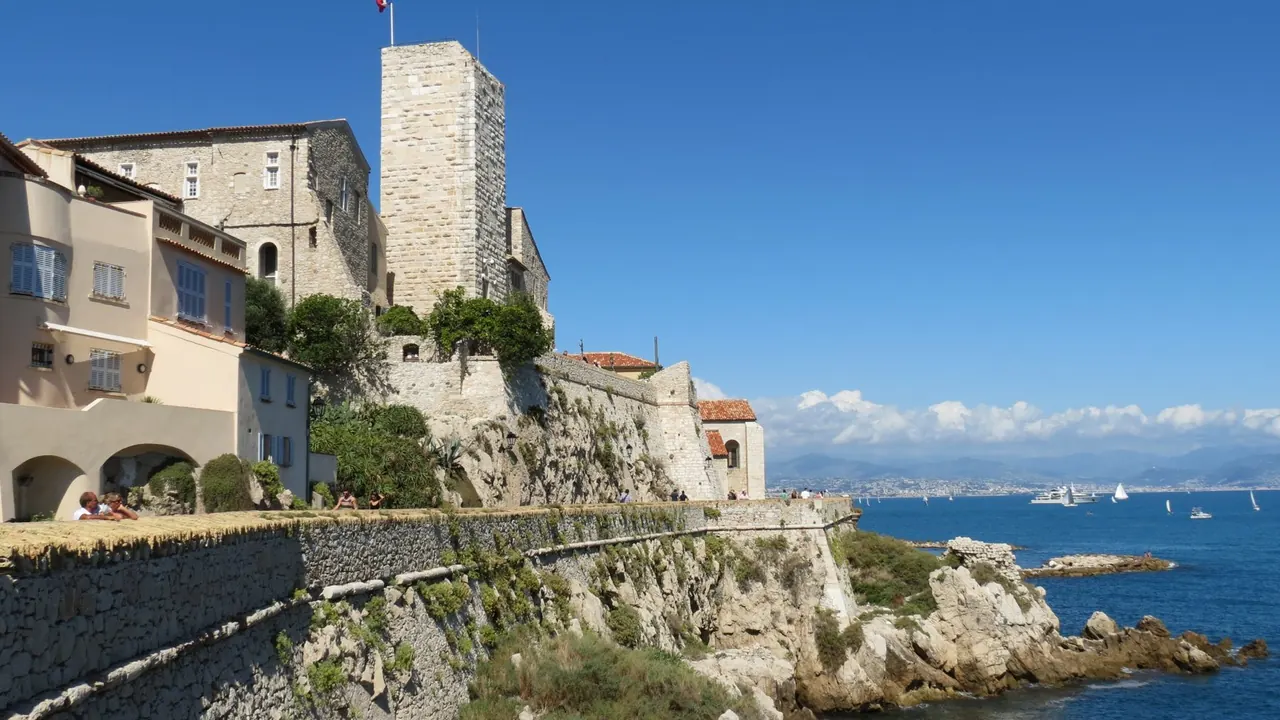
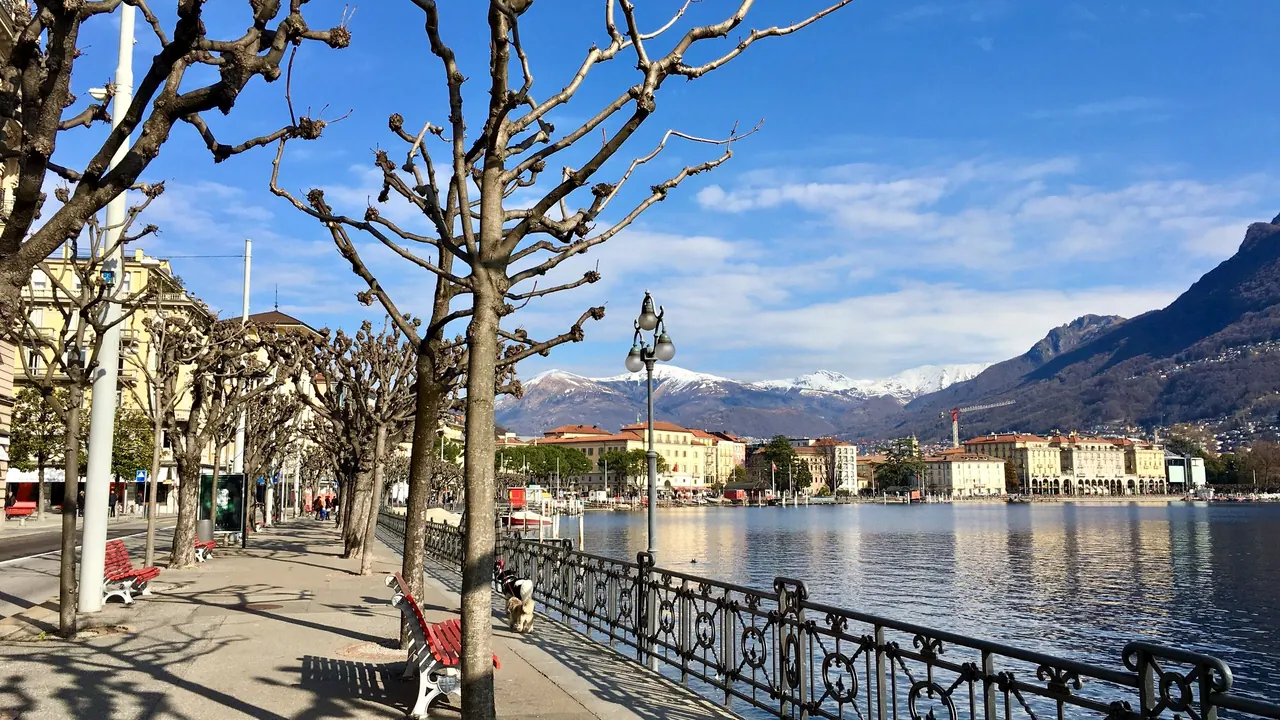
Photos: Antibes by Johan Allard, CC BY-SA 4.0, cropped; Lugano by Thomas Woodtli from Zürich, Switzerland, CC BY-SA 2.0, cropped.
Antibes or Lugano?
Our verdict in twelve categories, each scored against the same fixed benchmark cities, and the climate month by month, so you can choose for your trip.
Choose Antibes for
- beaches
- prices
- nightlife
Antibes is the pick for a summer of sun and sea. It has real sandy beaches at Juan-les-Pins and La Salis, clear water in the coves around Cap d'Antibes and livelier summer evenings. One coastal railway runs through the whole Riviera, from Cannes to Menton. It is not cheap, but it costs less than Switzerland.
Choose Lugano for
- getting around
- nature and the outdoors
- shopping
Lugano suits travellers who would rather look at mountains than lie on sand. Funiculars leave from the edge of town, a lakeside path runs to Gandria and ridge hikes climb above the water, which makes it the better base for walking. Its compact centre and Swiss trains make it easy to get about. Expect quiet nights and very high prices.
Scoreboard
Twelve categories on one fixed scale from 0 to 100. The shaded stretch is the gap between the two.
Your match
Pick a travel style or drag the sliders, and both match scores follow your weighting.
Too close to call, 2 points apart
Wins on beaches and prices with your weighting.
Wins on getting around and nature and the outdoors with your weighting.
What matters to you?
Category by category
What the scores mean for a trip.
Beaches & swimming
Antibes has sand, which is rare on this coast. There are long, gently shelving beaches at Juan-les-Pins and La Salis, and rocky coves and flat rocks around Cap d'Antibes with very clear water. Private beach clubs take much of the sand at Juan-les-Pins, though, and the free stretches fill early in high summer.
Lugano has lidos instead of beaches: lawns, wooden decks and ladders into the lake, with the largest at the mouth of the Cassarate. They are good for a hot afternoon between June and early September, but there is no sand and no surf.
Food & drink
Neither town is worth visiting for the food alone, and the two eat very differently. Antibes cooks the Niçoise way, with socca, pissaladière, grilled fish and rosé. Its covered market on Cours Masséna is the place to start, and the tourist menus near the port are best avoided.
Lugano's equivalent is the grotto, a rustic tavern built against cool rock cellars. Grotti serve polenta, braised meats and risotto with Ticino Merlot under chestnut trees. Beyond them there is little street food or cheap eating, and many visitors cross into Italy for a big meal.
Culture & sights
The Picasso Museum in Château Grimaldi, on the sea wall, is what sets Antibes apart. Picasso worked there in 1946, and the work he made that autumn is still in the building. Around it are the old-town lanes and ramparts. The star-shaped Fort Carré stands across the harbour, and the Villa Eilenroc and the Garoupe chapel are out on the cape. Together they fill about two days.
Lugano is more about churches, painting and arcaded streets than fortifications. Its Lombard old town leads up to San Lorenzo cathedral and its Renaissance façade. Luini's Passion fresco in Santa Maria degli Angioli is the finest single work in town, and the art museum is split between LAC and Palazzo Reali. A day covers it all, and the Hermann Hesse museum at Montagnola is worth the trip up into the hills.
Nightlife
Antibes has more going on after dark, at least in summer. Juan-les-Pins keeps its beach bars and a few clubs open into the early hours, and yacht crews fill the pubs and wine bars near Port Vauban. Out of season it goes quiet, and people go to Nice for a bigger night out.
In Lugano, an evening means an aperitivo under the arcades, a long dinner and perhaps a smart bar by the lake. On most nights the town is quiet before midnight, and young people head to Milan.
Nature & outdoors
Lugano is the stronger choice for the outdoors, because the mountains start at the edge of town. Funiculars climb Monte Brè and San Salvatore, and a rack railway goes up Monte Generoso. The path to Gandria and the ridge from Monte Lema to Monte Tamaro range from an easy stroll to a full day's hike.
In Antibes the outdoors is mostly about the water: snorkelling, diving and paddleboarding off the cape, plus the coastal path over wind-carved limestone. Real hiking means a trip to the Esterel or the hills above Grasse, because the land around the town is flat and built up.
Day trips
Both are excellent bases, but for different kinds of day out. From Antibes the coastal railway links Nice, Cannes, Monaco and Menton. Inland are the hill villages of Saint-Paul-de-Vence, Eze and Grasse, and boats cross to the Lérins Islands.
From Lugano, day trips reach into two countries. Milan, with The Last Supper and the Brera, is just over an hour away, Como half an hour, and the castles of Bellinzona and the Borromean Islands are within reach too. Days out from Antibes stay on the same sunny coast, while from Lugano the language, the lake and the scenery all change.
Good for families
Both towns are safe and small, and neither has much built for children, so the choice depends on how you want to spend the days. In Antibes the days revolve around the beach, where the sand shelves gently enough for toddlers, though August heat and crowds call for early starts.
Lugano keeps children busy with boat rides, lido slides, funiculars and the miniature Switzerland at Melide. Its steep streets are hard work with a pushchair, though.
Getting around
Lugano is easier to get around. The centre is walkable and a short funicular takes care of the climb from the station. Buses, lake boats and mountain railways reach almost everything else, and hotel stays usually include free regional transport.
Antibes works well on foot and by coastal train. Buses to the cape and the hill villages are slow, though, and Grasse or the Esterel are much simpler by car, which means dealing with summer traffic and scarce parking.
Shopping & style
Lugano has more to offer shoppers, though mostly at the top end. The arcades of Via Nassa are lined with Swiss watchmakers, jewellers and Italian fashion houses, and there is a large designer outlet near Mendrisio.
Antibes has no luxury street at all. Its strengths are the Provençal market for olive oil, herbs and soaps, small boutiques selling linen and ceramics, and Biot glass and Vallauris pottery in the villages next door.
Affordability
Both are expensive, but Antibes is easier on the wallet. Summer rooms near the beaches are priced like a luxury resort, but rates drop sharply in spring and autumn. The market makes self-catering easy, and the regional trains are good value.
Lugano has Swiss prices. Lakeside hotels, meals, wine, boats and mountain railways all cost far more than across the border, and grotti and set lunches are the only real way to save.
Live music & performing arts
Lugano has the fuller year-round programme, centred on LAC. The Orchestra della Svizzera italiana plays in its fine concert hall, and its theatre stages drama and dance through the season. In summer, Estival Jazz puts on free concerts in Piazza della Riforma.
Antibes has one great event, Jazz à Juan, held each July under the pines by the sea since 1960. The rest of the year there is the Anthéa theatre with regional plays and concerts. For opera, Antibes looks to Nice and Lugano to La Scala in Milan.
Wellness & relaxation
Neither town has a bathing tradition, so the difference is in the setting. Antibes has seawater thalassotherapy and the grand hotel spas of Cap d'Antibes, but it is truly restful only in May, June and September, outside the summer crowds.
In Lugano the calm comes from the pace of the day: coffee under the arcades, an afternoon in Parco Ciani or at a lido, and a long grotto lunch. There are also hotel spas and a large indoor complex with pools and saunas near Rivera.
When should you go?
Pick your month. The climate figures are measured averages, not a forecast.
Antibes in July
Lugano in July
Daytime high, °C
Rainfall in the month, mm
Temperature and rainfall are climate normals, averaged over the years shown. Antibes: 1991-2020 normals, Nice (9.9 km from centre). Lugano: 1991-2020 normals, Lugano (1.2 km from centre).
Antibes follows the classic Mediterranean pattern. July and August are hot and almost dry, with highs of about 28°C. The sea warms to about 25°C in August, so the beach season runs from June into early October. Rain comes with autumn and peaks in November at 138mm. Winters are mild and bright enough for long walks on the cape path, and Antibes gets more sunshine than Lugano in every month of the year.
Lugano is just as warm in high summer, but much wetter. Every month from April to November brings heavy rain, with May the wettest at about 178mm, and summer heat can feel humid. Winter is properly cold, around 7°C by day in January, so Lugano is at its best from late spring to September. Antibes stays pleasant for walking the streets right through the winter.
Which traveller are you?
For a beach and sun trip, Antibes is the clear choice. It has sandy, gently shelving beaches at Juan-les-Pins, rocky coves around the cape, sea warm enough for swimming from June into October and long dry summers. Lugano's lido season is pleasant but much shorter.
On an outdoors trip, Lugano suits walkers better. Paths lead down from the summits through chestnut woods, and the green rivers of the Verzasca and Maggia valleys are about an hour away. Antibes only wins if your idea of the outdoors is snorkelling off the cape.
On a tight budget, Antibes makes the money go further. Spend the days on the free sand between the beach clubs, and eat socca and picnics instead of sitting on seafront terraces. In Lugano, thrifty travellers save their meals for Italian lakeside towns.
Before you go
| Measure | Antibes | Lugano |
|---|---|---|
| Official language | French | French, German, Italian, Romansh |
| Currency | Euro (EUR) | Swiss Franc (CHF) |
| Sockets | CE230 V, 50 Hz | CJ230 V, 50 Hz |
| Driving side | Right | Right |
| Time zone | UTC+1, UTC+2 in summer | UTC+1, UTC+2 in summer |
| Emergency number | 112 | 112 |
| Elevation | 0 m | 283 m |
| Main airport | Nice-Côte d'Azur Airport (NCE)11 km from centre130 non-stop destinations | Milan Malpensa International Airport (MXP)46 km from centre208 non-stop destinations |
| Public holidays this year | 11 days | 15 days |
By the numbers
| Measure | Antibes | Lugano |
|---|---|---|
| City population | 77,637 | 63,495 |
| People per km² | 2,930 | 837 |
| Museums within 10 km | 14 | 17 |
| UNESCO World Heritage sites within 50 km | 2 | 5 |
| Swim season, months above 21 °C | 4 months | - |
Where else could you go?
Every comparison below shares a destination with this one, so you can follow Antibes or Lugano somewhere new.