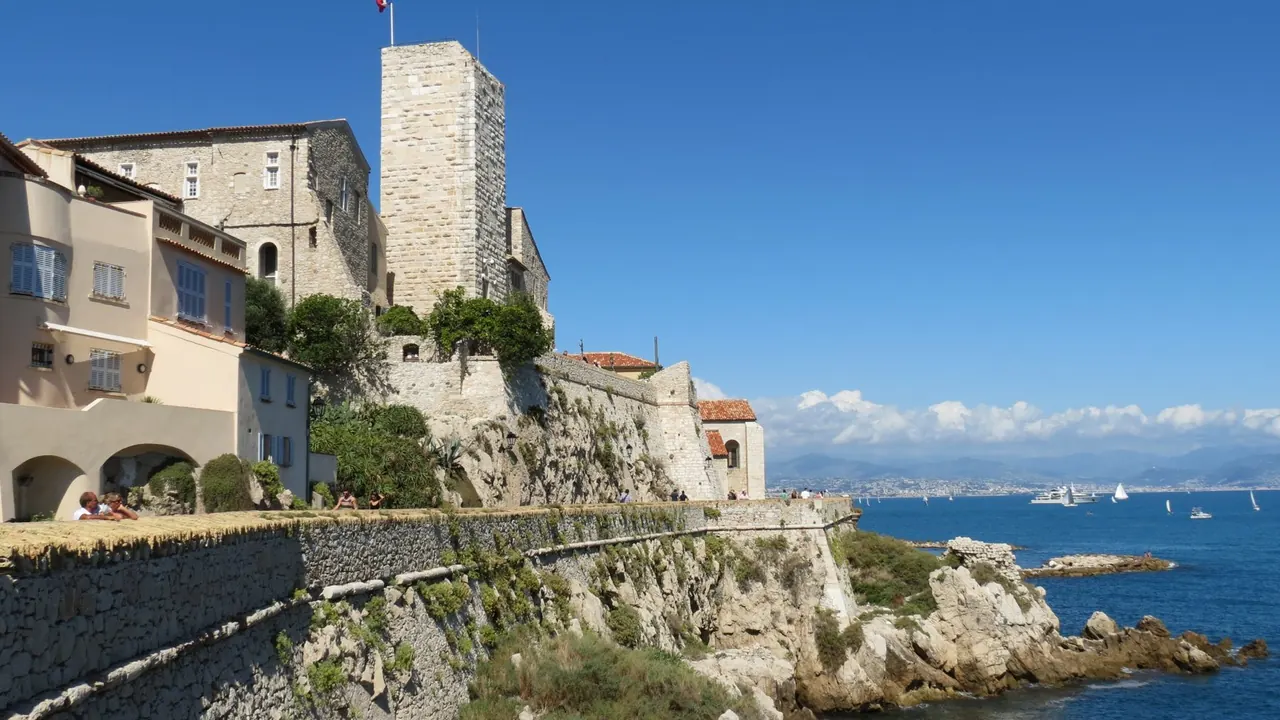
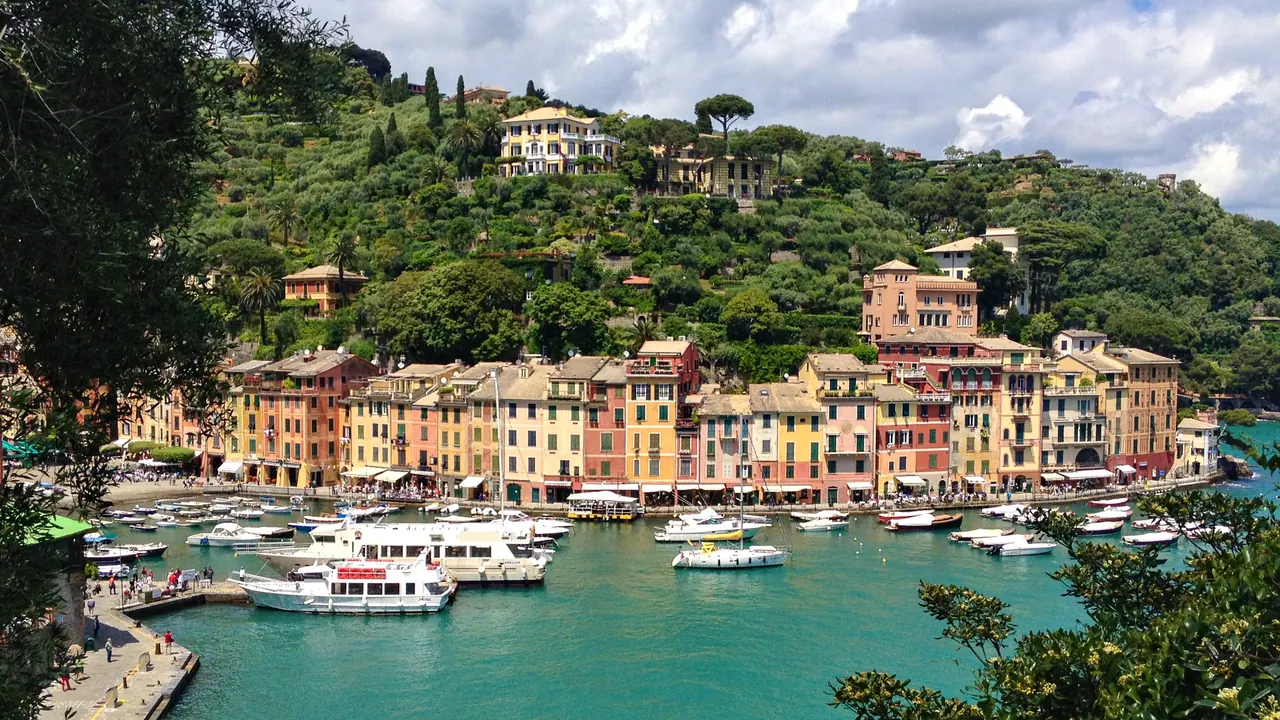
Photos: Antibes by Johan Allard, CC BY-SA 4.0, cropped; Portofino by Michal Osmenda, CC BY 2.0, cropped.
Antibes or Portofino?
Our verdict in twelve categories, each scored against the same fixed benchmark cities, and the climate month by month, so you can choose for your trip.
Choose Antibes for
- live music and the arts
- nightlife
- families
Antibes is the better choice for a summer by the sea with more going on. It has real sand at Juan-les-Pins and La Salis, the Picasso Museum on the ramparts and jazz under the pines in July. The coastal railway also puts Nice, Cannes and Monaco within easy reach. It is much easier for families, for people without a car and for anyone who wants an evening out, and it is the less punishing of two expensive places.
Choose Portofino for
- nature and the outdoors
- wellness
Pick Portofino for its setting and landscape rather than for things to do. The harbour village sits on a protected headland. Trails run over Monte di Portofino to San Fruttuoso, and there is a marine reserve below, so it rewards walkers, divers and couples happy with long lunches facing the water. You will find few sights, quiet nights and very high costs, and many visitors sleep in Santa Margherita or Camogli and come over for the day.
Scoreboard
Twelve categories on one fixed scale from 0 to 100. The shaded stretch is the gap between the two.
Your match
Pick a travel style or drag the sliders, and both match scores follow your weighting.
Wins on live music and the arts and nightlife with your weighting.
Wins on nature and the outdoors and wellness with your weighting.
What matters to you?
Category by category
What the scores mean for a trip.
Beaches & swimming
Antibes has what Portofino lacks: long, gently shelving sand at Juan-les-Pins and at La Salis, which looks across to the ramparts. Rocky coves around the cape add clearer water. Beach clubs take much of the sand, but there are public stretches between them.
In Portofino you swim from rock platforms and ladders along the lighthouse path, into deep and very clear water. The only nearby sand is the small bay at Paraggi, mostly given over to paid clubs. San Fruttuoso's pebble beach is reached by boat or on foot. It is lovely, but every spot is small and fills up in summer.
Food & drink
Antibes eats better day to day because there is a routine to build on. You have the covered market on Cours Masséna each morning, Niçoise staples such as socca and pissaladière, and decent bistros in the old town. The streets nearest the port do lean on tourist menus.
Portofino's Ligurian cooking sounds tempting: trofie with pesto, Recco's cheese focaccia and fritto misto. But the harbour terraces charge mainly for the view, and there is no market or casual everyday eating. Keen eaters go to Camogli, Santa Margherita or the trattorie in the hills.
Culture & sights
Antibes has a real anchor in the Picasso Museum in the Château Grimaldi, which still holds the works he made there in 1946. Around it are the sea ramparts, Fort Carré above Port Vauban, and Villa Eilenroc out on the cape.
In Portofino the village itself is the sight: the coloured houses round the harbour, San Giorgio, Castello Brown and the walk to the lighthouse, with the medieval abbey of San Fruttuoso around the point. There is no museum of any size, so it suits people who care more about atmosphere than about a list of sights.
Nightlife
Antibes at least has a proper summer night out. In July and August, Juan-les-Pins keeps its beach bars, lounges and a few clubs going until the early hours, and yacht crews fill the pubs and wine bars near Port Vauban. Nice is close for anything bigger.
Portofino's evening is a long aperitivo and a dressed-up dinner facing the yachts, and then it is over. There are no clubs and few late bars, so a real night out means going to Santa Margherita, Rapallo or Genoa.
Nature & outdoors
Portofino has the stronger landscape right on its doorstep. The whole headland is a regional park, with trails climbing through holm oak and pine over Monte di Portofino and dropping to San Fruttuoso and Punta Chiappa, some sections on chains. Offshore, the marine reserve is known for red coral walls and the Christ of the Abyss statue.
Antibes offers a gentler coastal path over limestone around the cape, with good snorkelling in clear water. The land around the town is flat and built up, so proper hiking means driving to the Esterel or the hills above Grasse.
Day trips
Antibes sits on the Riviera's main coastal line. Nice and Cannes are minutes away by train, Monaco and Menton are further along, and the hill villages of Saint-Paul-de-Vence, Eze and Grasse lie inland. Sanremo makes an easy Italian day out.
Portofino has fewer options, but good ones. Camogli and Santa Margherita are close by boat or bus, Genoa's medieval centre is within an hour, and summer ferries run to the Cinque Terre and Portovenere. Outside the ferry season it takes more planning.
Good for families
Antibes is much the easier choice with children. Its sandy beaches shelve gently for small swimmers, the town is safe and manageable, and the boats in Port Vauban and the walk round Fort Carré fill the gaps between swims.
Portofino is calm and safe, but it is built for adults. Paths are steep steps that defeat a pushchair, the little sand at Paraggi is mostly in paid clubs, and nothing is aimed at children. Families who want to see it usually stay in Rapallo or Santa Margherita and add a day at Genoa's aquarium.
Getting around
Antibes is simple to reach and to leave. It has two stations on the coastal railway and a compact old town that is best on foot, and slow buses run out to the cape. You only really need a car for Grasse or the Esterel, and summer traffic on the coast road is heavy.
Portofino itself takes a few minutes to cross, though the paths are steep. The way in is the hard part: a single narrow road from Santa Margherita, about 5km away, with very little parking. Buses and seasonal ferries do the work, and both are crowded in summer.
Shopping & style
Neither is worth the trip for shopping, and what each offers is different in kind. Antibes is local and practical: the covered market for olive oil, herbs and soap, and independent boutiques in the old town and on Rue de la République. Biot glass and Vallauris pottery are a short drive away.
Portofino packs big fashion and jewellery houses into a few lanes for people coming off the yachts, along with some Ligurian lace and jars of pesto. You can see it all in under an hour, and there is no market. For a longer browse you go to Rapallo, Chiavari or Genoa.
Affordability
Both are expensive, but Portofino is in another league. It has only a handful of luxury hotels, and in summer they are priced like the dearest addresses in Europe's big cities. Antibes has cheaper places to eat in the old town, good-value coastal trains and much lower hotel rates in spring and autumn, and self-catering from the market saves a lot.
In Portofino only walking, hiking and the local buses are cheap. The usual answer is to sleep in Santa Margherita, Rapallo or Camogli and come in for the day.
Live music & performing arts
Antibes has Jazz à Juan, held every July since 1960 under the pines of the Pinède Gould, and the Anthéa theatre puts on plays, dance and concerts through the rest of the year.
Portofino has no theatre or regular venue, only the occasional summer concert in the piazzetta or at the castle. A proper evening of music or opera means going to the Teatro Carlo Felice in Genoa.
Wellness & relaxation
The two are much alike here. Neither has a bathing tradition, so pampering means hotel spas, though Antibes adds a seawater thalassotherapy centre and grand-hotel spas on the cape that non-guests can often book.
The difference is in the kind of calm. Antibes slows down in May, June and September, with long market mornings and evening walks on the ramparts. In Portofino the quiet comes from shaded headland paths and long lunches over the water. At midday in high summer, though, the tour-boat crowds break that calm.
When should you go?
Pick your month. The climate figures are measured averages, not a forecast.
Antibes in July
Portofino in July
Daytime high, °C
Rainfall in the month, mm
Where the figures come from
Portofino's temperatures are measured 31 km from the centre, at Genova / Sestri.
Portofino has no rain gauge within 25 km of the centre, so its rainfall comes from a gridded climate dataset read at the city rather than from a gauge further away.
Temperature and rainfall are climate normals, averaged over the years shown. Antibes: 1991-2020 normals, Nice (9.9 km from centre). Portofino: 1991-2020 normals, Genova / Sestri (31 km from centre).
Through the warm months the two climates are very close. Both reach highs of about 28°C in July and August, and the sea is warm enough to swim in from June into early October, peaking near 25°C in August. Winters are mild in both, with highs in the low teens, which is fine for walking the streets but not for the beach. September is often the best month in either place: the heat has eased and the sea is still around 23°C.
The real difference is rain. Antibes is the drier and sunnier of the two, with about 346 hours of sunshine in July, and its wet season is October and November. Portofino gets far more autumn rain, around 225mm in October, which can wash out hikes on the headland. Its best walking months are April, May and late September, when the exposed slopes are not too hot.
Which traveller are you?
On a family trip with young children, Antibes is the clear pick. Its sandy, gently shelving beaches suit small swimmers, and the town is flat and easy to manage. Portofino has steep steps, little sand and nothing aimed at children.
For an outdoors trip, Portofino has the better landscape. You can walk straight out of the village onto protected trails over the headland to San Fruttuoso, and dive among red coral in the marine reserve. Antibes offers a gentler walk around the cape.
On a food and nightlife trip, Antibes gives you more to work with. There is the morning market, Niçoise cooking in the old town and late summer nights in Juan-les-Pins, with Nice close by. Portofino's evenings end after an expensive harbour dinner.
Before you go
| Measure | Antibes | Portofino |
|---|---|---|
| Official language | French | Italian |
| Currency | Euro (EUR) | Euro (EUR) |
| Sockets | CE230 V, 50 Hz | CFL230 V, 50 Hz |
| Driving side | Right | Right |
| Time zone | UTC+1, UTC+2 in summer | UTC+1, UTC+2 in summer |
| Emergency number | 112 | 112 |
| Elevation | 0 m | 20 m |
| Main airport | Nice-Côte d'Azur Airport (NCE)11 km from centre130 non-stop destinations | Genoa Cristoforo Colombo Airport (GOA)32 km from centre25 non-stop destinations |
| Public holidays this year | 11 days | 13 days |
By the numbers
| Measure | Antibes | Portofino |
|---|---|---|
| City population | 77,637 | 355 |
| People per km² | 2,930 | 142 |
| Museums within 10 km | 14 | 14 |
| UNESCO World Heritage sites within 50 km | 2 | 2 |
| Swim season, months above 21 °C | 4 months | 4 months |
Where else could you go?
Every comparison below shares a destination with this one, so you can follow Antibes or Portofino somewhere new.