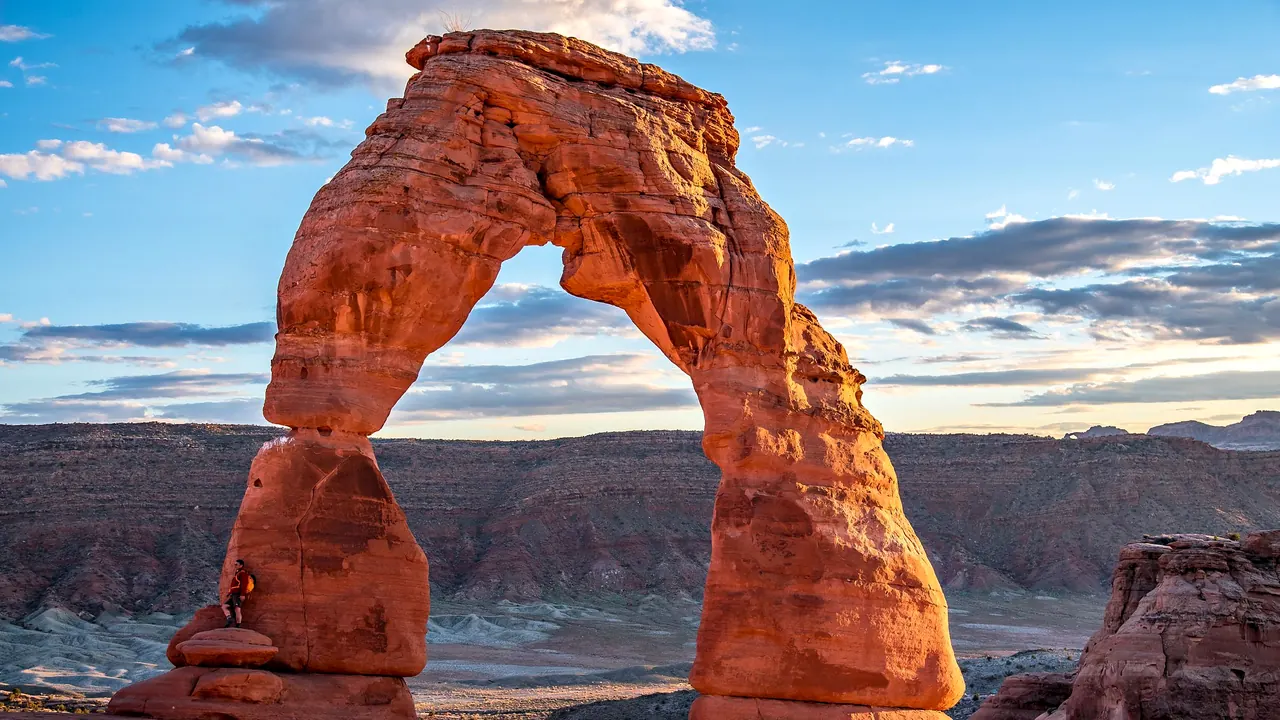
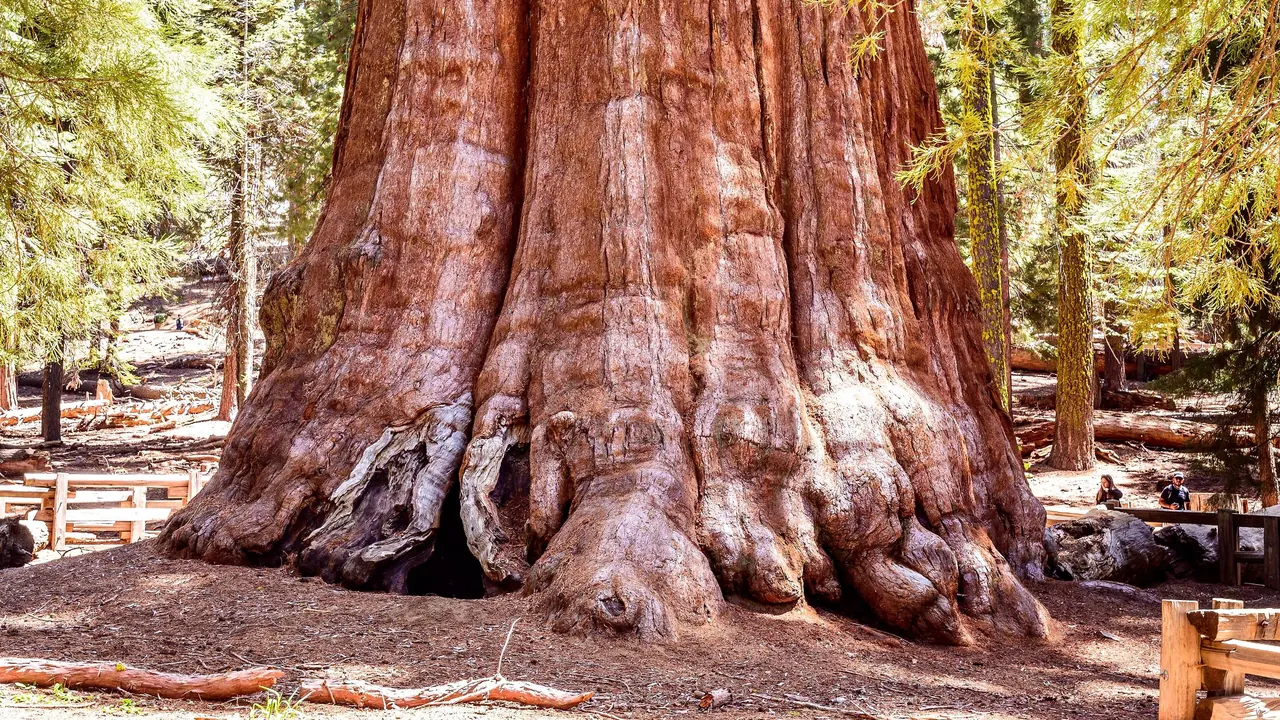
Photos: Arches by Jan Tang, Pexels License; Sequoia by Domenico Convertini from Zurich, Schweiz, CC BY-SA 2.0, cropped.
Arches or Sequoia?
Our verdict in twelve categories, each scored against the same fixed benchmark cities, and the climate month by month, so you can choose for your trip.
Choose Arches for
- getting around
- shopping
- live music and the arts
Arches suits travellers who want bare desert rock and a compact base to explore it from. Moab sits minutes from the park gate, so one trip can combine the short walks to Delicate Arch and the Windows with slickrock biking, a day rafting the Colorado or a climb at Fisher Towers, and Canyonlands is close enough for an evening at Dead Horse Point. It is best for active adults and older children who don't mind early starts in a dry, exposed landscape.
Choose Sequoia for
- beaches
- families
- wellness
For walkers drawn to forest and high mountains, Sequoia is the gentler and calmer choice. Small children can manage the giant trees of the Giant Forest, Moro Rock and Kings Canyon lead on to long hikes into the High Sierra, and a cabin near the groves makes for a quieter stay than a motel in a gateway town. The price is the driving. Long, winding roads separate the different parts of the park, so it works best if you stay in one place rather than try to cover a lot of ground.
Scoreboard
Twelve categories on one fixed scale from 0 to 100. The shaded stretch is the gap between the two.
Your match
Pick a travel style or drag the sliders, and both match scores follow your weighting.
Too close to call, 1 point apart
Wins on getting around and shopping with your weighting.
Wins on beaches and families with your weighting.
What matters to you?
Category by category
What the scores mean for a trip.
Beaches & swimming
Neither place is for swimming, but in Sequoia you can at least get into the water. In late summer the Kaweah River forms granite pools near Three Rivers, and Hume Lake has a small sandy shore and calm water in July and August. The rivers are dangerous while the snowmelt is running.
Around Moab the Colorado is for rafting, not bathing. Apart from a small reservoir in the hills and the odd creek pool after a hike, most visitors end a hot afternoon in the motel pool.
Food & drink
In both places the food is gateway-town cooking, meant to refuel you after a day on the trail rather than give you a reason to travel. Moab's Main Street has more of it in one place: brewpubs, Southwestern cooking with green chile and a few more ambitious dinner spots. Utah's liquor rules make ordering wine with dinner more awkward.
Inside the parks Sequoia has less choice, mainly lodge dining rooms and village delis. If you drive down into the San Joaquin Valley you add summer fruit stands selling straight from the orchards, and in Fresno, Armenian and Hmong cooking.
Culture & sights
Rock art on canyon walls gives Arches its human story, while in Sequoia it is a cave. Around Moab the petroglyph panels at Courthouse Wash, beside Wolfe Ranch and along Potash Road are the main draw, with dinosaur trackways in the nearby canyons as an extra. Sequoia's set piece is the ranger-led tour through the marble formations of Crystal Cave, and the paintings and grinding holes at Hospital Rock and the Giant Forest Museum fill in the rest. Either way it is a few hours between walks, not the reason for the trip.
Nightlife
Evenings end early in both, and the dark sky is the real attraction. Moab's few brewpubs, full of climbers and mountain bikers swapping stories, are a little more sociable than a lodge dinner or Three Rivers' couple of bars. In Sequoia a ranger talk or a campfire is the usual evening, and in Arches it is a night walk among the fins under the Milky Way.
Nature & outdoors
Both are among the great landscapes of North America, and the difference is in kind. Arches is red rock: more than two thousand natural arches, sandstone fins and balanced rocks, and the views into the canyons from Island in the Sky and Dead Horse Point. On top of that come the sports: slickrock biking, rafting the Colorado, canyoneering and tower climbing.
Sequoia is forest and granite. It has the largest trees on earth in the Giant Forest, the deep cleft of Kings Canyon at Cedar Grove and high country stretching towards Mount Whitney. Its strength is long walking, from loops through the groves to multi-day routes over the passes, with black bears often seen along the way.
Day trips
Day trips are a weak point in both, because nearly everything within reach is wilderness. From Sequoia the valley towns offer a little more variety: Visalia's tree-lined old downtown, Fresno's hand-dug Forestiere Underground Gardens, Hanford's old Chinese quarter and the history at Colonel Allensworth.
From Moab there is the museum of river exploration in Green River, about an hour away, and the rock art and Ancestral Puebloan ruins around Bluff. Mesa Verde and Monument Valley are so far that they really need an overnight stay.
Good for families
Sequoia is the easier park with children. The giant trees impress at once with very little walking, thanks to the paved Big Trees Trail and the drive through the Tunnel Log, and Hume Lake is a calm place to paddle in summer. The downsides are carsickness on the switchback roads, the drops beside Moro Rock's stairway and fierce rivers in spring.
Arches mostly suits children old enough to hike in the heat and scramble on rock. The sandy slot to Sand Dune Arch, the dinosaur tracks and gentle float trips on the Colorado are the highlights. Summer heat is punishing, though, many viewpoints have no fences, and there is little to do on a bad-weather day.
Getting around
Both need a car, but Arches is much easier to get around. Moab is about five minutes from the entrance, the scenic road through the park is only about 30km long, Canyonlands is under an hour away and a paved bike path runs from town towards the park. The main nuisance is small trailhead car parks filling by mid-morning.
In Sequoia, getting anywhere means a long drive on hairpin roads. The Generals Highway takes about an hour between the Giant Forest and Grant Grove, Cedar Grove and Mineral King lie at the end of long seasonal roads, and chains are often needed from late autumn. The summer shuttle around the groves helps, and sleeping inside the park saves hours of driving.
Shopping & style
Neither is a place to go shopping, but Moab's Main Street has more to browse: proper bike and outdoor gear, rock and fossil shops selling geodes, and galleries with Southwestern photography and Native American jewellery and pottery. Sequoia has little beyond visitor-centre bookshops, lodge gift stores and a few galleries in Three Rivers, so the valley fruit stands are the most local thing you can buy.
Affordability
Overall costs are similar. In both places camping is the big saving and in-season beds are the big expense. Moab's motels and condos charge gateway-town prices in spring and autumn, and guided rafting, canyoneering and jeep tours take a large share of the budget, though campgrounds on public land along the river are cheap.
Sequoia's lodges inside the park and the cottages in Three Rivers are expensive in summer. Staying down in Visalia costs much less, but you pay for it with hours on mountain roads. There are few restaurants, so cooking at camp keeps food costs low.
Live music & performing arts
The Moab Music Festival at the end of summer is the one real musical event in either place, with chamber concerts held in unusual spots such as a sandstone grotto reached by boat along the Colorado. For the rest of the year Arches offers only the odd band in a brewpub.
Sequoia has no festival like it. Its evenings bring ranger campfire programmes with talks and the occasional song. Proper concerts and touring shows are at Visalia's restored Fox Theatre and in Fresno, a long drive back up to the trees after dark.
Wellness & relaxation
Neither has spas or hot springs, so rest has to come from the setting, and Sequoia does this better. A cabin near the Giant Forest or a riverside cottage in Three Rivers makes slow days natural, with silent mornings among the groves. Late spring and September are the calmest times.
Arches is a more strenuous place by nature, with early starts and long, hot days on the trail, and little more than a few massage studios or a resort by the river. Its quiet comes in the evening, at a campsite as the light fades on the red cliffs and the stars come out.
When should you go?
Pick your month. The climate figures are measured averages, not a forecast.
Arches in July
Sequoia in July
Daytime high, °C
Rainfall in the month, mm
Where the figures come from
Arches has no rain gauge within 25 km of the centre, so its rainfall comes from a gridded climate dataset read at the destination rather than from a gauge further away.
Sequoia has no weather station within reach, so its figures come from a gridded climate model rather than a measured record, and read a broad area rather than one spot.
Temperature and rainfall are climate normals, averaged over the years shown. Arches: 2006-2020 (rainfall 1991-2020) normals, Moab / Crescent Junction (19.4 km from centre). Sequoia: 2001-2020 normals, NASA POWER reanalysis grid, no weather station within 90 km.
Around Moab, Arches is at its best in spring and autumn. April and May are warm and dry, ideal for hiking among the fins. September and October stay warm and bring the year's heaviest rain, though even October sees only about 25mm, usually as short showers. From June to August afternoons reach about 35°C, and walking only works at dawn. Winter is quiet and often freezing, with January highs around 2°C, but the desert is so dry all year that rain rarely spoils a day.
Sequoia's figures are taken low in the region, and the higher groves run cooler. Its year splits into a wet winter and a dry summer. Rain builds from November and peaks at about 90mm in December, and the high country stays under snow until late spring. From June to September it is almost rainless, with highs near 30°C. So Sequoia's best months fall in summer, when Arches is at its hottest, and that is also when the rivers drop and Hume Lake is warm enough to swim. Late spring and September work well in both places.
Which traveller are you?
On a family trip with children, Sequoia is the easier choice. The paved Big Trees Trail, the drive through the Tunnel Log and the General Sherman impress small children with little walking. Arches needs children old enough to carry water across hot, exposed rock with unfenced drops.
For a relaxing and wellness trip, Sequoia gives you more to rest in. Neither has spas, but a creekside cottage in Three Rivers or a cabin near the silent groves makes slow days easy. In Moab the days lean towards early starts and long, hot hours on the trail.
On an outdoors trip built around more than walking, Arches wins on variety and ease. From one base in Moab you can ride slickrock, raft the Colorado, climb desert towers and hike among the arches, all a short drive apart and not hours away on hairpin mountain roads.
Before you go
| Measure | Arches | Sequoia |
|---|---|---|
| Currency | US Dollar (USD) | US Dollar (USD) |
| Sockets | AB120 V, 60 Hz | AB120 V, 60 Hz |
| Driving side | Right | Right |
| Time zone | UTC-7, UTC-6 in summer | UTC-8, UTC-7 in summer |
| Emergency number | 911 | 911 |
| Main airport | Canyonlands Regional Airport (CNY)2 non-stop destinations | Fresno Yosemite International Airport (FAT)15 non-stop destinations |
| Public holidays this year | 12 days | 13 days |
Where else could you go?
Every comparison below shares a destination with this one, so you can follow Arches or Sequoia somewhere new.
- Canyonlandsvs Arches
- Kings Canyonvs Sequoia
- Yosemitevs Sequoia
- Death Valleyvs Sequoia
- Bryce Canyonvs Arches
- Zionvs Arches