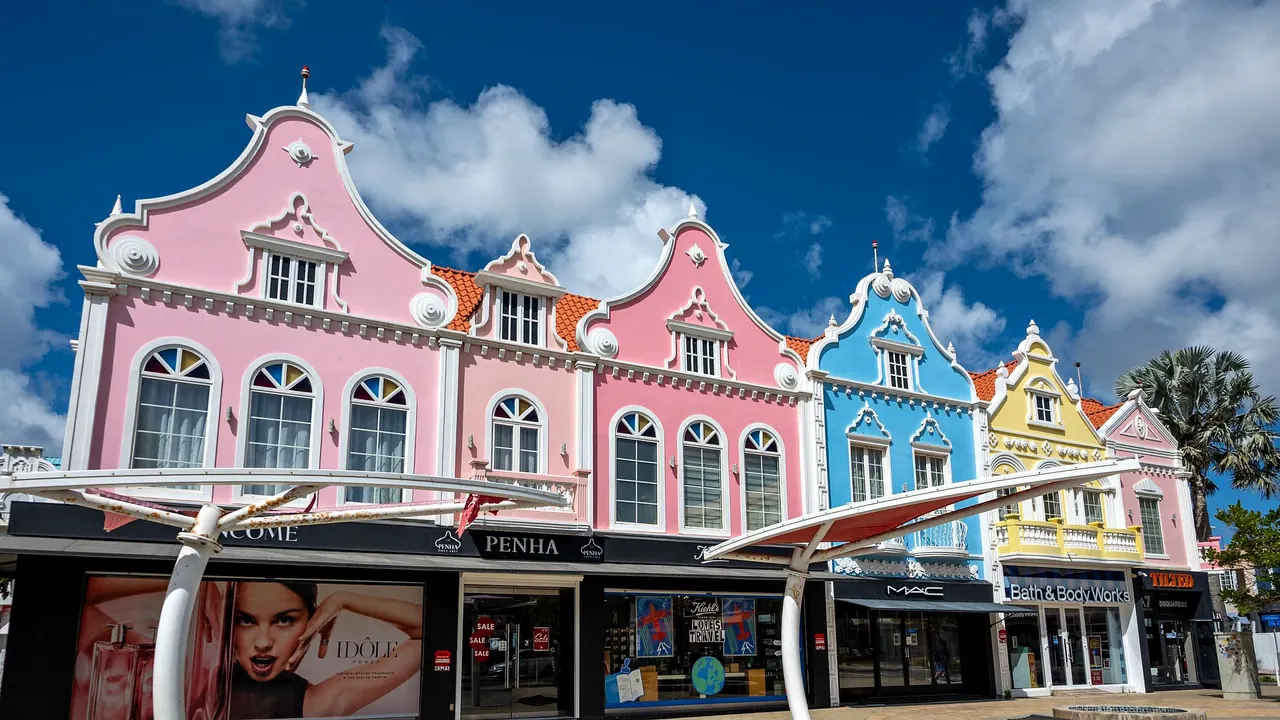
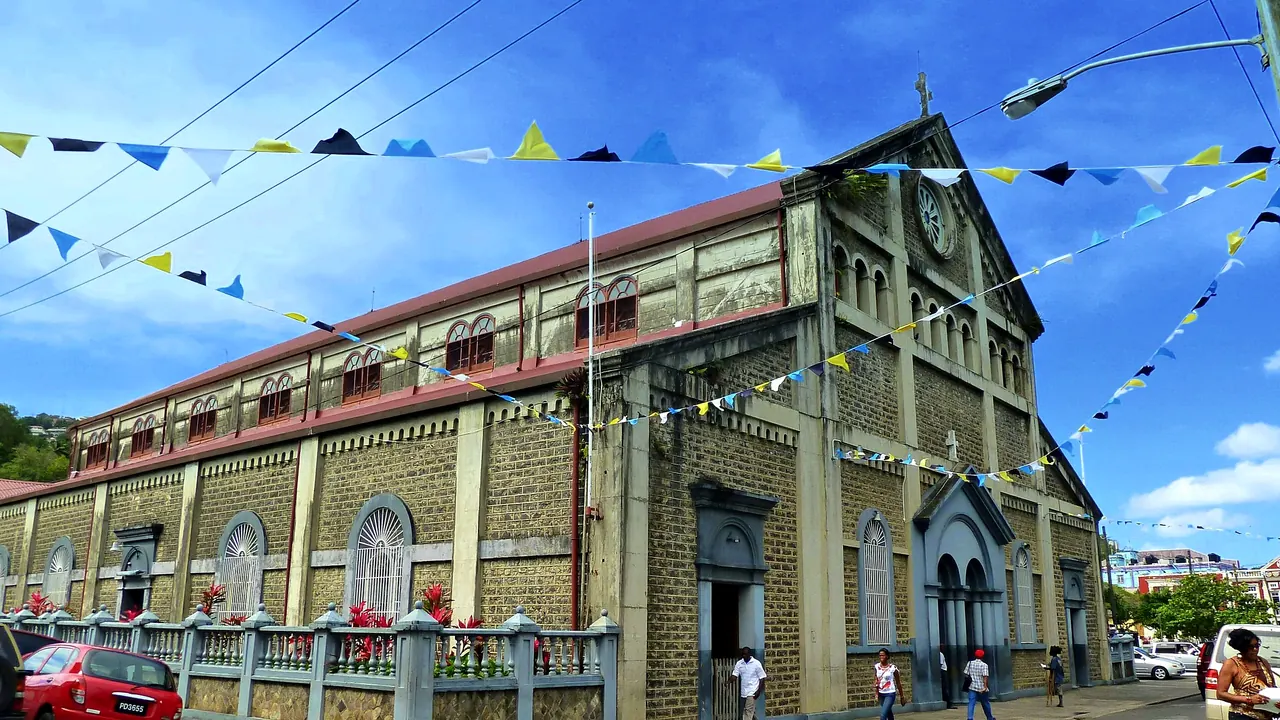
Photos: Aruba by xiquinhosilva, CC BY 4.0, cropped; Castries by Edgar El, CC BY 3.0, cropped.
Aruba or Castries?
Our verdict in twelve categories, each scored against the same fixed benchmark cities, and the climate month by month, so you can choose for your trip.
Choose Aruba for
- getting around
- families
- beaches
Aruba suits travellers who want the beach to be the whole point of the trip. It has long white sand on a sheltered coast, a dry climate where a rained-off day is rare, and a small, orderly island where buses link the resort strips with town. It is the easier choice with young children or for anyone who wants to unpack once and do very little, as long as you accept that there is not much to see beyond the shore and that everything costs a lot.
Choose Castries for
- day trips
- nature and the outdoors
- prices
Choose Castries if you want to explore the island itself. St Lucia's volcanic landscape, from the rainforest of the central ridge to the Pitons and the reefs below them, gives far more to do on foot and by boat. The drive to Soufrière and the ferry to Martinique fill days in a way Aruba cannot. In return you get wetter weather in the second half of the year, harder roads, and a capital that works as a base for outings rather than as a place to swim.
Scoreboard
Twelve categories on one fixed scale from 0 to 100. The shaded stretch is the gap between the two.
Your match
Pick a travel style or drag the sliders, and both match scores follow your weighting.
Too close to call, 2 points apart
Wins on getting around and families with your weighting.
Wins on day trips and nature and the outdoors with your weighting.
What matters to you?
Category by category
What the scores mean for a trip.
Beaches & swimming
Aruba is built around its beaches. Eagle Beach is a wide sweep of soft white sand with room to spread out, Palm Beach has piers and water sports, and the whole sheltered coast faces calm water that rarely turns rough. Baby Beach's enclosed lagoon, the mangroves at Mangel Halto and the snorkelling at Arashi add quieter options, all a short ride apart.
Castries is a working cruise port, so beach lovers stay north in Rodney Bay. Reduit Beach is a fine golden curve, Pigeon Island adds two small coves, and Marigot Bay and Anse Cochon lie south by road or boat. The swimming is good, but it is spread out rather than on the doorstep.
Food & drink
Neither island is a reason to travel for food, and they differ more in style than in quality. Aruba's eating is mostly steak, seafood and international menus on the resort strips. Its Dutch Caribbean dishes, such as keshi yena and pastechi, are found in small places in Oranjestad and San Nicolas, and the fish restaurants on jetties along the south coast are the highlight.
St Lucia's Creole cooking is easier to see in everyday life. Green fig and saltfish, bouyon and accra fill the lunch counters at Castries Central Market, and the Friday fish fry in Gros Islet is a night out in itself. Its restaurant scene is narrower, though.
Culture & sights
Both are light on sights, and each takes a day or so. Aruba's heritage is scattered across the island: pastel Dutch buildings and Fort Zoutman in Oranjestad, the gold mill ruins at Bushiribana, the lonely Alto Vista Chapel, and the murals of San Nicolas.
Castries lost most of its old town to fire, but it has one interior worth seeing: the cathedral on Derek Walcott Square, painted by Dunstan St Omer with Black saints in Caribbean colours. Add the barracks on Morne Fortune and Fort Rodney's ruins on Pigeon Island, and Castries has a slight edge in history you can feel.
Nightlife
The two are close, and both are relaxed rather than late. Aruba gives you a nightly routine on the Palm Beach strip: beach bars, hotel casinos, a few clubs and party buses touring the island's bars.
Castries itself goes quiet once the offices and ships close, and its best evening is a single weekly event, the Friday jump-up in Gros Islet, with soca and dancehall between the fish grills. On other nights you have Rodney Bay's bars and the island's rum shops.
Nature & outdoors
St Lucia is much stronger here. Its steep volcanic land gives you the Pitons rising from the sea, the rainforest reserves of the central ridge with their native parrot, canopy zip lines, a marine reserve for diving, and boat trips to see whales and dolphins.
Aruba's outdoors is dry and open: cactus scrub, the boulders at Ayo and Casibari, and Arikok National Park with its caves and the Natural Pool. Its real outdoor strength is on the water. The steady wind at Hadicurari makes it the better island for windsurfing and kitesurfing, and the SS Antilla wreck is a notable dive.
Day trips
Castries has a proper day out to offer. The coast road south passes Anse La Raye, Canaries and Marigot Bay on the way to Soufrière, with its cocoa estates and the Diamond botanical garden. A fast ferry reaches Martinique and the French Caribbean town of Fort-de-France in about an hour and a half.
Aruba has nothing comparable. San Nicolas and Savaneta are short drives you will fit into an ordinary day, and Curaçao and Bonaire need a flight, so they are a separate trip.
Good for families
Aruba is the more relaxed choice with small children. Baby Beach is a nearly enclosed lagoon, the sheltered coast is shallow, nothing is far away, and the butterfly farm, donkey sanctuary and glass-bottom boats fill gentle half-days.
St Lucia works best with older children who want zip lines, dolphin trips and the drive-in volcano, based on the calm bays near Rodney Bay. Castries is hot and crowded on cruise days, and the winding roads south tire young passengers. Neither island has a zoo or theme park.
Getting around
Aruba is the easier island to manage without a car. Buses come often along the flat west coast, so if you stay on Eagle Beach or Palm Beach you can reach Oranjestad or the snorkelling at Arashi without planning ahead. A day or two in a hire car covers the rest of the island in short, simple drives, and only the rough tracks to the Natural Pool call for an off-road vehicle or a guided trip.
St Lucia asks more of you. From Castries, the privately run minibuses work well on the north road to Rodney Bay, but that is about as far as public transport comfortably serves a visitor, especially after dark. Getting to Soufrière, the Pitons and the south means steep, twisting drives on the left. Without a car you depend on taxis, organised tours or water taxis, and each outing takes more time and planning than any trip on Aruba.
Shopping & style
Aruba has more shops, if not more character. Oranjestad's pedestrian main street and harbour malls are full of duty-free jewellery, watches and designer stores, and its own souvenirs are aloe products and Dutch cheese.
Castries has smaller duty-free arcades at Pointe Seraphine and La Place Carenage, but its local crafts are more interesting. The Central Market's craft arcade sells spices, cocoa and baskets, batik is made on Morne Fortune, and pottery comes from Choiseul.
Affordability
Both are expensive, but Aruba costs more. Almost everything there is imported and priced for a well-off market, so rooms, meals and tours are dear in every season. Supermarkets, apartments with a kitchen and the buses soften the bill only somewhat.
St Lucia's resorts, fixed taxi fares and Piton excursions are costly too, but there is a much cheaper local economy alongside them. Minibuses, market lunches, roadside fish fries and rum-shop beer let a careful traveller spend noticeably less.
Live music & performing arts
St Lucia has more live performance, though it comes in seasons. The Saint Lucia Jazz and Arts Festival brings musicians to Pigeon Island, and the summer Carnival fills Castries with soca, calypso and steelpan bands. Folk festivals such as La Rose and La Marguerite add local colour.
On Aruba, live music is mostly a backdrop to dinner. Its high point is Carnival before Lent, with tumba competitions and road marches, and outside those weeks there are folk evenings around Fort Zoutman.
Wellness & relaxation
The two are close, but they offer different kinds of rest. Aruba's calm comes from its pace: reliable sun, a cooling trade wind, short distances, and adults-only hotels and resort spas on Palm Beach and Eagle Beach, with no bathing tradition of its own.
St Lucia has the warm volcanic mud and mineral pools of the Sulphur Springs near Soufrière, along with spas using cocoa and volcanic clay and yoga retreats in the south. These are a long drive from Castries, though, so they work best if you stay in the south.
When should you go?
Pick your month. The climate figures are measured averages, not a forecast.
Aruba in July
Castries in July
Daytime high, °C
Rainfall in the month, mm
Where the figures come from
Aruba has no rain gauge within 25 km of the centre, so its rainfall comes from a gridded climate dataset read at the destination rather than from a gauge further away.
Castries's temperatures are measured 29 km from the centre, at Hewanorra International Airport.
Castries has no rain gauge within 25 km of the centre, so its rainfall comes from a gridded climate dataset read at the destination rather than from a gauge further away.
Castries's sunshine is measured 66 km from the centre, at Le Lamentin.
Temperature and rainfall are climate normals, averaged over the years shown. Aruba: 2005-2025 (rainfall 1991-2020) normals, Queen Beatrix Airport (8.5 km from centre). Castries: 2005-2020 (sunshine 1991-2020, rainfall 1991-2020) normals, Hewanorra International Airport (29.3 km from centre).
Aruba is hot and dry all year, with daytime highs between 30°C and 33°C and a warm sea in every month. Even the wettest stretch, October to December, brings little rain, peaking at about 76mm in November, so a beach trip works in any season. August and September are the hottest months, and walking around Oranjestad in the middle of the day is tiring then. The rest of the year is a little easier on foot.
Castries is about as warm as Aruba and its sea is just as inviting, but the two islands part ways on rain. St Lucia is driest and sunniest from February to April. From June the showers build, and by October the rainfall reaches about 311mm, which makes the rainforest trails muddy and some days grey. For walking and hiking, aim for the first half of the year. Aruba has no such season to avoid.
Which traveller are you?
For a beach and sun trip, Aruba is the stronger choice. Eagle Beach and Palm Beach sit right by the hotels, the sheltered coast keeps the water calm, and the dry climate means little rain at any time of year.
On an outdoors trip, Castries wins clearly. St Lucia offers a guided climb of Gros Piton, rainforest trails where the island's parrot lives, zip lines, and diving in the marine reserve below the Pitons. Aruba's arid park and wind sports are a smaller offer.
On a family trip with young children, Aruba is easier. Its lagoons are shallow and calm, distances are short, buses are simple, and English is spoken everywhere. On St Lucia the activities suit older children, and the long, winding drives south are hard on little ones.
Before you go
| Measure | Aruba | Castries |
|---|---|---|
| Official language | Dutch, Papiamento | English |
| Currency | Aruban Florin (AWG) | East Caribbean Dollar (XCD) |
| Sockets | ABF127 V, 60 Hz | G240 V, 50 Hz |
| Driving side | Right | Left |
| Time zone | UTC-4 | UTC-4 |
| Emergency number | 911 | Police 999, ambulance 911, fire 911 |
| Elevation | - | 2 m |
| Main airport | Queen Beatrix International Airport (AUA)35 non-stop destinations | Hewanorra International Airport (UVF)31 km from centre13 non-stop destinations |
| Public holidays this year | 12 days | 12 days |
By the numbers
| Measure | Aruba | Castries |
|---|---|---|
| Population | 106,739 | 20,000 |
| People per km² | 553 | 253 |
| Museums within 10 km | - | 0 |
| UNESCO World Heritage sites within 50 km | - | 1 |
| Swim season, months above 21 °C | 12 months | 12 months |
Where else could you go?
Every comparison below shares a destination with this one, so you can follow Aruba or Castries somewhere new.
- Kingstownvs Castries
- Curaçaovs Aruba
- Roseauvs Castries
- Bridgetownvs Castries
- Bonairevs Aruba
- St. George's, Grenadavs Castries