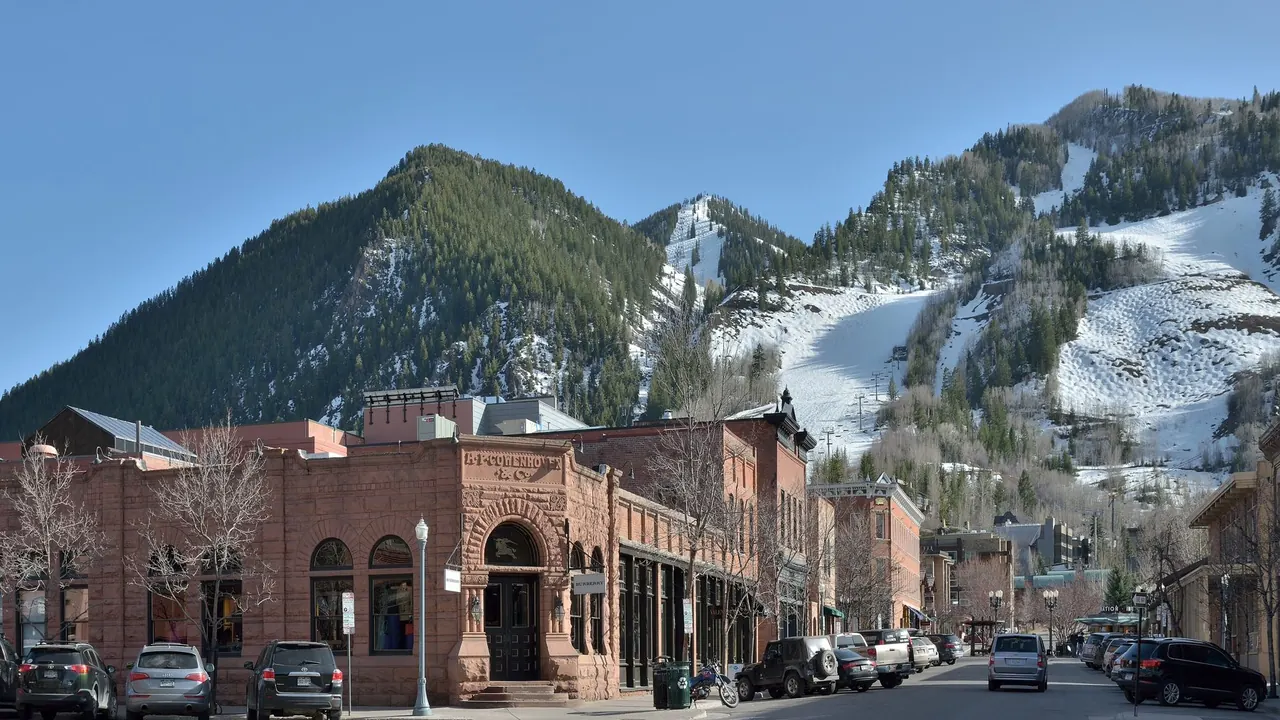
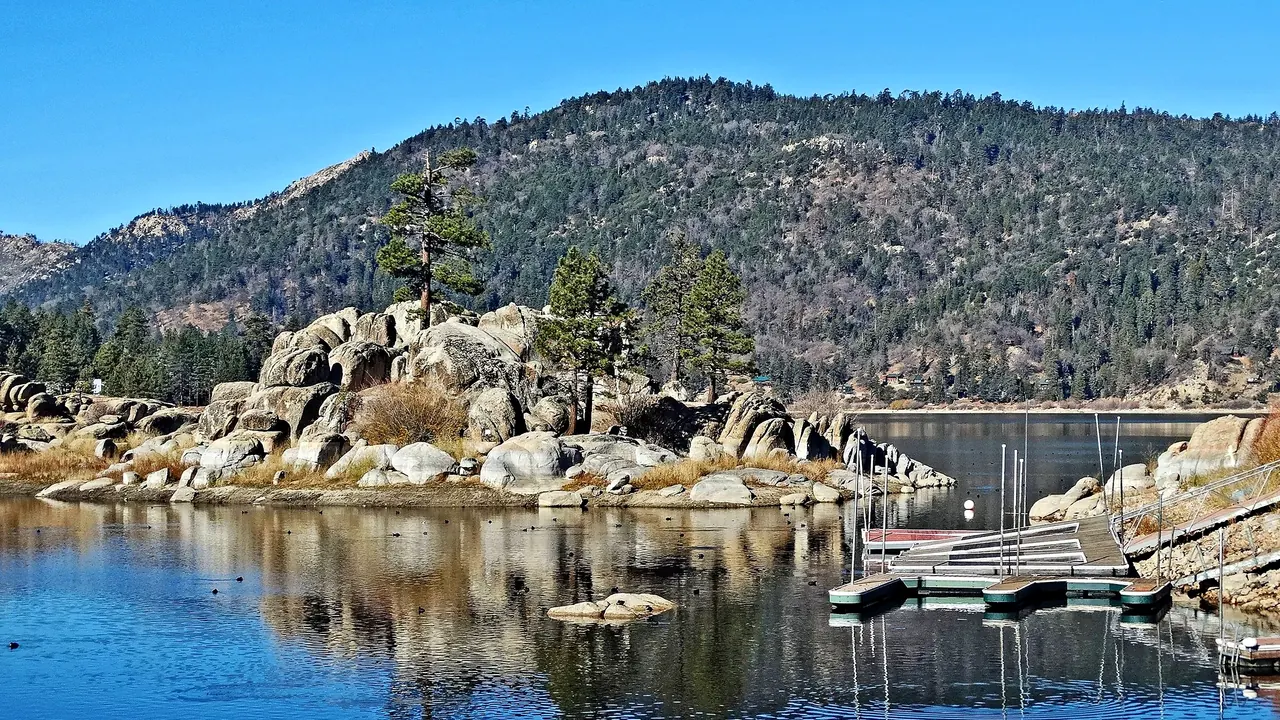
Photos: Aspen by Moroder, CC BY-SA 3.0, cropped; Big Bear Lake by inkknife_2000, CC BY-SA 2.0, cropped.
Aspen or Big Bear Lake?
Our verdict in twelve categories, each scored against the same fixed benchmark cities, and the climate month by month, so you can choose for your trip.
Choose Aspen for
- getting around
- live music and the arts
- shopping
Aspen is the choice for a mountain trip where cost matters less than quality. It has four linked ski mountains, wilderness peaks right above town and a summer music festival of real standing. Add chef-led dining and a few streets of luxury shops, and you can walk the town or take the free buses without needing a car. Come for big terrain and a polished town, and be ready to pay for both.
Choose Big Bear Lake for
- prices
- beaches
- families
Big Bear Lake suits a simpler, more affordable cabin escape, especially for Southern Californians who can drive up for a weekend. You get modest but reliable skiing, a lake for paddling and fishing, snow play and an alpine zoo for children, and evenings by the wood stove or in the hot tub. Pick it if you want a relaxed family base in the pines and don't need restaurants, culture or nightlife.
Scoreboard
Twelve categories on one fixed scale from 0 to 100. The shaded stretch is the gap between the two.
Your match
Pick a travel style or drag the sliders, and both match scores follow your weighting.
Wins on getting around and live music and the arts with your weighting.
Wins on prices and beaches with your weighting.
What matters to you?
Category by category
What the scores mean for a trip.
Beaches & swimming
Neither is a place for a beach, but Big Bear Lake at least lets you swim with some purpose. On summer afternoons the lake reaches around 19°C, and Meadow Park has a small supervised swim beach that suits children. Elsewhere you'll find rocky shoreline with a few sandy patches.
In Aspen the reservoirs and alpine lakes stay cold even in July, so the water mostly means rafting the Roaring Fork. For an actual swim you'll be in a hotel pool.
Food & drink
Aspen eats far better. Its downtown grid has chef-led dining rooms, sushi and steak counters, and serious wine lists. Après-ski on the terraces at the base of Aspen Mountain is part of the day, and the June Food & Wine Classic draws chefs from far away. Be aware that many kitchens shut in the quiet weeks of spring and autumn.
At Big Bear the food is hearty resort fare: big breakfasts in log-cabin diners, burgers, barbecue, Mexican plates and a brewpub pint. Many visitors simply cook in their cabins.
Culture & sights
Aspen has a real, if small, past to walk through. Red-brick Victorian blocks survive from its silver-mining boom, led by the Wheeler Opera House, and the West End has streets of painted miners' cottages. The Aspen Art Museum and the Bauhaus-influenced Aspen Institute campus add a modern layer. It fills an afternoon rather than a trip.
Big Bear has even less to see: a forest discovery centre, a small museum on the 1860s gold rush and a dirt-road drive past old mining remains in Holcomb Valley. The Village itself is modern, built in chalet and log-cabin style.
Nightlife
Aspen has a real night out in ski season. Après-ski moves from the slopeside decks into downtown bars and lounges, and around Christmas, New Year and the X Games a few small clubs and hotel bars stay full late with a well-dressed crowd. Summer evenings are calmer, spent on patios.
Big Bear has no clubs at all. A brewpub, a sports bar or a pub in the Village is about it, and most evenings end with the hot tub and an early night.
Nature & outdoors
Both are proper mountain bases, but Aspen works on a bigger scale. It has four ski mountains, from Buttermilk's gentle slopes to the steep expert terrain at Highlands, plus backcountry huts. In summer the Maroon Bells and wilderness routes climb past 4,000m, with Independence Pass, fly-fishing and golden aspen groves in autumn.
Big Bear's two ski areas are modest but kept reliable with snowmaking. In summer its strength is the lake, with kayaks, sailing and fishing boats, along with short hikes like Castle Rock, a stretch of the Pacific Crest Trail and bald eagles in winter.
Day trips
Neither is a great base for excursions, but the outings feel different. From Aspen you head down the valley to small Colorado towns: railway-era Glenwood Springs, Carbondale, and the quarry village of Marble. In summer you can cross Independence Pass to Victorian Leadville, but that road closes in winter.
From Big Bear, the winding roads lead to the lakeside village at Lake Arrowhead, the Oak Glen orchards and Riverside's citrus-era streets around the Mission Inn. Palm Springs and Los Angeles are within reach for a long day if traffic allows.
Good for families
Both work well with children, in different ways. Aspen is better for children learning to ski, with proper ski schools and kids' areas at Buttermilk and Snowmass, free buses between mountains, and summer alpine coasters and ropes courses. Much of the town, though, is aimed at well-off adults.
Big Bear is built around families. It has sledding hills and snow-play areas, the Alpine Zoo with its rescued bears and bobcats, an alpine slide, go-karts and pedal boats. Roomy cabins with kitchens make stays simple. Both towns sit high enough that young children may feel the altitude at first.
Getting around
Aspen is far easier without a car. The flat downtown grid takes minutes to cross, the gondola leaves from its edge, and free buses run to all four ski mountains, with a summer shuttle to the Maroon Bells and a small airport close by.
At Big Bear you'll need to drive, starting with steep highways where winter may call for snow chains. The Village is walkable and a seasonal trolley helps, but the cabins are scattered through hilly forest, so trailheads and errands mean using the car.
Shopping & style
For an Aspen-sized town, the shopping is unusually upmarket. Its pedestrian malls hold international designer boutiques, high-end ski wear, jewellers, Western leather and commercial art galleries, so window-shopping becomes part of the evening.
Big Bear's Village sells fudge, bear-themed souvenirs, some antiques and gear from outdoor outfitters. It's pleasant for an hour, and anything more means driving down to the valley.
Affordability
Big Bear is the cheaper of the two, though neither is a budget trip. Aspen is among the most expensive places to vacation anywhere: lodging, lift tickets and meals are all priced for the very wealthy, and even staying down the valley in Glenwood Springs only softens the cost.
At Big Bear, timing decides the bill. A shared cabin with self-catering can be fairly economical midweek, while winter weekends and school vacations push rates up sharply.
Live music & performing arts
Aspen has a serious summer stage. The Aspen Music Festival fills about eight weeks with orchestral, chamber and opera performances, and you can listen for free from the lawn outside the Benedict Music Tent. The ballet and jazz festivals add more, and the Wheeler Opera House runs a programme all year.
Big Bear offers a community arts centre, free lakeside concerts in summer and Bavarian bands at its autumn Oktoberfest beer hall.
Wellness & relaxation
Aspen gives you more ways to unwind. Its resort hotels have full spas with altitude-recovery treatments, there's yoga in the parks, and the big mineral pools and cave vapour baths of Glenwood Springs are an hour away. For the energetic, Conundrum Hot Springs rewards a long wilderness hike.
Big Bear's version of rest is the cabin itself: a wood stove, a deck among the pines and a private hot tub, plus a few day spas in town. Both towns lose their calm on busy winter weekends.
When should you go?
Pick your month. The climate figures are measured averages, not a forecast.
Aspen in July
Big Bear Lake in July
Daytime high, °C
Rainfall in the month, mm
Where the figures come from
Aspen has no rain gauge within 25 km of the centre, so its rainfall comes from a gridded climate dataset read at the city rather than from a gauge further away.
Big Bear Lake has no rain gauge within 25 km of the centre, so its rainfall comes from a gridded climate dataset read at the city rather than from a gauge further away.
Temperature and rainfall are climate normals, averaged over the years shown. Aspen: 2006-2020 (rainfall 1991-2020) normals, Aspen / Woody Creek (5.2 km from centre). Big Bear Lake: 2014-2025 (rainfall 1991-2020) normals, Big Bear City (5 km from centre).
Summer is the best season in both towns. Aspen's daytime highs peak at 27°C in July and Big Bear's at 26°C, so June to September suits trails, biking and time on the water in either place. Only the height of summer is warm enough for a brief lake swim. Aspen has some rain in every month, a little more in August. Big Bear's summer is almost completely dry, with just 3mm in June.
Winter is where they differ. Aspen is properly cold, with daytime highs around 0°C in December and January, so walking the streets means warm layers and snowy pavements. Big Bear stays milder by day, but most of its yearly rain and snow falls between November and April, peaking at 135mm in February. Aspen's precipitation, by contrast, is spread fairly evenly through the year. May and October are cool and changeable in both towns, and the drier choice for a shoulder-season visit to Big Bear.
Which traveller are you?
On a trip on a tight budget, Big Bear Lake is the easier fit. A shared cabin with a kitchen, booked midweek or in the shoulder season, keeps costs reasonable, and hiking and sledding cost little. Aspen is priced for very wealthy visitors in almost everything.
For a culture and arts trip, Aspen is clearly better. It has summer orchestral and chamber concerts in the Benedict Music Tent, the Victorian Wheeler Opera House, a contemporary art museum and Herbert Bayer's modernist campus. Big Bear has little beyond a small local history museum.
On a food and nightlife trip, choose Aspen. Its downtown has polished chef-led restaurants, slopeside après-ski terraces and bars and small clubs that stay busy late in peak ski weeks. Big Bear offers diners, a brewpub and early nights in the cabin.
Before you go
| Measure | Aspen | Big Bear Lake |
|---|---|---|
| Currency | US Dollar (USD) | US Dollar (USD) |
| Sockets | AB120 V, 60 Hz | AB120 V, 60 Hz |
| Driving side | Right | Right |
| Time zone | UTC-7, UTC-6 in summer | UTC-8, UTC-7 in summer |
| Emergency number | 911 | 911 |
| Elevation | 2,405 m | 2,058 m |
| Main airport | Aspen-Pitkin County Airport (Sardy Field) (ASE)5 km from centre11 non-stop destinations | Ontario International Airport (ONT)67 km from centre28 non-stop destinations |
| Public holidays this year | 12 days | 13 days |
By the numbers
| Measure | Aspen | Big Bear Lake |
|---|---|---|
| City population | 7,004 | 5,046 |
| People per km² | 700 | 299 |
| Museums within 10 km | 2 | 1 |
| UNESCO World Heritage sites within 50 km | 0 | 0 |
Where else could you go?
Every comparison below shares a destination with this one, so you can follow Aspen or Big Bear Lake somewhere new.
- Beaver Creekvs Aspen
- Palm Springsvs Big Bear Lake
- Vailvs Aspen
- Copper Mountainvs Aspen
- Breckenridgevs Aspen
- Palm Desertvs Big Bear Lake