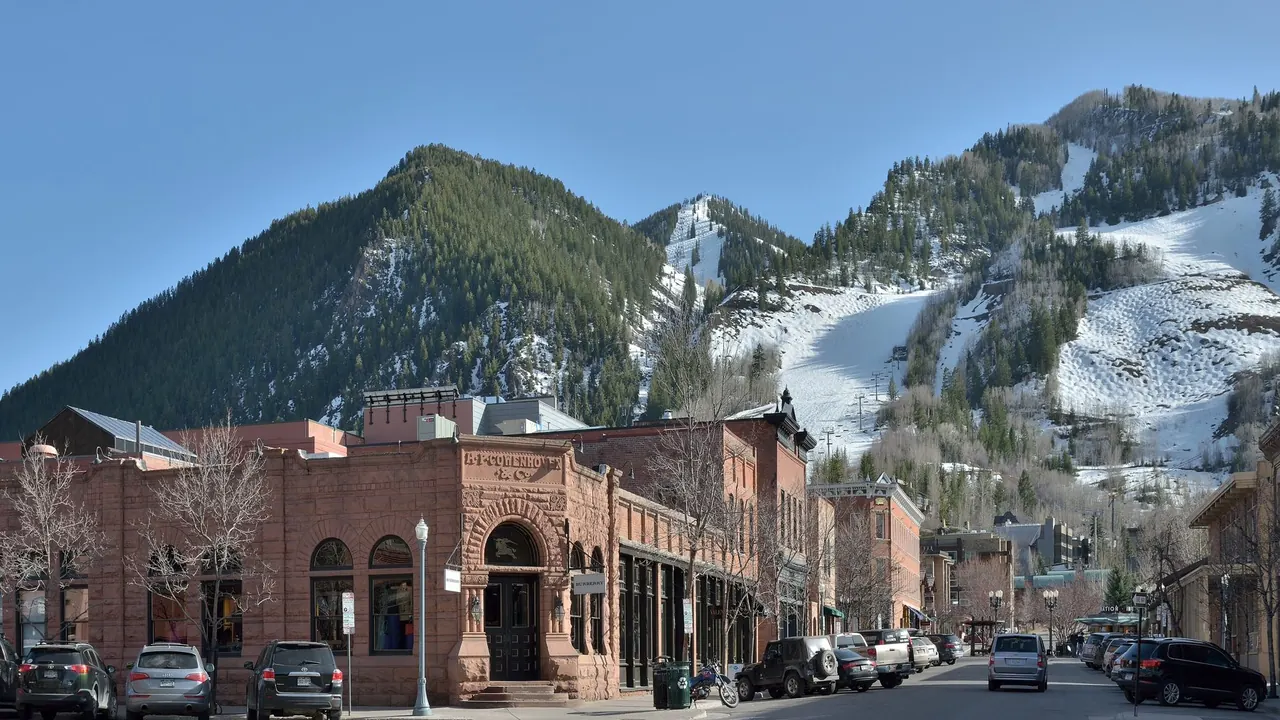
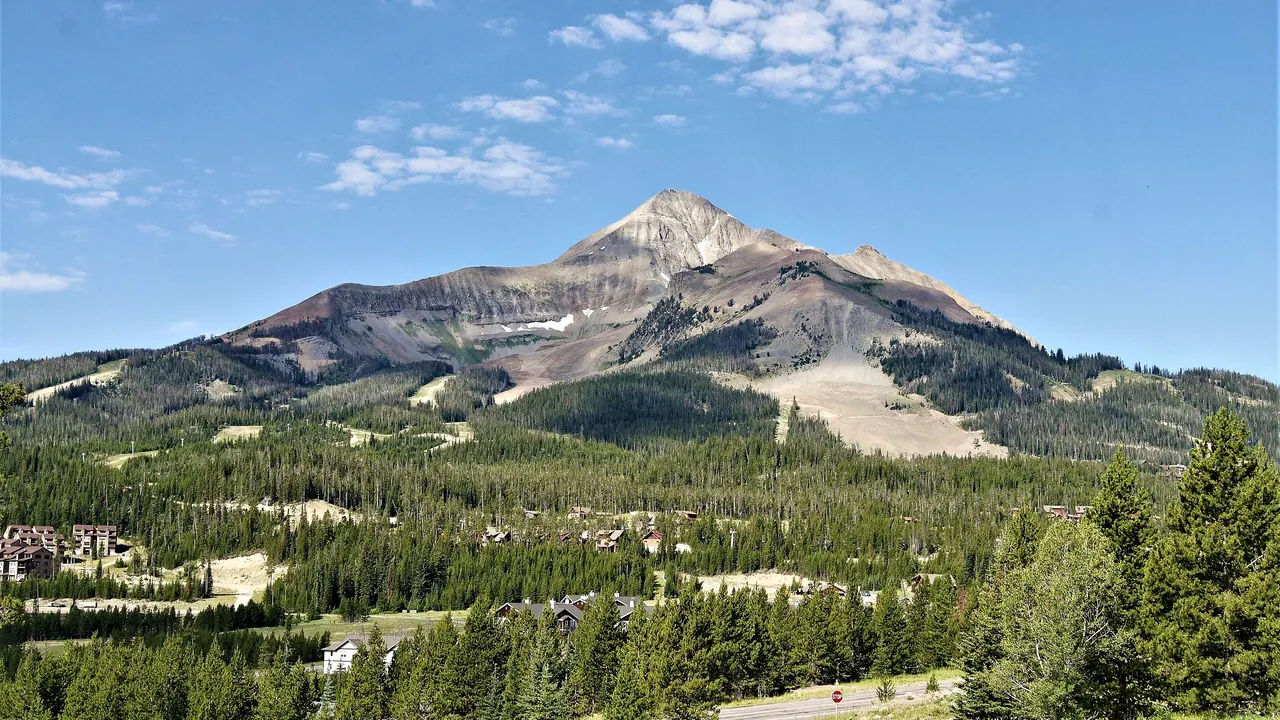
Photos: Aspen by Moroder, CC BY-SA 3.0, cropped; Big Sky by Greg Gjerdingen, CC BY 2.0, cropped.
Aspen or Big Sky?
Our verdict in twelve categories, each scored against the same fixed benchmark cities, and the climate month by month, so you can choose for your trip.
Choose Aspen for
- getting around
- shopping
- live music and the arts
Aspen suits travellers who want serious mountains with a proper town at their foot. The Victorian downtown, chef-led restaurants, designer boutiques and the summer music festival give the evenings as much to offer as the slopes. The gondola, the free ski buses and the small airport are all close at hand. Choose it if dinner, après-ski and a concert matter as much as the skiing.
Choose Big Sky for
- prices
Big Sky is for people who come for the mountain and very little else. Its outdoors is every bit as strong as Aspen's, with Lone Peak's huge ski area, the Spanish Peaks trails and the Gallatin River, and Yellowstone's geysers and wildlife are within a day out. In return you get a quiet, spread-out resort with hearty food and early nights, and you will nearly always need a car. That suits skiers, anglers and outdoor families who want space more than a scene.
Scoreboard
Twelve categories on one fixed scale from 0 to 100. The shaded stretch is the gap between the two.
Your match
Pick a travel style or drag the sliders, and both match scores follow your weighting.
Wins on getting around and shopping with your weighting.
Wins on prices with your weighting.
What matters to you?
Category by category
What the scores mean for a trip.
Beaches & swimming
Neither is a place for swimming, and on this they are essentially level. Both sit high in the Rockies a very long way from any sea, their rivers stay cold even in July, and in each the realistic swim is a hotel pool. The small lakes, ponds and reservoirs nearby are good for little more than a quick paddle on a hot afternoon.
What differs is how you spend time on the river instead. In Aspen people float the Roaring Fork on a raft, and there are alpine lakes to sit beside. At Big Sky the Gallatin is fast, rocky and better known for whitewater than for wading in, so the calmer way to enjoy it is a picnic on the bank.
Food & drink
Aspen eats like a much larger town. It has chef-led dining rooms, steak and sushi counters, Italian kitchens and wine lists built for wealthy winter visitors, and the Food & Wine Classic every June. Big Sky's food is resort cooking spread across its three villages and the roadhouses in the canyon. That means hearty plates of bison, elk, trout and Montana beef, with a few lodge kitchens aiming higher.
Neither has street food or a local cuisine, and in both, some kitchens close in the quiet weeks between seasons. The real difference is that in Aspen you could eat somewhere different every night for a week. In Big Sky the menus start to repeat quickly, and the main alternative is an hour's drive to Bozeman.
Culture & sights
Aspen at least has a past you can see. The silver-boom downtown keeps its red-brick Victorian blocks around the Wheeler Opera House, and the West End is lined with painted miners' cottages. The Aspen Art Museum and Herbert Bayer's modernist Aspen Institute campus add something more recent. It fills an afternoon, not a week.
Big Sky was built as a ski resort from the 1970s onwards. Apart from the Crail Ranch log cabins in Meadow Village, it is lodges and timber-clad condos, so anyone who wants history has to drive out of the resort to find it.
Nightlife
Aspen has a real night out in winter. Après-ski on the slopeside decks moves on to downtown bars, hotel lounges and a few small clubs, which stay busy late over Christmas, New Year and the X Games. Big Sky's après-ski is a beer in your ski boots at the base of the lifts, then perhaps a tavern in Town Center or a canyon saloon with pool tables, and most people head to bed early for the first lift.
Both go very quiet in spring and autumn. In summer, Aspen still has drinks on patios, while Big Sky has no clubs at any time of year.
Nature & outdoors
Both are first-rate mountain bases, and the difference is in character. Aspen spreads its skiing across four separate mountains linked by free shuttles, from gentle Buttermilk to the steep slopes of Highlands. In summer the Maroon Bells, Independence Pass and summits above 4,000m are close by, and the aspen groves turn gold in late September.
Big Sky puts its skiing into one vast area under Lone Peak, with wilder, emptier country in the Spanish Peaks and the Lee Metcalf Wilderness behind it. Its trump card is Yellowstone, about an hour to the south, with geysers, bison and wolves within a day's reach.
Day trips
Neither has a major city or a great sight within easy reach, so outings from both lead to small towns. From Aspen you can drive down the valley through Carbondale to Glenwood Springs and its railway-era centre, or up the Crystal River to the quarry village of Marble. In summer you can also cross to Leadville and its Victorian main street, but the pass closes in winter.
From Big Sky, Bozeman is an hour down the canyon and has the Museum of the Rockies with its dinosaur fossils. Further out, Virginia City and Nevada City keep their 1860s gold-rush boardwalks, so the Montana side offers a little more frontier history.
Good for families
Both handle a ski week with children well, with gentle slopes, good ski schools and a safe, quiet setting. Both also sit at around 2,300 to 2,400m, which can tire small children for the first day or two. Aspen splits its beginner terrain between Buttermilk and Snowmass, and its walkable town adds fountains, parks and nature programmes at the environmental centre.
Big Sky leans more towards adventure, with zip lines, a climbing wall and horse riding in summer, and bison-spotting in Yellowstone. Neither has a zoo, an aquarium or much to do on a rainy day.
Getting around
Aspen is far easier to manage. The downtown is a flat grid you can cross in minutes, the gondola leaves from its edge, free buses run to the other three ski mountains, and the airport is a few minutes from town. You only need a car to go beyond the valley.
Big Sky is strung out along about 15km of road from the canyon up to Mountain Village. A free bus links the villages and ski-in lodgings help, but walking between villages is not practical. Bozeman airport is an hour's drive away, and Yellowstone really calls for a car.
Shopping & style
Aspen has real shopping, mostly at the luxury end: international designer boutiques, high-end ski wear, jewellers, Western leather and a cluster of art galleries in the pedestrian malls. Window-shopping there is part of an evening stroll. Big Sky stops at outdoor gear, a few Western-style boutiques and wildlife art, which is enough to replace your gloves or buy a fly rod, and people drive to Bozeman for anything more.
Affordability
Both are among the most expensive mountain vacations in the American West, so choosing one over the other will not save much. Aspen is the more polished kind of expensive, with hotels, meals and drinks priced for a very wealthy crowd. The free valley buses cut transport costs, though, and Glenwood Springs or Carbondale offer cheaper beds down the valley.
At Big Sky the costs come from slopeside resorts, lift passes and guided fishing. Staying in the canyon or in Bozeman saves money but adds driving and usually a hire car. In both, summer and the shoulder seasons are easier on the budget.
Live music & performing arts
Aspen's summer is a genuine musical event. The Aspen Music Festival fills about eight weeks with orchestral, chamber and opera performances in the Benedict Music Tent, where you can listen for free on the lawn, and there is also jazz and the Aspen Santa Fe Ballet. The Wheeler Opera House keeps concerts, comedy and film going all year.
Big Sky's programme is smaller but pleasant. A performing arts centre in Meadow Village hosts touring acts and theatre in winter, and in summer there are free concerts on the lawn and a short classical festival. Between seasons there is very little on.
Wellness & relaxation
Aspen offers a little more for a restful stay. Besides the resort spas and their altitude-recovery treatments, it has yoga in the parks and riverside paths. The big mineral pools and cave vapour baths of Glenwood Springs are about an hour away, and Conundrum Hot Springs is there for anyone willing to make the long hike.
At Big Sky, relaxing means a hot tub on the deck, a massage for sore ski legs and quiet, starry nights, with the nearest natural hot springs an hour away towards Bozeman. Its calm comes from emptiness, whereas Aspen is restful mainly outside the peak ski weeks.
When should you go?
Pick your month. The climate figures are measured averages, not a forecast.
Aspen in July
Big Sky in July
Daytime high, °C
Rainfall in the month, mm
Where the figures come from
Aspen has no rain gauge within 25 km of the centre, so its rainfall comes from a gridded climate dataset read at the city rather than from a gauge further away.
Big Sky has no weather station within reach, so its figures come from a gridded climate model rather than a measured record, and read a broad area rather than the city itself.
Temperature and rainfall are climate normals, averaged over the years shown. Aspen: 2006-2020 (rainfall 1991-2020) normals, Aspen / Woody Creek (5.2 km from centre). Big Sky: 2001-2020 normals, NASA POWER reanalysis grid, no weather station within 90 km.
Both are high mountain places with long snowy winters and one short warm season, and neither has a beach month in any real sense. Aspen is the milder and drier of the two. July highs reach about 27°C, June is the driest month of the year, and from June to September the days are warm enough for hiking and for walking around town. From December to February, daytime highs hover around freezing. That is weather for skiing, not for strolling.
Big Sky is colder at both ends of the year, with January highs around -4°C. Its wettest stretch runs from April to June and peaks at about 83mm in May. July and August are its best summer months, warm and fairly dry, while June and September are noticeably cooler than in Aspen. In both places, spring and late autumn fall between the ski season and the hiking season and are the least rewarding times to go.
Which traveller are you?
On a culture and arts trip, Aspen is the clear choice. Its silver-boom downtown, the Wheeler Opera House, the Aspen Art Museum and eight summer weeks of concerts at the Benedict Music Tent leave Big Sky's log-cabin homestead far behind.
For a food and nightlife trip, Aspen wins again. Its downtown grid has chef-led dining rooms and serious wine lists, and the bars and lounges stay busy late in peak ski weeks. Big Sky offers trout, elk and local beer, and then an early night.
On an outdoors trip with wildlife in mind, Big Sky has the edge. The skiing and hiking are superb in both places, but from Big Sky the Yellowstone entrance is about an hour away. That puts geysers, bison and wolves alongside Lone Peak and the fly fishing on the Gallatin.
Before you go
| Measure | Aspen | Big Sky |
|---|---|---|
| Currency | US Dollar (USD) | US Dollar (USD) |
| Sockets | AB120 V, 60 Hz | AB120 V, 60 Hz |
| Driving side | Right | Right |
| Time zone | UTC-7, UTC-6 in summer | UTC-7, UTC-6 in summer |
| Emergency number | 911 | 911 |
| Elevation | 2,405 m | 2,200 m |
| Main airport | Aspen-Pitkin County Airport (Sardy Field) (ASE)5 km from centre11 non-stop destinations | Bozeman Yellowstone International Airport (BZN)59 km from centre27 non-stop destinations |
| Public holidays this year | 12 days | 12 days |
By the numbers
| Measure | Aspen | Big Sky |
|---|---|---|
| City population | 7,004 | 3,591 |
| People per km² | 700 | 12 |
| Museums within 10 km | 2 | 0 |
| UNESCO World Heritage sites within 50 km | 0 | 0 |
Where else could you go?
Every comparison below shares a destination with this one, so you can follow Aspen or Big Sky somewhere new.
- Beaver Creekvs Aspen
- Vailvs Aspen
- Copper Mountainvs Aspen
- Breckenridgevs Aspen
- Keystonevs Aspen
- Winter Park, Coloradovs Aspen