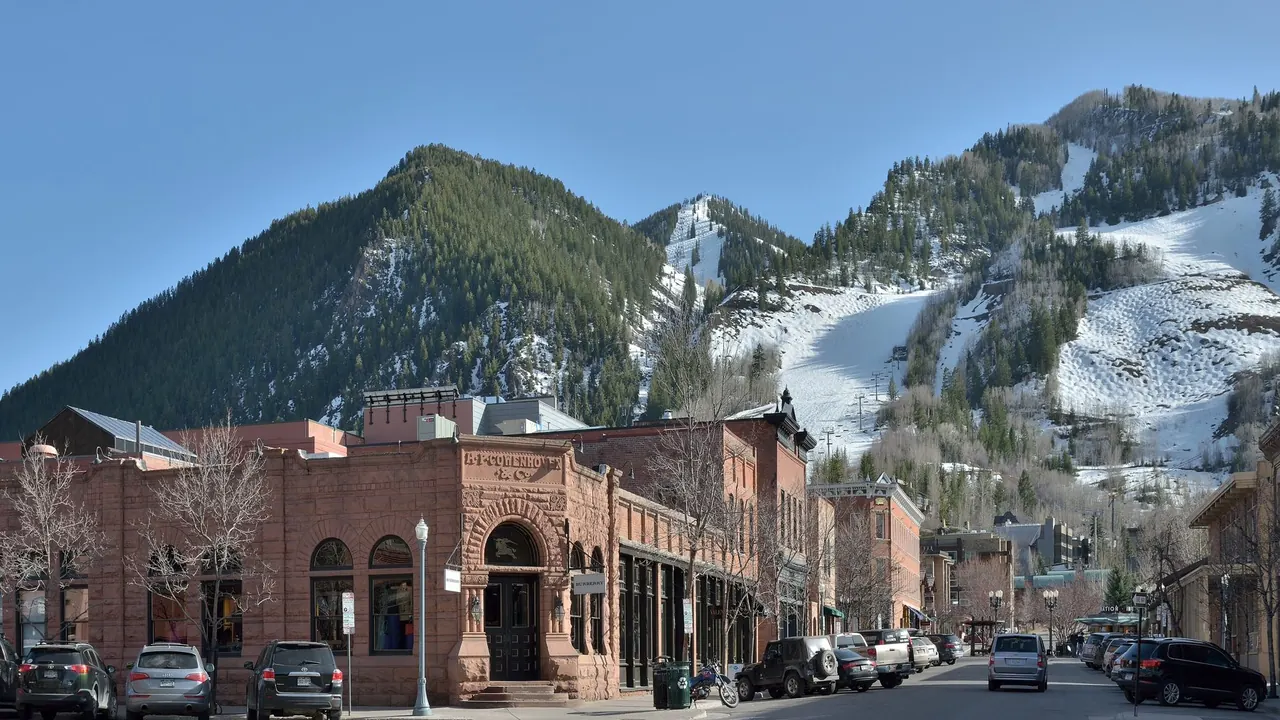
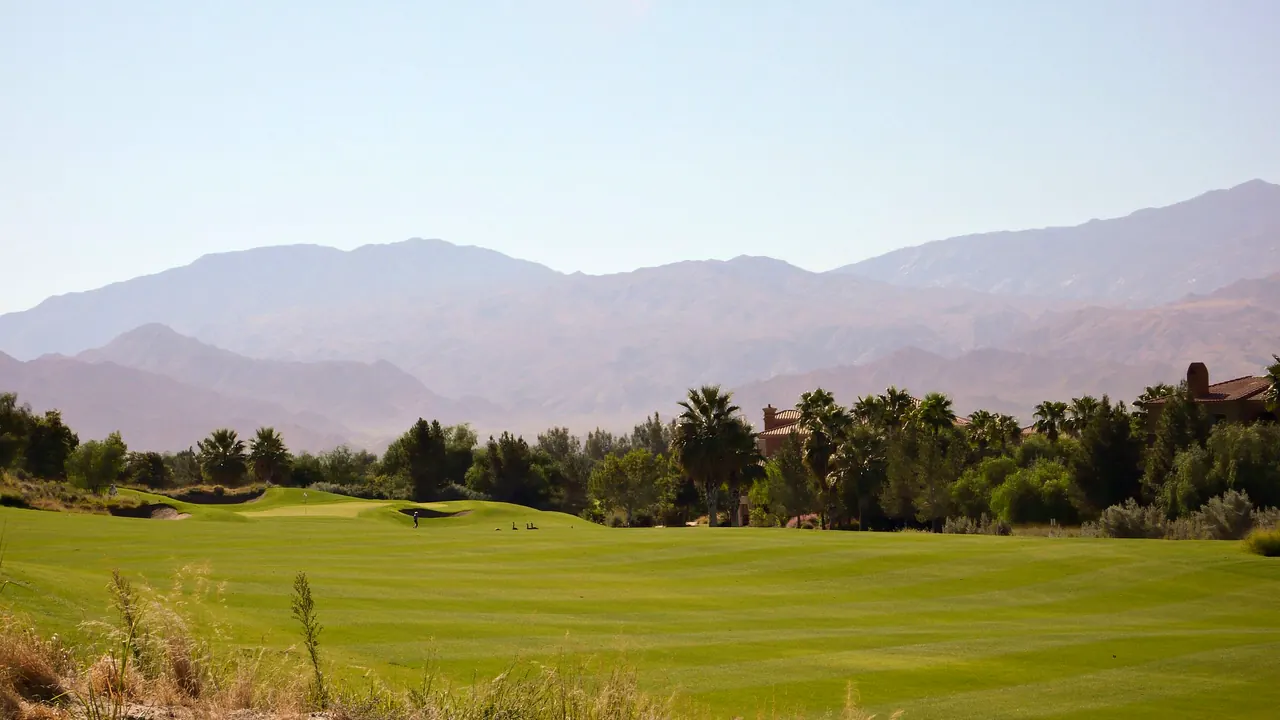
Photos: Aspen by Moroder, CC BY-SA 3.0, cropped; Palm Desert by David Balmer, CC BY 3.0, cropped.
Aspen or Palm Desert?
Our verdict in twelve categories, each scored against the same fixed benchmark cities, and the climate month by month, so you can choose for your trip.
Choose Aspen for
- getting around
- nature and the outdoors
- nightlife
Aspen is for travellers who want the mountains on their doorstep and the town to come with them. In winter that means four ski areas reached by free bus or a gondola from the edge of downtown, then après-ski and a serious dinner. In summer it means trails into the Elk Mountains, the Maroon Bells and a classical music festival on the lawn. You can manage it all without a car, but it is a very expensive trip.
Choose Palm Desert for
- prices
- day trips
- wellness
Palm Desert suits people who want winter warmth and an unhurried routine of pool, spa, golf and an early dinner on El Paseo. It is the better place to switch off, it costs less than Aspen, and with a car the rest of the valley gives you plenty of outings: Palm Springs, Joshua Tree and the hot springs to the north. Anyone hoping for lively evenings or a walkable town will find it too quiet and too spread out.
Scoreboard
Twelve categories on one fixed scale from 0 to 100. The shaded stretch is the gap between the two.
Your match
Pick a travel style or drag the sliders, and both match scores follow your weighting.
Wins on getting around and nature and the outdoors with your weighting.
Wins on prices and day trips with your weighting.
What matters to you?
Category by category
What the scores mean for a trip.
Beaches & swimming
Neither town has a beach, so the difference is in what replaces it. In Aspen it is cold water: alpine lakes, small reservoirs and rafting on the Roaring Fork River, with a hotel pool if you actually want to swim.
In Palm Desert the pool is the main event. Almost every resort and rental has one, often heated in winter, and lounging under the palms is a large part of any stay. The Pacific is a full day's outing two hours over the mountains.
Food & drink
Aspen is the better place to eat, at least at the top end. Its downtown grid has chef-led dining rooms, sushi and steak counters and serious wine lists, après-ski on the terraces at the foot of Aspen Mountain is a ritual of its own, and in June the Food & Wine Classic comes to town. The weak points are the lack of anything cheap and the kitchens that shut in the quiet weeks of spring and autumn.
Palm Desert's resort restaurants on El Paseo are reliable but hard to tell apart. The food with real local character is a drive east, at the family-run taquerias and bakeries of Indio and Coachella and at the date groves selling date shakes.
Culture & sights
Neither is a sightseeing destination, and each fills an afternoon or a morning or two. Aspen at least has a historic townscape of its own: red-brick silver-boom blocks around the Wheeler Opera House, painted miners' cottages in the West End, Herbert Bayer's modernist Aspen Institute campus and the ghost town of Ashcroft nearby.
Palm Desert was built after the Second World War and has little history to show. Its highlight is the outdoor sculpture garden at the branch of the Palm Springs Art Museum. For mid-century modern architecture and the main museum, you need to go to Palm Springs.
Nightlife
Aspen has the livelier evenings, especially in ski season. The night starts on the slopeside decks as the lifts close, moves into downtown bars and lounges, and on the Christmas, New Year and X Games weeks runs late in hotel bars and a few small clubs. In summer it is mostly drinks on patios, and in spring and autumn the town is quiet.
Palm Desert winds down early, with wine bars and patio happy hours around El Paseo for a crowd of golfers and retirees. A late night means driving to a tribal casino or to downtown Palm Springs and its gay scene.
Nature & outdoors
Both are built around landscape, but Aspen's is on a bigger scale and works all year. Winter brings four separate ski mountains connected by free shuttle buses, from gentle Buttermilk to the steep expert terrain of Highlands and the sheer size of Snowmass, plus huts for overnight backcountry tours. In summer you can hike to the Maroon Bells and over high passes, mountain-bike, raft or fly-fish the Roaring Fork, and watch the aspen groves turn gold in late September.
Palm Desert's outdoors is desert scenery: trails climbing straight into the Santa Rosa Mountains, fan-palm oases in the Indian Canyons, and boulders and night skies in Joshua Tree an hour away, with golf courses everywhere else. It only works from October to May.
Day trips
Palm Desert has the wider choice of outings. Palm Springs is twenty minutes away, Temecula's wine country an hour and a half, and there is cool mountain air in Idyllwild, the old film-set town of Pioneertown and the painted hillside of Salvation Mountain near the Salton Sea.
From Aspen the trips are to small mountain towns: Glenwood Springs, Carbondale, Redstone and Marble up the Crystal River valley, and Leadville's Victorian main street over Independence Pass. The pass closes in winter, which cuts the list down further.
Good for families
Both work for families in a narrow way. Aspen's strength is learning to ski: Buttermilk and Snowmass have good ski schools and kids' areas, and in summer the lifts lead to alpine coasters and ropes courses. Watch for the altitude, which can tire small children for the first day or two.
Palm Desert has the Living Desert, a large zoo and botanical garden with giraffes and cheetahs, and resort pools with slides. Every other outing means a drive, though, and in summer the middle of the day is too hot for young children.
Getting around
Aspen is far easier to manage on foot. The flat downtown grid takes minutes to cross and the gondola leaves from its southern edge. Free buses run between the ski mountains, and a valley bus runs down to Glenwood Springs, with a summer shuttle up to the Maroon Bells. You only need a car to go beyond the valley, and winter storms can close the roads out.
Palm Desert is a spread of resorts, gated communities and shopping centres along wide boulevards, and El Paseo is about the only stretch made for walking. The buses are slow, so you will need a hire car, though the roads are clear and parking is easy.
Shopping & style
Both are luxury shopping towns, with designer boutiques, jewellers and art galleries along a few smart streets. Aspen's pedestrian malls add high-end ski wear and Western leather and fur, but nothing much below the luxury end.
Palm Desert covers more price levels. Beyond the boutiques of El Paseo there is a large mall of familiar chains, a big designer outlet centre half an hour west, and vintage and mid-century furniture shops in Palm Springs.
Affordability
Aspen is the far dearer trip, and the gap is widest in winter, when the ski day is a large cost of its own. Lift tickets, ski school for the children and drinks on the après-ski terraces all come on top of rooms priced for a very wealthy crowd. Summer takes some of the edge off, and the free buses mean getting around costs nothing, but nothing in the valley is cheap.
Palm Desert costs what an ordinary American resort costs, and the money goes on different things. Rooms are dearest in the winter high season and around the big valley events, and the spending that climbs fastest is the kind you choose: rounds of golf and spa treatments. Its quiet season brings prices down much further than Aspen's quiet months do, though the heat also limits what you can do.
Live music & performing arts
Aspen has the stronger programme, centred on summer. The Aspen Music Festival brings leading soloists and orchestras to the Benedict Music Tent, where you can listen for free from the lawn outside. Jazz, the Aspen Santa Fe Ballet and year-round shows at the Wheeler Opera House add to it.
Palm Desert's main stage is the McCallum Theatre, which hosts touring Broadway shows, ballet and well-known singers through the winter. Casinos and an arena put on big concerts, and Coachella and Stagecoach take over the polo grounds in Indio for a few spring weekends.
Wellness & relaxation
Palm Desert is the better place to unwind, because rest is the point of the whole valley. Resort spas, long afternoons by the pool and dry, sunny winters set the pace, and Desert Hot Springs half an hour north fills its pools straight from natural mineral springs.
Aspen is restful in summer and the quiet seasons, with clear air, riverside paths, hotel spas and the big hot-spring pools of Glenwood Springs an hour away. In peak ski season the town is too busy to feel calm.
When should you go?
Pick your month. The climate figures are measured averages, not a forecast.
Aspen in July
Palm Desert in July
Daytime high, °C
Rainfall in the month, mm
Where the figures come from
Aspen has no rain gauge within 25 km of the centre, so its rainfall comes from a gridded climate dataset read at the city rather than from a gauge further away.
Palm Desert has no rain gauge within 25 km of the centre, so its rainfall comes from a gridded climate dataset read at the city rather than from a gauge further away.
Temperature and rainfall are climate normals, averaged over the years shown. Aspen: 2006-2020 (rainfall 1991-2020) normals, Aspen / Woody Creek (5.2 km from centre). Palm Desert: 2006-2020 (rainfall 1991-2020) normals, Palm Springs (17.2 km from centre).
The two run on opposite calendars. Aspen is a winter and summer town. From December to February daytime highs sit around 0°C, which is ski season. July is the warmest month at about 27°C, and June to September is the time for hiking, rafting and the music festival, with late September bringing the gold aspen groves. Spring and autumn are cool and in between. Rain is spread fairly evenly through the year, with no wet season to plan around.
Palm Desert is at its best from November to April, when highs of about 20°C in midwinter climb towards the low thirties in spring, perfect for walking, golf and long afternoons by the pool. The little rain it gets falls mostly in winter, and even then it is light. From June to September highs reach 42°C, so you can only be active outdoors around dawn. In short, go to Palm Desert when Aspen is under snow, and to Aspen when the desert is too hot.
Which traveller are you?
On an outdoors trip, Aspen wins clearly. It has four ski mountains in winter, and in summer trails start right from town and climb towards 4,000m summits beyond the Maroon Bells. Palm Desert's canyons and Joshua Tree are fine in winter, but the summer heat ends any outdoor plans.
For a relaxing and wellness trip, Palm Desert is the more natural choice. The whole valley is built around resort spas, long hours by the pool and early nights, and the mineral-spring pools of Desert Hot Springs are half an hour away. Aspen is only properly restful outside the ski season.
On a trip on a tight budget, Palm Desert is far easier to manage. Chain hotels and vacation rentals keep stays reasonable, and summer resort rates fall steeply, though you will still pay for a hire car. Aspen is priced for the very wealthy, even if you sleep down the valley.
Before you go
| Measure | Aspen | Palm Desert |
|---|---|---|
| Currency | US Dollar (USD) | US Dollar (USD) |
| Sockets | AB120 V, 60 Hz | AB120 V, 60 Hz |
| Driving side | Right | Right |
| Time zone | UTC-7, UTC-6 in summer | UTC-8, UTC-7 in summer |
| Emergency number | 911 | 911 |
| Elevation | 2,405 m | 67 m |
| Main airport | Aspen-Pitkin County Airport (Sardy Field) (ASE)5 km from centre11 non-stop destinations | Palm Springs International Airport (PSP)17 km from centre29 non-stop destinations |
| Public holidays this year | 12 days | 13 days |
By the numbers
| Measure | Aspen | Palm Desert |
|---|---|---|
| City population | 7,004 | 51,163 |
| People per km² | 700 | 731 |
| Museums within 10 km | 2 | 2 |
| UNESCO World Heritage sites within 50 km | 0 | 0 |
Where else could you go?
Every comparison below shares a destination with this one, so you can follow Aspen or Palm Desert somewhere new.