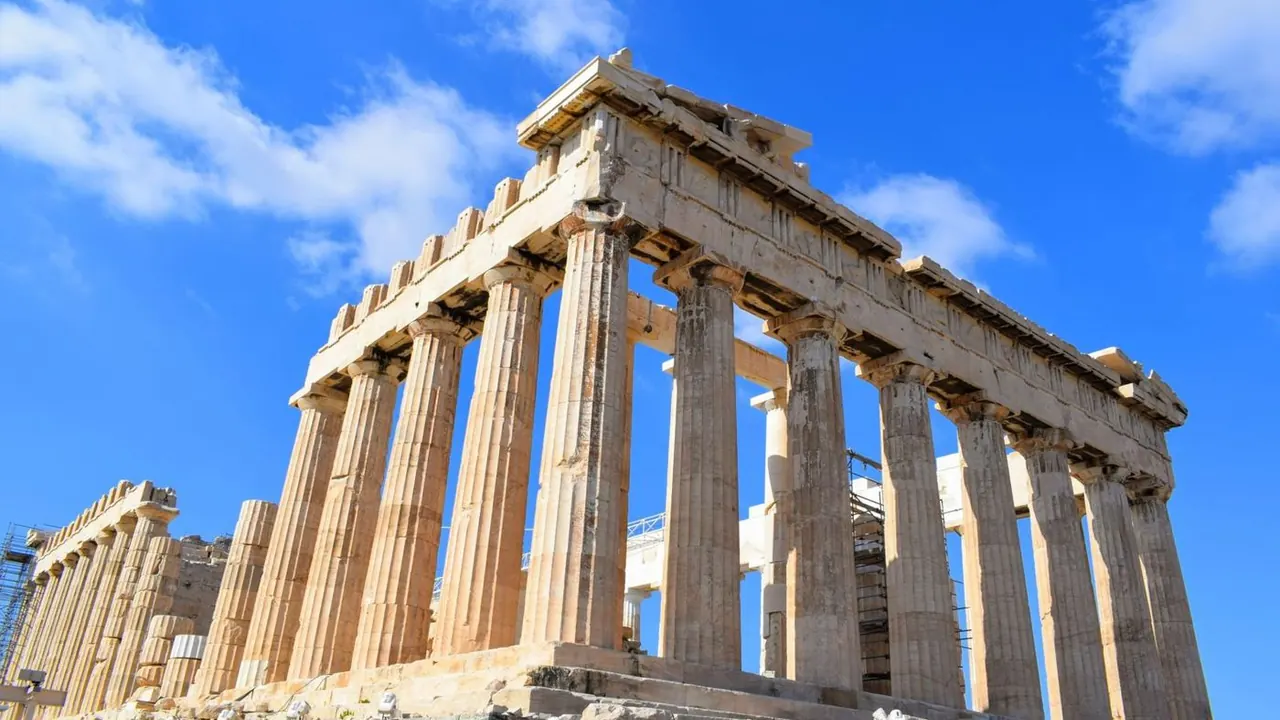
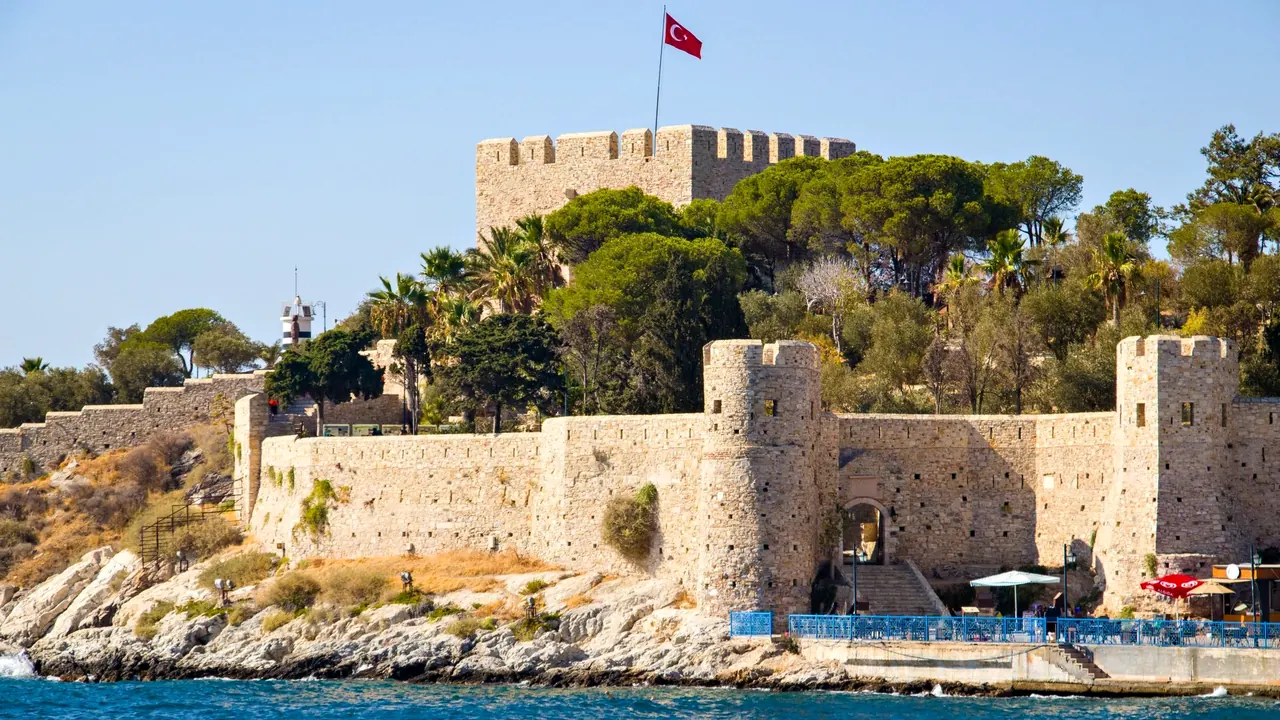
Photos: Athens by Ranjeet Kumar Singh, Pexels License; Kusadasi by Murat Halıcı, Pexels License.
Athens or Kusadasi?
Our verdict in twelve categories, each scored against the same fixed benchmark cities, and the climate month by month, so you can choose for your trip.
Choose Athens for
- culture and sights
- live music and the arts
- food and drink
Athens suits travellers who want the ancient world and a real city in the same trip. The Acropolis, the Agora and the great archaeological museums sit within walking distance of one another. Evenings run late in tavernas and bars, and in summer there are performances beneath the Acropolis. The Riviera and the island ferries add a swim, but the city is the reason to go.
Choose Kusadasi for
- beaches
- families
- prices
Pick Kusadasi for a sun-and-sand week with Ephesus twenty minutes up the road. Its beaches, resort hotels with pools and water parks, and slightly lower costs make it the easier choice for families and anyone who wants to unwind by the water. The town itself has little to see, the food is simpler and there is almost no stage to speak of, so evenings stay low-key.
Scoreboard
Twelve categories on one fixed scale from 0 to 100. The shaded stretch is the gap between the two.
Your match
Pick a travel style or drag the sliders, and both match scores follow your weighting.
Wins on culture and sights and live music and the arts with your weighting.
Wins on beaches and families with your weighting.
What matters to you?
Category by category
What the scores mean for a trip.
Beaches & swimming
Athens has more coast than people expect. Lidos and rocky free stretches run along the Riviera from Faliro to Vouliagmeni, a tram ride from the centre, and Aegina is a short ferry away for calmer water. Still, it is an afternoon added to a city stay.
In Kusadasi, the beach is the point of being there. Ladies Beach and Long Beach are sandy and right by town, Pamucak offers a wider and quieter strip, and the Dilek Peninsula coves have the clearest water. If swimming every day matters, Kusadasi gives you more of it with less effort.
Food & drink
Food is a real reason to choose Athens. Tavernas and mezedopoleia serve grilled octopus, fava and slow-cooked dishes with ouzo, tsipouro or Attica savatiano. The Varvakios market is worth a morning, and neighbourhoods like Koukaki and Exarchia cook better than touristy Plaka. There is serious fine dining too.
Kusadasi eats well enough on Aegean Turkish meze, grilled fish and olive-oil vegetables, best found in Kaleiçi meyhanes and lunchtime lokantas. Much of the resort strip, though, runs on international menus and hotel buffets, and fine dining is limited.
Culture & sights
The gap here is very wide. Athens has the Parthenon above the city, the Ancient Agora, Hadrian's Library and the Kerameikos along one pedestrian promenade, and museums like the Acropolis Museum and the Benaki to fill several days.
In Kusadasi the sights in town are Pigeon Island's small fortress, the Ottoman caravanserai and a few lanes in Kaleiçi, and an hour or two covers them. Its history is out at Ephesus and the other ancient sites inland, not in the town.
Nightlife
Athens goes out late all year. There are rooftop bars facing the lit Acropolis in Monastiraki, clubs and a long-standing gay scene in Gazi, student bars in Exarchia and smarter drinking in Kolonaki. Bouzouki clubs still run until morning, and in summer the clubbing moves to open-air venues on the coast.
Kusadasi's night out is narrower and more seasonal. Bar Street has pubs, karaoke and dance bars for a mostly young package crowd, and a few big open-air clubs run in July and August. Out of season the town goes to bed early.
Nature & outdoors
The two are about level, but the landscapes differ. Athens has mountains around its basin: pine trails on Hymettus, fir forest and deer on Parnitha, and the Saronic Gulf for sailing or a chartered boat.
Kusadasi's best nature is the Dilek Peninsula. A forested ridge drops to the sea there, with a canyon walk, wild horses and clear water for diving and snorkelling, and the granite Latmos mountains above Lake Bafa are about an hour away. In both, summer heat pushes serious walking into spring and autumn.
Day trips
Both are excellent bases for day trips, and both lead into the ancient world. From Athens the range is wider: Delphi on Parnassos, Mycenae, Epidaurus and Nafplio across the Corinth Canal, Sounion at sunset, and ferries from Piraeus to car-free Hydra or Poros. Most of the mainland sites take a long day and work best with a car or tour.
Kusadasi's great asset is that Ephesus is so close, about twenty minutes away and reachable by dolmuş. Selçuk and Şirince are next to it, Priene, Miletus and Didyma make a full day to the south, and in summer there is a ferry to Samos.
Good for families
Kusadasi is the easier family choice, as long as the trip centres on the beach. Ladies Beach and Long Beach have sand and gentle entry into the water, and there are resort hotels with kids' clubs and two water parks. Beyond that there is little made for children, and Ephesus is hard work in summer.
Athens has more for rainy or restless days, with the planetarium, Hellenic Cosmos, the zoo and the park at the Stavros Niarchos centre. But broken pavements, steep steps and the hot climb up the Acropolis make it more tiring with small children.
Getting around
Athens is easier to get around without a car. The metro runs from the airport and Piraeus into a compact centre, a tram goes to the coast, and taxis are plentiful. Narrow, blocked pavements, the hills and summer heat are the downsides.
Kusadasi's harbour and bazaar are walkable, and dolmuş minibuses handle the beaches and Selçuk. Many hotels sit far out along the coast road, though, and Priene, Didyma or the national park really call for a hire car or a tour.
Shopping & style
Athens gives shoppers more range. Ermou has the high-street chains, Kolonaki has Greek designers, and the Monastiraki flea market is good on weekends for antiques and records. Leather sandals, worry beads, honey and jewellery modelled on ancient designs make good souvenirs.
Kusadasi's shopping revolves around the cruise port. The bazaar sells carpets, leather, jewellery and imitation designer goods, with a hard sell and bargaining expected. The weekly market is better value for spices, dried figs and olive oil.
Affordability
Kusadasi stretches a budget slightly further, mainly on where you sleep. Mid-range hotels and all-inclusive packages cost less than comparable Aegean resorts, and dolmuş rides and lokanta meals are cheap. The harbour-front restaurants and beach clubs are priced for tourists, though.
Athens is a little cheaper than most Western European capitals, and souvlaki, bakeries and the metro are good value. Central hotels with Acropolis views cost a lot in summer. Both cities charge entry fees at the ancient sites that add up over several outings.
Live music & performing arts
Athens is far ahead here. In summer the Athens Epidaurus Festival stages opera, dance and ancient tragedy in the Odeon of Herodes Atticus and the theatre at Epidaurus. The rest of the year there is the Greek National Opera and the Megaron, and late-night rebetiko in small tavernas is the music most worth hearing.
Kusadasi has no theatre or concert season. Its live entertainment is Turkish-night dinner shows, cover bands in bars and the odd summer open-air concert.
Wellness & relaxation
Neither is a natural retreat, and both town centres are loud and crowded in summer. They relax in different ways. Athens has Lake Vouliagmeni, a spring-fed lake under a limestone cliff that stays mild all year, along with hotel spas and long coffees in shaded squares.
Kusadasi's version is the hammam scrub and foam massage, offered in the old-quarter bath and in most large resort hotels. In May, June and September, the quiet coves to the south are good places to slow down.
When should you go?
Pick your month. The climate figures are measured averages, not a forecast.
Athens in July
Kusadasi in July
Daytime high, °C
Rainfall in the month, mm
Where the figures come from
Kusadasi's temperatures are measured 36 km from the centre, at Samos Airport.
Kusadasi has no rain gauge within 25 km of the centre, so its rainfall comes from a gridded climate dataset read at the city rather than from a gauge further away.
Kusadasi's sunshine is measured 51 km from the centre, at Aydin.
Temperature and rainfall are climate normals, averaged over the years shown. Athens: 1991-2020 normals, Athens / Athenai / Pláka (2.2 km from centre). Kusadasi: 1991-2020 normals, Samos Airport (35.7 km from centre).
The two have the same Aegean rhythm of dry, hot summers and wet winters, and spring and autumn are the best seasons for walking in both. Athens gets hotter, reaching 35°C in August, so from June to August sightseeing on the exposed ancient sites belongs to the early morning and the evening. Kusadasi peaks a little lower, but its midsummer days are still too hot for much beyond the beach. For swimming, Athens has the warmer sea, about 26°C in August, and it is pleasant from late May. At Kusadasi the water is comfortable from June. In both places it stays swimmable into October.
The bigger difference is in winter. Kusadasi is much wetter, with about 146mm of rain in January, while Athens is wettest in December at around 86mm and stays drier overall. Athens also gets more sunshine through the summer months, which counts on a beach day and less so on a museum day.
Which traveller are you?
For a culture and arts trip, Athens is the clear choice. The Acropolis, the Acropolis Museum and the National Archaeological Museum are on your doorstep, and summer adds opera and ancient drama staged at the Odeon of Herodes Atticus. In Kusadasi the town itself takes an hour.
On a food and nightlife trip, Athens again. Shared meze and Greek wine in Psyrri or Pangrati lead on to bars that fill at midnight and stay open until dawn. Kusadasi's Bar Street and resort buffets are a much thinner offer.
For a beach and sun trip, Kusadasi is better. The sandy beaches sit right by town, Pamucak is quieter, and the Dilek Peninsula has clear coves. Athens has the Riviera, but its city beaches are a side trip from sightseeing, not the main event.
Before you go
| Measure | Athens | Kusadasi |
|---|---|---|
| Official language | Greek | Turkish |
| Currency | Euro (EUR) | Turkish Lira (TRY) |
| Sockets | CF230 V, 50 Hz | CF230 V, 50 Hz |
| Driving side | Right | Right |
| Time zone | UTC+2, UTC+3 in summer | UTC+3 |
| Emergency number | 112 | 112 |
| Elevation | 74 m | 11 m |
| Main airport | Athens Eleftherios Venizelos International Airport (ATH)20 km from centre173 non-stop destinations | Adnan Menderes International Airport (ADB)49 km from centre120 non-stop destinations |
| Public holidays this year | 15 days | 14 days |
By the numbers
| Measure | Athens | Kusadasi |
|---|---|---|
| City population | 643,452 | 130,835 |
| People per km² | 16,499 | 494 |
| Museums within 10 km | 88 | 0 |
| UNESCO World Heritage sites within 50 km | 2 | 2 |
| Swim season, months above 21 °C | 5 months | 5 months |
Where else could you go?
Every comparison below shares a destination with this one, so you can follow Athens or Kusadasi somewhere new.
- Izmirvs Kusadasi
- Bodrumvs Kusadasi
- Nafpliovs Athens
- Marmarisvs Kusadasi
- Fethiyevs Kusadasi
- Kasvs Kusadasi