
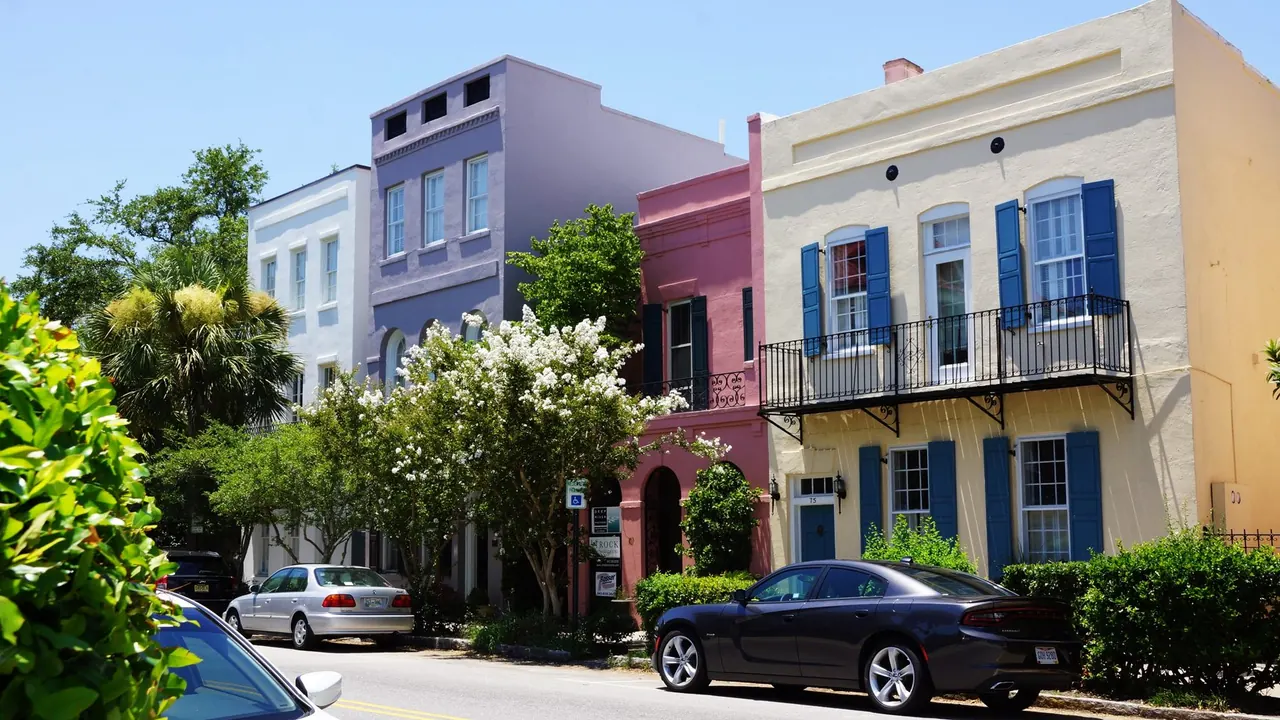
Photos: Atlanta by DXR, CC BY-SA 4.0, cropped; Charleston by NealVickers, CC BY-SA 4.0, cropped.
Atlanta or Charleston?
Our verdict in twelve categories, each scored against the same fixed benchmark cities, and the climate month by month, so you can choose for your trip.
Choose Atlanta for
- nightlife
- live music and the arts
- prices
Atlanta suits travellers who want a big city with full evenings: hip-hop clubs and Midtown's LGBTQ scene, symphony, opera and arena tours, the Buford Highway restaurants, and plenty of children's attractions led by the Georgia Aquarium. It is also the cheaper place to sleep. Bring a car or stay on the MARTA line, because the city spreads wide and fire in 1864 destroyed most of its old streets.
Choose Charleston for
- beaches
- getting around
- day trips
Pick Charleston for a slower, prettier trip where the town itself is the sight. You can walk the walled gardens and piazza houses of the peninsula in a morning, the barrier-island beaches are half an hour out, and the plantations and Savannah make good days out. Expect to pay more for rooms and to find bars rather than clubs after dark.
Scoreboard
Twelve categories on one fixed scale from 0 to 100. The shaded stretch is the gap between the two.
Your match
Pick a travel style or drag the sliders, and both match scores follow your weighting.
Wins on nightlife and live music and the arts with your weighting.
Wins on beaches and getting around with your weighting.
What matters to you?
Category by category
What the scores mean for a trip.
Beaches & swimming
On beaches the two could hardly differ more. Atlanta is hours from either coast, so swimming means Lake Lanier or Lake Allatoona on a hot weekend, or the hotel pool.
Charleston has three barrier-island beaches within half an hour: Folly, with its surf and pier, the dune-backed sands of Sullivan's Island and the wider, more resort-like Isle of Palms, with quieter Kiawah further south. The water is tidal and greenish rather than clear, but this is real Atlantic beach life, and it combines easily with days in the old town.
Food & drink
Both are serious Southern eating cities, but they cook different Souths. Atlanta is the place for fried chicken, meat-and-three plates and west-side soul food. Along Buford Highway, its strip malls add Korean, Vietnamese, Ethiopian and Mexican cooking that Charleston simply does not have.
Charleston's strength is Lowcountry and Gullah Geechee cooking: she-crab soup, Carolina Gold rice and oyster roasts in winter, served in townhouse dining rooms and creekside seafood shacks. Most of it sits close together around King Street and the French Quarter. In Atlanta you need a car to reach the best food, while in Charleston you need to book ahead.
Culture & sights
Charleston is the more rewarding city to wander. Its peninsula of Georgian and antebellum houses, church steeples and cobbled lanes south of Broad Street is the main sight. The house museums, Fort Sumter and the International African American Museum tell the story of the city's wealth and of slavery where it happened.
Atlanta lost most of its old buildings in 1864, so its weight rests on a few institutions. The Martin Luther King Jr. National Historical Park and the civil rights centre have no equal in Charleston, and the High Museum is the stronger art museum. Each city fills two or three days, but in Charleston the walk between sights is half the pleasure.
Nightlife
Atlanta offers by far the bigger night out. Its club culture is known nationally and rooted in hip-hop and trap. Edgewood Avenue has dive bars and small dance floors, Midtown has one of the South's largest LGBTQ scenes, and Buckhead has dressy lounges, though each area is a separate ride from the others.
In Charleston, a night out means bars: rooftops, cocktail rooms and oyster bars on upper King Street, older taverns in the French Quarter and a few beach bars on Folly. There is little dancing, and most places close by around 2am.
Nature & outdoors
Both cities have plenty of green on hand, but the country is very different. Atlanta has hills and tall trees: the granite dome of Stone Mountain, Kennesaw's battlefield trails and the Chattahoochee are close by. For proper hiking, the Blue Ridge foothills, Amicalola Falls and the start of the Appalachian Trail are about two hours north.
Charleston is flat marsh and water, best explored by kayak through tidal creeks where dolphins often appear. The ACE Basin and the Francis Marion forest add alligators, birdlife and quiet trails. Hikers will prefer Atlanta and paddlers Charleston.
Day trips
Charleston has the stronger set of day trips. Within half an hour are the old plantations: Middleton Place, Magnolia and Drayton Hall on the Ashley River, Boone Hall in Mount Pleasant and McLeod on James Island. Their gardens and grand houses sit alongside a frank account of the enslaved people who worked them. Savannah makes a full day at about two hours' drive, and Beaufort is a quieter antebellum river town close to Gullah culture on the sea islands.
From Atlanta the choices are pleasant rather than memorable: Athens with its college-town music history, the old gold-rush town of Dahlonega among the vineyards, the pre-Civil War houses of Madison, and Chattanooga's riverfront and Lookout Mountain. Savannah is twice as far from Atlanta, so it needs an overnight stay rather than a day out.
Good for families
Atlanta has much more to fill a family week. The Georgia Aquarium with its whale sharks, the gorillas at Zoo Atlanta, the dinosaurs at Fernbank, the puppetry centre in Midtown, a large theme park and the cable car at Stone Mountain make a long list. The driving and summer heat do tire small children.
Charleston is calmer and easier to manage. It has its own aquarium and children's museum, an aircraft carrier to climb through at Patriots Point, and the beaches. But it has no zoo or theme park, and house tours rarely hold young children's attention.
Getting around
Neither city is easy without a car, but Charleston is much simpler once you are in the centre. Its flat historic peninsula is only about 3km across, and walking, pedicabs and the free shuttle cover it. You only need a car for the beaches and plantations.
In Atlanta, MARTA rail serves the airport, downtown, Midtown and Buckhead well, and the BeltLine links a few neighbourhoods on foot. Away from that corridor, the sprawl, missing pavements and heavy motorway traffic mean you need a car or a ride-hailing app every day.
Shopping & style
Atlanta shops in malls, Charleston along a single street. In Atlanta the serious buying happens in Buckhead, where two big malls on Peachtree Road hold the department stores and luxury labels. Little Five Points offers a scruffier contrast of vintage clothing and record shops.
Charleston's King Street changes as you walk it, from antiques and galleries at the lower end through fashion brands to independent boutiques further up. The city also has a real local craft in the Gullah sweetgrass baskets woven and sold at City Market. Go to Atlanta for big labels, and to Charleston for an afternoon's browsing and a souvenir worth keeping.
Affordability
Atlanta is easier on the wallet. Its hotels cost noticeably less than coastal ones, especially outside Buckhead, and its Southern and Buford Highway cooking is fair value. Car hire, parking and entry to the big family attractions still add up.
Charleston's historic inns and well-known restaurants charge as much as far larger cities, and spring and autumn weekends push room rates higher. Its old streets and beaches are free, but staying cheaply means a room in the suburbs and a drive in every day.
Live music & performing arts
Atlanta has a full programme all year. The Atlanta Symphony and the Alliance Theatre play at the Woodruff Arts Center, opera and ballet companies run full seasons, and the Fox Theatre hosts touring Broadway shows. Major hip-hop, R&B and gospel tours pass through its arenas and halls all year.
Charleston's high point is Spoleto Festival USA in late spring, when opera, dance, theatre and jazz fill the city for more than two weeks. The rest of the year brings the Dock Street Theatre, the Gaillard Center, local bands and Gullah storytelling, a smaller but distinctive offer.
Wellness & relaxation
Charleston is the easier place to slow down, while Atlanta has the only real bathing culture of the two. In Charleston the old town does most of the work, with shaded gardens, quiet church courtyards and evenings by the water at White Point Garden. For treatments there are the resort spas out on Kiawah Island.
Atlanta's sprawl and traffic are harder to escape. Its large Korean community, though, has brought big bathhouses to the northeastern suburbs, about half an hour from the centre, with hot and cold pools, sauna rooms and long lounging halls.
When should you go?
Pick your month. The climate figures are measured averages, not a forecast.
Atlanta in July
Charleston in July
Daytime high, °C
Rainfall in the month, mm
Where the figures come from
Atlanta has no rain gauge within 25 km of the centre, so its rainfall comes from a gridded climate dataset read at the city rather than from a gauge further away.
Temperature and rainfall are climate normals, averaged over the years shown. Atlanta: 2006-2020 (rainfall 1991-2020) normals, Atlanta / Carroll Heights (12.5 km from centre). Charleston: 1991-2020 normals, Charleston Airport (16.1 km from centre).
Atlanta is at its best in April and October, when afternoons are mild and good for walking the streets or hiking in the hills. May and September are already warm, in the high twenties, but still pleasant. From June to August highs reach about 32°C in heavy, humid air. Winter is cool but rarely harsh, with January afternoons near 12°C. Rain falls all year, most heavily from December to March and least in October.
Charleston is several degrees milder through winter and spring, with January around 16°C, so a winter walk round the old town is more comfortable. By high summer the two cities are level, both peaking in the low thirties. The beach season runs from late May into October, and the sea reaches about 28°C in July and August. The drawback is summer rain: June to September are by far Charleston's wettest months, with August near 173mm. Late spring and early autumn give the best mix of warm water, drier days and comfortable walking.
Which traveller are you?
For a beach and sun trip, Charleston is the clear choice. Folly Beach, Sullivan's Island and Isle of Palms are half an hour from the old town, with warm Atlantic water in summer. From Atlanta, the nearest swimming is a lake an hour north.
On a food and nightlife trip, Atlanta has the edge. Both cities eat well, but Atlanta adds Buford Highway's immigrant kitchens to its soul food. After dinner come a club scene built on Southern hip-hop and late bars in the Old Fourth Ward and Midtown.
On a tight budget, Atlanta goes further. Its hotels cost less than Charleston's peninsula inns, Southern cooking and the Buford Highway restaurants are fair value, and the King historical park is free. Charleston's streets and beaches cost nothing, but its beds and restaurants are expensive.
Before you go
| Measure | Atlanta | Charleston |
|---|---|---|
| Currency | US Dollar (USD) | US Dollar (USD) |
| Sockets | AB120 V, 60 Hz | AB120 V, 60 Hz |
| Driving side | Right | Right |
| Time zone | UTC-5, UTC-4 in summer | UTC-5, UTC-4 in summer |
| Emergency number | 911 | 911 |
| Elevation | 225 m | 6 m |
| Main airport | Hartsfield Jackson Atlanta International Airport (ATL)14 km from centre238 non-stop destinations | Charleston International Airport (CHS)16 km from centre56 non-stop destinations |
| Public holidays this year | 12 days | 12 days |
By the numbers
| Measure | Atlanta | Charleston |
|---|---|---|
| City population | 498,715 | 150,227 |
| People per km² | 1,433 | 532 |
| Museums within 10 km | 27 | 19 |
| UNESCO World Heritage sites within 50 km | 0 | 0 |
| Swim season, months above 21 °C | - | 6 months |
Where else could you go?
Every comparison below shares a destination with this one, so you can follow Atlanta or Charleston somewhere new.