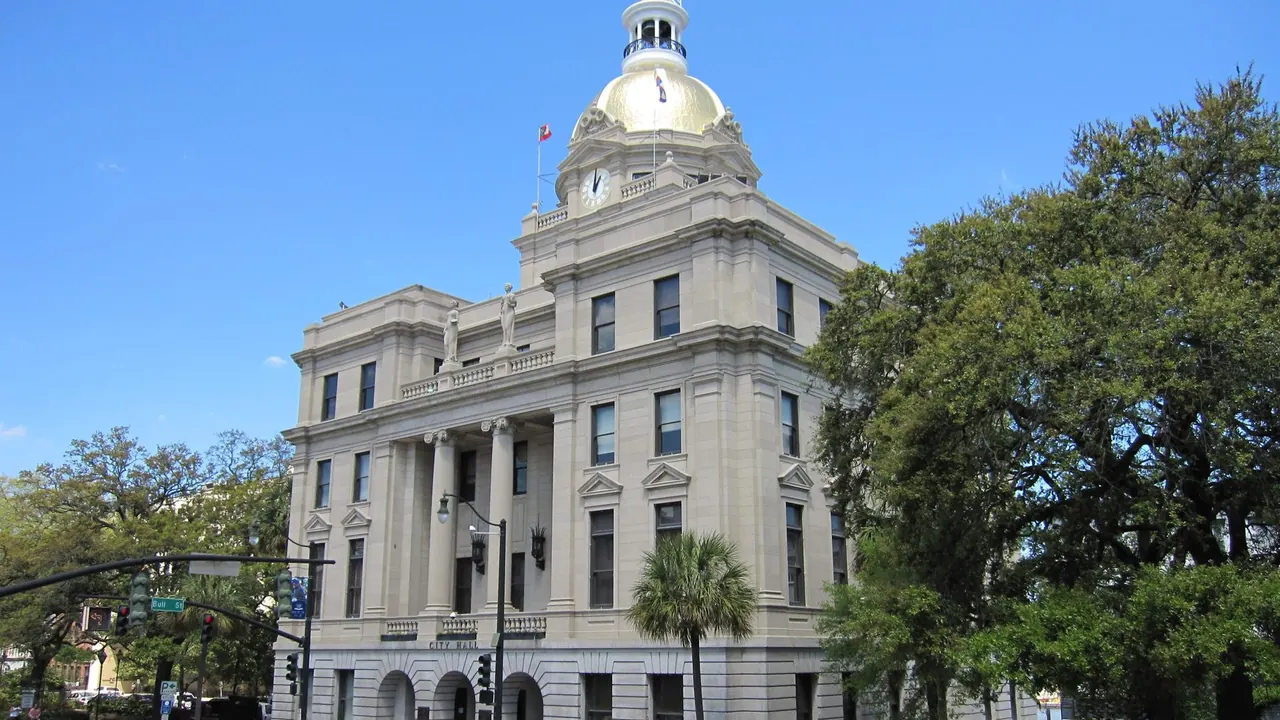
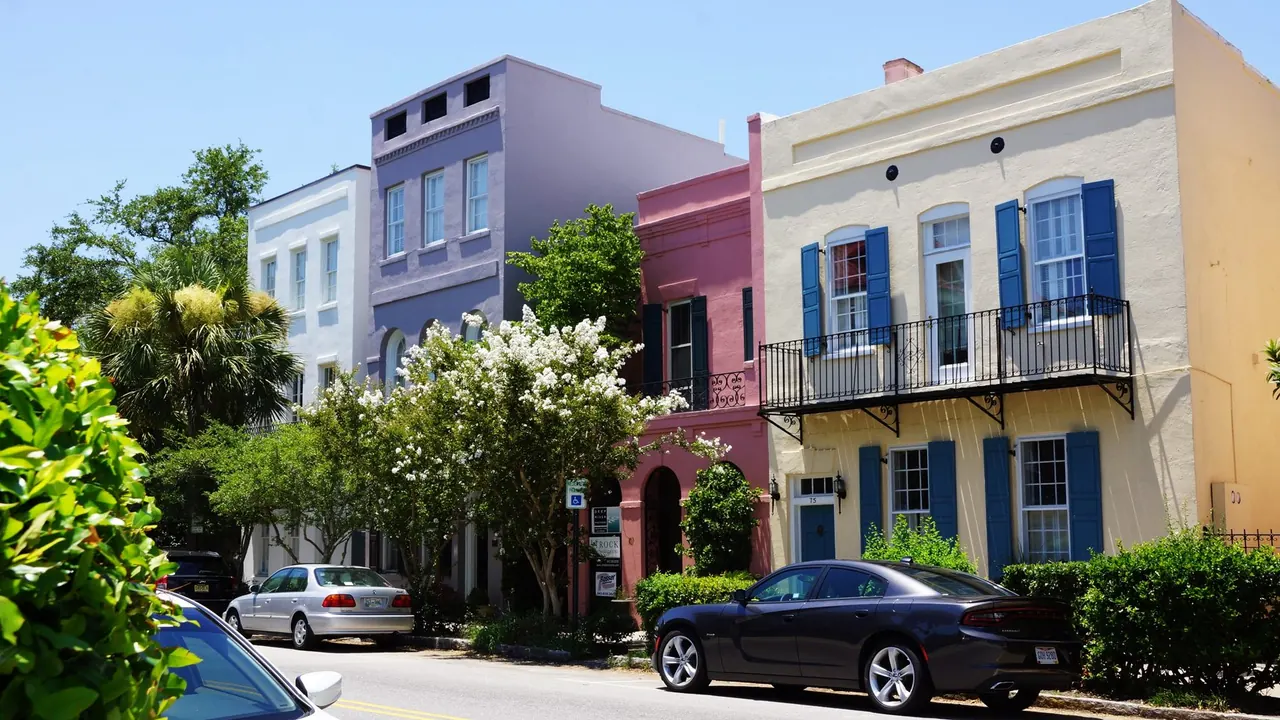
Photos: Savannah by Chris M Morris, CC BY 2.0, cropped; Charleston by NealVickers, CC BY-SA 4.0, cropped.
Savannah or Charleston?
Our verdict in twelve categories, each scored against the same fixed benchmark cities, and the climate month by month, so you can choose for your trip.
Choose Savannah for
- getting around
- nightlife
- prices
Savannah suits travellers who want to park the car and wander. Its grid of shaded squares puts hotels, sights and dinner within a short walk of each other, and evenings are looser and more sociable, with drinks carried from bar to bar along the cobbles. It costs a little less than Charleston, and as a slow, atmospheric weekend it is hard to beat, as long as the beach is a side trip rather than the point.
Choose Charleston for
- beaches
- food and drink
- shopping
Charleston is the better choice for a trip that mixes old streets with time by the sea and serious eating. It has three barrier-island beaches close by instead of one, a deeper restaurant scene built on Lowcountry and Gullah Geechee cooking, and more to keep children busy, from the aquarium to an aircraft carrier. Expect to pay more for all of it and to need a car once you leave the peninsula.
Scoreboard
Twelve categories on one fixed scale from 0 to 100. The shaded stretch is the gap between the two.
Your match
Pick a travel style or drag the sliders, and both match scores follow your weighting.
Too close to call, 2 points apart
Wins on getting around and nightlife with your weighting.
Wins on beaches and food and drink with your weighting.
What matters to you?
Category by category
What the scores mean for a trip.
Beaches & swimming
Charleston has the stronger beach side by some distance, mostly because it gives you choice. Folly Beach is casual and surfy with its pier, Sullivan's Island is quiet and residential behind its dunes and old forts, Isle of Palms is broad and resort-like, and Kiawah and Seabrook have long empty stretches further south.
Savannah, set on its river, has just Tybee Island, a wide, flat, low-key beach about half an hour's drive away that most visitors treat as a single day out. The water off both is warm in summer and greenish rather than clear, so what really separates them is how many beaches you can reach and how much beach time they can fill.
Food & drink
Both cook from the same Lowcountry pantry of shrimp and grits, she-crab soup and fire-roasted oysters, but Charleston takes it further. Its chefs work the Gullah Geechee and West African roots seriously, from fine dining in old townhouses to whole-hog barbecue, and there is enough along upper King Street, in the French Quarter and out at Shem Creek to fill a week. The catch is that the best tables need booking well ahead.
Savannah's scene is smaller and more homely. Its signature is the family-style dining room, with platters passed down long shared tables, alongside a handful of chef-led kitchens south of Forsyth Park. Its riverfront leans towards fried seafood for passing crowds. Neither city offers much beyond Southern cooking.
Culture & sights
These two are closely matched, but they reward different interests. Charleston's draw is history told through buildings and places: the houses south of Broad Street and Rainbow Row, the Nathaniel Russell and Aiken-Rhett houses, the boat out to Fort Sumter, and two museums that face the slave trade directly.
Savannah is more about the townscape itself. Oglethorpe's plan of garden squares, the ironwork and church spires, Factors Walk, the Telfair Museums' art and the moss-hung graves of Bonaventure Cemetery make a place you take in by walking more than by visiting. Either city fills two or three days.
Nightlife
Charleston's nights are built around sitting down: a long dinner, then a rooftop or cocktail bar on upper King Street, which fills with students and weekend groups on Fridays and Saturdays. There is almost nothing in the way of dance clubs, so anyone hoping to dance late will come away disappointed.
Savannah is the livelier night out, and the difference is less about venues than about the street. Drinking in the open is allowed across the historic district, so the evening spills outdoors, and art students keep a few dance nights going on the edges of downtown, something Charleston largely lacks. On St Patrick's Day the city hosts one of the largest street parties in the South. On other nights it winds down early too, and riverfront weekends can be loud with hen parties.
Nature & outdoors
Both sit in the same flat salt-marsh country, and in both the water is the way in, but Charleston has more of it within reach. Marsh kayak trips there regularly meet dolphins, the Francis Marion National Forest and the ACE Basin add quiet trails with alligators and birdlife, and Kiawah and Edisto have good cycling along wild shore.
Savannah's outdoors is gentler and closer in: high-tide paddles through the marsh, birding for wood storks and egrets, the oak avenue at Wormsloe, Skidaway Island's trails and the cycle path out to Tybee. It is pleasant for a morning or two rather than for several days outdoors.
Day trips
The best day trip from each city is the other one, about two hours apart by car, and both can reach Beaufort and the Gullah culture of the Sea Islands. Beyond that, the two go in different directions. Charleston's outings are close by and mostly about plantations. Middleton Place, Magnolia and Drayton Hall along the Ashley River and Boone Hall in Mount Pleasant combine formal gardens with the history of slavery, while McLeod on James Island is given over entirely to that history. Georgetown and McClellanville are smaller stops up the coast.
Savannah's trips follow the coast instead. Fort Pulaski is on the road to Tybee, Hilton Head's resort island is under an hour away, and further south lie Jekyll Island's millionaires' district and the village on St Simons. From either city, every one of these trips needs a car.
Good for families
Charleston is the easier city with children. The aquarium and children's museum sit together on the downtown waterfront, Patriots Point lets them clamber through an aircraft carrier, and the Fort Sumter boat and Charles Towne Landing's replica ship hold the attention of school-age children. Its several beaches give more sea days too.
Savannah manages without being designed for children. The squares and Forsyth Park give room to run, the free river ferry and trolley tours are simple treats, older children like the ghost walks and forts, and Tybee has a sea-turtle centre. Without an aquarium or large attraction, it runs out sooner.
Getting around
Savannah is the more comfortable city to get around without a car. Its grid of squares packs hotels, sights and restaurants into short walks, with a free shuttle and a little ferry across the river for the rest.
Charleston's peninsula is also flat and walkable, with pedicabs and a free shuttle, but the things visitors come for are further apart, and the beaches and plantations sit well beyond the reach of buses. Downtown parking is tight too. Both cities need a car or taxis for Tybee, Bonaventure or the barrier islands.
Shopping & style
Charleston gives you more to browse. King Street changes along its length from antiques and galleries to fashion brands and then independent design shops, and City Market is where Gullah weavers sell sweetgrass baskets, the one truly local thing to take home.
Savannah's Broughton Street is smaller, a row of boutiques and home-goods shops, with the art school's influence showing in shops selling student and graduate work, and bookshops around the southern squares. Neither has a luxury district.
Affordability
Neither is a cheap stay, but Charleston is the harder one on the budget. Rooms on its peninsula cost as much as in much larger American cities, its well-known restaurants charge accordingly, and parking, taxis and paid house and plantation tours keep adding up.
Savannah is somewhat gentler. Midweek visits in summer and motels out by the highway bring costs down noticeably, though the car then becomes part of the budget. In both, the best pleasures, walking the old streets, squares and waterfront, are free.
Live music & performing arts
Each city is built around one big spring festival, and they differ in kind. Charleston's Spoleto Festival USA, with Piccolo Spoleto alongside, covers the whole stage: opera, dance, theatre, chamber music and jazz. The rest of the year brings plays at the Dock Street Theatre, the symphony at the Gaillard Center and Gullah storytelling and song.
The Savannah Music Festival is more purely about music, from chamber works to blues and Americana in old theatres and churches, and an autumn jazz festival in Forsyth Park gives Savannah a second season. Outside those dates, both are quiet.
Wellness & relaxation
Neither city has any bathing culture, and both offer rest through their slow pace more than through spas. Charleston has the edge for pampering, with resort spas out on Kiawah Island, and evenings by the water at White Point Garden.
Savannah's calm lives on its benches under the oaks and in the courtyards of its old inns. Its quieter southern squares are the place to stay, since River Street gets loud at weekends.
When should you go?
Pick your month. The climate figures are measured averages, not a forecast.
Savannah in July
Charleston in July
Daytime high, °C
Rainfall in the month, mm
Temperature and rainfall are climate normals, averaged over the years shown. Savannah: 1991-2020 normals, Savannah Airport (9.9 km from centre). Charleston: 1991-2020 normals, Charleston Airport (16.1 km from centre).
The two cities share almost the same climate, so the choice of season works the same way for both. Spring and autumn are the times for walking: March to May and October to November bring warm, comfortable days, while June to August is hot and humid, with highs around 33°C that make midday sightseeing hard work. Winter is mild and fine for the streets, but the sea is too cold for most swimmers from December to March.
For the beach, June to September is the warmest stretch, with the Atlantic near 28°C off Charleston and a degree warmer off Tybee by July and August, and swimming stays pleasant into October. Summer is also the wet season in both, with heavy afternoon storms. Savannah's rain peaks in June, while Charleston stays wetter for longer, at around 170mm a month in July and August.
Which traveller are you?
On a beach and sun trip, Charleston is the clear pick. Folly Beach, Sullivan's Island and Isle of Palms each have a different feel and lie within about half an hour, while Savannah gives you only Tybee Island.
For a short city break, Savannah works better. You can walk everything from your hotel, square by shaded square, the evenings run easily between River Street and City Market, and staying costs a little less than in Charleston.
On a family trip with children, Charleston has more to offer. The South Carolina Aquarium, the Children's Museum and the aircraft carrier at Patriots Point fill rainy or hot afternoons, and the choice of beaches gives easy sea days. Savannah has no comparable attractions for children.
Before you go
| Measure | Savannah | Charleston |
|---|---|---|
| Currency | US Dollar (USD) | US Dollar (USD) |
| Sockets | AB120 V, 60 Hz | AB120 V, 60 Hz |
| Driving side | Right | Right |
| Time zone | UTC-5, UTC-4 in summer | UTC-5, UTC-4 in summer |
| Emergency number | 911 | 911 |
| Elevation | 15 m | 6 m |
| Main airport | Savannah Hilton Head International Airport (SAV)12 km from centre39 non-stop destinations | Charleston International Airport (CHS)16 km from centre56 non-stop destinations |
| Public holidays this year | 12 days | 12 days |
By the numbers
| Measure | Savannah | Charleston |
|---|---|---|
| City population | 147,780 | 150,227 |
| People per km² | 524 | 532 |
| Museums within 10 km | 19 | 19 |
| UNESCO World Heritage sites within 50 km | 0 | 0 |
| Swim season, months above 21 °C | 6 months | 6 months |
Where else could you go?
Every comparison below shares a destination with this one, so you can follow Savannah or Charleston somewhere new.