
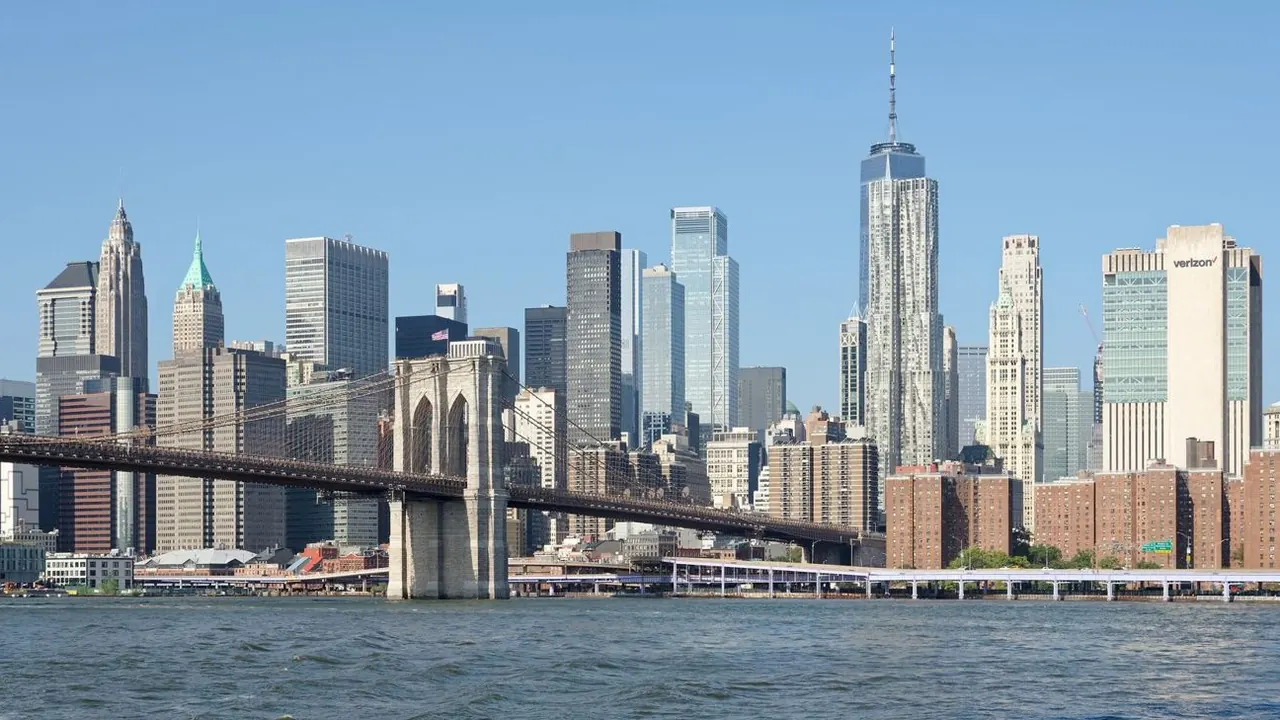
Photos: Berlin by Claudia Solano, Pexels License; New York by Jakub Hałun, CC BY 4.0, cropped.
Berlin or New York?
Our verdict in twelve categories, each scored against the same fixed benchmark cities, and the climate month by month, so you can choose for your trip.
Choose Berlin for
- prices
- wellness
- families
Berlin suits the traveller who wants a big capital without the big-capital bill. Rooms, meals and evenings out cost noticeably less, the twentieth-century history is told at the places where it happened, and the techno clubs that run from Saturday into Monday are a reason in themselves to go. It is also the calmer choice, with sauna culture, lakes and long Sunday mornings in the parks, and slightly easier with small children.
Choose New York for
- shopping
- food and drink
- beaches
New York is the pick if you want the most of everything and can pay for it. The eating is among the widest anywhere, the shopping runs from Fifth Avenue flagships to Brooklyn vintage, and Broadway, the Met Opera and the Village jazz clubs give it the deepest stage calendar of any city. It is the more intense trip, and the more expensive one, but few places pack as much into a week.
Scoreboard
Twelve categories on one fixed scale from 0 to 100. The shaded stretch is the gap between the two.
Your match
Pick a travel style or drag the sliders, and both match scores follow your weighting.
Too close to call, 2 points apart
Wins on prices and wellness with your weighting.
Wins on shopping and food and drink with your weighting.
What matters to you?
Category by category
What the scores mean for a trip.
Beaches & swimming
Neither is a beach destination, but New York at least has the ocean. Coney Island, Brighton Beach and the longer, surfier Rockaways are reachable by subway, and the Atlantic is pleasant to swim in through high summer, if crowded at weekends.
Berlin swims in lakes instead. The sandy lido at Wannsee, the Müggelsee and small forest lakes such as Schlachtensee are lovely on a hot afternoon, but the season is short and the sea is three hours away.
Food & drink
Berlin eats well on range rather than tradition: currywurst and pork knuckle, Turkish bakeries and grills in Kreuzberg and Neukölln, good Vietnamese and Levantine cooking, and street-food evenings in the market halls. It is casual, cheap and satisfying.
New York goes much further. Whole neighbourhoods cook their own cuisines, from Flushing's Chinese to Jackson Heights' Tibetan and Colombian food, and the slice, the bagel and the deli pastrami are classics in their own right. On top of that sits one of the deepest fine-dining scenes anywhere, though the best tables are expensive.
Culture & sights
Both are first-rank museum cities, and the difference lies in what they show. Berlin pairs Museum Island, Nefertiti and the Gemäldegalerie with the history of war and division at the Reichstag, the Holocaust memorial and the Wall on Bernauer Strasse, which no other city can offer in the same way.
New York's strength is sheer scale of art, with the Met, MoMA and Museum Mile, and landmarks the whole world recognises, from the Statue of Liberty to Grand Central. Its history is read in brownstones, cast-iron fronts and tenements rather than at sites of upheaval.
Nightlife
Two of the world's great nights out, with different centres of gravity. Berlin is the clubbing pilgrimage: techno in old power stations and warehouses, strict doors, no closing time and parties that last into Monday, with smoky Kneipen and canal-side beer around them.
New York's strength is breadth. Speakeasy cocktail bars and dives in the East Village, wine bars in the West Village, rooftop bars facing the skyline and the gay bars of the Village sit alongside a warehouse club scene in Bushwick and Williamsburg.
Nature & outdoors
Berlin's outdoors is flat and full of water. You cycle the old runways at Tempelhof, walk in the Grunewald forest, sail on the Havel and canoe through the Brandenburg lakes. It is pleasant country, but there are no climbs anywhere in it.
New York gives an active visitor a little more. Beyond Central Park and the waterfront walks, a train up the Hudson reaches the steep, rocky scrambles of Breakneck Ridge in the Hudson Highlands. The October colour there has no match around Berlin.
Day trips
The choice is similar in size, with different kinds of trips. Berlin's are mostly German history and architecture by train: Sanssouci in Potsdam, Reformation Wittenberg, Bach's Leipzig, the Bauhaus at Dessau and baroque Dresden.
New York looks to American history and art. Philadelphia's Independence Hall, Princeton and Yale's New Haven are easy by rail, and the Hudson Valley adds Gilded Age estates, Dia Beacon and Storm King's sculpture park.
Good for families
Berlin is the easier city to manage with small children. Prams are simple on the flat streets and the trains, and there are playgrounds in every district. There are also two big zoos, the Zoologischer Garten and the leafy Tierpark, and a towering dinosaur in the Natural History Museum.
New York has just as much to see, from the Bronx Zoo and the dinosaur halls to the aircraft carrier on the Hudson and the free Staten Island Ferry. It simply takes more effort. Stair-only subway stations, cramped hotel rooms and the Midtown crowds tire young children faster, so it pays to stay near a park.
Getting around
Berlin is a city of several centres. Mitte, Kreuzberg, Prenzlauer Berg and Charlottenburg are each easy to walk, but you need the U-Bahn, S-Bahn or trams to get between them. Cycling also works well, because the streets are flat and there are plenty of bike lanes.
Manhattan works the other way round. Thanks to the grid and the closeness of the main sights, you can walk for much of the trip, and the subway runs all night for the rest. Its weak points are the express and local trains sharing lines, stairs at many stations and the awkward journey in from the airports.
Shopping & style
This is one of the widest gaps between the two. New York covers every level: Fifth Avenue flagships, Madison Avenue luxury, Bergdorf Goodman and Macy's, SoHo brands and independent boutiques in Nolita, plus specialist shops for rare books, sneakers and cameras.
Berlin is a city for browsing rather than spending. KaDeWe and the Kurfürstendamm handle the brands, but the real pleasure is concept stores around Hackescher Markt and Sunday flea markets at Mauerpark for East German curios and vinyl.
Affordability
Berlin is far kinder to the wallet. Hotels are cheaper than in most capitals, cheap meals are everywhere and a beer in a Kneipe stays reasonable, though museum entry and fine dining add up on a culture-heavy trip.
New York is among the most expensive cities to visit, with small, costly Manhattan rooms and tax and tips on every bill. Slices, food carts, the free ferry and the parks help, and staying in Brooklyn or Queens saves on rooms.
Live music & performing arts
Berlin is outstanding: three opera houses, the Berlin Philharmonic in the Philharmonie, and famous theatre companies such as the Berliner Ensemble, though most plays are in German.
New York still edges ahead, and the language barrier disappears. Broadway and Off-Broadway lead the English-speaking stage, Lincoln Center holds the Met Opera and New York City Ballet, Carnegie Hall hosts the top orchestras, and the jazz clubs of the Village and Harlem play every night.
Wellness & relaxation
Berlin is the easier place to unwind. German sauna culture is a real part of life, with large clothes-free sauna complexes and the columned Stadtbad Neukölln, and the city moves at a slower pace than its size suggests, with lakes and park afternoons close at hand.
New York has unexpected bathing traditions, from the old Russian and Turkish baths in the East Village to Korean spas in Queens, but the noise and pace work against rest, so calm means a morning in the Cloisters' gardens or the Botanic Garden.
When should you go?
Pick your month. The climate figures are measured averages, not a forecast.
Berlin in July
New York in July
Daytime high, °C
Rainfall in the month, mm
Temperature and rainfall are climate normals, averaged over the years shown. Berlin: 1991-2020 normals, Berlin / Alexanderplatz (0.9 km from centre). New York: 1991-2020 normals, LaGuardia Airport (12.9 km from centre).
Both cities have cold winters and warm summers, but New York runs hotter at both ends of the warm season. Berlin is at its best from May to September, when days are mild to warm, peaking around 25°C in July and August, and the sunshine is long; the lakes are swimmable only in high summer, and July brings the heaviest showers. From November to February it is grey and cold, with as little as 41 hours of sun in December, so winter visits are for museums, opera and saunas.
New York climbs to around 30°C in July, which can make street walking and stuffy subway platforms tiring, while the Atlantic reaches about 23°C in August for beach days. Rain falls fairly evenly all year, so there is no dry season to aim for. Late May, June, September and October are the most comfortable months for walking, with October adding autumn colour in the parks, while January and February are as cold as Berlin's winter.
Which traveller are you?
On a trip with a tight budget, Berlin lets the money go further. The saving on a room can pay for an extra night or an opera seat, and cheap eating is normal there, not something to hunt for. In New York the same budget means a room out in the boroughs and watching every bill.
For a shopping trip, New York is the stronger pull. In a single week you can go from serious luxury to small designers and specialist dealers without leaving the city. Berlin suits a shopper who would rather browse than spend and prefers a flea market to a flagship.
On a food and nightlife trip, New York gives the fuller evening: dinner from almost any cuisine on earth, then bars that keep pouring into the small hours. Berlin is the better choice only when the night itself is the point and dancing until Monday matters more than the meal.
Before you go
| Measure | Berlin | New York |
|---|---|---|
| Official language | German | - |
| Currency | Euro (EUR) | US Dollar (USD) |
| Sockets | CF230 V, 50 Hz | AB120 V, 60 Hz |
| Driving side | Right | Right |
| Time zone | UTC+1, UTC+2 in summer | UTC-5, UTC-4 in summer |
| Emergency number | 112 | 911 |
| Elevation | 34 m | 25 m |
| Main airport | Berlin Brandenburg Airport (BER)19 km from centre161 non-stop destinations | John F. Kennedy International Airport (JFK)21 km from centre189 non-stop destinations |
| Public holidays this year | 10 days | 13 days |
By the numbers
| Measure | Berlin | New York |
|---|---|---|
| City population | 3,700,577 | 8,804,190 |
| People per km² | 4,153 | 7,256 |
| Museums within 10 km | 157 | 161 |
| UNESCO World Heritage sites within 50 km | 4 | 2 |
| Swim season, months above 21 °C | - | 3 months |
Where else could you go?
Every comparison below shares a destination with this one, so you can follow Berlin or New York somewhere new.
- Philadelphiavs New York
- Leipzigvs Berlin
- Dresdenvs Berlin
- Rehoboth Beachvs New York
- Hamburgvs Berlin
- Bethany Beachvs New York