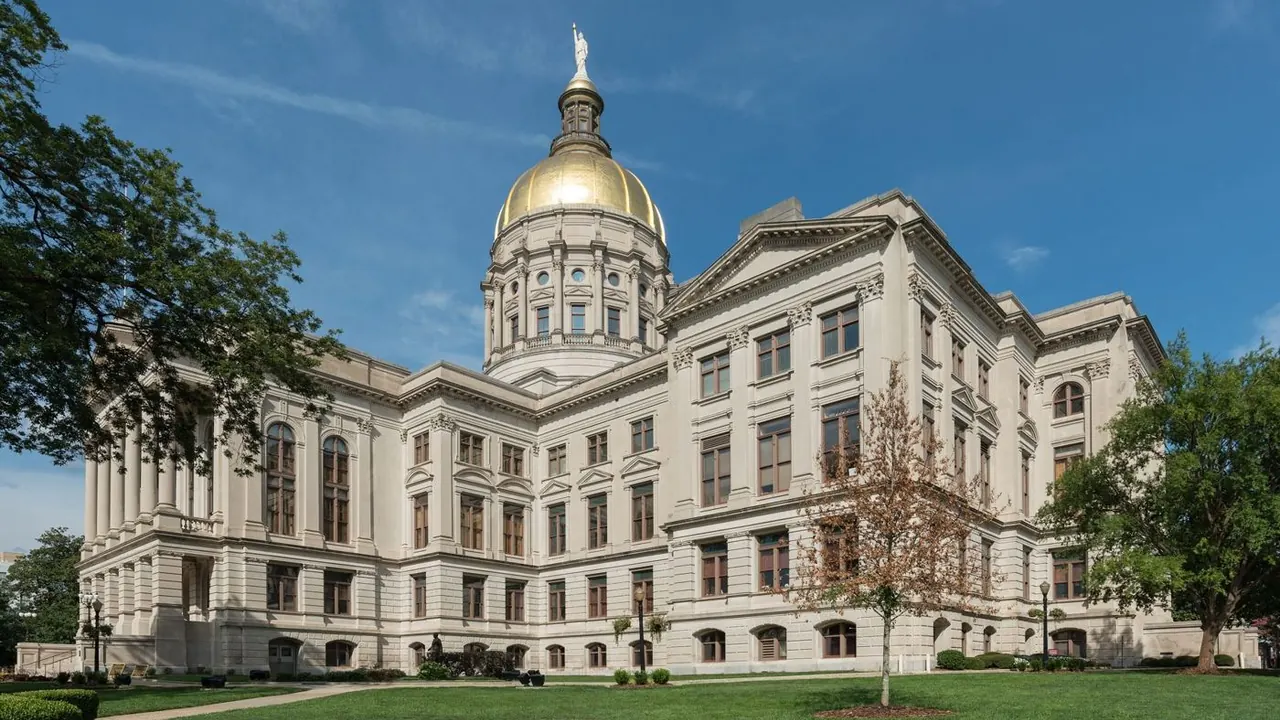
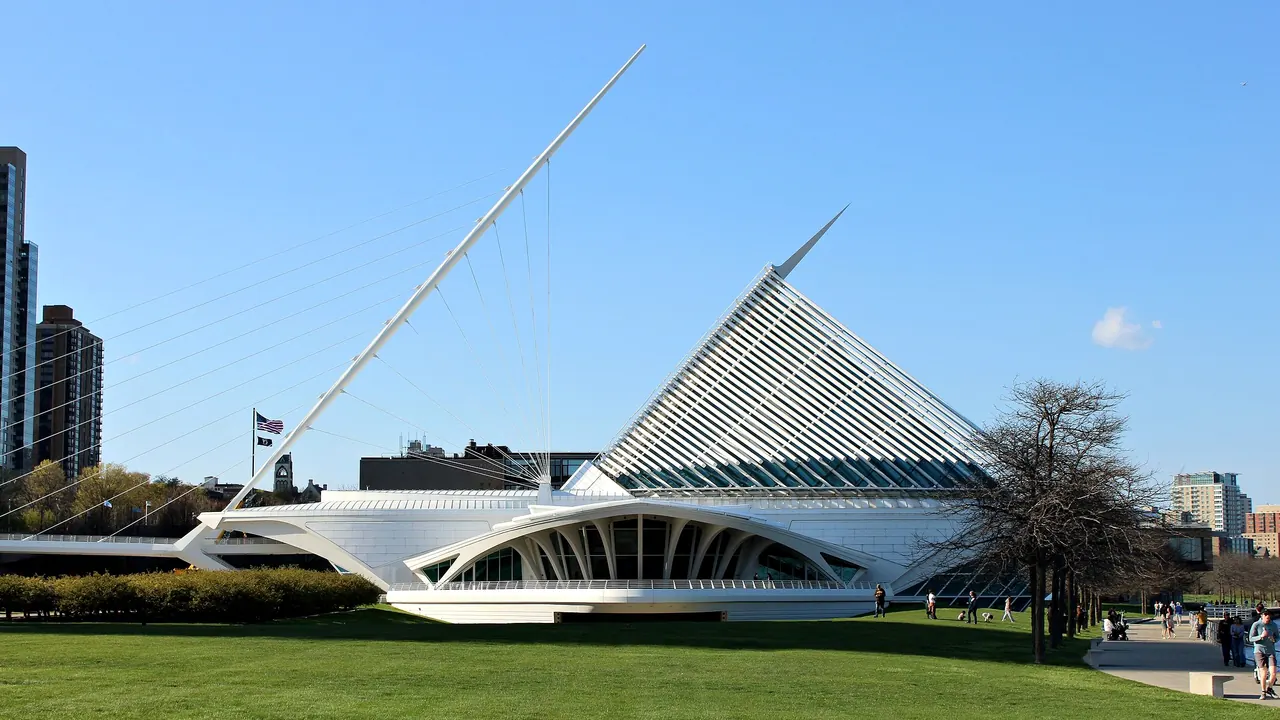
Photos: Atlanta by DXR, CC BY-SA 4.0, cropped; Milwaukee by Michael Barera, CC BY-SA 4.0, cropped.
Atlanta or Milwaukee?
Our verdict in twelve categories, each scored against the same fixed benchmark cities, and the climate month by month, so you can choose for your trip.
Choose Atlanta for
- nightlife
- shopping
- food and drink
Atlanta suits travellers who want a big, varied American city and don't mind driving it. It offers Southern cooking and the immigrant kitchens of Buford Highway, a club scene built on the hip-hop the city exports, the civil rights sites on Auburn Avenue and plenty for children. The Blue Ridge foothills are also close enough for a weekend of walking.
Choose Milwaukee for
- beaches
- getting around
- day trips
Milwaukee is the smaller, gentler choice, and it's best for a summer trip built around the lakefront. Its compact centre, Riverwalk and Third Ward can be walked, and Bradford Beach and Summerfest make high summer the time to come. The train to Chicago gives it a day out that nothing near Atlanta can match. Come for taverns, fish fries and festivals rather than shopping or big nights.
Scoreboard
Twelve categories on one fixed scale from 0 to 100. The shaded stretch is the gap between the two.
Your match
Pick a travel style or drag the sliders, and both match scores follow your weighting.
Wins on nightlife and shopping with your weighting.
Wins on beaches and getting around with your weighting.
What matters to you?
Category by category
What the scores mean for a trip.
Beaches & swimming
Neither city is a beach destination, but Milwaukee at least has a shoreline. Bradford Beach lies right in town below the East Side bluffs, with volleyball courts and cabanas. In late summer Lake Michigan is warm enough for a quick, bracing swim, as long as an offshore wind hasn't turned it cold overnight.
Atlanta has no coast within a day's reach. The nearest swimming is at Lake Lanier or Lake Allatoona, about an hour's drive away. The water there is much warmer, but the outing is a family day at a lake rather than a beach on your doorstep.
Food & drink
Atlanta eats better and more widely. Its Southern cooking ranges from meat-and-three cafeterias to west-side soul food and serious Sunday brunch. Buford Highway adds a second food scene of its own, where Korean, Vietnamese, Ethiopian and Mexican cooks feed their own communities, and chef-led restaurants in Inman Park and the Westside add depth.
Milwaukee's food is narrower and more homely: the Friday fish fry, bratwurst, cheese curds, frozen custard and a supper club evening with a brandy old fashioned. Its real strength is beer, from the old brewery buildings to the taprooms of Walker's Point, while fine dining is thin.
Culture & sights
The two are close in depth, and each fills two or three days, but they offer different things. Atlanta's sights carry historical weight: the King birth home and Ebenezer Baptist Church on Auburn Avenue and the civil rights centre downtown, with the High Museum and the Carter library alongside.
Milwaukee is more about architecture and its brewing-era past. The Calatrava pavilion of its lakefront art museum, the Harley-Davidson Museum, the Pabst Mansion and the cream-brick warehouses of the Third Ward give it an older townscape to wander, which Atlanta, burned in 1864, largely lacks.
Nightlife
Atlanta's nights are bigger and louder. Its clubs are the home ground of Southern hip-hop and trap, and Edgewood Avenue packs dive bars and small dance floors together. Midtown has one of the South's largest LGBTQ scenes, and Buckhead does bottle service. The drawback is that you need a ride to get from one area to the next.
Milwaukee is a tavern town rather than a club town. The real night out is the corner bar with a pool table and its regulars, while Brady Street and Walker's Point add cocktails and craft beer. Summer patios and beer gardens make for its liveliest weeks.
Nature & outdoors
Atlanta reaches further into real landscape. Stone Mountain's granite dome and the wooded Chattahoochee bluffs are close by. About two hours north are the Blue Ridge foothills, Amicalola Falls and the southern end of the Appalachian Trail.
Milwaukee's outdoors centre on the lake: Olmsted's Lake Park, flat cycling on the Oak Leaf Trail and kayaking through downtown. The glacial hills of the Kettle Moraine are the main escape inland. They're gentle rather than dramatic, and best visited between May and October.
Day trips
Milwaukee wins largely because of one neighbour. Chicago is about an hour and a half away by train, with no car needed. Frank Lloyd Wright's buildings in Racine, the stone mills of Cedarburg, Kohler and the lakeside capital, Madison, fill other days.
From Atlanta, every outing means driving. Athens, Dahlonega's gold-rush square and the antebellum houses of Madison, Georgia, are pleasant, and Chattanooga makes a longer day. Savannah is too far for a return trip in one day.
Good for families
Atlanta has more to keep children busy. There are the whale sharks and belugas of the Georgia Aquarium, Fernbank's dinosaurs, Zoo Atlanta's gorillas, the Center for Puppetry Arts and, for older children, Six Flags. The price is long drives and a hot summer.
Milwaukee is smaller but calmer with children. It has a well-regarded county zoo, Discovery World on the lakefront and the Mitchell Park Domes for cold days. In summer, the beach, a baseball game and the lakeside festivals make for easy family days.
Getting around
Both cities are built for cars, but Milwaukee's centre is easier on foot. Downtown, the Third Ward and the lakefront are close together, linked by the Riverwalk and the short Hop streetcar line, and parking is simple elsewhere.
Atlanta does have rail. MARTA works well on the one corridor from the airport through downtown and Midtown to Buckhead. Off that line, the sprawl, heavy motorway traffic and disappearing pavements make a car or ride-hailing almost unavoidable.
Shopping & style
Atlanta is the place for brands. The two malls facing each other on Peachtree Road and the designer shops of Buckhead Village cover luxury labels and department stores, and Little Five Points adds vintage clothing and records.
Milwaukee keeps things small and independent: boutiques and design shops in the Third Ward warehouses, vintage on Brady Street, and Wisconsin cheese and sausage from the Public Market. Neither city has a local craft, but Milwaukee's souvenirs, from Harley gear to local beer, are more particular to the place.
Affordability
By American standards both are fairly reasonable. Hotels cost well below the coasts, and both have the usual extras of tax, tips and car hire. The difference is where you save. In Atlanta, the savings are the Buford Highway restaurants and the free civil rights sites, while the big family attractions are expensive.
In Milwaukee, the cheap pleasures are tavern beer, fish fries, and a lakefront and festival programme that costs little. Big summer weekends push hotel rates up sharply, though.
Live music & performing arts
Atlanta has the broader programme. The Atlanta Symphony Orchestra and the Alliance Theatre share the Woodruff Arts Center, and the Fox Theatre hosts touring Broadway shows. As a centre of hip-hop, R&B and gospel, the city draws major tours all year, with the Tabernacle and the small rooms of East Atlanta Village below them.
Milwaukee has a full set of companies for its size, from the Florentine Opera to the Milwaukee Repertory Theater, and the 1895 Pabst Theater is a fine place to see a band. Its highlight is Summerfest on the lakefront, so it's at its best in summer.
Wellness & relaxation
Neither city is a place to unwind, but Atlanta has the more interesting option. Large Korean bathhouses in the northeastern suburbs, about half an hour out, offer hot and cold pools and sauna rooms, and Buckhead and Midtown have hotel spas.
Milwaukee has no bathing tradition. Rest here means its slower pace and a walk along the lakefront or the Riverwalk, and for a proper spa day you drive an hour north to Kohler.
When should you go?
Pick your month. The climate figures are measured averages, not a forecast.
Atlanta in July
Milwaukee in July
Daytime high, °C
Rainfall in the month, mm
Where the figures come from
Atlanta has no rain gauge within 25 km of the centre, so its rainfall comes from a gridded climate dataset read at the city rather than from a gauge further away.
Atlanta's sunshine is measured 29 km from the centre, at Hartsfield-Jackson Atlanta.
Temperature and rainfall are climate normals, averaged over the years shown. Atlanta: 2006-2020 (sunshine 1981-2010, rainfall 1991-2020) normals, Atlanta / Carroll Heights (12.5 km from centre). Milwaukee: 1991-2020 (sunshine 1981-2010) normals, Gen Mitchell International Airport (11.2 km from centre).
Atlanta is at its best in spring and autumn. April, May and October bring warm, sunny days in the low to mid twenties, good for walking the BeltLine or heading to the mountains. From June to August it climbs to around 32°C, with sticky humidity. Winters are mild enough for sightseeing, but rain falls through the whole year with no dry season, peaking at 137mm in March.
Milwaukee runs the other way. From December to February daytime highs hover around freezing, dipping to -1°C in January, so outdoor life largely stops. June to August is the time to go, with highs near 27°C and the sunniest weeks of the year. By August Lake Michigan warms to about 21°C, enough for a short swim. September is still pleasant, but by November the cold has returned.
Which traveller are you?
For a food and nightlife trip, Atlanta is the stronger pick. Shrimp and grits, smoked barbecue and the Korean and Vietnamese kitchens of Buford Highway lead on to clubs playing the city's own hip-hop, though you'll need a ride between districts.
For a short city break, Milwaukee is easier. Downtown, the Third Ward and the Riverwalk are close together on foot, and The Hop streetcar fills the gaps. Two or three days cover the Calatrava art museum, a round of corner taverns and a Friday fish fry.
On a shopping trip, Atlanta has far more to offer. The facing malls on Peachtree Road and the boutiques of Buckhead Village carry luxury labels and department stores. Milwaukee's Third Ward shops and cheese counters suit an afternoon's browsing rather than a whole trip.
Before you go
| Measure | Atlanta | Milwaukee |
|---|---|---|
| Currency | US Dollar (USD) | US Dollar (USD) |
| Sockets | AB120 V, 60 Hz | AB120 V, 60 Hz |
| Driving side | Right | Right |
| Time zone | UTC-5, UTC-4 in summer | UTC-6, UTC-5 in summer |
| Emergency number | 911 | 911 |
| Elevation | 225 m | 188 m |
| Main airport | Hartsfield Jackson Atlanta International Airport (ATL)14 km from centre238 non-stop destinations | General Mitchell International Airport (MKE)12 km from centre34 non-stop destinations |
| Public holidays this year | 12 days | 12 days |
By the numbers
| Measure | Atlanta | Milwaukee |
|---|---|---|
| City population | 498,715 | 577,222 |
| People per km² | 1,433 | 2,302 |
| Museums within 10 km | 27 | 14 |
| UNESCO World Heritage sites within 50 km | 0 | 0 |
| Swim season, months above 21 °C | - | 1 month |
Where else could you go?
Every comparison below shares a destination with this one, so you can follow Atlanta or Milwaukee somewhere new.
- Chicagovs Milwaukee
- Wisconsin Dellsvs Milwaukee
- Chattanoogavs Atlanta
- Gatlinburgvs Atlanta
- Pigeon Forgevs Atlanta
- Ashevillevs Atlanta