
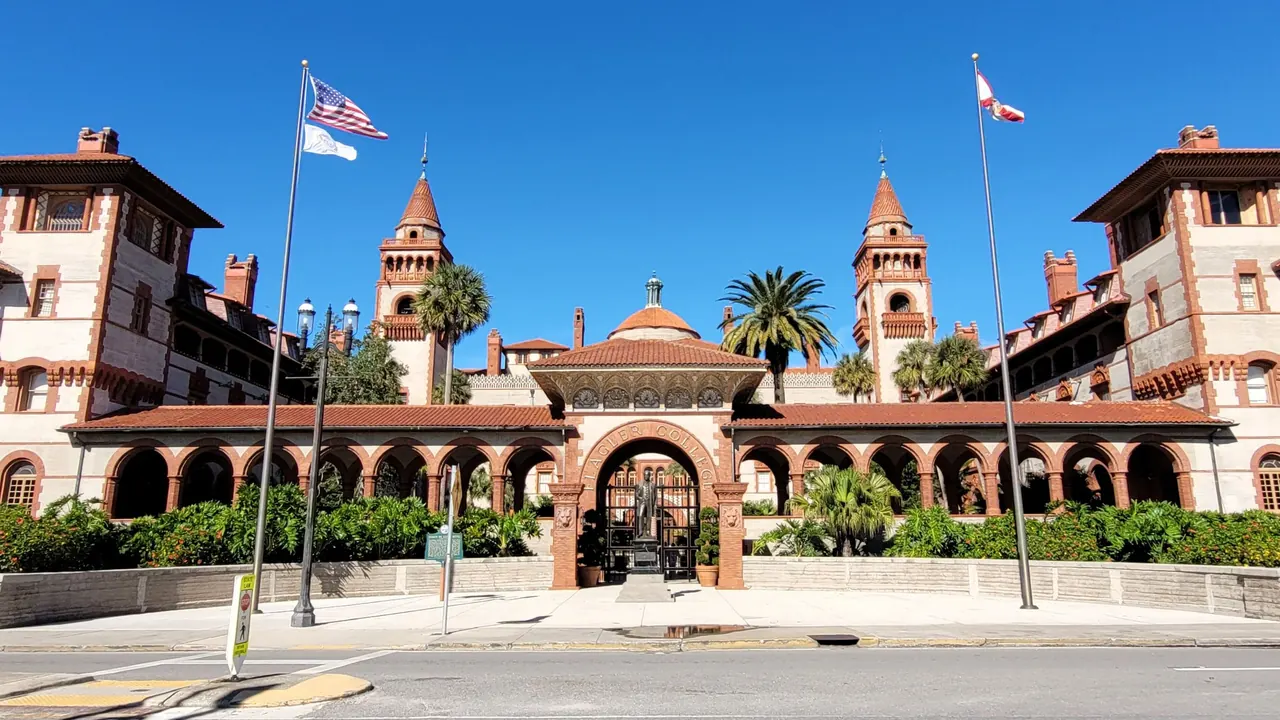
Photos: Atlanta by DXR, CC BY-SA 4.0, cropped; St. Augustine by Farragutful, CC BY-SA 4.0, cropped.
Atlanta or St. Augustine?
Our verdict in twelve categories, each scored against the same fixed benchmark cities, and the climate month by month, so you can choose for your trip.
Choose Atlanta for
- nightlife
- food and drink
- live music and the arts
Atlanta suits travellers who want a big Southern city with plenty to do after dark. It wins on food, from west-side soul food kitchens to the immigrant restaurants of Buford Highway, and on nightlife built around the city's hip-hop clubs. It also has a proper orchestra, opera and ballet, the civil rights sites on Auburn Avenue and a long list of big family attractions. The price is a lot of driving across a spread-out city with no sea in reach.
Choose St. Augustine for
- beaches
- getting around
- culture and sights
St. Augustine is the better pick for a slower vacation that mixes history with the beach. Its Spanish colonial lanes and the Castillo give it an old town that Atlanta lost in 1864, and the wide sands of Anastasia Island are a short drive from the fort. Evenings are gentle and the food is mostly seafood, so come for days in the sun and on old streets rather than for big nights.
Scoreboard
Twelve categories on one fixed scale from 0 to 100. The shaded stretch is the gap between the two.
Your match
Pick a travel style or drag the sliders, and both match scores follow your weighting.
Wins on nightlife and food and drink with your weighting.
Wins on beaches and getting around with your weighting.
What matters to you?
Category by category
What the scores mean for a trip.
Beaches & swimming
This is where the two differ most. Atlanta sits four to five hours from either coast, so a swim means a hotel pool or a summer lake day at Lanier or Allatoona with the local families.
St. Augustine has a real Atlantic shore within ten to fifteen minutes of the fort. There are the dunes of Anastasia State Park, the long flat sands of St. Augustine Beach and Crescent Beach, and the more local Vilano across the inlet. The water is gently shelving and warm from late spring to autumn, and in winter the beach is still good for long walks.
Food & drink
Atlanta is the far stronger place to eat. It cooks Southern food on home ground, from meat-and-three cafeterias and smoked barbecue to Sunday brunch. Buford Highway adds Korean, Vietnamese, Mexican and Ethiopian kitchens that cook for their own communities, though you need a car to reach them.
St. Augustine's table is narrower: shrimp, fried fish and oysters at casual waterfront places. Its one distinctive note is the Minorcan datil pepper, which goes into hot sauce and a spicy clam chowder. Beyond a few chef-led places around the old town and San Marco, the choice runs out quickly.
Culture & sights
Atlanta was largely burned in 1864 and rebuilt in glass and concrete, so there is little old townscape to stroll. Its sights carry weight instead: Martin Luther King Jr.'s birth home and Ebenezer Baptist Church on Auburn Avenue, the civil rights centre downtown, and the High Museum in Midtown, which gives it a serious art collection that St. Augustine lacks.
St. Augustine comes out ahead because the town itself is the sight. The Spanish founded it in 1565, and today the coquina Castillo de San Marcos guards the bayfront. Behind the fort is an old quarter of balconied houses, walled gardens and the city gate, partly original and partly careful reconstruction. Flagler's Gilded Age hotels add a second layer. One is now a college and the other holds the Lightner Museum.
Nightlife
Atlanta is the place for a big night. Its clubs play the hip-hop and trap the city is known for. Edgewood Avenue packs dive bars into a few blocks, Midtown anchors one of the South's largest LGBTQ scenes and Buckhead has the dressier lounges. Each area stands on its own, though, so plan on rides between them.
St. Augustine's evenings are a drink on a courtyard patio around St. George Street and the bayfront, perhaps with a cover band. It is cheerful at weekends, but there are almost no clubs and the town goes quiet well before the small hours.
Nature & outdoors
Atlanta offers more varied ground. A tall hardwood canopy covers the city, Stone Mountain's granite dome and the Kennesaw battlefield trails are close by, and the Chattahoochee is good for paddling. About two hours north are waterfalls, gorges and the start of the Appalachian Trail.
St. Augustine is entirely flat and watery: salt marsh, dunes and the Matanzas River. Its best outings are on the water and at the water's edge, kayaking creeks where dolphins and ospreys are common, birding in the Guana reserve and paddleboarding on the state park lagoon.
Day trips
Both lists are modest, and both need a car. The difference is in what you drive to. Atlanta's outings are small Georgia towns and the mountains: college-town Athens, Dahlonega's gold-rush square and vineyards, the antebellum houses of Madison and Chattanooga's riverfront.
St. Augustine has fewer charming towns nearby but some bigger names, as long full days. Kennedy Space Center and the Orlando theme parks are each about two hours away, while Jacksonville, Victorian Fernandina Beach and the Daytona speedway are closer.
Good for families
Atlanta has more for children to do. The Georgia Aquarium's whale sharks and belugas, Zoo Atlanta's gorillas, Fernbank's dinosaurs, the puppetry centre and the Six Flags roller coasters could fill a week. The cost is long drives and traffic between them.
St. Augustine offers less, but it is easier. The long-running Alligator Farm, cannon firing at the Castillo and a lighthouse to climb all sit close to a safe, compact centre, and the gentle summer surf gives children a beach day that Atlanta cannot match.
Getting around
St. Augustine is the easier place to get around, though both were built for the car. Its historic district is small and flat, and the fort, St. George Street and Flagler College are minutes apart on foot. Most visitors park once, walk, and drive only to the beaches.
In Atlanta, MARTA's rail line connects the airport, downtown, Midtown and Buckhead. Away from that corridor and the BeltLine trail, the metro area is hilly, has few pavements and suffers heavy rush-hour traffic, so you will be driving or calling rides for most of the trip.
Shopping & style
Atlanta offers far more. Its two big malls on Peachtree Road and the boutiques of Buckhead Village cover department stores and luxury labels, while Little Five Points is good for vintage clothes and records.
St. Augustine's main street sells fudge, T-shirts and pirate trinkets, with better browsing in the galleries and antique shops of Aviles Street. Its local datil-pepper sauces make a better souvenir than anything Atlanta has to take home.
Affordability
Overall costs are similar, but they come from different places. In Atlanta, hotels are reasonable by big-city American standards, while car hire, parking and steep tickets for the big family attractions add up. The King sites are free.
In St. Augustine, the main cost is the room. Historic inns and hotels within walking distance of the old town get expensive at weekends and in peak season. To keep costs down, stay at a highway motel, visit midweek and enjoy the free beaches and old streets.
Live music & performing arts
Atlanta is well ahead. It has a symphony orchestra known for its choral work, new plays at the Alliance Theatre, full opera and ballet seasons, and touring Broadway shows in the 1920s Fox Theatre. Major hip-hop and R&B tours play its arenas, with the Tabernacle and smaller rooms in between.
St. Augustine's main stage is the open-air amphitheatre in the woods on Anastasia Island, which books touring rock, country and folk acts. Beyond that, there are acoustic sets on bar patios and a community theatre.
Wellness & relaxation
Neither city is built for a restful break, but they offer different kinds of rest. Atlanta has the more interesting option in the large Korean bathhouses in its northeastern suburbs, with hot and cold pools and sauna rooms, some open round the clock.
St. Augustine has no bathing tradition and only modest spas. Its calm comes from the slower pace: quiet B&B verandas, courtyard gardens and an evening walk along the bayfront seawall, especially midweek.
When should you go?
Pick your month. The climate figures are measured averages, not a forecast.
Atlanta in July
St. Augustine in July
Daytime high, °C
Rainfall in the month, mm
Where the figures come from
Atlanta has no rain gauge within 25 km of the centre, so its rainfall comes from a gridded climate dataset read at the city rather than from a gauge further away.
Atlanta's sunshine is measured 29 km from the centre, at Hartsfield-Jackson Atlanta.
St. Augustine has no rain gauge within 25 km of the centre, so its rainfall comes from a gridded climate dataset read at the city rather than from a gauge further away.
St. Augustine's sunshine is measured 73 km from the centre, at Jacksonville International.
Temperature and rainfall are climate normals, averaged over the years shown. Atlanta: 2006-2020 (sunshine 1981-2010, rainfall 1991-2020) normals, Atlanta / Carroll Heights (12.5 km from centre). St. Augustine: 2006-2020 (sunshine 1991-2020, rainfall 1991-2020) normals, St Augustine / Kingsley Mobile Home Park (7.6 km from centre).
Atlanta is at its best in April, May and October, when the days are warm and dry enough for walking and the trails north of the city are pleasant. Winters are cool, with January highs around 12°C. July and August reach about 32°C with heavy humidity. Rain falls fairly evenly all year, so no month is reliably dry.
St. Augustine has milder winters, with highs around 18°C, which suit sightseeing but are too cool for swimming. The sea warms to about 28°C from June to September, which makes those the beach months. They are also the wettest, with afternoon storms that peak in September at around 173mm. April, May and November bring plenty of sun and less rain, which is the best balance between the old town and the sand. Neither city gets much relief from the heat in midsummer.
Which traveller are you?
On a beach and sun trip, St. Augustine is the only real choice. Anastasia Island's wide sand and warm summer Atlantic are minutes from the old town, while Atlanta's nearest swimming is a lake an hour away and the coast is half a day's drive.
For a food and nightlife trip, choose Atlanta. Southern cooking, barbecue and the long run of restaurants on Buford Highway give far more range, and its clubs and late bars are a different league from St. Augustine's courtyard pubs, which close early.
On a shopping trip, Atlanta is the better bet. Buckhead's facing malls and designer boutiques, plus the vintage and record shops of Little Five Points, beat St. Augustine's souvenir shops, small galleries and single outlet mall.
Before you go
| Measure | Atlanta | St. Augustine |
|---|---|---|
| Currency | US Dollar (USD) | US Dollar (USD) |
| Sockets | AB120 V, 60 Hz | AB120 V, 60 Hz |
| Driving side | Right | Right |
| Time zone | UTC-5, UTC-4 in summer | UTC-5, UTC-4 in summer |
| Emergency number | 911 | 911 |
| Elevation | 225 m | 152 m |
| Main airport | Hartsfield Jackson Atlanta International Airport (ATL)14 km from centre238 non-stop destinations | Jacksonville International Airport (JAX)76 km from centre48 non-stop destinations |
| Public holidays this year | 12 days | 11 days |
By the numbers
| Measure | Atlanta | St. Augustine |
|---|---|---|
| City population | 498,715 | 14,329 |
| People per km² | 1,433 | 433 |
| Museums within 10 km | 27 | 12 |
| UNESCO World Heritage sites within 50 km | 0 | 0 |
| Swim season, months above 21 °C | - | 8 months |
Where else could you go?
Every comparison below shares a destination with this one, so you can follow Atlanta or St. Augustine somewhere new.
- Daytona Beachvs St. Augustine
- Orlandovs St. Augustine
- Cocoa Beachvs St. Augustine
- Gatlinburgvs Atlanta
- Pigeon Forgevs Atlanta
- Savannahvs St. Augustine