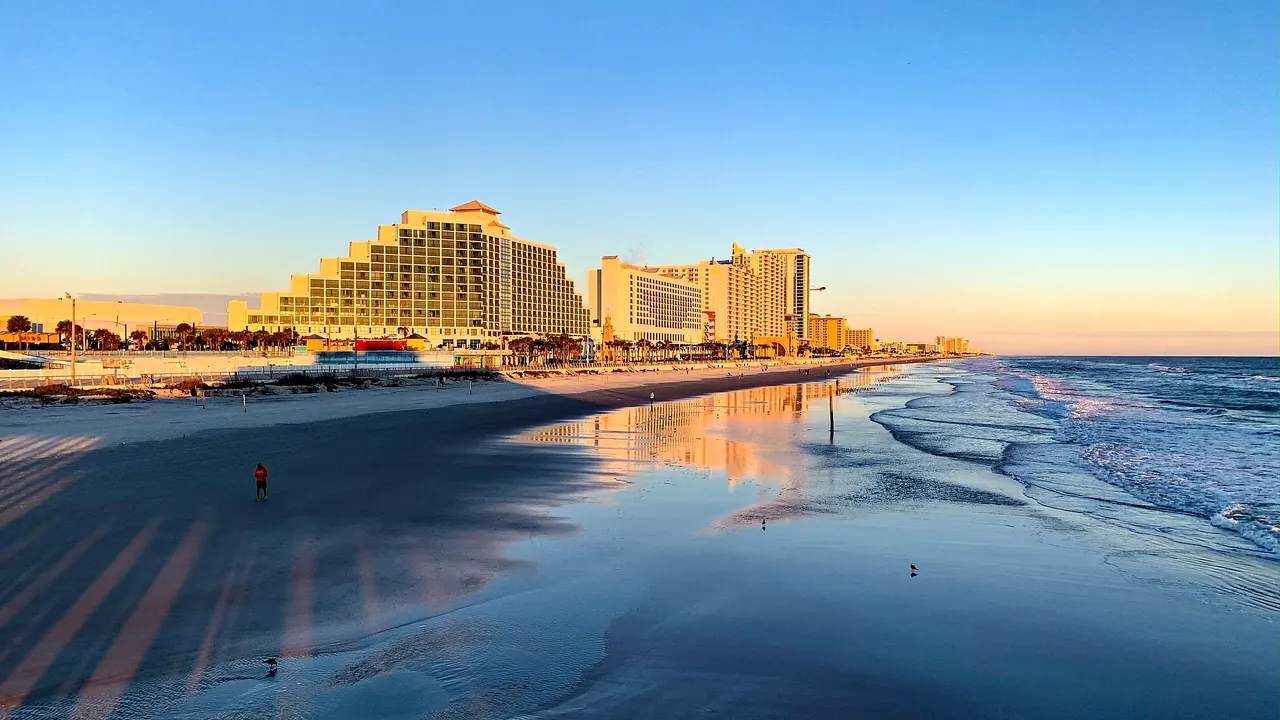
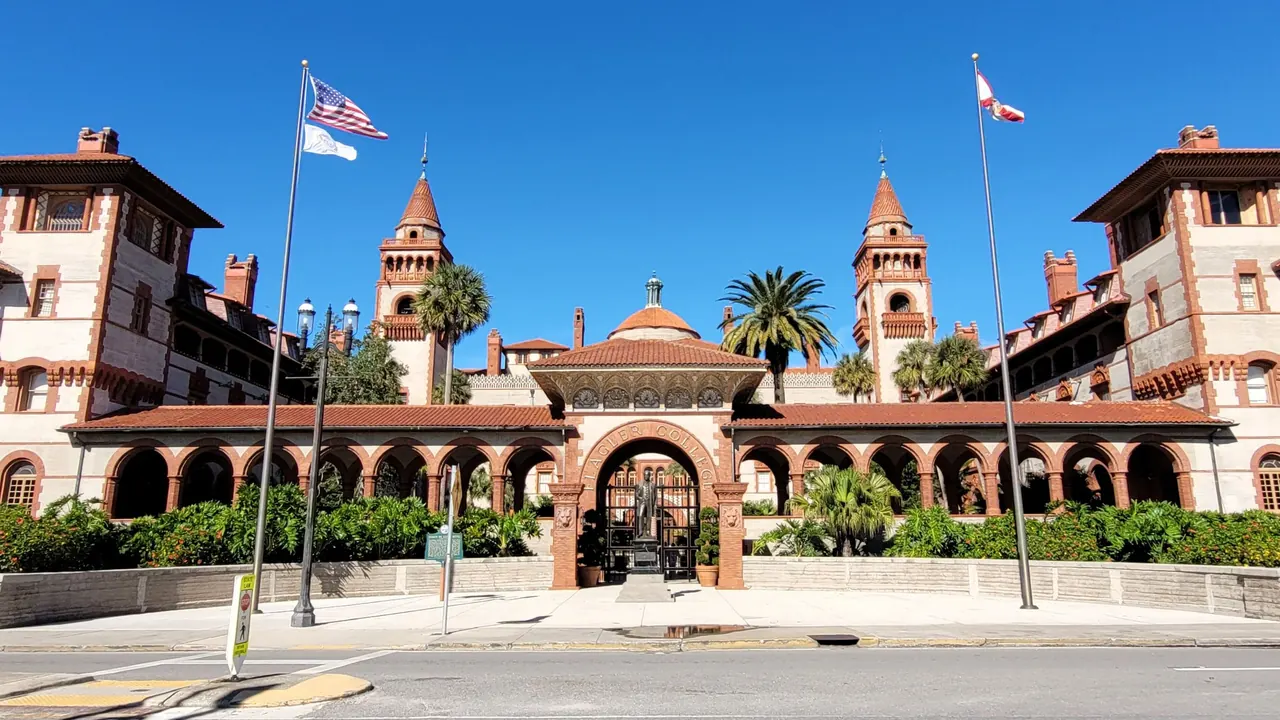
Photos: Daytona Beach by Han Zheng, CC BY-SA 2.0, cropped; St. Augustine by Farragutful, CC BY-SA 4.0, cropped.
Daytona Beach or St. Augustine?
Our verdict in twelve categories, each scored against the same fixed benchmark cities, and the climate month by month, so you can choose for your trip.
Choose Daytona Beach for
- day trips
- prices
- beaches
Daytona Beach suits a trip built around the sand. Its beach is longer, broader and right outside the hotel door, the boardwalk and pier keep children busy, the bars have more life when the motorcycles or the race crowds arrive, and rooms generally cost less. It is also the better base for driving out, with Kennedy Space Center, Orlando and St. Augustine itself all within about an hour.
Choose St. Augustine for
- culture and sights
- getting around
- shopping
If history matters as much as the beach, St. Augustine is the stronger pick. The Spanish fort, the old lanes and Flagler's Gilded Age hotels give it a depth of sightseeing that Daytona cannot match, and the compact centre lets you park once and walk. The island beaches are a short drive away and gentle for swimming, so old-town mornings and beach afternoons fit together easily, though staying there costs more.
Scoreboard
Twelve categories on one fixed scale from 0 to 100. The shaded stretch is the gap between the two.
Your match
Pick a travel style or drag the sliders, and both match scores follow your weighting.
Too close to call, 1 point apart
Wins on day trips and prices with your weighting.
Wins on culture and sights and getting around with your weighting.
What matters to you?
Category by category
What the scores mean for a trip.
Beaches & swimming
Daytona's beach is the whole reason the town exists: about 37km of firm, flat sand, wide enough that cars drive on marked stretches, with quieter sand at Ormond Beach and Ponce Inlet and the surf town of New Smyrna Beach close by. The catch is the water, which brings regular waves and real rip currents, so it pays to stay near the lifeguards.
St. Augustine's sand is just as wide and pale, from the dunes of Anastasia State Park down to Crescent Beach, and the gently shelving water with easy surf suits cautious swimmers better. It sits a ten to fifteen minute drive from the old town, though, so the beach is half of the trip rather than all of it.
Food & drink
Neither town is somewhere to travel for the food, and both are at their best with simple seafood by the water. In Daytona that means fried shrimp, grouper sandwiches and smoked fish dip on the decks of old fish camps along the Halifax River and towards Ponce Inlet, with chain restaurants filling the main roads.
St. Augustine has a flavour of its own from its Minorcan settlers, the fiery datil pepper in hot sauces, a spicy clam chowder and pilau, plus a few chef-driven restaurants and wine bars around the old town and San Marco. Just avoid relying on the tourist-facing places along St. George Street.
Culture & sights
This is where the two part company most. Daytona's story is speed: the Speedway tour, the land-speed records once set on the sand, plus the Cuban art at the Museum of Arts and Sciences and the climb up Florida's tallest lighthouse at Ponce Inlet. After that, the town is mostly motels and strip roads.
St. Augustine, founded by the Spanish in 1565, is a destination in itself. The coquina star fort on the bayfront, the balconied lanes of the Spanish quarter and Flagler's extravagant hotels, one now Flagler College with its Tiffany glass and the other home to the Lightner Museum, give it layers of history Daytona simply does not have.
Nightlife
Daytona has more going on after dark, though of a particular kind. Main Street's biker saloons, sports bars and tiki bars set the tone, and during Bike Week, Biketoberfest and race weeks the whole strip spills onto the street.
St. Augustine's evenings are smaller and quieter: pubs, taverns and cocktail bars with courtyards around St. George Street, Hypolita Street and the bayfront, busier at weekends and in term time. Most close well before the small hours, so it suits a drink after dinner rather than a long night.
Nature & outdoors
Both sit in the same flat, watery coastal country of marsh, dunes and lagoons, with dolphins and wading birds a common sight from a kayak. Daytona has the wider reach, with the undeveloped dunes of Canaveral National Seashore, Mosquito Lagoon, the Merritt Island refuge for birding and the winter manatees at Blue Spring State Park.
St. Augustine's outdoors stays closer to town: the lagoon at Anastasia State Park for paddleboarding, the long marsh walks of the Guana Tolomato Matanzas reserve and a coastal road south that is good for cycling.
Day trips
Daytona is the better base for outings. St. Augustine is about an hour north, and Kennedy Space Center and the Orlando theme parks are each roughly an hour away, with Winter Park, New Smyrna Beach and DeLand for gentler days.
From St. Augustine, those same big-name days stretch to around two hours each way. Its own nearby choices are Jacksonville's museums and Cummer gardens, the Victorian port of Fernandina Beach and quiet river towns like Palatka, along with Daytona's speedway and boardwalk.
Good for families
Families do equally well in both, but the days look different. Daytona offers a classic beach resort stay, with room to spread out on the sand, arcades and small rides by the pier, a water park, condos with kitchens and pools, and Orlando's parks an hour away. Rip currents and the noise of Bike Week and spring break are the downsides.
St. Augustine trades rides for adventures: the Alligator Farm with its zipline, cannon firing at the fort, the lighthouse climb and pirate museums. The island surf is gentler for small swimmers and the centre is compact, but roller coasters mean a two-hour drive.
Getting around
You will need a car in both, but St. Augustine is much easier once you arrive. The fort, St. George Street, Flagler College and the bayfront are minutes apart on foot, and sightseeing trolleys loop the main sights, so most visitors park once for the day.
Daytona spreads along long, wide roads on both banks of the river, and beyond the boardwalk area and the beach itself, which is lovely to walk or cycle, nearly everything means driving. Traffic jams badly during the big events.
Shopping & style
Neither is a shopping destination, and each has an outlet centre for mainstream brands. The difference is in character: Daytona adds a regional mall, beachwear shops and the motorcycle gear of Main Street, with a few galleries on Beach Street.
St. Augustine's browsing is more rewarding, with art galleries, antique dealers and craft shops on Aviles Street, and local datil-pepper sauces make a better souvenir than anything from the fudge and T-shirt shops of St. George Street.
Affordability
Daytona is the cheaper stay. Its older oceanfront motels and plentiful condo rentals keep rooms reasonable by American beach standards, and casual seafood keeps meals modest, though prices climb steeply around the Daytona 500 and Bike Week.
In St. Augustine the historic inns, B&Bs and hotels within walking distance of the old town are in high demand, especially at weekends. Chain motels by the highway or on the island and midweek dates bring the cost down, and the old streets and beaches are free.
Live music & performing arts
Daytona's live performance leans to the concert hall and is at its best in winter. The local symphony society's long-established series brings visiting orchestras and soloists through the cooler months, and the Peabody Auditorium stages touring Broadway shows alongside comedy and pop. In summer there are free evening concerts at the oceanfront bandshell, and for anything bigger people drive inland to Orlando.
St. Augustine's real stage is outdoors: the amphitheatre in the woods on Anastasia Island, which books touring rock, country and folk acts for much of the year. In the old town, acoustic sets and cover bands play on bar patios every night, which suits a casual evening. Opera or a full orchestral season means the drive to Jacksonville.
Wellness & relaxation
Both offer the same modest spa scene of hotel treatment rooms and a few day spas, so rest comes from the pace instead. In Daytona that means early walks on hard sand and long afternoons by a condo pool, but race weeks and Bike Week bring engine noise.
St. Augustine's calm is quieter and more old-fashioned: B&B verandas, walled courtyard gardens and an evening stroll on the bayfront seawall, best midweek.
When should you go?
Pick your month. The climate figures are measured averages, not a forecast.
Daytona Beach in July
St. Augustine in July
Daytime high, °C
Rainfall in the month, mm
Where the figures come from
St. Augustine has no rain gauge within 25 km of the centre, so its rainfall comes from a gridded climate dataset read at the city rather than from a gauge further away.
St. Augustine's sunshine is measured 73 km from the centre, at Jacksonville International.
Temperature and rainfall are climate normals, averaged over the years shown. Daytona Beach: 1991-2020 normals, Daytona Beach / Mansfield Mobile Home Park (4.9 km from centre). St. Augustine: 2006-2020 (sunshine 1991-2020, rainfall 1991-2020) normals, St Augustine / Kingsley Mobile Home Park (7.6 km from centre).
The two towns share a summer. The sea is warm enough for easy swimming from late May to October, reaching about 28°C from July to September, and June to September is the wet season in both, with heavy afternoon storms bringing up to 182mm in Daytona's wettest month. Midsummer highs above 30°C make long walks hard work outside the early morning. That matters more in St. Augustine, where the old streets are the point of the visit.
They differ most in winter. Daytona stays a few degrees warmer, with January highs around 21°C against St. Augustine's 18°C. That makes Daytona pleasant for beach walks even though few people swim, while St. Augustine's cooler days suit sightseeing better than sunbathing. Spring is the best time to combine St. Augustine's streets with the sand. April is warm and the driest month before the summer storms, and by May the sea is warm enough to swim. October and November are a good second choice for both, cooler and drier than high summer.
Which traveller are you?
On a beach and sun trip, Daytona Beach is the better fit. The sand runs for kilometres directly in front of the hotels and condos, so you walk out of the door onto it, while St. Augustine's beaches need a short drive across the bridge.
For a culture and arts trip, St. Augustine is the clear choice. The Castillo de San Marcos, the Spanish quarter, Flagler College and the Lightner Museum fill two or three days, whereas Daytona's sights, led by the Speedway, are covered in one or two.
On a trip with a tight budget, Daytona Beach makes the money go further. Older oceanfront motels and condo rentals keep rooms cheaper than St. Augustine's sought-after inns, provided you avoid Bike Week and the race weeks, when rates jump.
Before you go
| Measure | Daytona Beach | St. Augustine |
|---|---|---|
| Currency | US Dollar (USD) | US Dollar (USD) |
| Sockets | AB120 V, 60 Hz | AB120 V, 60 Hz |
| Driving side | Right | Right |
| Time zone | UTC-5, UTC-4 in summer | UTC-5, UTC-4 in summer |
| Emergency number | 911 | 911 |
| Elevation | 4 m | 152 m |
| Main airport | Daytona Beach International Airport (DAB)5 km from centre8 non-stop destinations | Jacksonville International Airport (JAX)76 km from centre48 non-stop destinations |
| Public holidays this year | 11 days | 11 days |
By the numbers
| Measure | Daytona Beach | St. Augustine |
|---|---|---|
| City population | 72,647 | 14,329 |
| People per km² | 440 | 433 |
| Museums within 10 km | 6 | 12 |
| UNESCO World Heritage sites within 50 km | 0 | 0 |
| Swim season, months above 21 °C | 9 months | 8 months |
Where else could you go?
Every comparison below shares a destination with this one, so you can follow Daytona Beach or St. Augustine somewhere new.
- Orlandovs Daytona Beach
- Cocoa Beachvs Daytona Beach
- Orlandovs St. Augustine
- Cocoa Beachvs St. Augustine
- Tampavs Daytona Beach
- Clearwatervs Daytona Beach