Australia
Kakadu
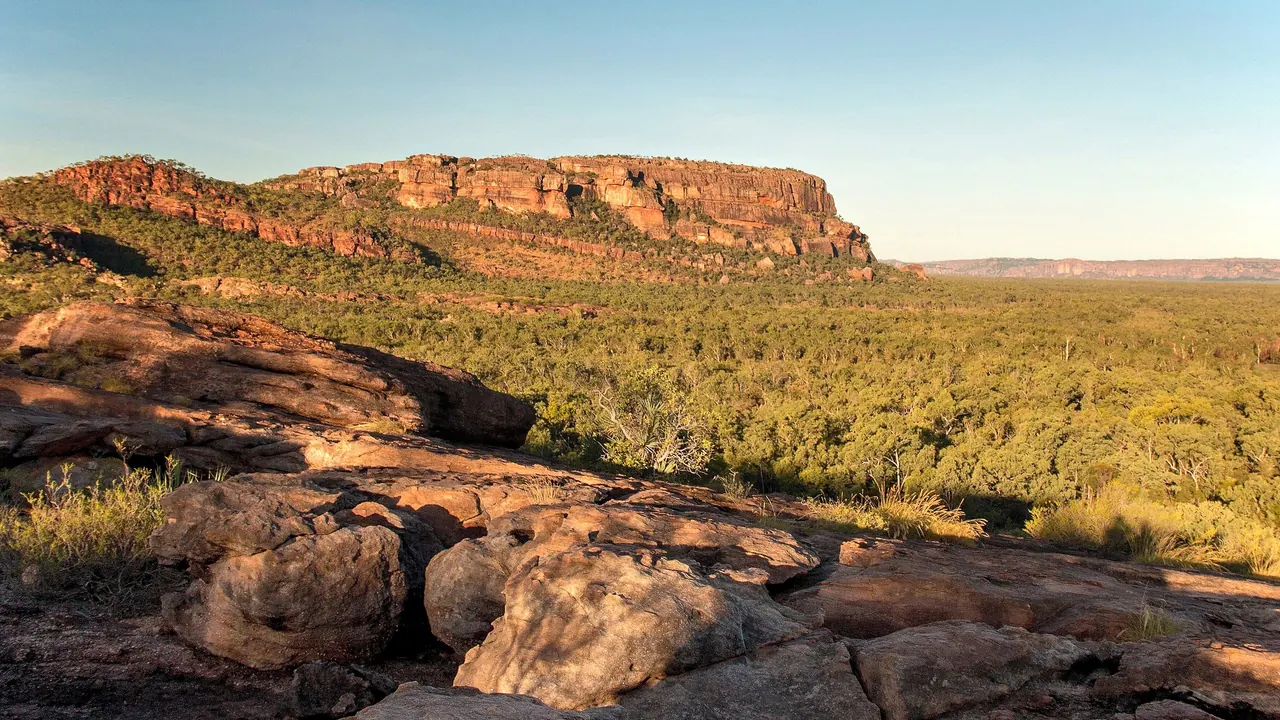
Nourlangie Rock (Burrungkuy) in afternoon light
- Nature & outdoors91
- Culture & sights55
- Families30
Photo: Andrea Schaffer, CC BY-SA 4.0, cropped
Match
24
Every category weighted equally
- Beach & sun23
- Culture & arts24
- Food & nightlife16
- Family trip29
- Outdoors33
- Relax & unwind26
- Shopping & style20
- On a budget25
Kakadu in twelve categories
Our verdict on each, scored 0 to 100 against the same fixed benchmark cities, so a score means the same thing on every page.
Beaches & swimming. Scores 10 out of 100.
Food & drink. Scores 10 out of 100.
Culture & sights. Scores 55 out of 100.
Nightlife. Scores 3 out of 100.
Nature & outdoors. Scores 91 out of 100.
Day trips. Scores 12 out of 100.
Good for families. Scores 30 out of 100.
Getting around. Scores 22 out of 100.
Shopping & style. Scores 12 out of 100.
Affordability. Scores 28 out of 100.
Live music & performing arts. Scores 5 out of 100.
Wellness & relaxation. Scores 15 out of 100.
Kakadu category by category
Beaches & swimming
10Kakadu has no beaches to speak of. Its coastline on the Van Diemen Gulf is tidal mudflat and mangrove, and saltwater crocodiles live in the rivers, billabongs and estuaries, so you never swim anywhere that is not signposted as safe.
The swimming you get is in the escarpment country of the south. Rangers survey a few plunge pools and rock holes, such as those at Maguk and Gunlom, after the wet, and open them for swimming in the dry season from about May to October. The water is warm and the settings are lovely, but it is a cooling dip after a hot walk, not beach life. Many visitors rely on their campground or lodge pool.
Food & drink
10Most of the eating here happens at lodge bistros, roadhouses and campfires. Jabiru, the park's only township, has a supermarket and a couple of simple places to eat, and the lodges near Cooinda and the South Alligator serve barramundi, buffalo and pub-style meals. Most travellers stock up on groceries before they drive in and cook at camp.
The culinary interest lies in bush food. Guides on cultural walks and cruises show how Bininj and Mungguy people harvest magpie geese, file snakes, water lilies and bush fruits through the six local seasons. That is an education rather than a meal, and anyone who cares about food should plan to eat well in Darwin before or after.
Culture & sights
55Kakadu is one of the few places listed by UNESCO for both its nature and its culture, and the cultural half is the rock art. It records more than 20,000 years of continuous Aboriginal life on the sandstone of the Arnhem Land escarpment and its outliers. At Ubirr, near the East Alligator River, galleries of x-ray style fish, turtles and wallabies sit beside Mimi spirit figures and images of the first Europeans. At Burrungui, the site once known as Nourlangie, the paintings include the Lightning Man, Namarrkon, and the nearby Nanguluwurr gallery is quieter.
The Warradjan Aboriginal Cultural Centre near Cooinda and the Bowali Visitor Centre near Jabiru explain kinship, seasons and law from a Bininj and Mungguy point of view, and ranger talks at the art sites in the dry season add a great deal. Beyond these the sights are few and far apart. Three or four outings cover the essentials, and they reward a visitor who comes ready to listen.
Nightlife
3There is no nightlife in Kakadu. Evenings mean a drink at a lodge or campground bar, watching the sunset from the rock at Ubirr, and an early night before a dawn start, when the wildlife is most active and the heat least punishing. The dark skies, the noise of frogs and the call of the night birds are the evening's entertainment.
Nature & outdoors
91Kakadu covers about 20,000 square kilometres of the Top End, from tidal rivers and floodplains to the sandstone wall of the Arnhem Land escarpment. Yellow Water billabong at Cooinda is the place for a dawn boat trip among saltwater crocodiles, jabirus, sea eagles and huge flocks of magpie geese and whistling ducks. Wildlife here is the real thing on a vast scale, and about a third of Australia's bird species have been recorded in the park.
The south and centre are escarpment country. Jim Jim Falls and Twin Falls lie down a long 4WD track to gorges under sheer cliffs. Walks climb to lookouts at Ubirr, Burrungui and Gunlom over the floodplain and the stone country. The dry season, roughly May to October, is when the tracks open and the walking is bearable, though the falls shrink as it goes on. In the wet the floodplains fill, storms build every afternoon, the falls thunder and many roads close, so scenic flights become the best way to see it.
Day trips
12Kakadu is a destination in itself rather than a base for outings elsewhere. The one notable trip beyond the park is across the East Alligator River into Arnhem Land to the community of Gunbalanya, where the art centre and the rock art of Injalak Hill can be visited on a guided tour with a permit. At the southern edge, the old gold-rush town of Pine Creek makes a short stop on the way in or out. Darwin and the Mary River wetlands are better treated as stops on the long drive than as day trips.
Good for families
30Kakadu suits families with older children who already like camping and wildlife. A boat trip at Yellow Water, crocodiles basking on the banks, rock paintings of turtles and fish at Ubirr and short boardwalk walks can make a strong impression on them, and the visitor centres explain the country in an accessible way.
It is hard going with toddlers. Distances between sights are long, the heat is fierce for most of the year, and children have to be watched closely near every river and billabong because of crocodiles. Medical help is far away, and the climbs to the plunge pools are rocky. Families usually base themselves at a lodge or campground with a pool and keep the days short.
Getting around
22You need your own vehicle or a tour. There is no public transport, and the main sights are scattered across a park the size of a small country. The sealed Arnhem and Kakadu highways make the core easy driving: Jabiru, Ubirr, Burrungui and Cooinda are each within an hour or so of one another, and Darwin is about three hours away.
Beyond the bitumen it gets harder. Jim Jim and Twin Falls need a high-clearance 4WD on a long corrugated track with a sandy, rough final stretch, and several unsealed roads open only in the dry season. In the wet, flooding cuts tracks and sometimes main roads too. Fuel stops are few, wildlife on the road makes night driving unwise, and many visitors take a guided tour from Darwin or Jabiru instead.
Shopping & style
12There is very little to buy beyond essentials, with one exception worth knowing about. The Aboriginal art and crafts sold in the park are made by artists of the region, including bark paintings, works on paper, pandanus weaving and carvings. You find them at the cultural centre near Cooinda, the art gallery in Jabiru and, for those who make the guided trip, the art centre at Gunbalanya in Arnhem Land. Buying direct from community-run centres is the way to be sure the work is authentic. Otherwise the shopping is a supermarket, fuel stations and lodge shops.
Affordability
28Kakadu is an expensive place to visit unless you camp. The lodges near Jabiru, Cooinda and the South Alligator are few and charge remote-area prices for fairly simple comfort. Groceries and fuel cost more than in the cities, and hiring a 4WD to reach the big falls is a major part of the budget. A park pass is required, and the boat cruises, cultural tours and scenic flights that make a visit memorable all add up.
The saving is camping. The national park campgrounds are basic but cheap, and some are free, so self-sufficient travellers with their own vehicle can keep costs to a fraction of a lodge-and-tours trip.
Live music & performing arts
5Kakadu has no performing-arts life to plan a trip around. There is no theatre or concert venue, and live music amounts to the odd performer at a lodge bar. The cultural experience here is storytelling through ranger talks and guided walks at the rock-art sites, and a small community festival in Jabiru that celebrates local culture with music and dance. Anyone hoping to see Aboriginal performance should look to Darwin's festivals rather than the park.
Wellness & relaxation
15There is no spa or bathing culture in Kakadu, and a lodge pool is about as close as you get to pampering. The park restores in a different way: dawn on a still billabong, the silence of the stone country, and nights far from any city light. But the heat, the long drives and the early starts make a visit more of an expedition than a rest, and in the humid build-up before the wet even sitting still is hard work.
Where to stay in Kakadu
Jabiru is the practical base for the north of the park. As the only township, it has the supermarket, fuel, the art gallery and the Bowali Visitor Centre, and Ubirr and Burrungui are both an easy drive away. It suits a first visit, travellers who like having supplies close by and anyone joining a guided tour, since tours leave from here too.
Cooinda, in the centre, puts you beside Yellow Water billabong for the dawn boat trip and near the Warradjan Aboriginal Cultural Centre. It is the best choice for wildlife. Families who want a pool and short days usually pick it, and the lodge and campground there make an easy base. The South Alligator, on the highway in from Darwin, is a quieter place to stay between the two and works well for a first or last night.
There are no lodges in the escarpment country of the south, so you camp there. The national park campgrounds near Gunlom and Maguk suit self-sufficient walkers who come for the plunge pools in the dry season. Jim Jim and Twin Falls need a 4WD. Most trips split their nights between Jabiru and Cooinda, which are about an hour apart, and add the south only with time to spare and a vehicle that can handle the tracks.
When should you go?
Pick a month to see what it is like. The climate figures are measured averages, not a forecast.
Kakadu in July
Daytime high, °C
Rainfall in the month, mm
The whole year
Shaded against this destination’s own year: the deepest cell is its best month for that figure and the palest its weakest.
Temperature and rainfall are climate normals, averaged over the years shown. Kakadu: 1991-2020 normals, Jabiru (7.7 km from centre).
Before you go
| Measure | Kakadu |
|---|---|
| Official language | English |
| Currency | Australian Dollar (AUD) |
| Sockets | I230 V, 50 Hz |
| Driving side | Left |
| Time zone | UTC+9:30 |
| Emergency number | 000 |
| Main airport | Darwin International Airport / RAAF Darwin (DRW)20 non-stop destinations |
| Public holidays this year | 12 days |
Compare Kakadu with
Every comparison with a written verdict behind it.