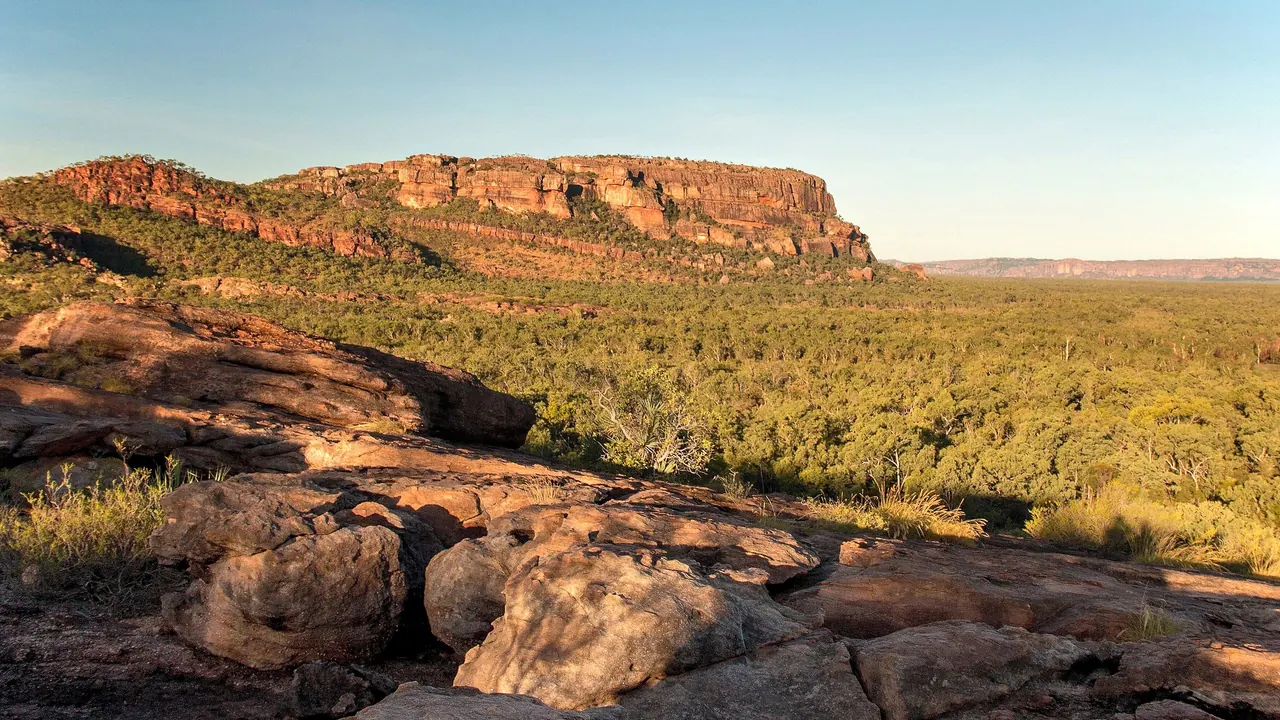
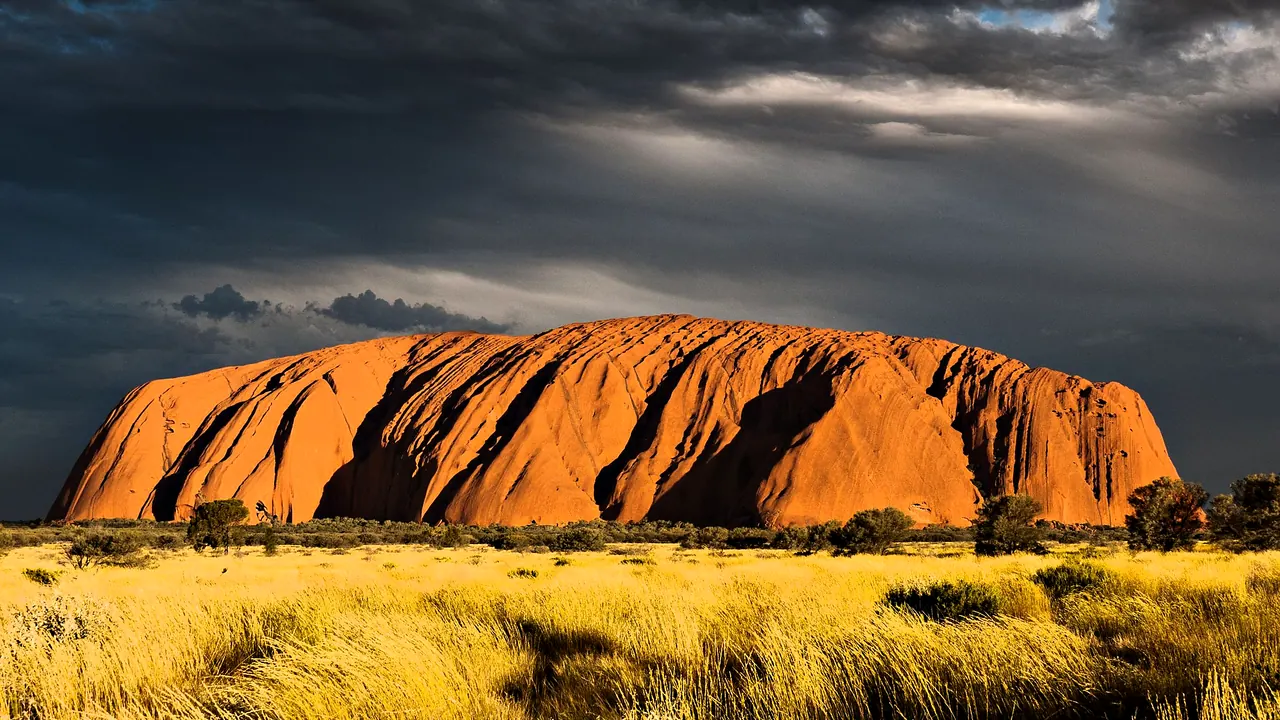
Photos: Kakadu by Andrea Schaffer, CC BY-SA 4.0, cropped; Uluru by Weyf, CC0.
Kakadu or Uluru?
Our verdict in twelve categories, each scored against the same fixed benchmark cities, and the climate month by month, so you can choose for your trip.
Choose Kakadu for
- prices
- culture and sights
- beaches
Kakadu is the choice for travellers who want to spend days, not hours, in the wild. Its floodplains, billabongs and escarpment gorges hold wildlife on a scale Uluru cannot match, and its rock art galleries at Ubirr and Burrungui go deeper into Aboriginal history. It asks more in return: long drives, a 4WD for the big falls, crocodile caution at every river and a heat that rarely lets up. Campers with their own vehicle get the most from it, and spend the least.
Choose Uluru for
- getting around
- wellness
- food and drink
Uluru suits a shorter, more contained trip built around one overwhelming sight. You fly almost to the door, stay in a compact resort with a shuttle and a spa, and plan the day around sunrise and sunset at the rock and a walk among the domes of Kata Tjuta. It costs more and offers less variety, but it is far easier to manage, and in the cooler months it is gentler on the body than the tropical Top End.
Scoreboard
Twelve categories on one fixed scale from 0 to 100. The shaded stretch is the gap between the two.
Your match
Pick a travel style or drag the sliders, and both match scores follow your weighting.
Too close to call, level with your weighting
Wins on prices and culture and sights with your weighting.
Wins on getting around and wellness with your weighting.
What matters to you?
Category by category
What the scores mean for a trip.
Beaches & swimming
Neither is a place for a beach. Kakadu at least offers a real swim: in the dry season rangers open plunge pools in the south such as Maguk and Gunlom, warm rock holes under the escarpment that make a fine reward after a hot walk.
Uluru has nothing beyond the hotel pools at Yulara, since the waterholes at the base of the rock are sacred and closed to swimmers. If water matters to you, Kakadu gives you a few memorable dips; neither gives you sand.
Food & drink
Both feed you mainly from lodges and a supermarket, and neither has a food culture to explore. Uluru does a little better at the table, with resort restaurants that work wattleseed, quandong and bush tomato into the menu and outdoor dinners in the dunes as the rock changes colour.
Kakadu's lodge bistros and roadhouses are plainer, and most travellers cook at camp. Its food interest lies in the bush tucker shown on cultural walks and cruises, which is something to learn rather than something to eat.
Culture & sights
Kakadu goes further for anyone who wants to understand Aboriginal culture. Its rock art spans more than 20,000 years across several galleries, from the x-ray fish and Mimi spirits at Ubirr to the Lightning Man at Burrungui, and two centres, Warradjan and Bowali, explain kinship and the six seasons.
At Uluru the culture is concentrated in the rock itself and the Anangu stories bound to it. The shelters at Kulpi Mutitjulu and Kantju Gorge and the Cultural Centre are moving, but the art is less extensive and two or three days covers it.
Nightlife
There is effectively no nightlife in either. Uluru's resort has a few hotel bars and one outback-style bar with a pool table, while Kakadu's evenings come down to a drink at a lodge or campground and the sound of frogs; in both, the early start for dawn ends the night soon after dark.
Nature & outdoors
Both are among Australia's great landscapes, but Kakadu holds more life and more variety. Tidal rivers, wetlands, monsoon forest and the sandstone escarpment sit in one park, with crocodiles, sea eagles and vast flocks of magpie geese at Yellow Water and waterfalls that thunder in the wet.
Uluru's strength is form rather than abundance: the rock rising from flat red plains, the domes of Kata Tjuta and the Valley of the Winds walk between them. Wildlife is sparse, mostly lizards and birds, but the desert night sky is among the darkest you will see.
Day trips
Kakadu's one real excursion beyond its own boundaries is a guided permit tour across the East Alligator River to Gunbalanya in Arnhem Land, where the art centre and the rock art of Injalak Hill open onto country few visitors reach. The old gold-rush town of Pine Creek adds a short stop on the drive in or out.
Uluru has no equivalent. Kata Tjuta is already part of the park visit, Kings Canyon is about three and a half hours each way for more desert scenery, and Alice Springs lies about 450km off, so anything beyond the park becomes a separate leg of the journey.
Good for families
Both work for older children rather than toddlers, and the difficulty differs. In Kakadu the problems are distance, fierce humidity, rocky climbs to the pools and constant vigilance near water because of crocodiles, though the boat trips and rock paintings of turtles leave a strong impression.
Uluru is easier to manage day to day, with a small, safe resort, a free shuttle, camel rides and astronomy evenings. Its hardships are midday heat and flies on long walks, so both are best visited with children between May and September.
Getting around
Uluru is much simpler to reach and move around. Ayers Rock airport sits beside Yulara, the resort is compact with a free shuttle, and the rock and Kata Tjuta are a short drive on quiet sealed roads.
Kakadu is a road trip from the start, about three hours' drive from Darwin with sights spread across a huge park. The sealed core is easy, but the big falls need a high-clearance 4WD on rough tracks, wet-season floods cut roads, and fuel stops are few.
Shopping & style
In both the only purchase worth making is Aboriginal art bought from community outlets. Uluru has more of it in one place, with canvases from the surrounding desert communities and carved punu at the Cultural Centre and the Yulara galleries, plus outdoor clothing.
Kakadu's offer is spread thinner, at the centre near Cooinda and the gallery in Jabiru, though its bark paintings and pandanus weaving differ from desert art, and the Gunbalanya art centre rewards those who make the trip.
Affordability
Kakadu rewards travellers who bring a tent and their own vehicle. Its national park campgrounds are basic and cheap, and some cost nothing, so a self-sufficient trip comes to a fraction of one built on lodges, cruises and scenic flights. The main strain on the budget is hiring a 4WD for the big falls.
Uluru leaves far less room to cut back. The choice of beds is narrow, flights in are rarely cheap, and with everything trucked into the desert, meals, drinks and tours are priced accordingly. Self-catering from the supermarket and driving yourself rather than booking tours help, but the bill stays higher.
Live music & performing arts
Neither has a stage to plan for. Uluru offers short shows of Indigenous dance and didgeridoo at the resort and music at outdoor dinners, staged for visitors; Kakadu's equivalent is the storytelling of ranger talks at the rock art sites and a small community festival in Jabiru.
Wellness & relaxation
Uluru is the more restful of the two. Its top hotel has a spa using native botanicals, the dry desert air is easier to bear, and the day falls into a calm pattern of sunrise, pool through the heat and stars at night.
Kakadu restores through silence and stillness on a dawn billabong, but there is little comfort beyond a lodge pool, and the humidity, long drives and early starts make it more effort than rest.
When should you go?
Pick your month. The climate figures are measured averages, not a forecast.
Kakadu in July
Uluru in July
Daytime high, °C
Rainfall in the month, mm
Temperature and rainfall are climate normals, averaged over the years shown. Kakadu: 1991-2020 normals, Jabiru (7.7 km from centre). Uluru: 1991-2020 normals, Yulara (4.7 km from centre).
The two run on opposite rhythms. Kakadu is hot all year, with highs in the low to mid thirties even in its coolest months, and what changes is the rain. From May to September it is almost dry, the tracks to the falls open and the plunge pools are surveyed for swimming. The build-up of October and November reaches about 38°C with sticky humidity, and from December to March the wet brings storms most afternoons, with February near 418mm, flooded roads and closed tracks, though the waterfalls are at their fullest.
Uluru is dry desert, so rain matters little and temperature decides everything. June and July bring days around 20°C, ideal for the base walk and Kata Tjuta, though nights turn cold. From November to February highs climb towards 38°C, the long trails close by late morning and only dawn and dusk are comfortable outdoors. Both are at their best in the southern winter, roughly May to September, which makes it easy to combine them in one trip.
Which traveller are you?
On an outdoors trip, Kakadu is the stronger pick. Dawn boat trips at Yellow Water, gorges under the escarpment at Jim Jim and Twin Falls, and floodplains full of birds and crocodiles give far more variety than Uluru's desert walks, superb as they are.
For a relaxing and wellness trip, Uluru suits better. The resort has a spa with native botanical treatments, pools for the afternoon heat and a short shuttle ride between everything, while Kakadu's long drives, humidity and early starts make a stay feel like an expedition.
On a trip on a tight budget, Kakadu is the easier place to keep costs down. Its national park campgrounds are cheap and some are free, whereas at Uluru every bed belongs to one resort and even the campground carries remote pricing.
Before you go
| Measure | Kakadu | Uluru |
|---|---|---|
| Official language | English | English |
| Currency | Australian Dollar (AUD) | Australian Dollar (AUD) |
| Sockets | I230 V, 50 Hz | I230 V, 50 Hz |
| Driving side | Left | Left |
| Time zone | UTC+9:30 | UTC+9:30 |
| Emergency number | 000 | 000 |
| Main airport | Darwin International Airport / RAAF Darwin (DRW)20 non-stop destinations | Ayers Rock Connellan Airport (AYQ)3 non-stop destinations |
| Public holidays this year | 12 days | 12 days |
Where else could you go?
Every comparison below shares a destination with this one, so you can follow Kakadu or Uluru somewhere new.