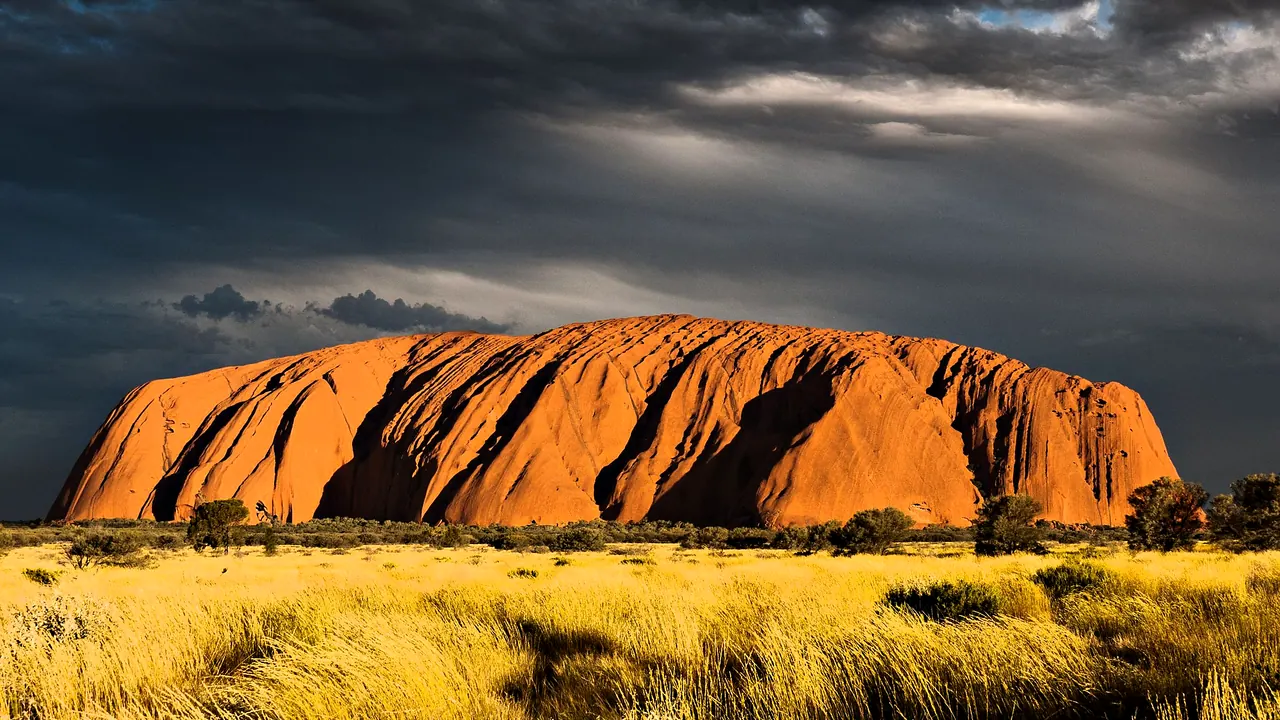
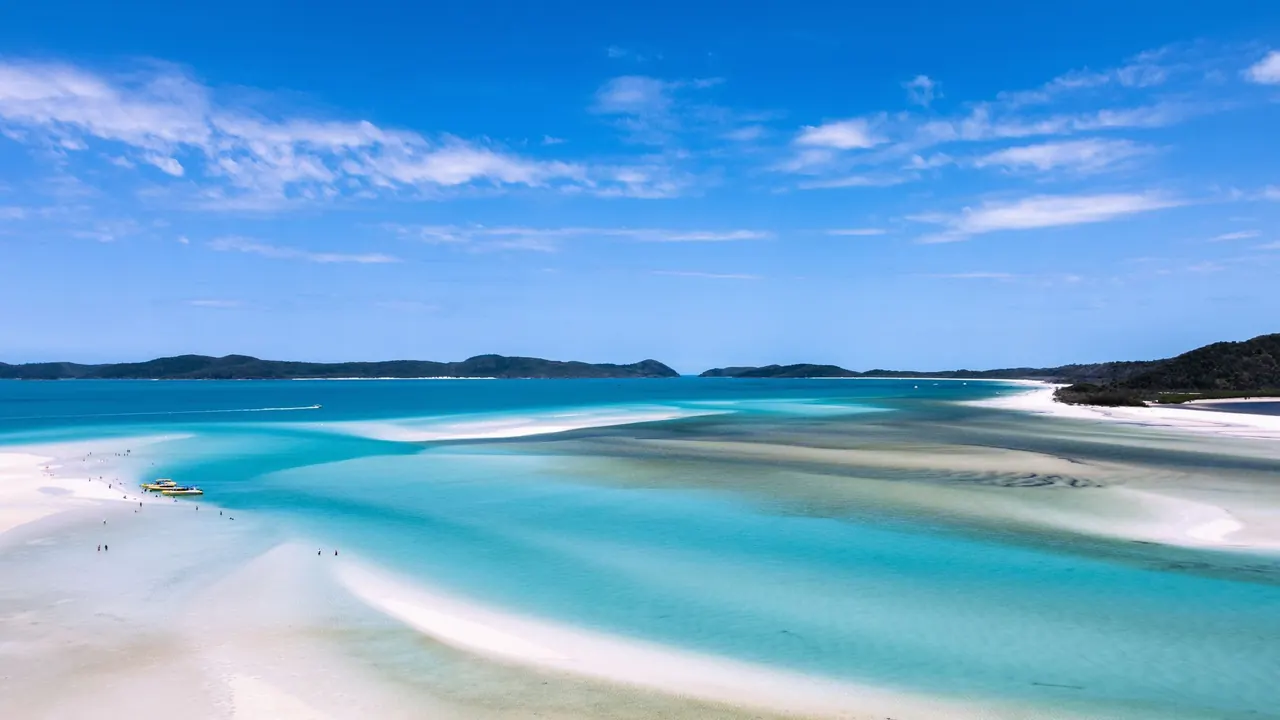
Photos: Uluru by Weyf, CC0; Whitsundays by Lukas Kloeppel, Pexels License.
Uluru or Whitsundays?
Our verdict in twelve categories, each scored against the same fixed benchmark cities, and the climate month by month, so you can choose for your trip.
Choose Uluru for
- culture and sights
- shopping
Uluru is for a trip built around one extraordinary landscape and the Anangu culture that gives it meaning. You spend dawn and dusk watching the rock change colour, walk the base and the Valley of the Winds at Kata Tjuta, learn the Tjukurpa at the Cultural Centre and on ranger walks, and end each day under a very dark sky. It suits travellers who want to understand a place rather than lounge in it, and who will accept a single resort, early alarms and no swimming beyond the pool.
Choose Whitsundays for
- beaches
- nightlife
- families
The Whitsundays win on sun, sea and slowing down. Here the days go to Whitehaven's white silica sand, sailing between national park islands and snorkelling inside the Great Barrier Reef. Families have the resort islands of Hamilton and Daydream, and younger travellers get a few loud nights in Airlie Beach. Sights and history are thin, so this suits people happy to spend most of their time on boats and beaches.
Scoreboard
Twelve categories on one fixed scale from 0 to 100. The shaded stretch is the gap between the two.
Your match
Pick a travel style or drag the sliders, and both match scores follow your weighting.
Wins on culture and sights and shopping with your weighting.
Wins on beaches and nightlife with your weighting.
What matters to you?
Category by category
What the scores mean for a trip.
Beaches & swimming
Uluru has no beach at all. It lies some 700km from the nearest coast, and the waterholes at the rock are sacred, so swimming means the resort pools at Yulara.
The Whitsundays are among the finest beach destinations in Australia. You have Whitehaven's long white curve towards Hill Inlet, quiet coves on the national park islands and Catseye Beach on Hamilton. Keep in mind that the best sand is out on the islands rather than at Airlie, and that stinger suits are needed in the warmer months.
Food & drink
Neither is a place to travel for food, but the Whitsundays give you more choice. Airlie Beach has a strip of cafés, pubs and bistros with water views, the island resorts add some polished dining, and local prawns, reef fish and fruit from around Bowen are the highlights.
At Uluru everything comes from the cluster of restaurants and the supermarket at Yulara, so the menu starts repeating within a few nights. What stays with you is a dish of wattleseed, quandong or kangaroo, and the dinner in the dunes as the rock turns red.
Culture & sights
Uluru has the deeper culture by far. The national park is World Heritage listed partly for the living law of the Anangu, which you meet in the rock art of Kantju Gorge, on ranger-led walks and at the snake-shaped Cultural Centre. Two or three days covers it, and there is nothing beyond the park.
In the Whitsundays you will find little more than a few Ngaro sites along the sea trail and small heritage displays in Proserpine and Bowen. You go for the islands, not for sights.
Nightlife
The Whitsundays have the only real night out of the two. Airlie Beach's short main street fills with backpackers in big pub bars and on open-air decks once the sailing trips return, and it is loud and young for a few nights. The islands, though, go quiet early.
Uluru has a handful of hotel bars and one outback-style bar with a pool table. Most guests are in bed early for the sunrise, so the stars are the evening's entertainment.
Nature & outdoors
Both are among the great natural landscapes of Australia, and the difference is in kind. Uluru is red desert. You walk the 10km base track, take the Valley of the Winds walk between the domes of Kata Tjuta and watch the colours shift at sunrise and sunset under a very dark sky.
The Whitsundays are about water. There are 74 islands to sail between, reefs to snorkel, a seaplane over Heart Reef and humpback whales in the southern winter, with the Ngaro Track and the rainforest of Conway National Park when you want to walk on land.
Day trips
From the Whitsundays there are at least a few separate places to visit. Ferries run to the marina village on Hamilton Island and to Daydream Island, and the beach town of Bowen, with its mango farms, is about an hour's drive north. Most other outings are boat trips to reefs and lookouts.
Uluru has nothing outside the park. Kata Tjuta is part of the same visit, and Kings Canyon and Alice Springs are too far for a day, so treat them as separate stops.
Good for families
The Whitsundays are the easier family choice. Hamilton Island has a calm beach, kids' clubs, koalas and golf buggies to drive, Daydream has a lagoon full of rays and reef fish, and the netted lagoon at Airlie is safe for toddlers. Long boat days to Whitehaven suit older children better.
Uluru can thrill a child old enough to take in its scale, and the resort is small and safe, with camel rides and astronomy evenings. Nothing there is designed for young children, though, and the heat and flies wear small walkers down quickly.
Getting around
Both are easy to fly into and harder to explore once you arrive. At Uluru the airport sits beside Yulara and a free shuttle loops around the resort, but the rock is 20km away and Kata Tjuta further still, so you need a hire car or paid tours timed to the sun.
The Whitsundays have two airports, a walkable Airlie and ferries out to Hamilton and Daydream, where buggies take over. Getting to Whitehaven or the reef means a booked boat, so your days follow departure times and the weather rather than a road map.
Shopping & style
Uluru has the one thing really worth buying here, Aboriginal art. You can find canvases and carved punu from nearby communities at the Cultural Centre and in the Yulara galleries, and buying from the community-run outlets sends the money to the artists.
In the Whitsundays shopping is mostly swimwear, surf gear and souvenirs along Airlie's main street and at the Hamilton marina, plus a weekend craft market on the foreshore.
Affordability
Uluru's single resort leaves far fewer ways to save than the hostels, self-catering apartments and campgrounds of Airlie Beach. Every bed at Uluru belongs to that resort, and food, drink and tours are priced for a remote place supplied by truck. The campground, the dormitory lodge, cooking from the supermarket and driving yourself are about the only savings.
The Whitsundays are still no bargain. The sailing trips, reef days and scenic flights that draw people here add up quickly, and the luxury island resorts on Hayman and Hamilton push the total higher still.
Live music & performing arts
At Uluru, performance means short displays of Indigenous dance and didgeridoo staged for visitors at the resort, plus music over outdoor dinners. They are pleasant but not a reason to come. In the Whitsundays the sound is pub cover bands and acoustic sets in Airlie, with an annual music festival on the foreshore, and neither destination has a theatre or concert hall.
Wellness & relaxation
The Whitsundays are the better place to switch off. You can stay on a quiet island, spend a night on a yacht anchored in a still bay, or book the spas at the Hamilton and Hayman resorts, which face the sea or the bush. Just avoid noisy Airlie as a base.
Uluru has a calm of its own, with silent desert nights and a single resort spa using native botanicals. Pre-dawn starts and the summer heat make it a short reset rather than a lazy stay.
When should you go?
Pick your month. The climate figures are measured averages, not a forecast.
Uluru in July
Whitsundays in July
Daytime high, °C
Rainfall in the month, mm
Where the figures come from
Whitsundays's temperatures are measured 29 km from the centre, at Proserpine.
Whitsundays has no rain gauge within 25 km of the centre, so its rainfall comes from a gridded climate dataset read at the destination rather than from a gauge further away.
Temperature and rainfall are climate normals, averaged over the years shown. Uluru: 1991-2020 normals, Yulara (4.7 km from centre). Whitsundays: 1991-2020 normals, Proserpine (28.6 km from centre).
Uluru is best in the southern winter. From May to August daytime highs sit around 20 to 24°C, which is ideal for the base walk and Kata Tjuta, though desert nights can drop close to freezing, so pack warm layers. From November the heat builds, and from December to February afternoons reach 37°C or more, which closes the longer trails by late morning. Rain is light all year.
The best months in the Whitsundays are much the same, but for different reasons. June to September is the dry, settled stretch, with highs near 25°C and a sea that is still warm enough for swimming. The sea is warmest in summer, but December to March is also the wet season, with February bringing over 400mm, plus the risk of cyclones and stingers that make a suit necessary. If you want to combine the two on one trip, the southern winter works for both.
Which traveller are you?
For a culture and arts trip, Uluru is the clear choice. Here the landscape itself is the lesson, read through Anangu law and creation stories, and a few unhurried days bring real understanding. In the Whitsundays the sea is the attraction and sights barely figure.
On a beach and sun trip, go to the Whitsundays. Long days on white sand and in warm reef water are what the region is for. Uluru is desert, far from any coast, and a hotel pool is the only place to swim.
On a family trip with children, the Whitsundays make life easier. The resort islands are set up for children, with safe swimming and plenty to fill an afternoon. Uluru works for older children who can cope with heat, flies and pre-dawn starts, but offers little for little ones.
Before you go
| Measure | Uluru | Whitsundays |
|---|---|---|
| Official language | English | English |
| Currency | Australian Dollar (AUD) | Australian Dollar (AUD) |
| Sockets | I230 V, 50 Hz | I230 V, 50 Hz |
| Driving side | Left | Left |
| Time zone | UTC+9:30 | UTC+10 |
| Emergency number | 000 | 000 |
| Main airport | Ayers Rock Connellan Airport (AYQ)3 non-stop destinations | Proserpine Whitsunday Coast Airport (PPP)4 non-stop destinations |
| Public holidays this year | 12 days | 11 days |
By the numbers
| Measure | Uluru | Whitsundays |
|---|---|---|
| Population | - | 2,269 |
| People per km² | - | 8 |
| Swim season, months above 21 °C | - | 12 months |
Where else could you go?
Every comparison below shares a destination with this one, so you can follow Uluru or Whitsundays somewhere new.