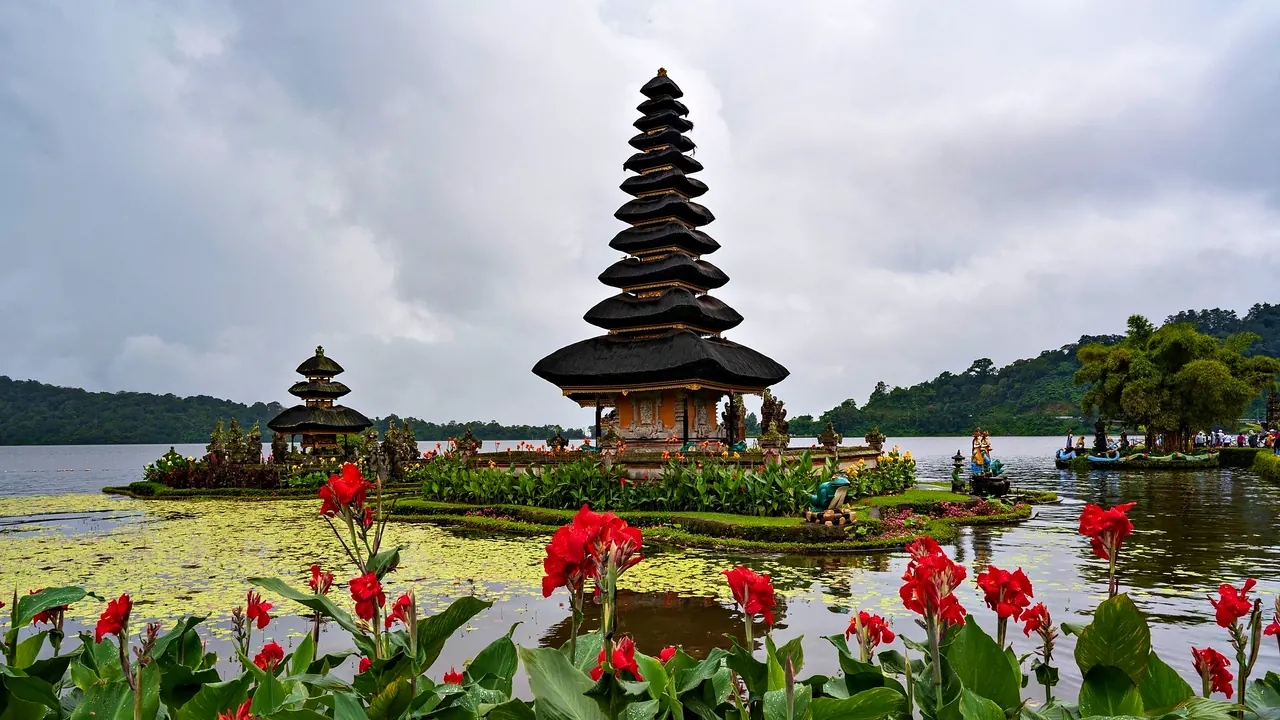
Photos: Bali by Evelin Magnus, Pexels License.
Bali or Whitsundays?
Our verdict in twelve categories, each scored against the same fixed benchmark cities, and the climate month by month, so you can choose for your trip.
Choose Bali for
- culture and sights
- shopping
- prices
Bali suits travellers who want an island with a strong culture of its own as well as a beach. Village temples, nightly dance in Ubud, Balinese pork dishes in simple warungs and a deep wellness scene give a long stay plenty to fill it, and it costs far less than Australia. The price you pay is traffic, so pick one or two bases and accept slow roads between them.
Choose Whitsundays for
- getting around
- beaches
- nature and the outdoors
The Whitsundays are for a trip spent almost entirely on the water. Whitehaven's white silica sand, island-hopping by yacht inside the Great Barrier Reef and humpback whales in winter make it a superb escape for sea and nature. Ashore, though, there is little to eat, see or do beyond Airlie Beach, and the boats and island resorts make it an expensive place to stay.
Scoreboard
Twelve categories on one fixed scale from 0 to 100. The shaded stretch is the gap between the two.
Your match
Pick a travel style or drag the sliders, and both match scores follow your weighting.
Wins on culture and sights and shopping with your weighting.
Wins on getting around and beaches with your weighting.
What matters to you?
Category by category
What the scores mean for a trip.
Beaches & swimming
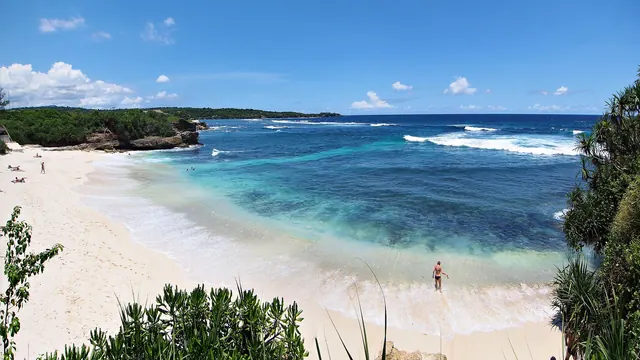
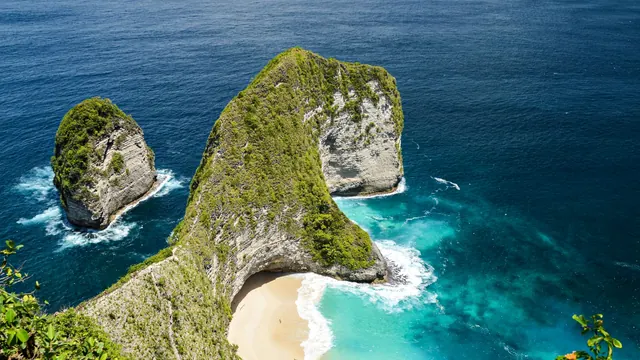
Both have warm water and fine sand, but of different kinds. Bali's beaches line the main island and come in several moods: surf and sunsets on the west coast from Kuta to Canggu, calm reef lagoons at Sanur and Nusa Dua, and coves below the cliffs on the Bukit. Most are close to where you sleep.
The Whitsundays have the single more spectacular beach in Whitehaven, along with empty coves across the national park islands. You reach them by boat, though, because the mainland shore at Airlie is shallow and muddy. You also need a stinger suit for about half the year, a precaution Bali does not ask of you.
Food & drink
Bali has a real cuisine to explore. The Hindu kitchen gives you spit-roast babi guling, bebek betutu and lawar, eaten at warungs and in Denpasar's morning markets, and Canggu, Seminyak and Ubud add a serious café and tasting-menu scene.
The Whitsundays serve good prawns, reef fish and tropical fruit in Airlie's casual bistros and at the island resorts. There is no regional cooking to seek out, though, and after a week the menus start to repeat. Food can be a reason to choose Bali. Here it simply goes along with the sea.
Culture & sights
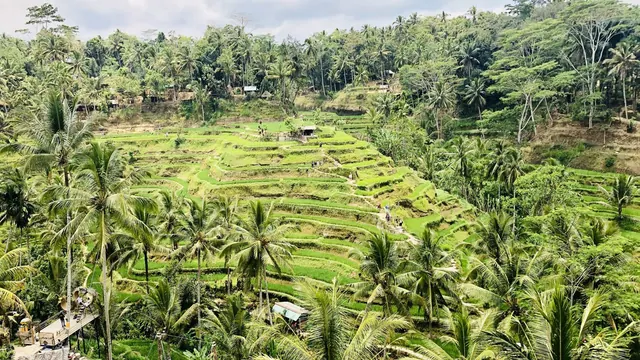
This is where the two differ most. In Bali culture is part of daily life: offerings on the pavements, village temples and processions. The great sites run from Tanah Lot and Uluwatu to Besakih and the Jatiluwih rice terraces, and Ubud keeps its palace and painting museums close together.
The Whitsundays have almost nothing to set against this. The Ngaro Sea Trail passes a few rock art and cultural sites left by the islands' first people, and Proserpine and Bowen have small heritage displays. Sightseeing is not what the region is for.
Nightlife
Bali has much the bigger night out, and it is all in the southwest. Beach clubs in Seminyak, Canggu and on the Uluwatu cliffs run from sunset into the night, Seminyak has polished cocktail bars, and Kuta and Legian have the loud club strip. Elsewhere on the island evenings are quiet.
In the Whitsundays, going out means one short main street of backpacker pubs and open decks in Airlie Beach. It is lively for a few nights once the sailing trips are back. On the islands you get a resort bar and an early night before the boats leave.
Nature & outdoors
Both are outstanding, but in different settings. Bali's strength is on land and in the surf: the pre-dawn climb of Mount Batur, the crater lakes and waterfalls around Munduk, rice-field walks near Ubud and Sidemen, famous reef breaks on the Bukit, and dives at Tulamben or with the manta rays off Nusa Penida.
The Whitsundays are all about the sea. Seventy-four islands, most of them national park, give sheltered sailing inside the Great Barrier Reef, with kayaking, snorkelling, seaplane flights over Heart Reef and humpback whales in winter. The walks are shorter, the Ngaro Track and the rainforest of Conway rather than volcano summits.
Day trips
Neither is a place for many separate outings, but Bali has more of them. The old Bali Aga villages of Tenganan and Penglipuran, the Sidemen valley, the fishing villages of Amed and a fast boat to Nusa Lembongan each make a different day out, though traffic means most visitors manage only one or two.
In the Whitsundays nearly every excursion is a boat trip to reefs and beaches. As places to visit, there are only the marina village on Hamilton Island, Daydream Island and the small town of Bowen an hour to the north.
Good for families
Bali works a little better with children if you stay in Sanur or Nusa Dua, with their calm lagoons and kids' clubs. The water park, the safari park and Ubud's Monkey Forest add outings, and the Balinese are warm with children. The drawbacks are traffic, missing pavements, stomach upsets and long drives.
The Whitsundays are simpler but offer less. Children love the golf buggies, koalas and kids' clubs on Hamilton Island and the coral lagoon on Daydream. Stinger suits, crocodiles in the mainland creeks and hours on a boat to Whitehaven, however, suit older children better than toddlers.
Getting around
The Whitsundays are easier to get around, on their own terms. Airlie Beach is walkable, ferries run to Hamilton and Daydream, and Hamilton has its own airport and buggies. Everything else is a booked boat, so your days follow departure times and the weather.
Bali has no public transport worth using and heavy traffic across the south. You rely on a car with a driver, ride-hailing apps or a scooter, and only experienced riders should try the scooter. Short distances on the map become long drives.
Shopping & style
Bali is by far the better place to shop, for crafts rather than brands. There is silver in Celuk, woodcarving in Mas, Ubud's painting studios and art market, ikat and endek weaving from East Bali, and designer boutiques in Seminyak and Canggu for linen, ceramics and furniture.
In the Whitsundays shopping goes no further than swimwear, surf gear and souvenirs in Airlie and at the Hamilton marina, plus a weekend craft market on the foreshore.
Affordability
Bali gives much more for your money. Villas with private pools, warung meals, massages and drivers cost little, and Ubud and the quieter coasts are cheaper still. Seminyak's beach clubs and the cliff-top resorts, though, charge close to Western prices.
The Whitsundays charge Australian prices, plus extra on the islands. Hostels and campgrounds in Airlie keep a basic stay possible, but the sailing trips, reef days and scenic flights that are the reason to come soon add up.
Live music & performing arts
Bali has a living stage that is easy to catch. Legong, Barong and shadow puppetry are performed with gamelan in Ubud's palace courtyards almost every night, the Kecak is danced at sunset at Uluwatu, and village temple festivals add more dance.
The Whitsundays offer cover bands and acoustic sets in Airlie's pubs and resort bars, plus an annual music festival on the foreshore, but nothing to plan a trip around.
Wellness & relaxation
Bali is one of the world's great places to slow down. Ubud and its valleys are full of yoga studios, meditation retreats and spas among the rice fields, and Balinese massage is offered everywhere. There are hot springs at Banjar and on Lake Batur, and real calm in Sidemen and Amed.
The Whitsundays help you rest in a different way, with a quiet island or a yacht at anchor, and there are serious spas at the Hamilton and Hayman resorts. They have no wellness tradition to match Ubud's, and noisy Airlie is the place to avoid if you want rest.
When should you go?
Pick your month. The climate figures are measured averages, not a forecast.
Bali in July
Whitsundays in July
Daytime high, °C
Rainfall in the month, mm
Where the figures come from
Whitsundays's temperatures are measured 29 km from the centre, at Proserpine.
Whitsundays has no rain gauge within 25 km of the centre, so its rainfall comes from a gridded climate dataset read at the destination rather than from a gauge further away.
Temperature and rainfall are climate normals, averaged over the years shown. Bali: 1991-2020 normals, Denpasar / Ngurah-Rai (3.5 km from centre). Whitsundays: 1991-2020 normals, Proserpine (28.6 km from centre).
The two share the same rhythm: wet from December to March and dry from about May to October. Bali hardly changes temperature through the year, with daytime highs close to 30°C and a sea warm enough to swim in every month. Its dry months are also the sunniest, while January, with almost 400mm of rain, is the wettest. Walking round temple grounds in the midday heat is tiring in any month.
The Whitsundays change more. From June to August highs fall to about 25°C and the sea to around 22°C, which some swimmers find fresh, but it is the most comfortable weather for sailing, walking and beach days, and stinger season is over. February is the wettest month, with over 400mm, and the summer heat brings a risk of cyclones. For both, June to September is the safest choice.
Which traveller are you?
On a culture and arts trip, choose Bali. Stay a week in Ubud, watch a dance most evenings, drive out to a mountain temple and, with luck, come across a village procession. In the Whitsundays you would run out of sights in a day.
On a tight budget, Bali makes the money go much further. A family-run guesthouse inland and local food leave room for the odd afternoon at a beach club. In the Whitsundays a hostel bed is possible, but one sailing trip takes much of the budget.
For a sailing trip, the Whitsundays are the obvious pick. Experienced crews can hire a yacht to sail themselves and anchor somewhere new each night. Others join a two-night trip, snorkelling straight off the boat and climbing to the Hill Inlet lookout. Bali has nothing similar.
Before you go
| Measure | Bali | Whitsundays |
|---|---|---|
| Official language | Indonesian | English |
| Currency | Rupiah (IDR) | Australian Dollar (AUD) |
| Sockets | CF50 Hz | I230 V, 50 Hz |
| Driving side | Left | Left |
| Time zone | UTC+8 | UTC+10 |
| Emergency number | 112 | 000 |
| Main airport | Denpasar I Gusti Ngurah Rai International Airport (DPS)63 non-stop destinations | Proserpine Whitsunday Coast Airport (PPP)4 non-stop destinations |
| Public holidays this year | - | 11 days |
By the numbers
| Measure | Bali | Whitsundays |
|---|---|---|
| Population | 4,404,300 | 2,269 |
| People per km² | 782 | 8 |
| Swim season, months above 21 °C | 12 months | 12 months |
Where else could you go?
Every comparison below shares a destination with this one, so you can follow Bali or Whitsundays somewhere new.