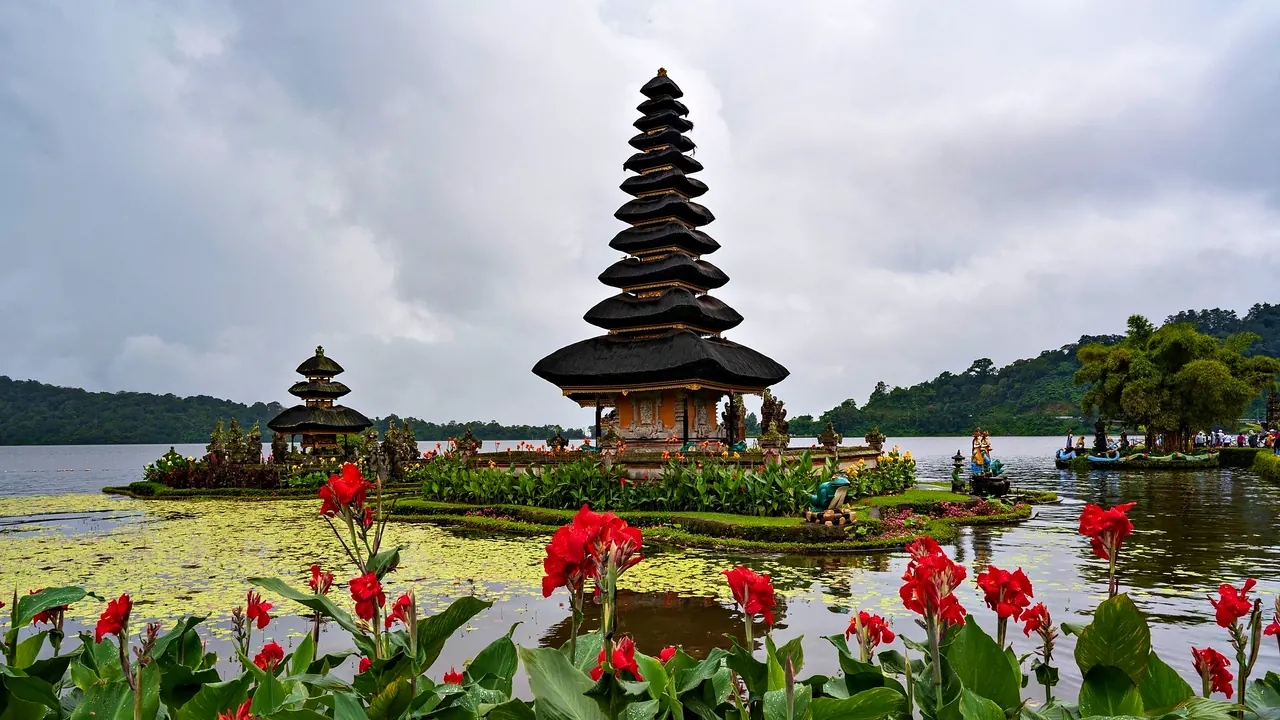
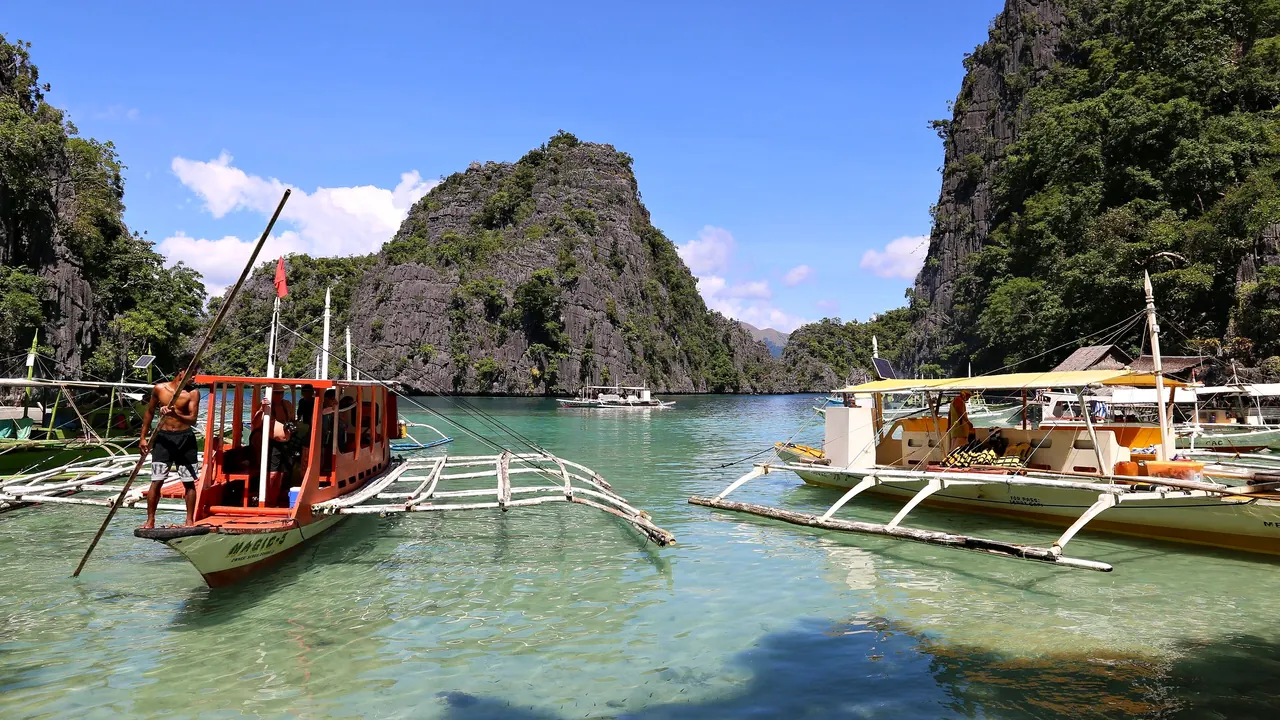
Photos: Bali by Evelin Magnus, Pexels License; Palawan by Sailko, CC BY 3.0, cropped.
Bali or Palawan?
Our verdict in twelve categories, each scored against the same fixed benchmark cities, and the climate month by month, so you can choose for your trip.
Choose Bali for
- culture and sights
- live music and the arts
- shopping
Bali suits travellers who want a beach trip with a lot more going on around it. In Ubud you get temple ceremonies and dance evenings, and village warungs serve Balinese pork dishes. The Seminyak and Canggu coast has beach clubs, and the island's yoga and spa culture is among the deepest anywhere. With younger children it is also the easier choice, as long as you base yourself in Sanur or Nusa Dua.
Choose Palawan for
- beaches
- nature and the outdoors
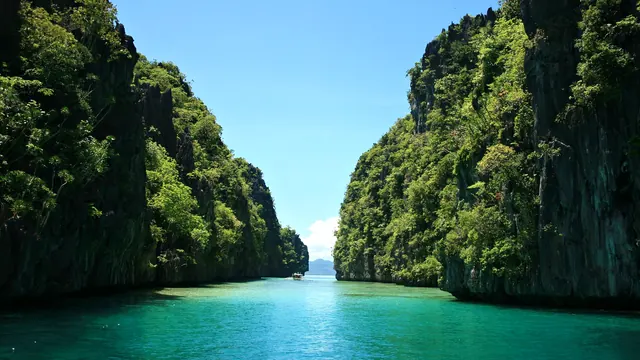
Choose Palawan if the scenery is the whole point. The limestone islands of Bacuit Bay, the lagoons around Coron and the Underground River give it finer beaches and a wilder seascape, and most days are spent on a boat rather than in a town. You give up almost everything else for that. The food is simple, nights end early, there is little culture to see, and travelling between El Nido, Coron and Puerto Princesa takes whole days.
Scoreboard
Twelve categories on one fixed scale from 0 to 100. The shaded stretch is the gap between the two.
Your match
Pick a travel style or drag the sliders, and both match scores follow your weighting.
Wins on culture and sights and live music and the arts with your weighting.
Wins on beaches and nature and the outdoors with your weighting.
What matters to you?
Category by category
What the scores mean for a trip.
Beaches & swimming
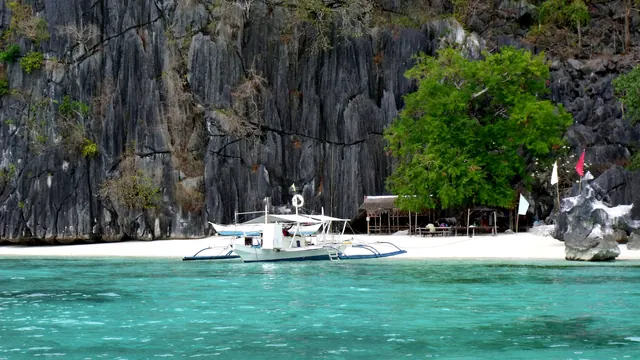
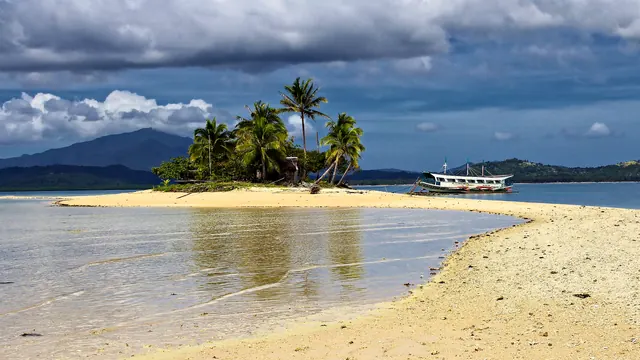
Both have warm sea all year, but Palawan's beaches are the more beautiful. Off El Nido, Bacuit Bay hides small white coves and shallow lagoons between limestone islands, and Nacpan and Duli are long, almost empty strands. The catch is that the best sand usually means a boat ride, and the town waterfronts are not for swimming.
Bali's beaches are easier to reach and vary more in character. Kuta, Seminyak and Canggu have surf and rip currents, Sanur and Nusa Dua have calm lagoons sheltered by reefs, and the Bukit has coves at the foot of cliffs, such as Padang Padang and Bingin. Bali puts beach life on your doorstep, while Palawan has the finer scenery.
Food & drink
Bali is much the better place to eat. Its Hindu kitchen is unlike anything else in the region: babi guling, bebek betutu and sate lilit at village warungs and in Denpasar's morning markets. Ubud and Seminyak add ambitious restaurants, and there is coffee from the Kintamani highlands.
In Palawan the high point is grilled seafood on an island-hopping day, along with chao long noodle soup in Puerto Princesa. Elsewhere, menus lean towards pizza and comfort food for travellers, with adobo and sinigang at simple local places.
Culture & sights
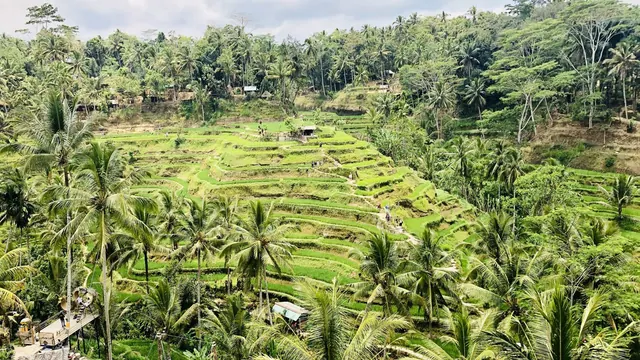
The gap here is wide. In Bali, religion is part of daily life, from the morning offerings on the pavements to the sea temples of Tanah Lot and Uluwatu, the mother temple at Besakih and the subak terraces of Jatiluwih. Ubud's palace and painting museums are close at hand.
Palawan has the Tabon Caves, Culion's history as a leper colony, and Puerto Princesa's cathedral and wartime memorial square. These sights are modest and far apart, and most visitors leave them out.
Nightlife
Bali gives you real choice after dark, all in its southwest corner. The beach clubs of Seminyak, Canggu and the Uluwatu cliffs run from the pool into the night, Seminyak has polished cocktail bars, and Kuta and Legian have a loud strip of clubs that stay open late.
In Palawan, going out means a short row of bars in El Nido with reggae, cheap rum and sunset drinks at Las Cabanas. Most people go to bed early because the boats leave in the morning, and there are no clubs.
Nature & outdoors
Both are superb, but Palawan edges ahead for sheer landscape. The black limestone islands of Bacuit Bay, the lakes of Coron ringed by cliffs, the Underground River and the remote Tubbataha Reef make a seascape few places can match. The Japanese wrecks off Coron draw serious divers.
Bali's strengths are its volcanoes and its surf. You can climb Mount Batur before dawn, walk around the crater lakes near Munduk and through the terraced Sidemen valley, and ride the famous reef breaks of the Bukit. Divers have the wreck at Tulamben and the mantas off Nusa Penida.
Day trips
Neither island is made for classic day trips, but Bali offers more. The old Bali Aga villages of Tenganan and Penglipuran, the Sidemen valley and the boat to Nusa Lembongan all make good single days, though the traffic keeps most people to one or two.
In Palawan the outings are boat tours to islands and lagoons rather than visits to other places. El Nido, Coron and Puerto Princesa are too far apart to reach in a day, so people move base instead.
Good for families
Bali is the easier choice with children. Sanur and Nusa Dua have sheltered water, flat beachfront paths and resorts with kids' clubs, and the water park, the safari park and Ubud's Monkey Forest fill other days. Traffic, heat and stomach upsets still need managing.
Palawan suits families with older children who swim confidently and enjoy kayaking and snorkelling in shallow lagoons. Beyond that there is little aimed at children, the road transfers are long, and medical care is basic outside Puerto Princesa.
Getting around
Both are hard work to get around, for different reasons. Bali's problem is congestion. There is no public transport a visitor can use, the traffic between Kuta, Seminyak, Canggu and Uluwatu is slow, and pavements are few, so most people hire a driver by the day or use ride-hailing apps.
Palawan's problem is distance. El Nido is a winding van ride of five to six hours from Puerto Princesa, and Coron needs a flight or a ferry that rough weather can cancel. In Bali you settle in a base and make longer journeys as full days out. In Palawan you plan a route.
Shopping & style
Bali is a real place to shop, for crafts and homeware rather than brands. On the Ubud road there is silver in Celuk and woodcarving in Mas, and Ubud has its art market. Look for endek weaving from the east, and for designer linen, ceramics and swimwear in the boutiques of Seminyak and Canggu.
Palawan offers cashews, woven baskets and South Sea pearls in Puerto Princesa, and beachwear stalls in El Nido and Coron. That is little more than souvenirs.
Affordability
Bali gives more comfort for the money. Villas with private pools, very cheap warung meals and inexpensive massages and drivers are the norm, and prices drop further around Ubud, Sidemen and the north coast. Only the beach clubs and cliff-top resorts approach Western levels.
Palawan can be done cheaply with guesthouses, shared vans and group boat tours. Internal flights, private boats, the lagoon and Underground River fees and El Nido's dry-season room rates push the total up, though, and the private-island resorts are among the most expensive in the Philippines.
Live music & performing arts
Bali has living dance and music traditions that a visitor can see almost any night. Ubud's palace courtyards host Legong and Barong dances with gamelan orchestras, there is shadow puppetry, and the Kecak is chanted at sunset above Uluwatu. Palawan has nothing comparable, only cover bands in El Nido bars and the occasional folk dance show in Puerto Princesa.
Wellness & relaxation
Bali is built for slowing down. Ubud and its river valleys are full of yoga studios, retreats and spas set among the rice fields, Balinese massage is available at every price level, and there are hot springs at Banjar and on the shore of Lake Batur. To rest properly, stay away from the noise of Kuta and Canggu.
Palawan's calm comes mainly from its pace, especially in villages like Port Barton. It has simple massage huts, the Maquinit hot spring near Coron, and full spas only inside the private-island resorts, for their own guests.
When should you go?
Pick your month. The climate figures are measured averages, not a forecast.
Bali in July
Palawan in July
Daytime high, °C
Rainfall in the month, mm
Where the figures come from
Palawan has no weather station within reach, so its figures come from a gridded climate model rather than a measured record, and read a broad area rather than one spot.
Temperature and rainfall are climate normals, averaged over the years shown. Bali: 1991-2020 normals, Denpasar / Ngurah-Rai (3.5 km from centre). Palawan: 2001-2020 normals, NASA POWER reanalysis grid, no weather station within 90 km.
On Bali's south coast, where most visitors stay, the dry season runs from May to October. August is almost rainless and the sunniest month of the year. Rain builds from November and peaks in January at nearly 400mm. The daytime heat hardly changes, staying around 30°C all year, so the sea is warm enough to swim in every month and walking is a sticky business at any time.
Palawan's seasons run almost the other way. January to April is the dry, calm stretch, with February the driest month. From June to October each month brings around 200mm of rain and rough seas that can cancel boat trips, and the rain only eases slowly through November and December. Highs are a touch lower than Bali's, near 29°C, and the sea is warmest in May at about 30°C. For a trip in the northern summer, pick Bali. Palawan is the better choice from midwinter into spring.
Which traveller are you?
On a beach and sun trip, Palawan is the one to pick. In Bali the sand is often a short walk from your room, but Palawan's days are spent island-hopping by banca around Bacuit Bay, swimming from lagoon to cove and eating fish grilled on the shore.
For a culture and arts trip, Bali wins easily. Stay in Ubud, go to a dance performance in the evenings, ask locally about village temple ceremonies and hire a driver for a day at Besakih. In Palawan the few historic sites rarely justify the journey.
On a relaxing and wellness trip, Bali is the better choice. You can join a week-long retreat with daily classes and treatments, then finish somewhere quiet on the coast, such as Amed. Rest in Palawan means switching off in a remote village rather than following a programme.
Before you go
| Measure | Bali | Palawan |
|---|---|---|
| Official language | Indonesian | English, Filipino, Taglish |
| Currency | Rupiah (IDR) | Philippine Peso (PHP) |
| Sockets | CF50 Hz | ABC220 V, 60 Hz |
| Driving side | Left | Right |
| Time zone | UTC+8 | UTC+8 |
| Emergency number | 112 | 911 |
| Main airport | Denpasar I Gusti Ngurah Rai International Airport (DPS)63 non-stop destinations | Puerto Princesa International Airport / PAF Antonio Bautista Air Base (PPS)5 non-stop destinations |
| Public holidays this year | - | 18 days |
By the numbers
| Measure | Bali | Palawan |
|---|---|---|
| Population | 4,404,300 | 968,795 |
| People per km² | 782 | 66 |
| Swim season, months above 21 °C | 12 months | 12 months |
Where else could you go?
Every comparison below shares a destination with this one, so you can follow Bali or Palawan somewhere new.
- Lombokvs Bali
- Gili Islandsvs Bali
- Boracayvs Palawan
- Boholvs Palawan
- Cebu Islandvs Palawan
- Siargaovs Palawan