Australia
Uluru
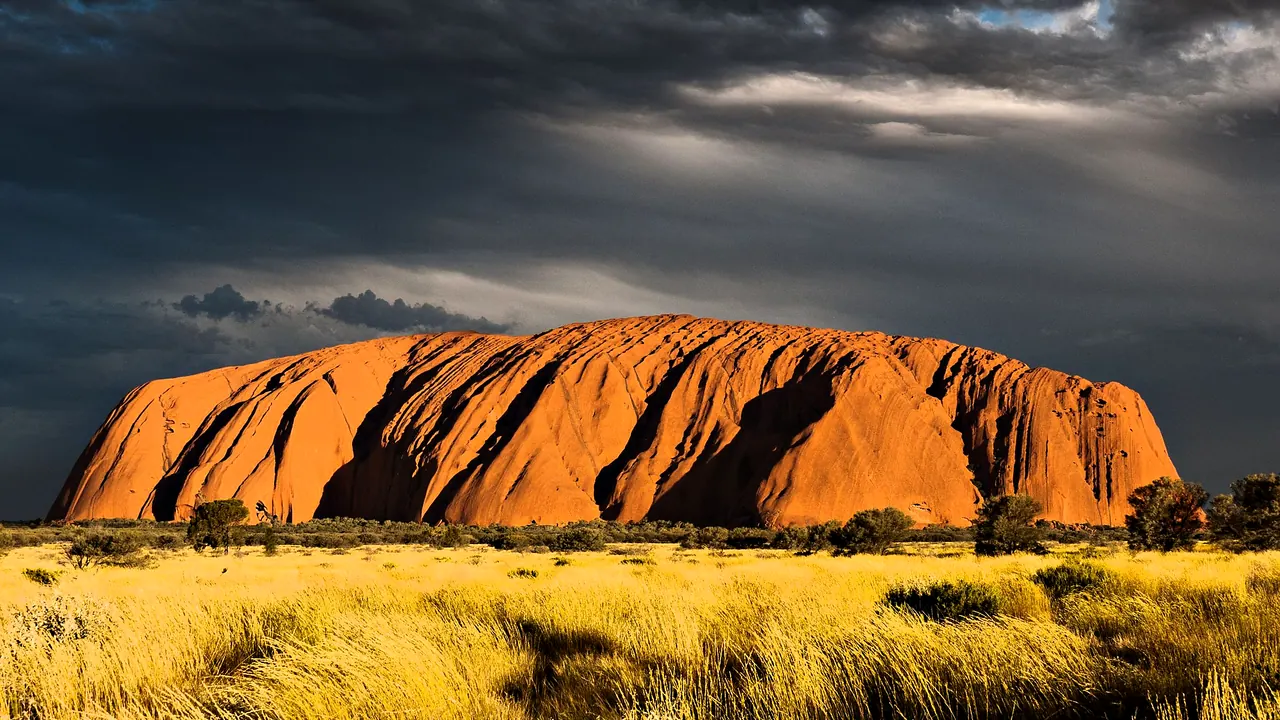
Uluru glowing at sunset under a storm sky
- Nature & outdoors84
- Culture & sights40
- Getting around40
Match
24
Every category weighted equally
- Beach & sun23
- Culture & arts24
- Food & nightlife19
- Family trip27
- Outdoors30
- Relax & unwind27
- Shopping & style23
- On a budget23
Uluru in twelve categories
Our verdict on each, scored 0 to 100 against the same fixed benchmark cities, so a score means the same thing on every page.
Beaches & swimming. Scores 3 out of 100.
Food & drink. Scores 18 out of 100.
Culture & sights. Scores 40 out of 100.
Nightlife. Scores 5 out of 100.
Nature & outdoors. Scores 84 out of 100.
Day trips. Scores 5 out of 100.
Good for families. Scores 30 out of 100.
Getting around. Scores 40 out of 100.
Shopping & style. Scores 20 out of 100.
Affordability. Scores 10 out of 100.
Live music & performing arts. Scores 8 out of 100.
Wellness & relaxation. Scores 30 out of 100.
Uluru category by category
Beaches & swimming
3There is no swimming here beyond the hotel pools at Yulara. The resort lies in the arid centre of the continent, about 700km in a straight line from the nearest coast and much further by road, and the waterholes at the base of the rock are sacred sites where no one swims. If you want a beach, plan it as a separate part of the trip.
Food & drink
18Everything you eat comes from the small cluster of restaurants, bars and a supermarket at Ayers Rock Resort in Yulara. Most of it is competent hotel cooking. The things worth seeking out are the native ingredients, such as wattleseed, quandong, bush tomato and lemon myrtle, along with kangaroo and barramundi on the grill. The best food memory here is usually about the setting: an outdoor dinner in the dunes as the rock turns red, or a sausage on the communal barbecue at the budget end of the resort. There is no local food culture to explore and no markets, and the choice is the same after a couple of nights.
Culture & sights
40Uluru is a natural monument, but the reason to look closely is cultural. Uluru-Kata Tjuta National Park is World Heritage listed for its landscape and also for the living culture of the Anangu, whose Tjukurpa (law and creation stories) is written into every cave, scar and waterhole of the rock. Walking the base, you pass rock art in the shelters at Kulpi Mutitjulu and Kantju Gorge, and signs ask you not to photograph the sacred sections. The Cultural Centre near the rock, built in the shape of two ancestral snakes, gives the best introduction, and ranger-led walks explain what you are looking at.
The Anangu ask visitors not to climb Uluru, and climbing is not permitted. Apart from the park, there is nothing else to see in the way of sights. You will not find museums, historic buildings or a town centre. Two or three days covers the culture well.
Nightlife
5Evenings end early. The resort has a few hotel bars and one relaxed outback-style bar with a pool table and the occasional singer, and that is all. Most visitors are up before dawn for sunrise at the rock, so the night belongs to the stars, not to going out.
Nature & outdoors
84Uluru rises about 350m out of flat red sand plains, and that alone repays the journey. The 10km base walk takes you close to the rock, past waterholes, caves and folds you cannot see from a distance. About 50km west, the domes of Kata Tjuta are less famous and often more dramatic. The Valley of the Winds walk threads between them and is the best hike in the park. Sunrise and sunset at the viewing areas change the rock's colour by the minute. You can also cycle the base track, ride camels through the dunes or take a scenic flight to see both formations together.
The night sky is among the darkest anywhere. The season matters a great deal. From May to September days are mild and nights can drop near freezing. In summer temperatures often pass 40°C, the longer trails close by late morning, and flies are relentless. Wildlife is mostly lizards, birds and the odd dingo. Kings Canyon is about 300km away, too far for a day.
Day trips
5There is nowhere else to go for a day out. Kata Tjuta sits inside the same national park, and Kings Canyon is a long drive of about three and a half hours each way to more landscape. The nearest real town, Alice Springs, is about 450km away. Day outings here mean the park, and anything further is a separate stop on the itinerary.
Good for families
30Children who are old enough to be impressed by scale often love the rock, and the resort is small, safe and easy to manage, with a free shuttle loop and pools for the afternoons. Camel rides, the flat sections of the base walk, ranger talks and astronomy evenings work well for families. Still, nothing here is made for young children. The best moments come at dawn and dusk, the midday heat for much of the year is punishing, and flies make long walks hard work for small walkers. The cooler months from May to September are by far the easier time to come with them.
Getting around
40Getting here is simpler than the map suggests, because Ayers Rock airport sits just outside Yulara and has direct flights from several Australian cities. The resort itself is compact, and a free shuttle loops between its hotels, campground and town square. The park is the harder part. Uluru is about 20km away and Kata Tjuta about 50km, with no public transport, so you either hire a car, which is the most flexible choice on quiet sealed roads, or rely on paid shuttles and tours timed around sunrise and sunset. Driving in from Alice Springs takes the best part of a day.
Shopping & style
20Shopping comes down to one thing worth taking home, which is Aboriginal art. At the Cultural Centre and in the galleries at Yulara you can buy canvases painted by artists from the surrounding communities, along with punu, the carved wooden bowls and animals of the region. Buying from the community-run outlets means the money reaches the artists. Apart from that you will find souvenir shops, outdoor clothing and a supermarket.
Affordability
10This is an expensive place to stay. All the accommodation belongs to one resort, so you have little choice, and hotel rooms, restaurant meals, drinks and guided tours are all priced for a remote location where everything arrives by truck. Flights in are rarely cheap, and a park pass is required. You can bring costs down at the campground and the dormitory-style lodge, cook your own meals with supermarket shopping, and drive yourself rather than book tours. The busy cooler months are the priciest.
Live music & performing arts
8There is no theatre, concert hall or regular live music here. What you can attend is small and staged for visitors: short performances of Indigenous dance and didgeridoo at the resort, music at outdoor dinners, and the occasional singer in a bar. It is pleasant, but you should not plan a trip around it.
Wellness & relaxation
30You will find no thermal baths or bathing tradition, only the spa at the resort's top hotel, which offers treatments using native botanicals. What makes the place restful is the rhythm of the day. You wake for sunrise, keep to the shade or the pool through the heat, come back out to watch the rock at sunset, and end the day under a sky full of stars in near silence. That suits a short reset better than a long retreat, and early alarms for tours and the summer heat work against a truly lazy stay.
Where to stay in Uluru
There is only one place to stay for Uluru: Yulara, the resort village about 20km from the rock, where every bed belongs to a single resort. The real choice is which part of it suits you. Yulara is compact, and a free shuttle links the hotels, the campground and the town square, so wherever you sleep, the restaurants, supermarket and galleries are a short ride away.
The hotels suit couples and anyone who wants comfort between early starts, with pools for the hot afternoons and, at the top hotel, a spa using native botanicals. Families do well here too, because the resort is small and safe and the pools fill the middle of the day. If you are watching costs or like to cook for yourself, the campground or the dormitory-style lodge is the better fit. The communal barbecue and the supermarket keep spending down.
Two or three nights covers the park, and there is no second base to move to within it. Both Uluru and Kata Tjuta are reached from Yulara, ideally with a hire car so you can time your trips around sunrise and sunset. Kings Canyon is about three and a half hours' drive away and Alice Springs is around 450km off, so each needs its own nights as a separate stop.
When should you go?
Pick a month to see what it is like. The climate figures are measured averages, not a forecast.
Uluru in July
Daytime high, °C
Rainfall in the month, mm
The whole year
Shaded against this destination’s own year: the deepest cell is its best month for that figure and the palest its weakest.
Temperature and rainfall are climate normals, averaged over the years shown. Uluru: 1991-2020 normals, Yulara (4.7 km from centre).
Before you go
| Measure | Uluru |
|---|---|
| Official language | English |
| Currency | Australian Dollar (AUD) |
| Sockets | I230 V, 50 Hz |
| Driving side | Left |
| Time zone | UTC+9:30 |
| Emergency number | 000 |
| Main airport | Ayers Rock Connellan Airport (AYQ)3 non-stop destinations |
| Public holidays this year | 12 days |
Compare Uluru with
Every comparison with a written verdict behind it.