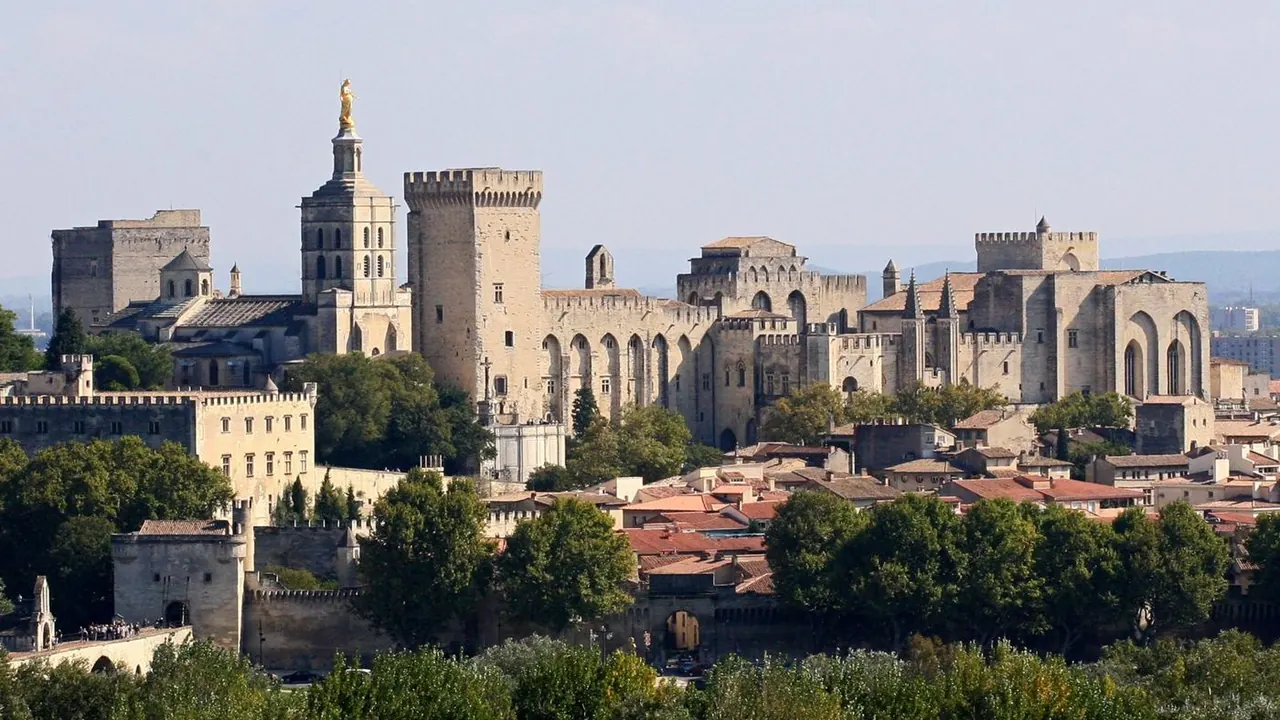
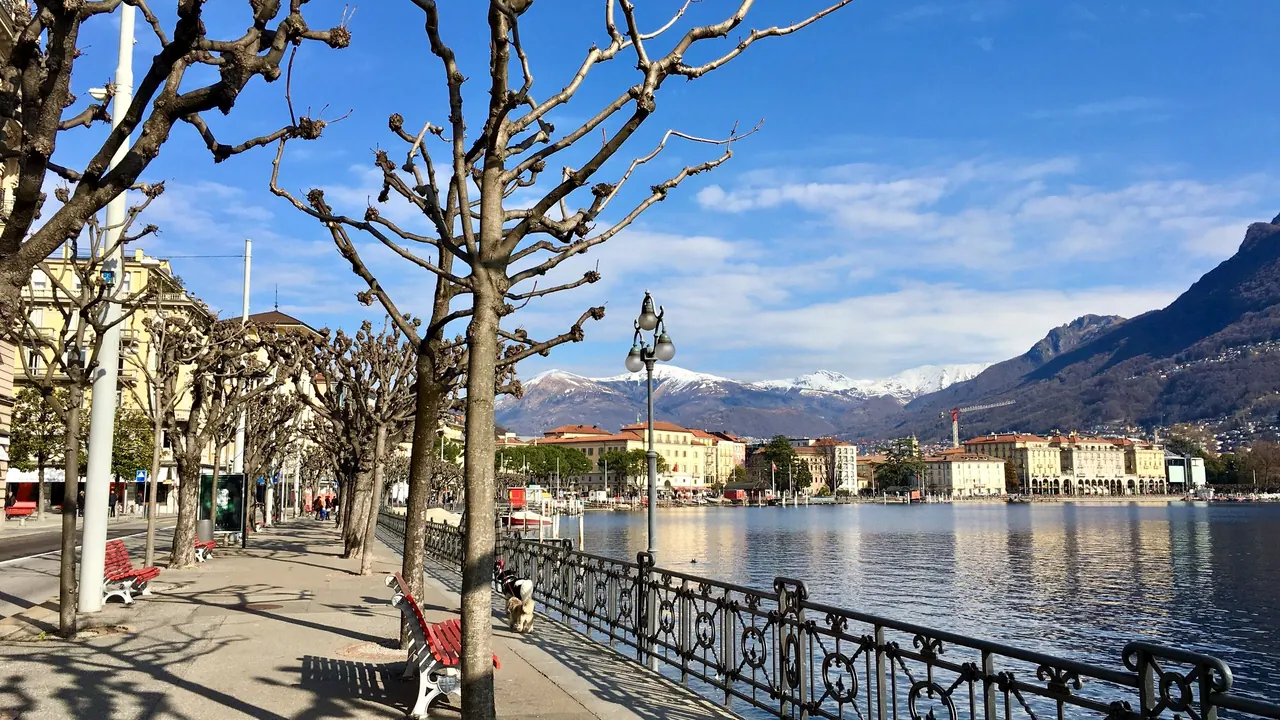
Photos: Avignon by BlueBreezeWiki, CC BY-SA 3.0, cropped; Lugano by Thomas Woodtli from Zürich, Switzerland, CC BY-SA 2.0, cropped.
Avignon or Lugano?
Our verdict in twelve categories, each scored against the same fixed benchmark cities, and the climate month by month, so you can choose for your trip.
Choose Avignon for
- prices
- culture and sights
- live music and the arts
Avignon is for travellers who want history and performance with a base for exploring. The papal palace, the ramparts and the museums fill two unhurried days, and July brings one of the world's great theatre festivals. Beyond the walls you have the Roman monuments of Nîmes, Arles and Orange and the wine villages of the Rhône. It also costs a good deal less than Lugano, and it is the better choice for anyone who cares about wine and Provençal cooking.
Choose Lugano for
- beaches
- getting around
- families
Lugano suits a slower trip built around water and mountains. You can swim from a lido, take a funicular up Monte Brè or San Salvatore, ride a boat to Gandria or Morcote, and then take the train to Milan or Lake Maggiore for the day. Getting around is easier, families have more to do, and the scenery is the main reason to go. Its sights are fewer, though, and every day there costs Swiss prices.
Scoreboard
Twelve categories on one fixed scale from 0 to 100. The shaded stretch is the gap between the two.
Your match
Pick a travel style or drag the sliders, and both match scores follow your weighting.
Wins on prices and culture and sights with your weighting.
Wins on beaches and getting around with your weighting.
What matters to you?
Category by category
What the scores mean for a trip.
Beaches & swimming
Neither has a beach on the doorstep, but Lugano can at least offer a proper swim in town. Its lidos have lawns, decks and ladders into the lake, with smaller bathing spots along the shore and in villages you reach by boat, from June to early September.
In Avignon the Rhône is not for swimming. The nearest natural swim is in the Gardon pools below the Pont du Gard, a drive away. The Camargue sands and Le Grau-du-Roi make an occasional sea day rather than a daily habit.
Food & drink
Avignon eats better. Les Halles shows off Provençal produce and cooks lunch from its stalls. Daube, tians and lamb with herbs come with Châteauneuf-du-Pape and Côtes du Rhône wines poured by the glass, and the best tables are tucked into the lanes off Rue des Teinturiers.
Lugano's great pleasure is the grotto, where you eat polenta, braised meats and Ticino Merlot at stone tables under chestnut trees. Beyond that the choice is thin and expensive, and many visitors save their big meals for a trip into Italy.
Culture & sights
Avignon is well ahead on culture. The popes left it the largest Gothic palace in Europe, at the heart of a UNESCO-listed quarter with the cathedral, the Rocher des Doms and the broken bridge, all inside medieval ramparts that still ring the town. The Petit Palais, the Musée Calvet and the Collection Lambert cover Italian primitives to contemporary art, and Villeneuve across the river adds a charterhouse and a fort.
Lugano is pleasant rather than weighty. It has arcaded Lombard streets, San Lorenzo cathedral above the lake, Luini's fine Passion fresco in Santa Maria degli Angioli and an art museum split between LAC and Palazzo Reali. A single day takes in the main sights without hurrying.
Nightlife
Both are quiet after dark, and anyone after a big night heads to a larger city, Marseille or Montpellier from Avignon and Milan from Lugano. The difference is in the style. Avignon has café terraces, wine and a few student bars, and in July the festival keeps the squares full until the small hours. Lugano has a smarter lakeside aperitivo, a few lounge and cocktail bars and one or two clubs, all at Swiss prices.
Nature & outdoors
Lugano's scenery is right on the doorstep. Funiculars climb Monte Brè and San Salvatore from the edge of town, the lakeside path runs to Gandria, and the Verzasca and Maggia valleys are about an hour away.
Avignon's landscapes are celebrated, among them Mont Ventoux, the Luberon cliffs, the Alpilles and the Camargue's flamingos and white horses, but most of them are a drive away. In town you get flat cycling on the Île de la Barthelasse, and summer heat and the mistral limit the season.
Day trips
Both make excellent bases, and Avignon is the stronger one. Within about half an hour lie the Pont du Gard and the Roman monuments of Nîmes, Arles and Orange, then the Luberon villages, Châteauneuf-du-Pape and L'Isle-sur-la-Sorgue. Several of them need a car.
Lugano's day trips cross a border instead. Milan and The Last Supper, Como, the castles of Bellinzona and the Borromean Islands are all easy by train or boat, though the destinations are fewer and more spread out.
Good for families
Lugano is easier with children. In one stay they can swim and use the slides at the lidos, ride boats and funiculars and visit Swissminiatur at Melide, and Parco Ciani has playgrounds. Both towns are hilly or cobbled enough to make a pushchair hard work.
In Avignon the palace's tablet tour, the famous bridge and the Rocher des Doms playground fill a day. The best family outings, such as canoeing at the Pont du Gard or seeing the Camargue's wildlife, need a car, and July's heat and crowds are hard on young children.
Getting around
Lugano is easier to get around without a car. The Swiss trains reach Bellinzona, Locarno, Como and Milan, lake boats serve the villages, mountain railways do the climbing, and a short funicular links the station with the old town.
Avignon's walled centre is flat and walkable, and regional trains run to Arles, Nîmes and Marseille. The hill villages, vineyards and Ventoux have sparse buses, though, so a hire car or a tour is part of most plans.
Shopping & style
Neither is a shopping destination, but Lugano has a little more. Via Nassa has Swiss watchmakers and Italian fashion under its arcades, and there is a designer outlet near Mendrisio.
Avignon's appeal is homelier: Provençal cottons, lavender and olive-wood in the lanes off Rue des Marchands, and tapenade, oil and wine from Les Halles. For antiques, people head to L'Isle-sur-la-Sorgue.
Affordability
Avignon is far cheaper. It is no bargain, and rooms inside the walls are expensive in July. Still, set lunches, producers' wine and a free old town make spring and autumn stays reasonable, and the main extra cost is a hire car.
Lugano is expensive at every step, from lakeside hotels to boat trips and mountain railways. The free regional transport that comes with most hotel stays helps a little, and grotti are the gentlest way to eat.
Live music & performing arts
Avignon is far ahead, above all in July. The Festival d'Avignon fills the Cour d'honneur of the papal palace, and the Off puts on well over a thousand shows a day across town. For the rest of the year there are the opera house, a dozen small theatres and a jazz club.
Lugano's stage life centres on LAC, home to the Orchestra della Svizzera italiana and a mainly Italian-language theatre programme. In summer Estival Jazz brings free open-air concerts to Piazza della Riforma.
Wellness & relaxation
Neither has a bathing tradition, but Lugano is the more restful town. You can spend afternoons at a lido or in Parco Ciani, there are spas in the big lakeside hotels, and the indoor pool and sauna complex near Rivera is close by.
Avignon's calm is found at long lunches under the plane trees, or outside town in a vineyard guesthouse with a pool. July's festival crowds and days of mistral work against rest within the walls.
When should you go?
Pick your month. The climate figures are measured averages, not a forecast.
Avignon in July
Lugano in July
Daytime high, °C
Rainfall in the month, mm
Where the figures come from
Avignon has no rain gauge within 25 km of the centre, so its rainfall comes from a gridded climate dataset read at the city rather than from a gauge further away.
Avignon's sunshine is measured 34 km from the centre, at Nimes / Courbessac.
Temperature and rainfall are climate normals, averaged over the years shown. Avignon: 2005-2020 (sunshine 1981-2010, rainfall 1991-2020) normals, Avignon / Morières-lès-Avignon (8.6 km from centre). Lugano: 1991-2020 normals, Lugano (1.2 km from centre).
Avignon is the hotter and drier of the two. July reaches about 32°C with very little rain and long, bright days. That is too hot for comfortable sightseeing at midday, but it is the month of the festival. May, June and September are warm and sunny and better for walking and for touring the countryside. The rain arrives in autumn, peaking in October at around 109mm. Winters are cool but often sunny.
Lugano is milder in summer, with highs of about 27°C in July and August, which is pleasant for lake swimming and boat days. It is a much wetter place, though. From April to November most months see heavy rain, often as showers and thunderstorms, and May is the wettest. Winters are colder than in Avignon, with highs in single figures. Late spring and September give the best mix of warmth for walking and swimming in Lugano, while Avignon is at its most comfortable either side of high summer.
Which traveller are you?
On a culture and arts trip, Avignon is the clear choice. You get the Palais des Papes, the walled town, the Petit Palais and the Collection Lambert, and in July the festival and its enormous fringe. Lugano's sights take a day, and its stage life centres on one arts centre.
For an outdoors trip, Lugano has the edge. Funiculars and a rack railway climb straight from the lake to mountain paths, the Monte Lema to Tamaro ridge is a classic day hike, and kayaks are easy to hire. Avignon's best walking and cycling country needs a car.
On a tight budget, Avignon is far kinder. Set lunches in the side-street bistros, good wine bought from producers and a free old town to wander keep costs reasonable outside July. Lugano has Swiss prices on rooms, meals and mountain railways, with no cheap way to stay.
Before you go
| Measure | Avignon | Lugano |
|---|---|---|
| Official language | French | French, German, Italian, Romansh |
| Currency | Euro (EUR) | Swiss Franc (CHF) |
| Sockets | CE230 V, 50 Hz | CJ230 V, 50 Hz |
| Driving side | Right | Right |
| Time zone | UTC+1, UTC+2 in summer | UTC+1, UTC+2 in summer |
| Emergency number | 112 | 112 |
| Elevation | 10 m | 283 m |
| Main airport | Marseille Provence Airport (MRS)65 km from centre126 non-stop destinations | Milan Malpensa International Airport (MXP)46 km from centre208 non-stop destinations |
| Public holidays this year | 11 days | 15 days |
By the numbers
| Measure | Avignon | Lugano |
|---|---|---|
| City population | 92,188 | 63,495 |
| People per km² | 1,420 | 837 |
| Museums within 10 km | 11 | 17 |
| UNESCO World Heritage sites within 50 km | 6 | 5 |
Where else could you go?
Every comparison below shares a destination with this one, so you can follow Avignon or Lugano somewhere new.
- Comovs Lugano
- Milanvs Lugano
- Bergamovs Lugano
- Aix-en-Provencevs Avignon
- Montpelliervs Avignon
- Marseillevs Avignon