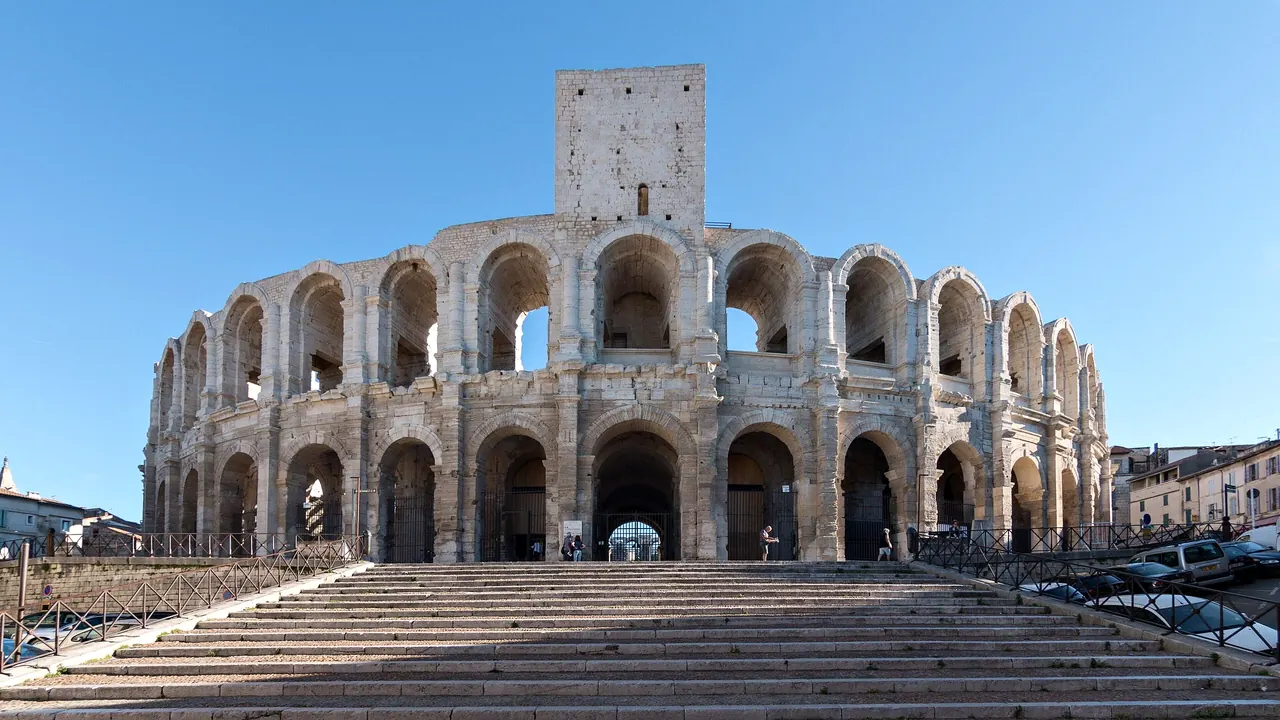
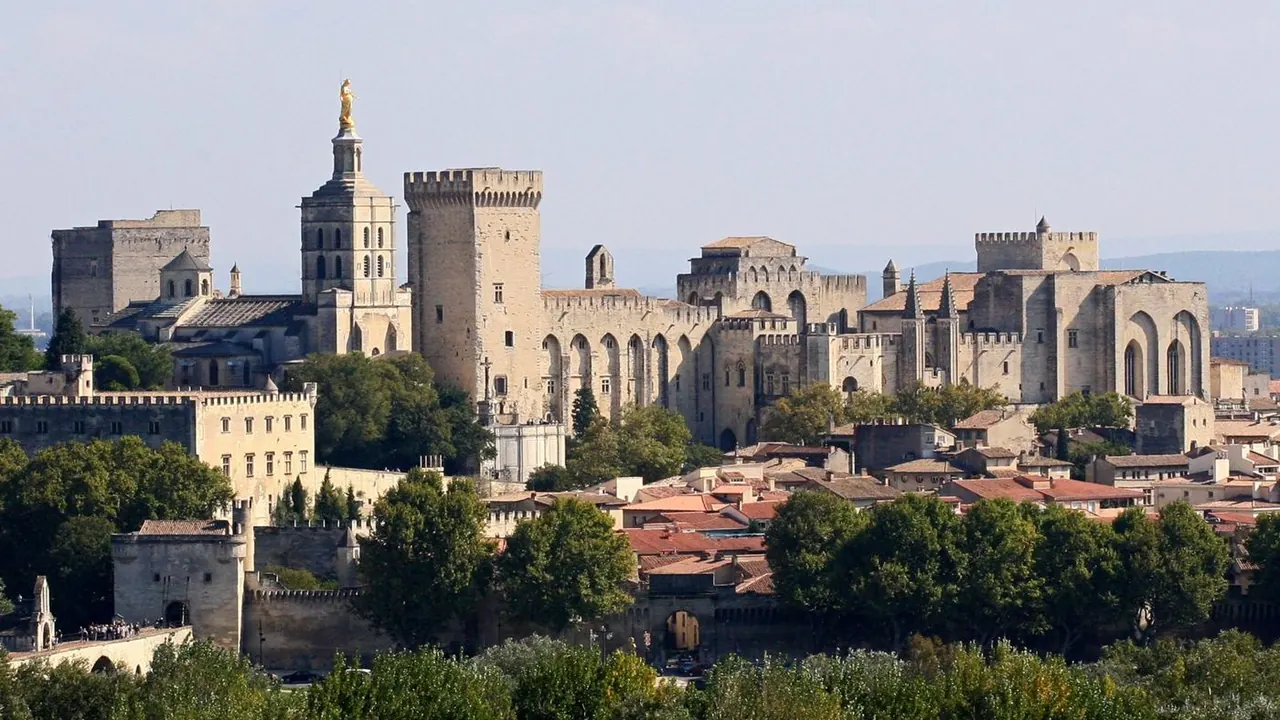
Photos: Arles by Martin Kraft, CC BY-SA 3.0, cropped; Avignon by BlueBreezeWiki, CC BY-SA 3.0, cropped.
Arles or Avignon?
Our verdict in twelve categories, each scored against the same fixed benchmark cities, and the climate month by month, so you can choose for your trip.
Choose Arles for
- beaches
- prices
- culture and sights
Arles suits travellers who want Roman stones and open country in equal measure. The arena, the theatre and the Alyscamps are a short walk apart. The Camargue starts at the edge of town and the delta beaches are close enough for a day at the sea. It works best for a slow, outdoor trip with a hire car, and for anyone who would rather swim in the Mediterranean than sit in a theatre.
Choose Avignon for
- live music and the arts
- nightlife
- food and drink
Pick Avignon if your evenings matter as much as the sights. It has much more live performance, from the July festival to the opera on Place de l'Horloge. It also eats a little better, with Châteauneuf-du-Pape on the doorstep, and its rail links make it the easier base for a stay without a car or a short break.
Scoreboard
Twelve categories on one fixed scale from 0 to 100. The shaded stretch is the gap between the two.
Your match
Pick a travel style or drag the sliders, and both match scores follow your weighting.
Wins on beaches and prices with your weighting.
Wins on live music and the arts and nightlife with your weighting.
What matters to you?
Category by category
What the scores mean for a trip.
Beaches & swimming
Arles has the sea on its side. The Camargue beaches at Saintes-Maries-de-la-Mer are about 40km away. Past Salin-de-Giraud, the open strands of Piémanson and Beauduc have room to spread out even in high summer, so shallow, easy swimming fits into a stay without much planning.
From Avignon, the same Camargue sands and the resort beaches around Le Grau-du-Roi are well over an hour's drive, so the sea is an occasional outing. Its local swim is in the river instead, in the clear green pools of the Gardon below the Pont du Gard, and otherwise in the hotel pool.
Food & drink
Arles has the more distinctive local cooking: gardiane made with Camargue bull, red rice from the delta and tellines from the beaches. Its Saturday market along the Boulevard des Lices is the bigger food event of the two. But the choice of restaurants is narrow and many close in winter, so the town is better for market shopping and long lunches than for evenings of eating out.
Avignon gives you more choice of where to eat. Les Halles on Place Pie is a covered morning market whose small counters cook lunch from the stalls around them. With the vineyards of Châteauneuf-du-Pape and the Côtes du Rhône villages close by, the side-street bistros around Rue des Teinturiers serve good local wine by the glass.
Culture & sights
Both have a UNESCO-listed group of monuments in a compact centre that two days will cover, so the real difference is the period. Arles is Roman and Romanesque: the arena that is still in use, the antique theatre, the cryptoporticus, the Alyscamps and the carved portal of Saint-Trophime. The Luma tower adds modern art, and photography is the town's summer theme.
Avignon is medieval and papal. The huge Gothic Palais des Papes dominates it, along with the broken bridge and almost 4km of ramparts, and the Petit Palais holds Italian painting. The charterhouse at Villeneuve-lès-Avignon is just across the river.
Nightlife
Neither is a town for clubbing, but Avignon has a little more going on after dinner. It has aperitifs on Place Pie, student bars near the university and the late-night crowds of the July festival, though most of the year the streets inside the walls are quiet by midnight.
Arles winds down sooner. Evenings are a drink on the Place du Forum and not much after that, except during the Easter and September ferias, when bodegas fill the streets for a few nights.
Nature & outdoors
Both are close to the same remarkable country, but they look out on different sides of it. Arles has the Camargue on its doorstep: flamingos, white horses and bird reserves you can reach by bike along the dykes, with the Alpilles to the north-east for hiking. Avignon looks north and east instead, to the climb up Mont Ventoux, the Luberon's ochre trails, the Dentelles de Montmirail and canoeing on the Gardon, and the Camargue is a longer drive away.
Day trips
Both make superb bases, and each counts the other among its best outings. Arles is better placed for the south and west, with Les Baux, Saint-Rémy, Montmajour, Aigues-Mortes and Saintes-Maries close by.
Avignon is better placed for the north and east: Orange's Roman theatre, the wine villages of Châteauneuf-du-Pape and Gigondas, L'Isle-sur-la-Sorgue and the Luberon hill villages. Its high-speed trains also reach Aix and Marseille in about half an hour, where from Arles it takes about an hour.
Good for families
Neither town has much made for children, and in both the best family days are outside the town. Arles has the arena towers and the dark cryptoporticus, then pony rides at Camargue ranches and gentle delta beaches, which suits older children who like animals.
Avignon has the tablet tour of the Palais des Papes, the playground in the Rocher des Doms and the bridge from the song, with swimming and canoeing at the Pont du Gard. July's festival crowds make spring a better time to bring children there.
Getting around
Both centres are easy to walk, but Avignon has the better connections. A shuttle train links it to its TGV station, and regional trains run to Arles, Nîmes, Orange and Marseille. That makes a stay without a car realistic, at least for visiting the towns.
Arles has a station near the old town and a free shuttle bus around the centre. But its real draws, the Camargue reserves, the ranches and the wild beaches, depend on infrequent buses, so most visitors staying a few days hire a car.
Shopping & style
Shopping is modest in both, and mostly Provençal cottons, soaps and olive oil. Arles leans towards books and photography prints, gardian shirts and Camargue salt from the Saturday market. Avignon adds the high-street chains on Rue de la République and a few independent boutiques around Rue Joseph Vernet, and the antiques dealers of L'Isle-sur-la-Sorgue are within easy reach.
Affordability
Costs are much the same in both, those of a French provincial town that gets plenty of visitors, and in both a hire car adds to the bill. Arles has a combined pass that covers most of its sights.
The difference is when rooms get scarce and dear. In Arles that happens in July and during the ferias and the summer photography festival. Avignon's prices peak in July, when the theatre festival fills every room inside the walls.
Live music & performing arts
This is where the two differ most. Avignon's festival, founded in 1947, fills the Cour d'honneur of the Palais des Papes every July, alongside the Off fringe with well over a thousand shows a day. The rest of the year, the opera house on Place de l'Horloge, the small theatres and a jazz club keep a regular programme going.
In Arles, live performance is mostly outdoors and in summer: concerts in the Roman theatre and arena, world music at Les Suds in July and the course camarguaise in the warm months. For opera or anything serious in winter, people go from Arles to Avignon, Nîmes or Marseille.
Wellness & relaxation
Neither has a spa tradition, but Avignon offers a bit more for a restful stay. There are day spas and massage studios as well as hotel spas, the quiet of the Rocher des Doms in the late afternoon, and vineyard farmhouses with pools just outside the walls, as long as you avoid July. Arles relies on its slow pace instead: siestas and evenings by the Rhône, plus a few farmhouses in the Camargue and the Alpilles run as retreats.
When should you go?
Pick your month. The climate figures are measured averages, not a forecast.
Arles in July
Avignon in July
Daytime high, °C
Rainfall in the month, mm
Where the figures come from
Arles's temperatures are measured 28 km from the centre, at Nimes / Courbessac.
Arles has no rain gauge within 25 km of the centre, so its rainfall comes from a gridded climate dataset read at the city rather than from a gauge further away.
Avignon has no rain gauge within 25 km of the centre, so its rainfall comes from a gridded climate dataset read at the city rather than from a gauge further away.
Avignon's sunshine is measured 34 km from the centre, at Nimes / Courbessac.
Temperature and rainfall are climate normals, averaged over the years shown. Arles: 1991-2020 (sunshine 1981-2010) normals, Nimes / Courbessac (28 km from centre). Avignon: 2005-2020 (sunshine 1981-2010, rainfall 1991-2020) normals, Avignon / Morières-lès-Avignon (8.6 km from centre).
The two towns have almost the same climate, so the best seasons are the same for both. Spring and early autumn are the best times for walking the old streets and getting out into the Camargue or the hills. By May the days reach about 24°C, and September stays warm and sunny. July and August are hot, around 31°C in Arles and a degree more in Avignon. That makes midday sightseeing hard work, though the long, bright evenings make up for it.
Only Arles has the sea close by. The delta water is warmest in August at about 22°C, so July to early September is the time for beach days. The rain comes in autumn, and October is the wettest month in both towns, with around 105mm. Winter is mild but has much less sun, which suits museums and Roman sites more than days outdoors.
Which traveller are you?
On a beach and sun trip, Arles is the clear choice. The flat, wild sands of Saintes-Maries, Piémanson and Beauduc are close enough for regular sea days in July and August. From Avignon the coast is a long drive, so most days the swim is in the river or a pool.
For a food and nightlife trip, Avignon has the edge. Les Halles, side-street bistros pouring Châteauneuf-du-Pape and Côtes du Rhône, and the terraces on Place Pie give its evenings more to them. Arles goes quiet after dinner except during feria weeks.
Theatre lovers should go to Avignon in July. The festival in the Palais des Papes and the huge Off fringe turn the whole town into a stage, and the opera and small theatres carry on all year. Arles, with only its summer open-air shows, cannot match that.
Before you go
| Measure | Arles | Avignon |
|---|---|---|
| Official language | French | French |
| Currency | Euro (EUR) | Euro (EUR) |
| Sockets | CE230 V, 50 Hz | CE230 V, 50 Hz |
| Driving side | Right | Right |
| Time zone | UTC+1, UTC+2 in summer | UTC+1, UTC+2 in summer |
| Emergency number | 112 | 112 |
| Elevation | 0 m | 10 m |
| Main airport | Marseille Provence Airport (MRS)54 km from centre126 non-stop destinations | Marseille Provence Airport (MRS)65 km from centre126 non-stop destinations |
| Public holidays this year | 11 days | 11 days |
By the numbers
| Measure | Arles | Avignon |
|---|---|---|
| City population | 51,811 | 92,188 |
| People per km² | 68 | 1,420 |
| Museums within 10 km | 3 | 11 |
| UNESCO World Heritage sites within 50 km | 5 | 6 |
| Swim season, months above 21 °C | 2 months | - |
Where else could you go?
Every comparison below shares a destination with this one, so you can follow Arles or Avignon somewhere new.
- Montpelliervs Arles
- Aix-en-Provencevs Arles
- Aix-en-Provencevs Avignon
- Marseillevs Arles
- Montpelliervs Avignon
- Marseillevs Avignon