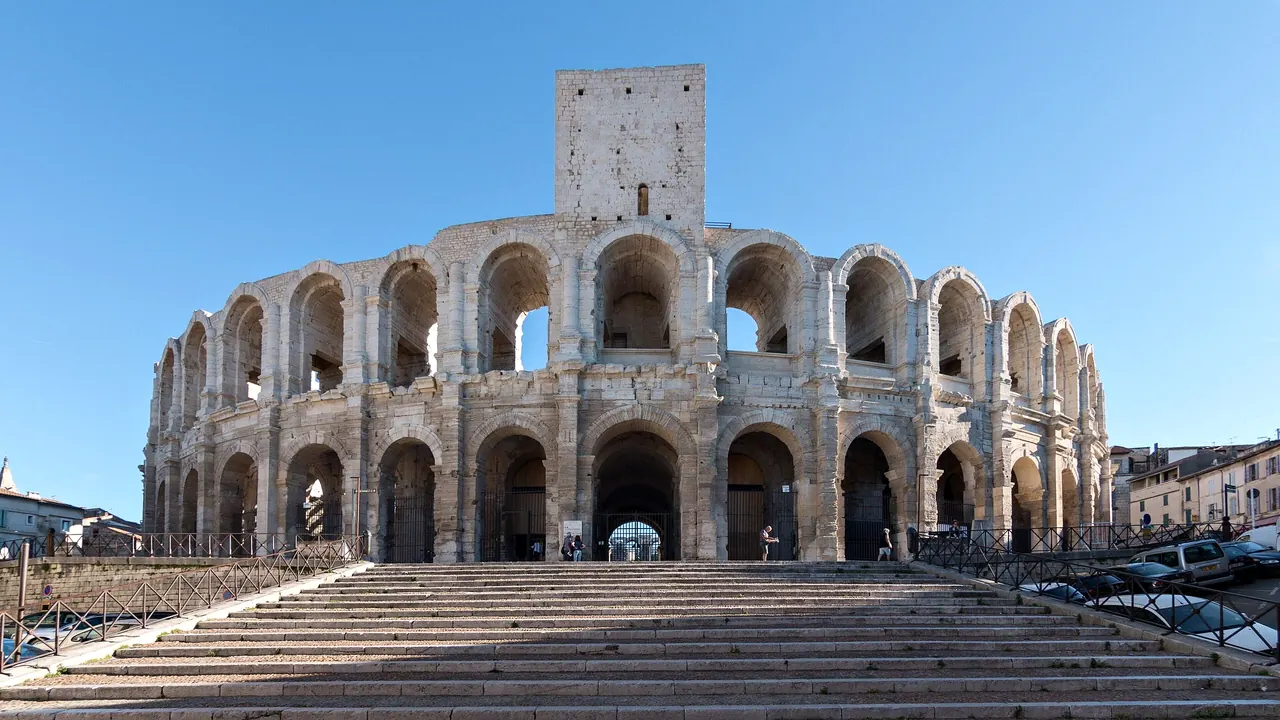
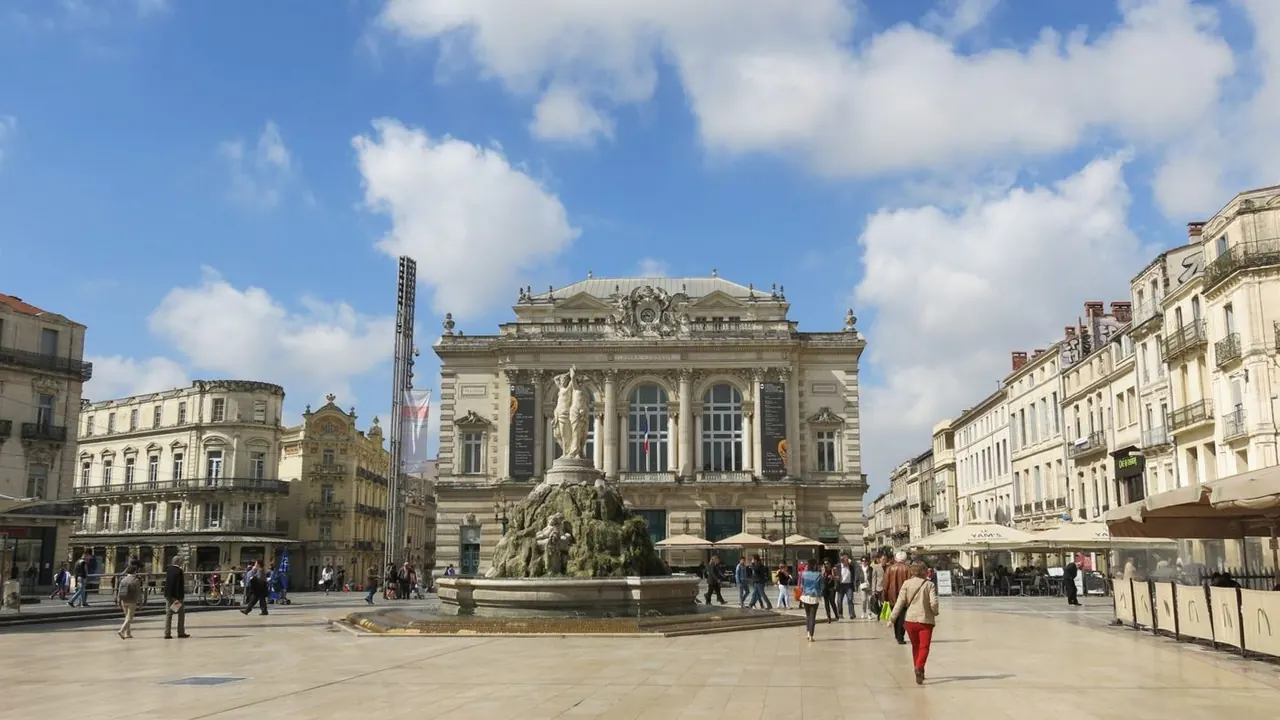
Photos: Arles by Martin Kraft, CC BY-SA 3.0, cropped; Montpellier by Peter, CC BY 2.0, cropped.
Arles or Montpellier?
Our verdict in twelve categories, each scored against the same fixed benchmark cities, and the climate month by month, so you can choose for your trip.
Choose Arles for
- culture and sights
- day trips
Arles is for travellers who want history on the doorstep and a slow pace. The arena, the antique theatre, Saint-Trophime and the Alyscamps are all a short walk apart. The Camargue starts at the edge of town, and Avignon, Les Baux and Saint-Rémy are close by. It suits couples and older travellers with a car who are happy for the evening to end with dinner on a square.
Choose Montpellier for
- nightlife
- live music and the arts
- families
Pick Montpellier if you would rather stay in a real working city than a small town. Trams reach most corners, students keep the bars full on weeknights, and there is an opera house and a celebrated dance festival. Sandy beaches are near enough for an afternoon. Families with young children will find it easier, and it is almost as good a base for Nîmes and the Pont du Gard.
Scoreboard
Twelve categories on one fixed scale from 0 to 100. The shaded stretch is the gap between the two.
Your match
Pick a travel style or drag the sliders, and both match scores follow your weighting.
Wins on culture and sights and day trips with your weighting.
Wins on nightlife and live music and the arts with your weighting.
What matters to you?
Category by category
What the scores mean for a trip.
Beaches & swimming
Neither is a beach town, but Montpellier's coast is closer and easier to reach. Palavas and Carnon are about 11km away by tram and bus. From there, fine sand runs east to the dunes of l'Espiguette, and Sète adds more beaches to the west.
From Arles, the sea is about 40km away across the Camargue at Saintes-Maries, or further still at Piémanson and Beauduc. These beaches are wilder and emptier, even in August. However, you need a car to get there, and they have little shade, few services and plenty of mosquitoes from the marshes.
Food & drink
Montpellier has more to eat and drink. Oysters and mussels come from the Thau lagoon, there is tielle from Sète, and the Languedoc vineyards begin at the city's edge. The Halles Castellane and Laissac are good for browsing and eating, and the students keep cheap places open all year.
Arles has a narrower, more rural table, built around gardiane, Camargue rice and tellines. Its high point is the long Saturday market on the Boulevard des Lices. There are fewer restaurants, and many close in winter, so choice thins out off-season.
Culture & sights
Arles has the greater weight of history. Its UNESCO-listed core includes the arena, the antique theatre, the cryptoporticus, the Alyscamps and Saint-Trophime, which is remarkable for a town of its size. The Museum of Ancient Arles, the Van Gogh connections and the Rencontres photography festival add depth.
Montpellier's interest lies in the city as a whole. There is the medieval Écusson with its courtyard mansions, the Peyrou terrace and aqueduct, the Jardin des Plantes and Bofill's Antigone. Its Musée Fabre is the stronger single art collection of the two.
Nightlife
This is where the two differ most. In Montpellier, students fill the bars, pubs and wine bars around Place Jean-Jaurès and the Écusson even midweek. After closing time the night carries on at clubs out towards Lattes and the coast.
In Arles, an evening means a late dinner on the Place du Forum and a few bars, then quiet streets. The exception is the feria at Easter and in September, when bodegas keep the town up for a few nights. The rest of the year, people in Arles who want a night out drive to Montpellier.
Nature & outdoors
Both sit between the same wetlands and limestone hills, so the difference is in what lies closest. In Arles the Camargue begins at the edge of town. You can explore it on horseback from the ranches, by bike around the Étang de Vaccarès or on foot through the bird reserve, and the Alpilles to the north-east are good for hiking.
From Montpellier the Camargue is about an hour away, but the hills are more varied. There is the climb up Pic Saint-Loup, canoeing in the Hérault gorges, and the Cirque de Navacelles and the Cévennes further out. The windy coast also suits kitesurfing.
Day trips
Both are excellent bases, and their lists overlap: Nîmes, the Pont du Gard, Avignon and Aigues-Mortes are within reach of either. Arles is better placed for Provence. Avignon is about 20 minutes by train, Les Baux, Saint-Rémy and Montmajour are close at hand, and Marseille and Aix are about an hour away.
Montpellier looks west and into the hills instead. Sète, Saint-Guilhem-le-Désert and Pézenas are close, and Carcassonne is reachable by train. Arles itself makes an easy day out from Montpellier.
Good for families
Montpellier gives children much more to do. There is the Zoo de Lunaret in its wooded park, the aquarium and planetarium at Odysseum, trams that take a pushchair, and gentle beaches within easy reach.
Children in Arles usually enjoy the arena towers and the dark cryptoporticus, and the Camargue adds pony rides and flamingos. But nearly every outing beyond the town needs a car, the cobbles are hard on buggies, and the summer mosquitoes wear children down. It suits older children better than toddlers.
Getting around
Both centres are easy on foot. In Arles every sight is within about fifteen minutes' walk, and Montpellier's Écusson is largely closed to cars, though it sits on a gentle hill. The real difference is beyond the old town. Montpellier's trams reach the station, Antigone, Odysseum and the edge of the city towards the beaches, while Arles has only a small shuttle around the centre and infrequent regional buses.
Both have good trains to the neighbouring cities, and both need a car for the Camargue and the hills. In Arles, though, hiring one is close to essential for a longer stay.
Shopping & style
Montpellier has the broader choice. The Écusson lanes hold boutiques, bookshops and wine shops, and the Polygone and Odysseum have the big-brand stores. Arles is smaller and more particular, with Provençal printed cottons, santons and gardian shirts, Camargue salt and rice from the Saturday market, and photography books from a town known for publishing them.
Affordability
Costs are much the same in both, roughly those of provincial France. In Montpellier, students keep cheap food and drink easy to find and the tram saves on transport, while in Arles rooms are reasonable for Provence but most visitors add the cost of a hire car. Both get dearer in high summer, and Arles also during its ferias and the photography festival.
Live music & performing arts
Montpellier has a year-round stage that Arles lacks. Opera, ballet and the national orchestra share the Opéra Comédie and the Opéra Berlioz, and the city is home to a national choreographic centre. In summer the Montpellier Danse festival and the Radio France festival's often free concerts add more.
In Arles, live performance is mostly a summer, open-air affair. There are concerts in the Roman theatre and arena, Les Suds world music festival in July, and the bullfights, brass bands and course camarguaise of the feria. Out of season there is little beyond a modest town theatre.
Wellness & relaxation
Arles has no spa culture and no thermal water within easy reach, so unwinding there is about tempo rather than treatment. The heat of the day slows everything to a crawl, the Rhône quays are calm by evening, and a farmhouse stay out in the Camargue or the Alpilles is as close as it gets to a retreat.
Montpellier gives a wellness trip more to work with. Besides day spas in town, it has real thermal water at Balaruc-les-Bains on the Thau lagoon, about half an hour away, where you can book a single day instead of a full cure. The catch is noise, since the student crowd keeps the old town lively. Go to Montpellier for treatments, and to Arles if quiet is what you are after.
When should you go?
Pick your month. The climate figures are measured averages, not a forecast.
Arles in July
Montpellier in July
Daytime high, °C
Rainfall in the month, mm
Where the figures come from
Arles's temperatures are measured 28 km from the centre, at Nimes / Courbessac.
Arles has no rain gauge within 25 km of the centre, so its rainfall comes from a gridded climate dataset read at the city rather than from a gauge further away.
Temperature and rainfall are climate normals, averaged over the years shown. Arles: 1991-2020 (sunshine 1981-2010) normals, Nimes / Courbessac (28 km from centre). Montpellier: 1991-2020 normals, Montpellier (7.8 km from centre).
The two share much the same Mediterranean year. Spring, from April into early June, and the end of September are the best times for walking the streets and the countryside. July and August are hot, reaching 31°C in Arles and slightly less in Montpellier, so sightseeing works best early and late. They are also the only months when the sea is properly warm, at about 22°C in August. June and September are a little cooler but still fine for a swim. Montpellier gets a bit more sunshine from February to June, and Arles is the sunnier of the two in high summer.
Summers are dry, but the rain arrives in autumn and peaks in October, when Arles gets about 105mm and Montpellier 93mm, often in heavy bursts. Winters are mild, with days in the low teens. That is fine for monuments and museums but too cool for the coast.
Which traveller are you?
For a culture and arts trip built around history, Arles is the stronger choice. The Roman arena and theatre, the cryptoporticus, Saint-Trophime's cloister and the Van Gogh sites are all within a short walk. Choose Montpellier only if opera and dance matter more than monuments.
On a family trip with young children, Montpellier is easier. Its pedestrian streets and trams suit a pushchair, the zoo, aquarium and planetarium fill hot afternoons, and the beaches shelve gently. Arles works better for older children who are keen on horses, flamingos and ruins.
For a food and nightlife trip, Montpellier has the clear edge. On weeknights students fill the terraces around Place Jean-Jaurès, Thau oysters and Pic Saint-Loup wines are on every list, and clubs stay open late towards the coast. Outside its ferias, Arles goes quiet after dinner.
Before you go
| Measure | Arles | Montpellier |
|---|---|---|
| Official language | French | French |
| Currency | Euro (EUR) | Euro (EUR) |
| Sockets | CE230 V, 50 Hz | CE230 V, 50 Hz |
| Driving side | Right | Right |
| Time zone | UTC+1, UTC+2 in summer | UTC+1, UTC+2 in summer |
| Emergency number | 112 | 112 |
| Elevation | 0 m | 7 m |
| Main airport | Marseille Provence Airport (MRS)54 km from centre126 non-stop destinations | Montpellier-Méditerranée Airport (MPL)8 km from centre40 non-stop destinations |
| Public holidays this year | 11 days | 11 days |
By the numbers
| Measure | Arles | Montpellier |
|---|---|---|
| City population | 51,811 | 310,240 |
| People per km² | 68 | 5,452 |
| Museums within 10 km | 3 | 14 |
| UNESCO World Heritage sites within 50 km | 5 | 2 |
| Swim season, months above 21 °C | 2 months | 2 months |
Where else could you go?
Every comparison below shares a destination with this one, so you can follow Arles or Montpellier somewhere new.
- Avignonvs Arles
- Aix-en-Provencevs Arles
- Marseillevs Arles
- Avignonvs Montpellier
- Marseillevs Montpellier
- Aix-en-Provencevs Montpellier