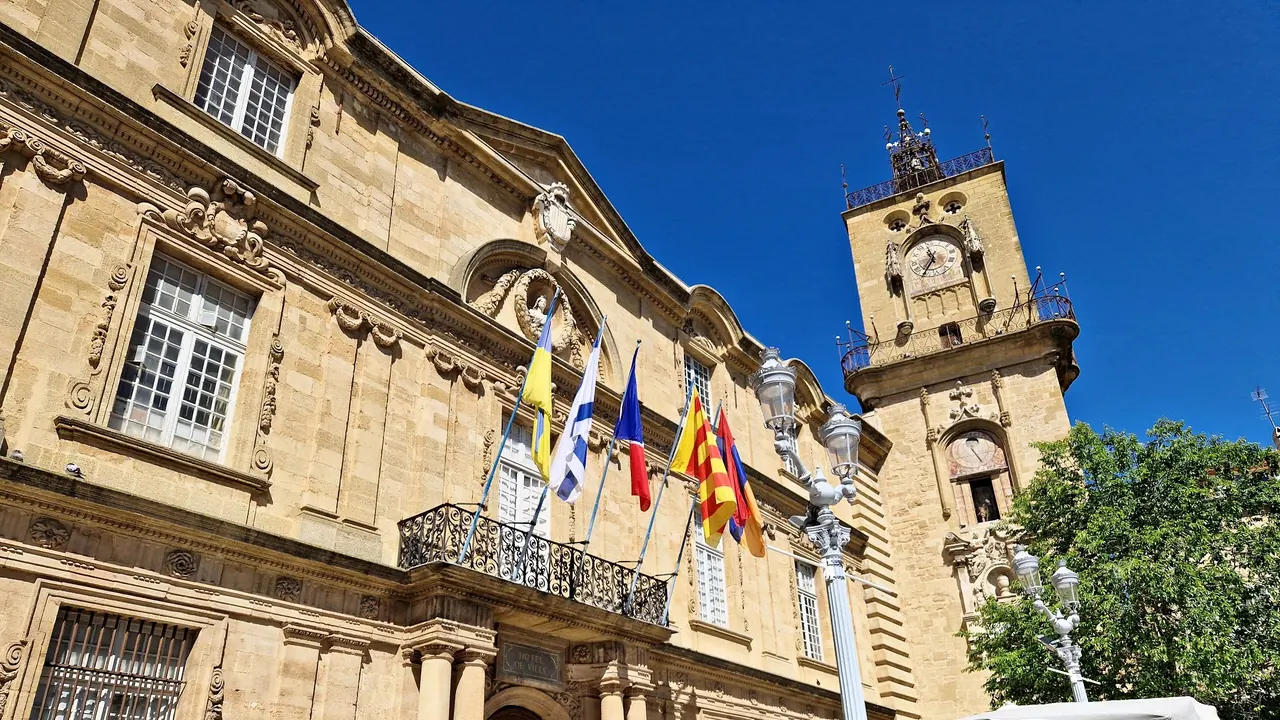
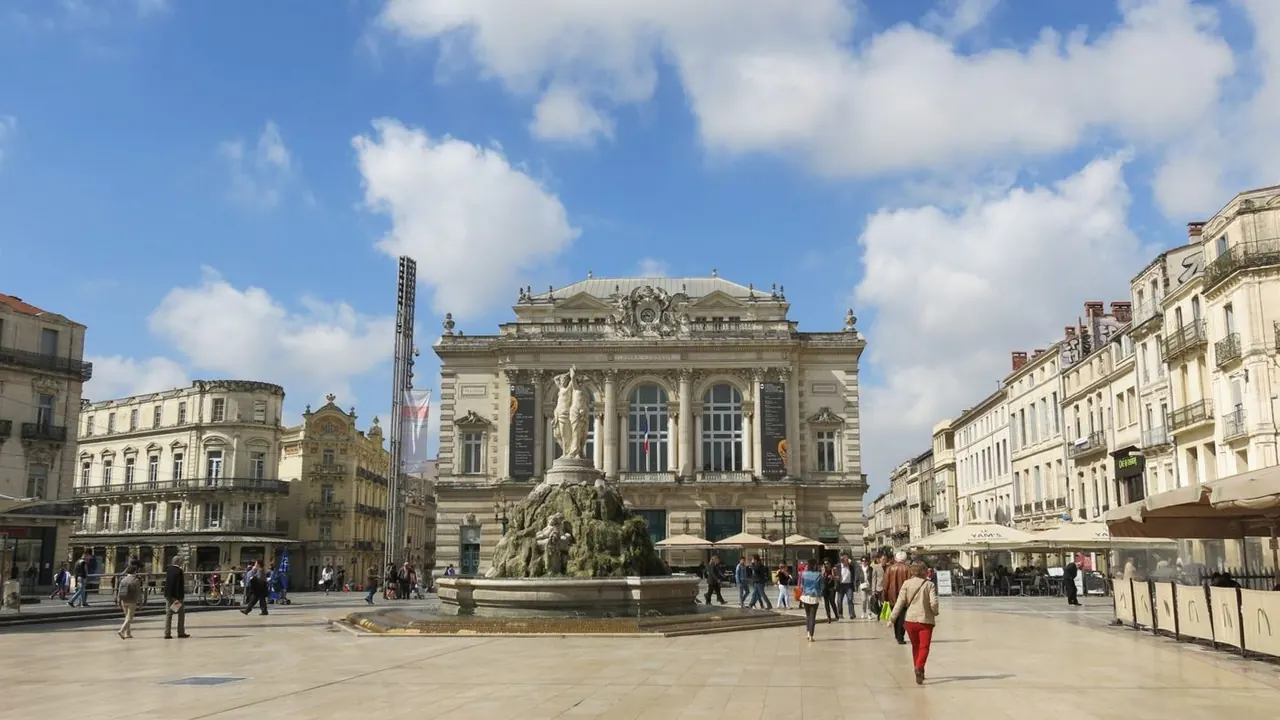
Photos: Aix-en-Provence by Hanay, CC BY-SA 4.0, cropped; Montpellier by Peter, CC BY 2.0, cropped.
Aix-en-Provence or Montpellier?
Our verdict in twelve categories, each scored against the same fixed benchmark cities, and the climate month by month, so you can choose for your trip.
Choose Aix-en-Provence for
- wellness
- shopping
- nature and the outdoors
Aix-en-Provence suits travellers who want a beautiful small town as a base for exploring Provence by car. It has Cezanne's landscapes on the doorstep, Sainte-Victoire and the Calanques for walking, the Luberon villages within reach, and a slow rhythm of market mornings and long lunches. It costs more and the sea is always a day out. For walkers, art lovers and opera-goers in July, it is worth the extra.
Choose Montpellier for
- beaches
- nightlife
- families
Montpellier is the better pick for a livelier, easier and cheaper stay. It is a real city with trams and a large student crowd that keeps the bars full, and it has a sandy, gently shelving coast you can reach without a car. That makes it the stronger choice for families and for anyone who wants a few beach days in a city break. Its day trips to Nîmes, Arles and Carcassonne cover as much ground as Aix's do.
Scoreboard
Twelve categories on one fixed scale from 0 to 100. The shaded stretch is the gap between the two.
Your match
Pick a travel style or drag the sliders, and both match scores follow your weighting.
Wins on wellness and shopping with your weighting.
Wins on beaches and nightlife with your weighting.
What matters to you?
Category by category
What the scores mean for a trip.
Beaches & swimming
From Aix, swimming is always an outing. The sea is about 30km away, and what you reach are small pebbly or rocky inlets on the Cote Bleue or around Cassis and the calanques. The water is lovely, but the coves are cramped in August and awkward without a car, so many visitors settle for the pool.
Montpellier makes beach days far simpler. Palavas and Carnon are about 11km away by tram and bus, and a long band of fine sand runs on past La Grande-Motte to the dunes of l'Espiguette, shallow and gentle for weaker swimmers. Aix keeps the edge only for scenery, since the flat Languedoc shore has no coves or clear rocky water.
Food & drink
Both are towns for markets and bistros rather than gastronomic capitals, and neither offers much beyond French cooking. What differs is the larder. Aix eats Provence: daube, tapenade and vegetable tians over long terrace lunches, rosé from the vineyards at the edge of town, and calissons from the old confiseries.
Montpellier looks to the lagoon and the Languedoc hills, with Thau oysters and mussels, octopus tielle from Sète and Pic Saint-Loup reds. Its students also keep far more cheap, casual places open. Eat at the counters of the Halles Laissac there. In Aix, skip the showier terraces of the Cours Mirabeau for the back streets.
Culture & sights
Each fills two or three unhurried days, but in different ways. Aix is the prettier town simply to wander, with the plane trees and fountains of the Cours Mirabeau and the honey-coloured mansions of the Mazarin quarter. Cezanne gives a visit a thread to follow, from his studio at Les Lauves to the Bibemus quarries.
Montpellier has the stronger single museum in the Musée Fabre, and a broader spread of history: the medieval medical faculty, France's oldest botanical garden, and the Peyrou terrace with its aqueduct. Bofill's Antigone adds a striking piece of twentieth-century planning that Aix has nothing to match.
Nightlife
Both are university towns that go quiet outside term, but in Aix the evening stays on the terraces. People drink outside around the Forum des Cardeurs, there are a handful of small clubs, and the town winds down early. Locals after a real club night drive to Marseille.
Montpellier's student population is much larger, and it shows. The bars around Place Jean-Jaurès fill on weeknights as well as weekends, and once they close the night carries on in clubs out towards Lattes and the coast.
Nature & outdoors
Aix has the more dramatic surroundings. Sainte-Victoire rises at the edge of town, the white cliffs of the Calanques offer some of the Mediterranean's finest coastal walking, and the Gorges du Verdon is about an hour and a half away. The catch is that in midsummer the massifs often close on days of high fire risk.
Montpellier's outdoors is gentler and different in kind. It has flamingo lagoons and the Camargue's marshes, the climb up Pic Saint-Loup, canoeing in the Hérault gorges, and a windy coast for kitesurfing. In both, spring and autumn are the seasons for it, and a car opens up far more.
Day trips
Both are superb bases and share much of the same Roman country, since Arles, Avignon, Nîmes and the Pont du Gard lie between them. Aix leans east into Provence: Marseille is half an hour away, the hill villages of the Luberon and the Alpilles are close, and Cassis is on the coast. Those villages need a car.
Montpellier leans west and towards the lagoons. From there you can reach Carcassonne by train, the canals and seafood of Sète, walled Aigues-Mortes in the salt marshes and Saint-Guilhem-le-Désert in its gorge. Fast trains to Nîmes and Avignon mean more of its list works without driving.
Good for families
Aix is safe and pleasant with children, with a pedestrian centre, fountains to stop at and ice cream on the squares. Its sights are mansions and museums, though, so families usually base themselves around a pool and drive to La Barben zoo or the coast.
Montpellier gives children more within the city. The Zoo de Lunaret sits in its wooded park, Odysseum has an aquarium and a planetarium side by side, and the trams take a pushchair. The shallow, warm beaches suit small swimmers far better than the rocky coves near Aix.
Getting around
Both centres are small, walkable and mostly free of cars, though the Écusson in Montpellier sits on a low hill with some slopes and uneven paving. The real difference starts at the edge of the old town. Montpellier has a tram network linking the station, Antigone, Odysseum and the route to the beaches.
Aix depends on buses, a local line to Marseille and a TGV station out on the plateau reached by shuttle. Both need a car for the countryside, but from Montpellier you can see more without one.
Shopping & style
Aix is the more rewarding town to browse. The lanes around Rue d'Italie and Rue Fabrot hold French fashion and shoe boutiques, and on market days the squares add textiles, bric-a-brac and flowers. The things to take home are distinctly local: calissons, santons, olive wood and printed Provençal fabrics.
Montpellier is more ordinary, with small boutiques in the Écusson and the Polygone and Odysseum malls for big brands. Its best buys are edible, mostly wine and olive oil. Neither has luxury shopping.
Affordability
Aix is the dearer stay. It has few hotels in the old town, leans towards boutique and country-house accommodation, and is most expensive in July, when the opera festival fills it. Terrace dinners on the Cours Mirabeau cost more than they are worth.
Montpellier is easier on the budget. Its central hotels are moderately priced for most of the year, and the students keep plenty of cheap places to eat and drink. In both, market food and walking keep costs down, though Montpellier's rooms on the coast also rise in high summer.
Live music & performing arts
Both take music and dance seriously for their size, but they peak in different ways. Aix has one great moment, the July opera festival in the courtyard of the Archbishop's Palace, and its tickets go early. The rest of the year rests on the Grand Théâtre de Provence and Ballet Preljocaj at the Pavillon Noir.
Montpellier spreads its season more evenly. Two opera houses share a programme with the national orchestra, the Montpellier Danse festival is one of Europe's most respected, and the summer Radio France festival puts on classical and jazz concerts, many of them free.
Wellness & relaxation
Aix has genuine thermal roots. The Romans founded it for its warm springs, some of its fountains still run warm, and the Thermes Sextius spa stands on the site of the Roman baths. Outside July it is also the calmer town to slow down in.
Montpellier has no bathing tradition of its own, so for thermal water you take a half-hour trip to Balaruc-les-Bains on the Thau lagoon. Its shaded squares make for unhurried days, but the centre stays lively rather than quiet.
When should you go?
Pick your month. The climate figures are measured averages, not a forecast.
Aix-en-Provence in July
Montpellier in July
Daytime high, °C
Rainfall in the month, mm
Temperature and rainfall are climate normals, averaged over the years shown. Aix-en-Provence: 1991-2020 normals, Marseille / Marignane (19.2 km from centre). Montpellier: 1991-2020 normals, Montpellier (7.8 km from centre).
The two keep almost the same calendar, as close neighbours in the south of France. Both are warm enough for the sea from late June to mid-September, and the water peaks at about 22°C in August. Both are hot in July. Aix is a touch hotter at 31°C, as well as sunnier and drier: its July is almost rainless at 11mm. For walking the streets and the hills, spring and early autumn are best in either city, because midsummer afternoons are tiring in the stone centres.
The rain arrives between September and November, and Montpellier gets more of it, with October its wettest month at 93mm. Winters are cool in both, with daytime highs around 12°C. That is fine for museums and markets but no weather for the coast.
Which traveller are you?
On a family trip with children, Montpellier is the easier choice. It has a zoo, an aquarium and a planetarium in town, trams that take a pushchair, and gently shelving sandy beaches a short ride away. Aix has pleasant squares but little aimed at children.
On a tight budget, Montpellier goes further. Its central hotels are moderately priced, there are plenty of cheap student places to eat and drink, and you can reach the coast by tram and bus. Aix has fewer affordable rooms, and its countryside usually means hiring a car.
For a relaxing and wellness trip, Aix is the better fit. It has a spa on the site of the Roman baths, fountains that run with warm water, long market lunches and a calm town outside July. Montpellier's nearest thermal water is half an hour away, and its centre is livelier.
Before you go
| Measure | Aix-en-Provence | Montpellier |
|---|---|---|
| Official language | French | French |
| Currency | Euro (EUR) | Euro (EUR) |
| Sockets | CE230 V, 50 Hz | CE230 V, 50 Hz |
| Driving side | Right | Right |
| Time zone | UTC+1, UTC+2 in summer | UTC+1, UTC+2 in summer |
| Emergency number | 112 | 112 |
| Elevation | 73 m | 7 m |
| Main airport | Marseille Provence Airport (MRS)21 km from centre126 non-stop destinations | Montpellier-Méditerranée Airport (MPL)8 km from centre40 non-stop destinations |
| Public holidays this year | 11 days | 11 days |
By the numbers
| Measure | Aix-en-Provence | Montpellier |
|---|---|---|
| City population | 149,695 | 310,240 |
| People per km² | 804 | 5,452 |
| Museums within 10 km | 8 | 14 |
| UNESCO World Heritage sites within 50 km | 1 | 2 |
| Swim season, months above 21 °C | 2 months | 2 months |
Where else could you go?
Every comparison below shares a destination with this one, so you can follow Aix-en-Provence or Montpellier somewhere new.
- Marseillevs Aix-en-Provence
- Avignonvs Aix-en-Provence
- Avignonvs Montpellier
- Saint-Tropezvs Aix-en-Provence
- Marseillevs Montpellier
- Cannesvs Aix-en-Provence