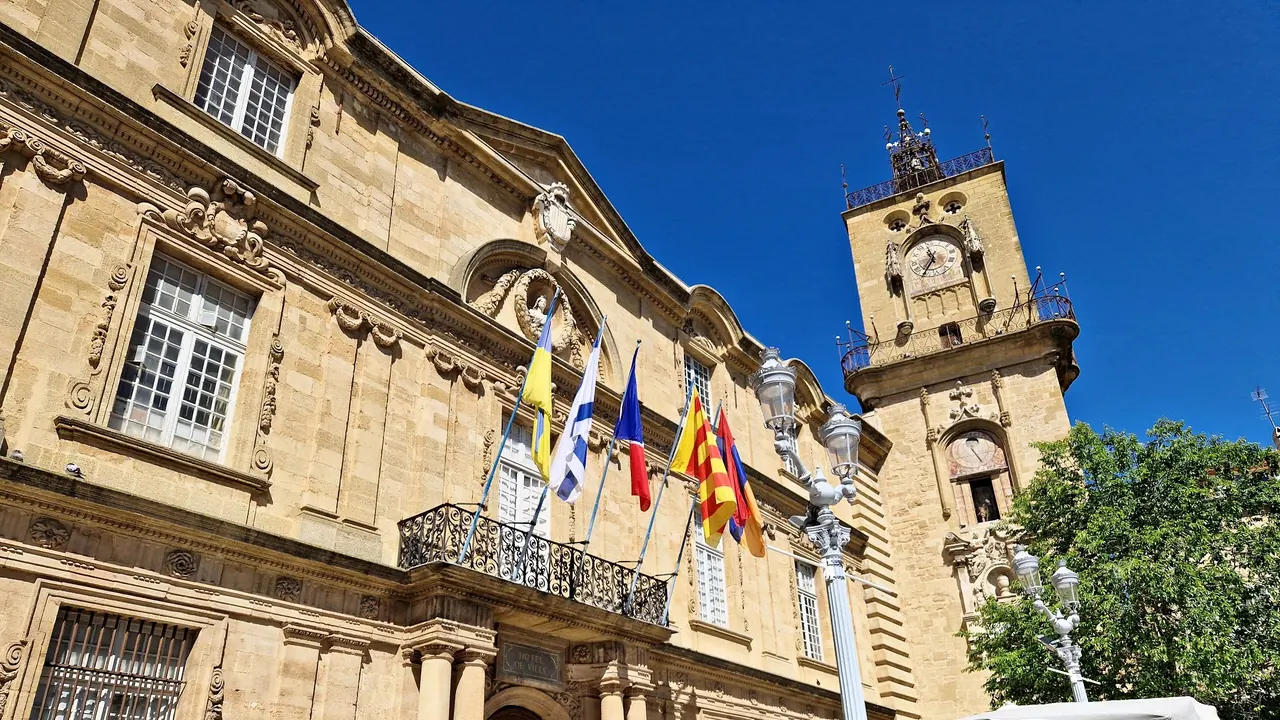
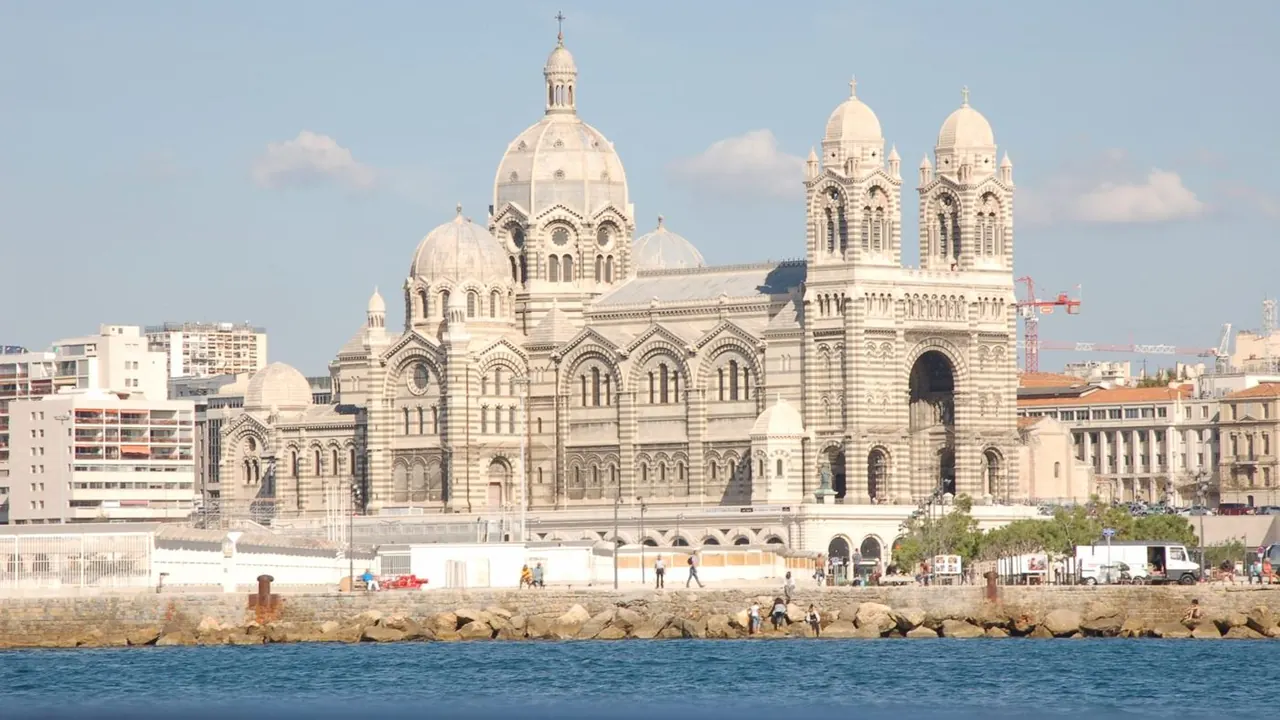
Photos: Aix-en-Provence by Hanay, CC BY-SA 4.0, cropped; Marseille by Charlotte Noblet, CC BY-SA 3.0, cropped.
Aix-en-Provence or Marseille?
Our verdict in twelve categories, each scored against the same fixed benchmark cities, and the climate month by month, so you can choose for your trip.
Choose Aix-en-Provence for
- wellness
- shopping
- getting around
Aix-en-Provence suits a slower, more polished trip. It has a walkable old town of fountains and honey-stone mansions, morning markets and long lunches, Cézanne's studio and a spa built on warm springs. It is the better base if you want calm evenings, easy strolling and a pool to come back to, and you plan to drive out to the Luberon villages and the Calanques rather than live by the sea.
Choose Marseille for
- beaches
- nightlife
- prices
If you want the sea on your doorstep and a city with more noise and appetite, go to Marseille. You get swimming off the Corniche, boats to the Frioul islands, a national park inside the city limits, the food of the Noailles market and late nights around Cours Julien, and day to day it costs less than Aix. The trade-off is grit: traffic, steep streets and rough edges that Aix simply does not have.
Scoreboard
Twelve categories on one fixed scale from 0 to 100. The shaded stretch is the gap between the two.
Your match
Pick a travel style or drag the sliders, and both match scores follow your weighting.
Wins on wellness and shopping with your weighting.
Wins on beaches and nightlife with your weighting.
What matters to you?
Category by category
What the scores mean for a trip.
Beaches & swimming
Marseille has the sea at its feet. The broad shingle-and-sand Prado beaches suit families, locals swim early off the Catalans and the Corniche rocks, and ferries cross to the coves of the Frioul islands. The Calanques begin at the edge of the city.
Aix is inland, so reaching the same water means a drive, or a bus and then a train through Marseille. You usually end up at small pebbly coves on the Côte Bleue or around Cassis. On ordinary days, many visitors to Aix settle for the hotel pool.
Food & drink
The two are broadly level for food, but they cook in different registers. Aix is Provençal and led by its markets: produce stalls on Place Richelme every morning, long lunches of daube and vegetable tians with Coteaux d'Aix rosé, and calissons from the old confectioners.
Marseille eats like a port, with a wider range and cheaper everyday food. Bouillabaisse is a set-piece meal in the Corniche harbours, Noailles has panisses and North African bakeries, and fishermen sell their catch on the Vieux-Port quay. In both towns, the terraces with the best views are rarely where the best cooking is.
Culture & sights
Aix is a single preserved set piece, while Marseille's history is spread through a working port. In Aix that means the plane-shaded Cours Mirabeau, the honey-coloured mansions of the Mazarin quarter, fountains on almost every square, and the Cézanne trail from his studio at Les Lauves to the Bibemus quarries. You can see it all at a gentle pace in two or three days.
Marseille goes back further, to its Greek founding around 600 BC, and its sights are spread over hills and water. They include Notre-Dame de la Garde above the port, the forts and the MuCEM at the harbour mouth, the Vieille Charité in Le Panier, the Château d'If offshore and Le Corbusier's Cité Radieuse. Seeing it all takes more legwork, but you get more variety in return.
Nightlife
Marseille is the place to go out. Cours Julien and La Plaine fill with graffiti-painted bars and small music venues until late, and the Vieux-Port terraces carry on into the night. Summer brings electronic nights in warehouses and parties by the sea or on rooftops. Some streets feel edgy late at night, so a taxi home is sensible.
Aix's students fill the outdoor tables around Place des Cardeurs, but an evening there means terraces and a few wine bars, it ends early, and the town is quieter still outside term. Anyone in Aix who wants a club night goes to Marseille for it.
Nature & outdoors
Both reach the same great landscapes, but from opposite sides. Marseille has the Calanques national park inside its city limits. Walks to Sormiou or Sugiton, sport climbing on the white cliffs, and kayaking or diving around the Riou archipelago all start close to town.
Aix faces inland. Montagne Sainte-Victoire is on its doorstep, the Luberon and the Alpilles are cycling country, and the Gorges du Verdon is close enough for a day of canyon kayaking. In both towns, the hills can close to walkers on high fire-risk days in summer.
Day trips
Both are first-rate bases and share most of the same list: Arles, Avignon, Nîmes and the Pont du Gard, the Luberon villages, Les Baux, Saint-Rémy and Cassis. They are also half an hour apart, so each makes an easy day out from the other.
What differs is the direction. Aix is closer to the Luberon and its TGV station puts Avignon about twenty minutes away. Marseille has the coast on its side, with La Ciotat, Toulon, the Bandol estates and the little harbours of the Côte Bleue. From either town, you need a car for the hill villages.
Good for families
Neither town is built around children, and the difference is in what kind of day you get. Aix is the gentler place to be on foot, with a safe, largely pedestrian centre of fountains and squares. Its sights are aimed at adults, though, so families drive out to the zoo at La Barben, the coast or a villa pool.
Marseille gives children the sea: the Prado beaches with their lawns and gentle water, the lake in Parc Borély, and boat trips to the Château d'If. The cost is heavy traffic, steep streets and narrow pavements, which make the centre hard going with a buggy.
Getting around
Aix is the simpler place to manage without a car. The old town, the Mazarin quarter and the Cours Mirabeau are all a short walk apart, small electric shuttles run through the narrow lanes, and only Cézanne's studio needs a climb or a bus.
Marseille has a metro, trams and harbour ferries, but its sights are spread over hills and bays, and the buses to the beaches and Calanques trailheads crawl in traffic. Aix's weak point is beyond the town: its TGV station sits out on the plateau, and the villages need a hire car.
Shopping & style
Aix makes for the better afternoon of browsing. The lanes around Rue d'Italie and Rue Fabrot hold French fashion and shoe boutiques, delicatessens and homeware shops, and on market days the squares add textiles, bric-a-brac and flowers.
Marseille has department stores on Rue Paradis and Rue de Rome and a large shopping centre at La Joliette. Its real strength is Noailles, where narrow streets are packed with spices, fabrics and North African goods. You can buy santons and Marseille soap in both towns, but the santon workshops are in and around Le Panier.
Affordability
Marseille is the easier of the two on a budget. Everyday food such as pizza, panisses and North African snacks is cheap, public transport costs little, walking in the Calanques is free, and central hotels are reasonable outside July and August.
Aix has few hotels, mostly boutique places and country houses, and they fill up and raise their rates during the July opera festival. Back-street lunch menus and market picnics help, but a hire car for the countryside adds to the cost.
Live music & performing arts
Aix builds its year around one great summer event, while Marseille runs a broader, more popular programme all year. Every July the Festival d'Aix stages opera in the open-air courtyard of the Archbishop's Palace, and tickets for the main productions go early. Outside the festival, Ballet Preljocaj performs at the Pavillon Noir and touring orchestras visit the Grand Théâtre de Provence.
Marseille has a full season at the art deco Opéra, drama at La Criée in the old fish market and mixed programmes at the Friche la Belle de Mai. The city also has deep roots in French hip-hop and world music, and every autumn the Fiesta des Suds brings in music from around the world. For gig nights, people from Aix come to Marseille.
Wellness & relaxation
Aix is a town built on warm water. The Romans founded it for its springs, the moss-covered Fontaine d'Eau Chaude still runs warm on the Cours Mirabeau, and the Thermes Sextius has thermal pools on the site of the old baths. Outside July, market mornings and shaded afternoons keep the pace slow.
Marseille has a few neighbourhood hammams and some hotel spas, but its centre is loud and dense. Its restful moments are things like a long lunch at a small Corniche harbour, and visitors who want real rest often stay in Cassis or inland.
When should you go?
Pick your month. The climate figures are measured averages, not a forecast.
Aix-en-Provence in July
Marseille in July
Daytime high, °C
Rainfall in the month, mm
Temperature and rainfall are climate normals, averaged over the years shown. Aix-en-Provence: 1991-2020 normals, Marseille / Marignane (19.2 km from centre). Marseille: 1991-2020 normals, Marseille / Marignane (20.6 km from centre).
The two towns share the same measured climate, so the season works the same way for both. Summer is long, dry and very sunny, with July highs around 31°C and almost no rain. The sea is warm enough to swim from June to September and reaches about 22°C in August. That heat makes midday sightseeing hard work in July and August, and on high fire-risk days the trails of the Calanques and Sainte-Victoire can close.
May, June and late September are the best months for combining walking with swimming. Rain sets in during autumn, and September to November is the wettest stretch, with about 82mm in September. Winter is mild but cool at around 12°C, which is fine for museums and markets but not for the beach. The difference is how you deal with the heat. In Aix you rely on a pool, while in Marseille the sea is a short ride away.
Which traveller are you?
For a beach and sun trip, Marseille is the clear pick. You can swim at the Prado beaches, the Plage des Catalans or the Corniche inlets without leaving town, and boats run to the Calanques and the Frioul coves. From Aix, every swim is a day out.
On a relaxing and wellness trip, Aix suits you better. The Thermes Sextius stands on the site of the Roman baths, warm water still runs in its fountains, and outside July the pedestrian centre is quiet. Marseille's traffic and street noise make rest harder to find.
For a food and nightlife trip, Marseille gives you far more after dark. Bouillabaisse in the Corniche harbours, snacks in Noailles and pastis on the Vieux-Port lead on to late bars around Cours Julien and warehouse club nights. Aix's terraces wind down early.
Before you go
| Measure | Aix-en-Provence | Marseille |
|---|---|---|
| Official language | French | French |
| Currency | Euro (EUR) | Euro (EUR) |
| Sockets | CE230 V, 50 Hz | CE230 V, 50 Hz |
| Driving side | Right | Right |
| Time zone | UTC+1, UTC+2 in summer | UTC+1, UTC+2 in summer |
| Emergency number | 112 | 112 |
| Elevation | 73 m | 0 m |
| Main airport | Marseille Provence Airport (MRS)21 km from centre126 non-stop destinations | Marseille Provence Airport (MRS)21 km from centre126 non-stop destinations |
| Public holidays this year | 11 days | 11 days |
By the numbers
| Measure | Aix-en-Provence | Marseille |
|---|---|---|
| City population | 149,695 | 886,040 |
| People per km² | 804 | 3,683 |
| Museums within 10 km | 8 | 27 |
| UNESCO World Heritage sites within 50 km | 1 | 1 |
| Swim season, months above 21 °C | 2 months | 2 months |
Where else could you go?
Every comparison below shares a destination with this one, so you can follow Aix-en-Provence or Marseille somewhere new.
- Avignonvs Aix-en-Provence
- Avignonvs Marseille
- Saint-Tropezvs Aix-en-Provence
- Saint-Tropezvs Marseille
- Montpelliervs Marseille
- Montpelliervs Aix-en-Provence