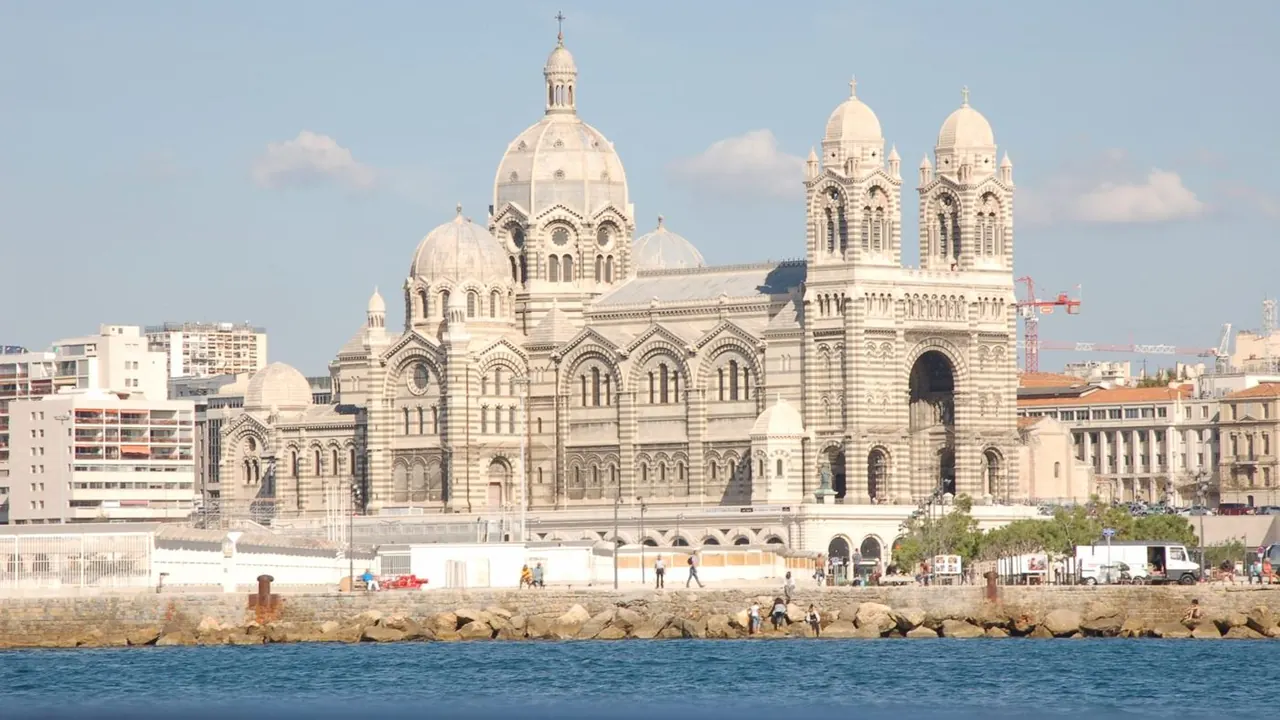
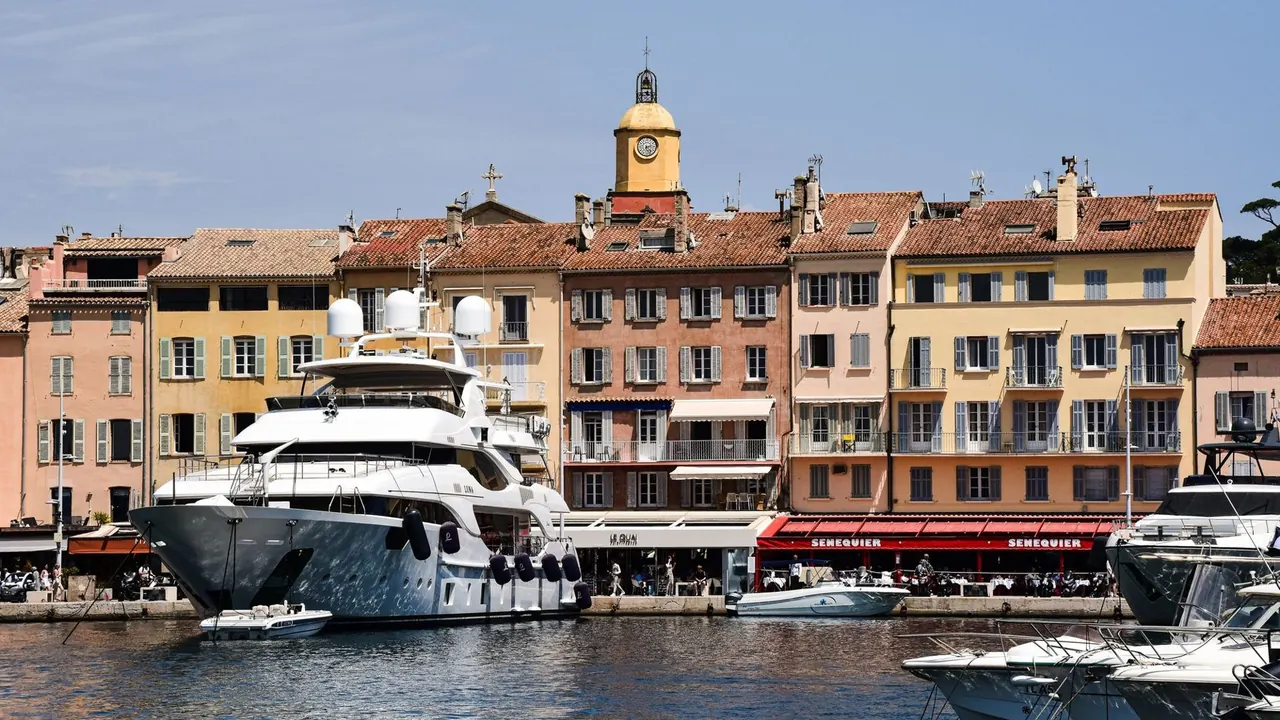
Photos: Marseille by Charlotte Noblet, CC BY-SA 3.0, cropped; Saint-Tropez by AXP Photography, Pexels License.
Marseille or Saint-Tropez?
Our verdict in twelve categories, each scored against the same fixed benchmark cities, and the climate month by month, so you can choose for your trip.
Choose Marseille for
- live music and the arts
- prices
- day trips
Marseille suits travellers who want a real city with the sea attached. It is France's oldest city, with the MuCEM, Le Panier and Notre-Dame de la Garde, and it eats like a port that has fed the whole Mediterranean. The Calanques national park starts in its suburbs. It is also the better base for Provence, with Aix, Arles and Avignon a short train ride away, and it costs far less to stay in and get around.
Choose Saint-Tropez for
- shopping
- beaches
- nightlife
Pick Saint-Tropez for a summer of sand and polish: Pampelonne's long pale beach, clear water, harbour terraces, designer boutiques and beach-club parties. It is a small resort rather than a city, so the sights take a day and there is little culture out of season. It is also very expensive. Come for the setting, ideally in June or September when the town slows down.
Scoreboard
Twelve categories on one fixed scale from 0 to 100. The shaded stretch is the gap between the two.
Your match
Pick a travel style or drag the sliders, and both match scores follow your weighting.
Wins on live music and the arts and prices with your weighting.
Wins on shopping and beaches with your weighting.
What matters to you?
Category by category
What the scores mean for a trip.
Beaches & swimming
Marseille offers two kinds of swimming. Close to town there are the shingle and imported sand of the Prado beaches and the rocks of the Corniche. The best water is in the clear inlets of the Calanques, but reaching them on foot or by boat takes half a day. The mistral can chill the sea overnight, and the city beaches sometimes close after heavy rain.
Saint-Tropez is the stronger beach choice. Pampelonne has about 5km of fine pale sand and clear water, with quieter coves at Escalet, Cap Taillat and Gigaro further south. You need wheels to get there from town, and beach clubs take much of Pampelonne, but the public stretches between them are proper sand rather than pebble.
Food & drink
Marseille is much the better place to eat. You can have a two-course bouillabaisse in the little harbours of the Corniche, eat panisses and wood-fired pizza on the street, and browse the North African, Comorian and Armenian shops of Noailles. The range runs from cheap snacks to serious seafood cooking.
Saint-Tropez cooks the same Provençal food, grilled fish, aïoli and local rosé, with a glossier finish, and its top tables are good. What it lacks is the everyday middle. Simple, honest meals are hard to find, many quayside places are selling the view, and in winter much of the town shuts. The tarte tropézienne and the Place des Lices market are its local pleasures.
Culture & sights
Marseille has far more to see, with some 26 centuries of history spread through a working city rather than a preserved centre. The sights include Notre-Dame de la Garde, the forts of the Vieux-Port, the MuCEM, the Vieille Charité in Le Panier, the crypts of Saint-Victor and Le Corbusier's Cité Radieuse. That is several days of sightseeing.
Saint-Tropez's sights fit into a day: the Musée de l'Annonciade with its pointillist and Fauvist paintings from Signac's time, the citadel and its maritime museum, and the lanes of La Ponche. The Annonciade is a genuine treat, but people come here for the setting, not the heritage.
Nightlife
The two are close in strength but nothing alike. Marseille's nights are scruffy and local: graffiti-covered bars and pavement tables around Cours Julien and La Plaine, pastis on the Vieux-Port terraces and electronic nights in old warehouses. The scene carries on through winter, if thinner, though some central streets feel edgy late at night.
Saint-Tropez offers glamour for a short season. Afternoon parties at the Pampelonne beach clubs lead to champagne on harbour yachts and then to a few famous clubs with table service and dress codes that stay open until dawn. Out of summer, a night out is a quiet drink on the Place des Lices.
Nature & outdoors
Both sit on a beautiful coast, but Marseille has the wilder outdoors. The Calanques national park begins in its southern suburbs. It has the coast path past Sormiou, Morgiou, Sugiton and En-Vau, famous sport-climbing cliffs, and kayaking and diving around the Riou islands. Sainte-Victoire and the Sainte-Baume forest are within an hour.
Saint-Tropez has gentler country: the Sentier du Littoral around the capes of Camarat and Taillat, the cork-oak forests of the Maures for hiking and biking, and sailing on the gulf. Its highlight is the national park islands of Porquerolles and Port-Cros, which take a drive and a ferry. In both places, summer fire risk can close trails.
Day trips
Marseille is one of the best bases in Provence. By train, Aix is about half an hour away, Arles about an hour and Avignon under an hour on the fast line. Cassis is closer still, and the Luberon villages and the Pont du Gard fit into a longer day.
From Saint-Tropez the outings are pretty but smaller in scale: the hilltop villages of Ramatuelle, Gassin and Grimaud, the canals of Port Grimaud by boat, wine tastings, and Porquerolles for a full day. Everything goes by road, and in July and August those roads jam badly.
Good for families
Neither is an easy family choice, but Marseille has more to offer. Beyond the Prado beaches there is Parc Borély with its lake and lawns, boat trips to the Château d'If and the Frioul islands, and the little train up to Notre-Dame de la Garde. Steep streets, traffic and heat make pushing a buggy hard work, though.
Saint-Tropez has gentle, sandy beaches for toddlers at Pampelonne and Gigaro, and a small old town that is safe to walk. Almost everything else is aimed at adults, and the prices make a long stay difficult, so many families stay in Sainte-Maxime instead.
Getting around
Marseille has a proper network: two metro lines, trams and buses on one card, and summer ferries to Pointe Rouge and L'Estaque. Buses to the beaches and Calanques trailheads crawl in traffic, but you can manage without a car until you head for the villages.
Saint-Tropez takes a few minutes to cross on foot, and that is the end of the easy part. There is no railway, the buses are slow, Pampelonne is several kilometres out, and the single road along the gulf jams for hours in high summer. The boats from Sainte-Maxime and Port Grimaud are often the best way in.
Shopping & style
Marseille's shopping is about local goods rather than labels: green cubes of Marseille soap, santon figures from the Le Panier workshops, and the fabrics, teas and kitchenware of Noailles. Rue Paradis and Rue de Rome cover the chain stores, but fashion is thin.
Small as it is, Saint-Tropez is the place for style. The big fashion houses open summer shops in the lanes behind the port, alongside resort wear and jewellery, and the hand-stitched Tropézienne sandal is the souvenir to buy. Many of the shops close in winter.
Affordability
Marseille is priced like an ordinary French city. Everyday food from markets and snack stalls is cheap, transport costs little and the Calanques are free to walk. Rooms near the port and beaches cost much more in July and August, but the rest of the year is reasonable.
Saint-Tropez is far more expensive, among the priciest places on the Mediterranean. Rooms, loungers and even a coffee on the port all cost far more, and you pay for taxis or parking on top. Even spring and autumn are never cheap, which is why budget visitors stay across the gulf and come over for the day.
Live music & performing arts
Marseille has a real stage life. There is an art deco opera house, a national theatre at La Criée in the old fish market, and the Friche la Belle de Mai for contemporary work. The city also has deep roots in French hip-hop and Mediterranean music, and it holds festivals in summer and autumn.
Saint-Tropez has open-air classical and jazz concerts on summer evenings and live sets at the beach clubs. Its one distinctive event is the Bravade in May, a centuries-old procession of costumed townspeople with muskets. For serious opera or theatre, you have to drive to Toulon or Nice.
Wellness & relaxation
Neither has a spa tradition, so how restful a stay feels depends on the place itself. Marseille's few hammams mostly serve locals, and the city stays loud and dense. Its calm comes from a long lunch by a Corniche harbour, and many visitors who want rest stay in Cassis instead.
Saint-Tropez has polished hotel spas for guests, and outside high summer the town becomes genuinely slow, with pétanque under the plane trees and morning walks to the citadel. In July and August it is crowded and loud.
When should you go?
Pick your month. The climate figures are measured averages, not a forecast.
Marseille in July
Saint-Tropez in July
Daytime high, °C
Rainfall in the month, mm
Where the figures come from
Saint-Tropez has no rain gauge within 25 km of the centre, so its rainfall comes from a gridded climate dataset read at the city rather than from a gauge further away.
Saint-Tropez's sunshine is measured 62 km from the centre, at Nice.
Temperature and rainfall are climate normals, averaged over the years shown. Marseille: 1991-2020 normals, Marseille / Marignane (20.6 km from centre). Saint-Tropez: 1999-2020 (sunshine 1991-2020, rainfall 1991-2020) normals, Le Luc (24.2 km from centre).
Both are classic Mediterranean summer places, and in both the beach season runs from June to September. Saint-Tropez's sea is a little warmer, reaching about 24°C in August against 22°C at Marseille, while Marseille gets slightly more sunshine through the summer. July and August are hot in both, over 30°C by day, which makes long walks through Marseille's hilly streets or out into the Calanques hard going. May, June and late September are better for exploring on foot.
The two part ways in autumn and winter. Rain arrives in both from September, but Saint-Tropez gets much wetter in October and November, with November the wettest month at around 155mm. Winters are mild in both, about 12-13°C by day. That is fine for walking around Marseille, but it is quiet weather for a resort built around the beach.
Which traveller are you?
For a culture and arts trip, choose Marseille and allow several days. Its history is scattered through a working, rough-edged city, so expect to walk between sights by day and spend evenings at the opera or the Friche. Saint-Tropez's art fills one morning.
On a trip on a tight budget, base yourself in Marseille. Eat from Noailles and the street stalls, use the metro and the port ferries, and spend whole days walking and swimming in the Calanques. Saint-Tropez works only as a day out with a market picnic.
On a beach and sun trip, Saint-Tropez is the pick. Pampelonne's long stretch of fine sand and its clear, slightly warmer water beat Marseille's shingle city beaches. The coves at Escalet and Gigaro add quieter swims, provided you have wheels and a generous budget.
Before you go
| Measure | Marseille | Saint-Tropez |
|---|---|---|
| Official language | French | French |
| Currency | Euro (EUR) | Euro (EUR) |
| Sockets | CE230 V, 50 Hz | CE230 V, 50 Hz |
| Driving side | Right | Right |
| Time zone | UTC+1, UTC+2 in summer | UTC+1, UTC+2 in summer |
| Emergency number | 112 | 112 |
| Elevation | 0 m | 0 m |
| Main airport | Marseille Provence Airport (MRS)21 km from centre126 non-stop destinations | Nice-Côte d'Azur Airport (NCE)64 km from centre130 non-stop destinations |
| Public holidays this year | 11 days | 11 days |
By the numbers
| Measure | Marseille | Saint-Tropez |
|---|---|---|
| City population | 886,040 | 3,582 |
| People per km² | 3,683 | 320 |
| Museums within 10 km | 27 | 4 |
| UNESCO World Heritage sites within 50 km | 1 | 0 |
| Swim season, months above 21 °C | 2 months | 3 months |
Where else could you go?
Every comparison below shares a destination with this one, so you can follow Marseille or Saint-Tropez somewhere new.