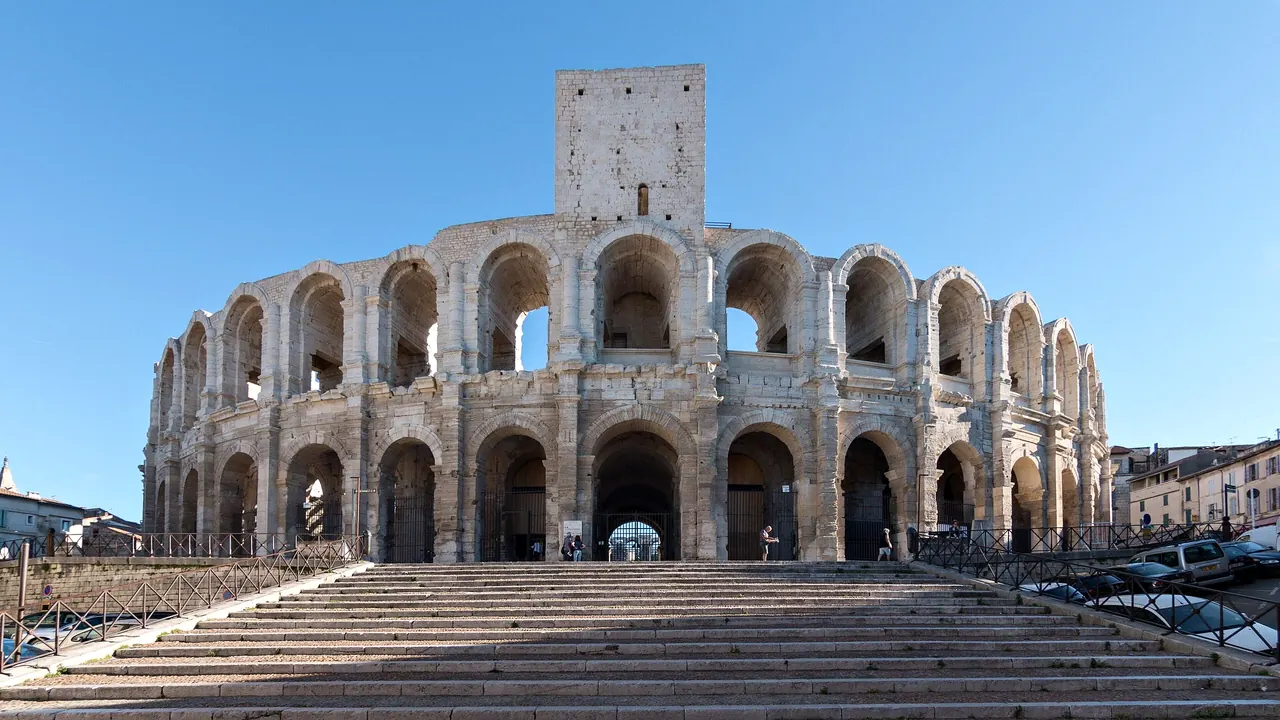
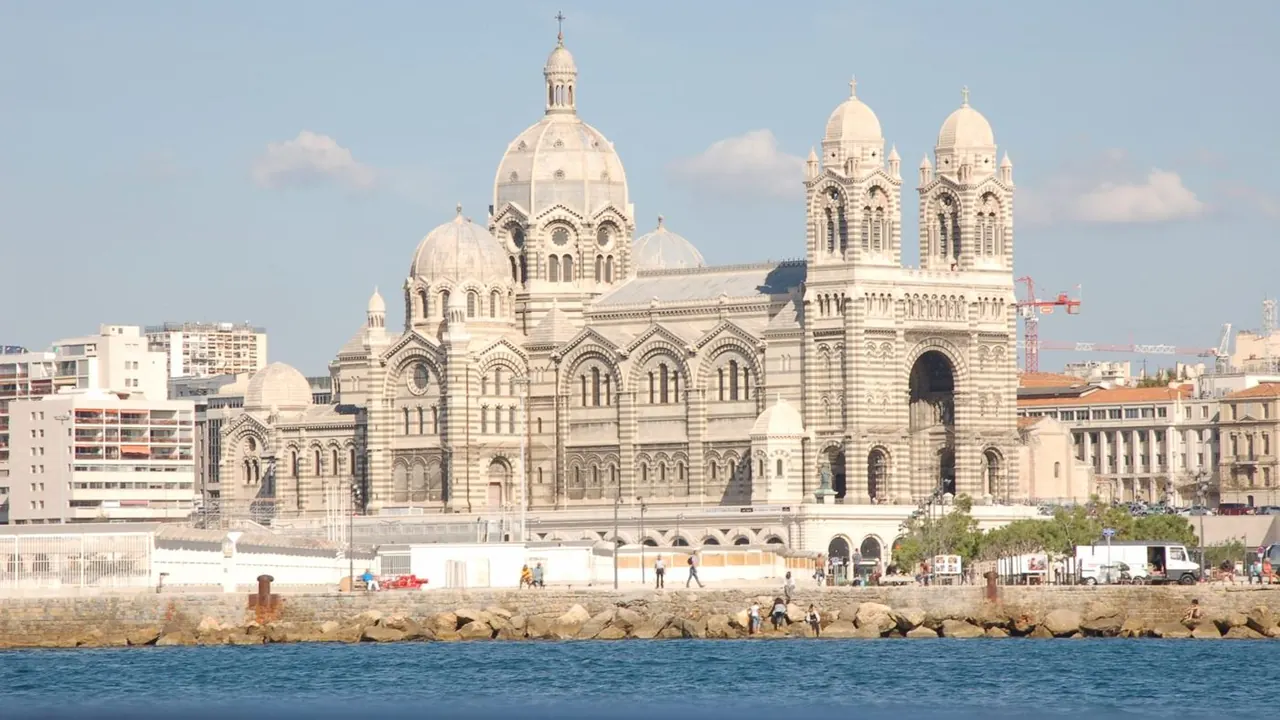
Photos: Arles by Martin Kraft, CC BY-SA 3.0, cropped; Marseille by Charlotte Noblet, CC BY-SA 3.0, cropped.
Arles or Marseille?
Our verdict in twelve categories, each scored against the same fixed benchmark cities, and the climate month by month, so you can choose for your trip.
Choose Arles for
- culture and sights
- day trips
- prices
Arles is for the traveller who wants history close at hand and a quiet base. The Roman arena, theatre and Saint-Trophime are all a short walk apart. The Camargue starts at the edge of town, and Avignon, Nîmes and Les Baux are easy to reach. Evenings are slow, the town is small and a long market lunch is the main event. It suits a calm trip built around sights and countryside.
Choose Marseille for
- nightlife
- live music and the arts
- beaches
Marseille is the better pick if you want a big port city with the sea on its doorstep. You can swim in the Calanques, eat a proper bouillabaisse, spend an evening in the bars of Cours Julien and see a show at the Opéra or La Criée. It is louder and rougher at the edges than Arles, but it gives you much more to do once the sightseeing is over.
Scoreboard
Twelve categories on one fixed scale from 0 to 100. The shaded stretch is the gap between the two.
Your match
Pick a travel style or drag the sliders, and both match scores follow your weighting.
Wins on culture and sights and day trips with your weighting.
Wins on nightlife and live music and the arts with your weighting.
What matters to you?
Category by category
What the scores mean for a trip.
Beaches & swimming
Marseille is a city you can swim from. The Prado beaches, the little Plage des Catalans and the rocky inlets of the Corniche are all within the city. The turquoise coves of the Calanques and the Frioul islands make a half-day trip by foot or boat.
Arles sits on the Rhône, about 40km from the sea. Its beaches are the long, wild Camargue strands at Saintes-Maries, Piémanson and Beauduc. They have plenty of space but little shade, and there are mosquitoes. They make a good day out by car, but you cannot base a beach trip on them.
Food & drink
Marseille has the wider table. It has bouillabaisse in the Corniche harbours, panisses and wood-fired pizza on the street, and the spice shops and North African bakeries of Noailles. A serious top tier sits alongside cheap everyday eating, though you should avoid the tired set menus around the Vieux-Port.
Arles is narrower but very local. Look for gardiane bull stew, Camargue rice, tellines and saucisson d'Arles. The best of it is at the long Saturday market on the Boulevard des Lices or at a lunch on the Place du Forum, and many places close in winter.
Culture & sights
In Arles the sights are packed closer together than anywhere in Marseille. The arena, the antique theatre, the cryptoporticus, the Alyscamps and Saint-Trophime's carved portal all sit within a short walk. The Roman barge in the Museum of Ancient Arles and Gehry's Luma tower add to them, and two full days cover it all.
Marseille is older, founded by Greek sailors, but its heritage is spread across a working city. You will cross town between Notre-Dame de la Garde, the MuCEM and its forts, the Vieille Charité in Le Panier, the Château d'If and Le Corbusier's Cité Radieuse.
Nightlife
This is one of the widest gaps between them. Marseille has a real night out: graffiti-painted bars and music bars around Cours Julien and La Plaine, pastis on the Vieux-Port terraces, and warehouse electronic nights or summer rooftop parties. Some streets feel edgy late at night, so a taxi home is sensible.
In Arles, an evening means dinner on a square and a drink on the Place du Forum. The exception is the feria weeks at Easter and in September, when bodegas fill the streets.
Nature & outdoors
For outdoor travellers Marseille is the stronger choice, with more varied ground and more ways to be active. Arles has the Camargue delta at the edge of town, with flat lagoons, salt flats and reed beds. You can explore them on horseback from the ranches, by bike along the dykes around the Étang de Vaccarès, or on foot to see flamingos and migrating waders. The Alpilles add hill walks among olive groves and pines.
Marseille's Calanques offer steeper and wilder country: white limestone ridges, the coastal path to Sugiton and En-Vau, well-known sport climbing, and kayaking and diving around the Riou islands. Sainte-Victoire and the Sainte-Baume forest are within an hour. Spring and autumn are the best seasons in both. In summer the delta fills with mosquitoes, and Marseille's massifs can close to walkers on days of high fire risk.
Day trips
Both make first-rate bases, and the difference is which direction you look. From Arles, Avignon and Nîmes are a short train ride away, while Les Baux, Saint-Rémy, Montmajour and Aigues-Mortes are close by car, so western Provence and the Gard are on the doorstep.
Marseille faces east and along the coast. Aix and Cassis are near, and so are the Bandol vineyards, La Ciotat and the Côte Bleue harbours. Arles itself is an hour away by train.
Good for families
Marseille is a little easier with children. The Prado beaches have gentle water and lawns, Parc Borély has a lake, and boat trips to the Frioul islands and the Château d'If go down well. The trade-off is traffic, steep streets and hard going with a buggy.
Arles is safe and small, and children enjoy climbing the arena towers and exploring the dark cryptoporticus. Most of the fun, though, means driving out to Camargue pony rides and the flamingo park, so it suits older children who like animals and history.
Getting around
The two are about equally easy to get around, but in very different ways. In Arles everything is within about fifteen minutes' walk, with a free shuttle and a station next to the old town. Once you leave town, though, buses to the Camargue and the villages are infrequent, and most visitors hire a car.
Marseille has two metro lines, trams and harbour ferries on a single card. The city sprawls across hills, however, and buses to the beaches and the Calanques trailheads often get stuck in traffic.
Shopping & style
Marseille gives you more streets to browse. There are the fabric and tea shops of Noailles, santon workshops in Le Panier, department stores on Rue Paradis and Rue de Rome, and a large centre at La Joliette. Even so, there is little designer shopping.
Arles is smaller and more particular. Its Saturday market is good for olive oil, Camargue salt and linens. The old town has Provençal cottons, gardian shirts and good bookshops full of photography titles.
Affordability
Costs work out much the same in both, but you spend in different places. Arles has provincial French prices and is cheaper than the Luberon villages, but the car most visitors hire adds to the bill.
In Marseille the cheap street food, inexpensive public transport, free Calanques walks and low museum entry fees keep a stay affordable without a car. Both are dearer in July.
Live music & performing arts
Marseille runs a year-round programme. The art deco Opéra stages opera and recitals, La Criée stages serious drama, and the Friche la Belle de Mai mixes dance and concerts. The city also has deep roots in hip-hop and Mediterranean music, plus the Festival de Marseille and the Fiesta des Suds.
Arles comes alive mainly in summer. There are concerts in the Roman theatre and the arena, Les Suds in July, and brass bands and the course camarguaise during the ferias. It has no opera or orchestra.
Wellness & relaxation
Neither is a spa town, and Marseille has slightly more to work with. It has a few hammams run by the North African community, some hotel spas, and the sea for a morning swim off the Corniche. Its own visitors still often sleep in Cassis to escape the noise.
Arles has no bathing tradition and only a handful of hotel spas. What it offers is a slow pace: shaded squares, a siesta in the summer heat, and converted mas in the Camargue and the Alpilles with pools.
When should you go?
Pick your month. The climate figures are measured averages, not a forecast.
Arles in July
Marseille in July
Daytime high, °C
Rainfall in the month, mm
Where the figures come from
Arles's temperatures are measured 28 km from the centre, at Nimes / Courbessac.
Arles has no rain gauge within 25 km of the centre, so its rainfall comes from a gridded climate dataset read at the city rather than from a gauge further away.
Temperature and rainfall are climate normals, averaged over the years shown. Arles: 1991-2020 (sunshine 1981-2010) normals, Nimes / Courbessac (28 km from centre). Marseille: 1991-2020 normals, Marseille / Marignane (20.6 km from centre).
Arles and Marseille have almost the same climate, with highs of about 31°C in July and August. That heat is right for the sea but makes long walks through the streets tiring from late morning on. July and August are the best months for swimming, when the water reaches about 22°C, and June and September are still fine for a swim. From Arles the sea is a drive away. Marseille has it on the doorstep and gets more sunshine in most months, especially through spring and summer, so a summer stay pays off more there.
For walking and sightseeing, May, June and late September are best in both, warm without the full heat of summer. The autumn rain starts in September, and in October it falls harder in Arles, about 105mm against 72mm in Marseille. Winters are mild in both, with highs around 12°C. That is fine for sightseeing in a coat but too cold for the sea.
Which traveller are you?
On a beach and sun trip, Marseille is the clear choice. The Prado beaches and the Corniche coves are reached by city bus or ferry, and the clear inlets of the Calanques are close by. From Arles, the wild Camargue strands need a car.
For a culture and arts trip built around monuments, Arles is the better choice. Its Roman arena, theatre and cryptoporticus, the Romanesque cloister of Saint-Trophime and the Alyscamps form one compact UNESCO group. Avignon and Nîmes are close by train for more.
On a food and nightlife trip, choose Marseille. You can start the day at the morning fish quay and the stalls of Noailles, then spend the evening in the bars of Cours Julien and La Plaine. Arles offers a good market lunch, but it goes quiet after dinner.
Before you go
| Measure | Arles | Marseille |
|---|---|---|
| Official language | French | French |
| Currency | Euro (EUR) | Euro (EUR) |
| Sockets | CE230 V, 50 Hz | CE230 V, 50 Hz |
| Driving side | Right | Right |
| Time zone | UTC+1, UTC+2 in summer | UTC+1, UTC+2 in summer |
| Emergency number | 112 | 112 |
| Elevation | 0 m | 0 m |
| Main airport | Marseille Provence Airport (MRS)54 km from centre126 non-stop destinations | Marseille Provence Airport (MRS)21 km from centre126 non-stop destinations |
| Public holidays this year | 11 days | 11 days |
By the numbers
| Measure | Arles | Marseille |
|---|---|---|
| City population | 51,811 | 886,040 |
| People per km² | 68 | 3,683 |
| Museums within 10 km | 3 | 27 |
| UNESCO World Heritage sites within 50 km | 5 | 1 |
| Swim season, months above 21 °C | 2 months | 2 months |
Where else could you go?
Every comparison below shares a destination with this one, so you can follow Arles or Marseille somewhere new.
- Aix-en-Provencevs Marseille
- Avignonvs Arles
- Montpelliervs Arles
- Aix-en-Provencevs Arles
- Avignonvs Marseille
- Saint-Tropezvs Marseille