Photos: Avignon by BlueBreezeWiki, CC BY-SA 3.0, cropped; Marseille by Charlotte Noblet, CC BY-SA 3.0, cropped.
Avignon or Marseille?
Our verdict in twelve categories, each scored against the same fixed benchmark cities, and the climate month by month, so you can choose for your trip.
Choose Avignon for
- live music and the arts
- culture and sights
- day trips
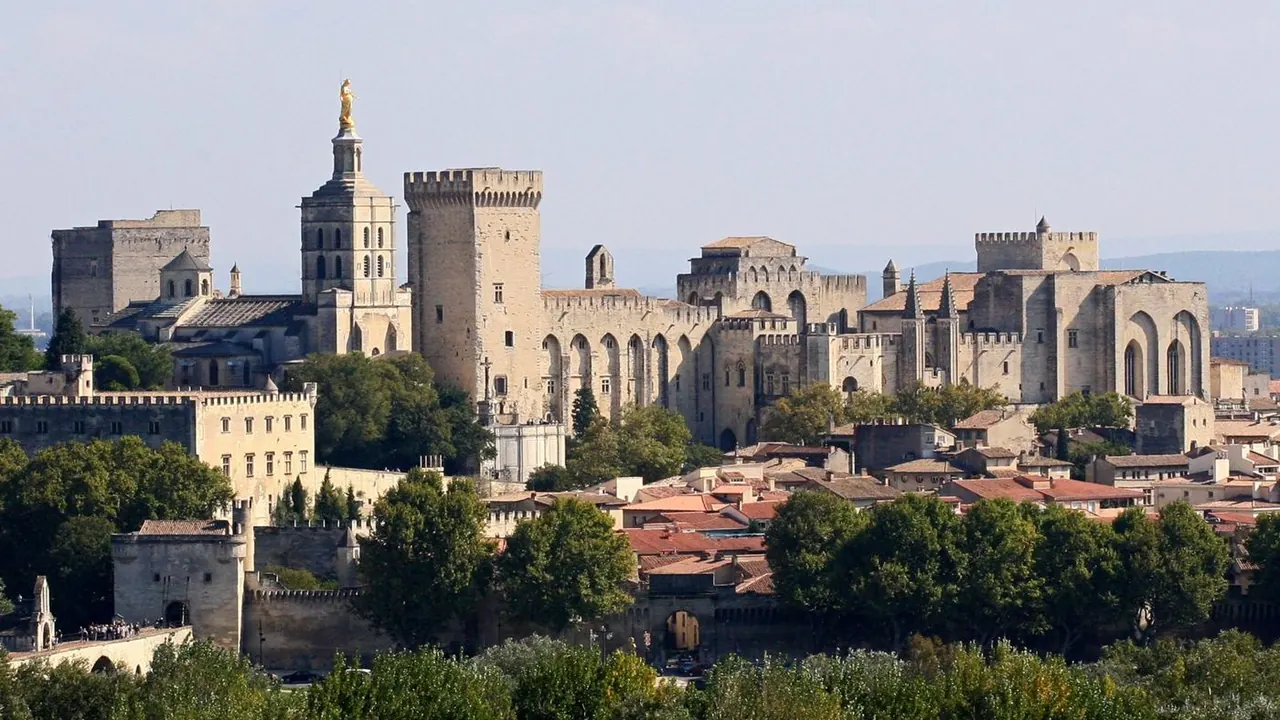
Avignon suits a traveller who wants a compact walled town to explore on foot, with the papal palace on the doorstep and the Roman sites of Provence a short train ride away. It works best as a touring base for Nîmes, Arles, Orange and the Luberon villages, and in July its theatre festival takes over the whole town. If you want beaches or late nights, you will find little here.
Choose Marseille for
- beaches
- nightlife
- nature and the outdoors
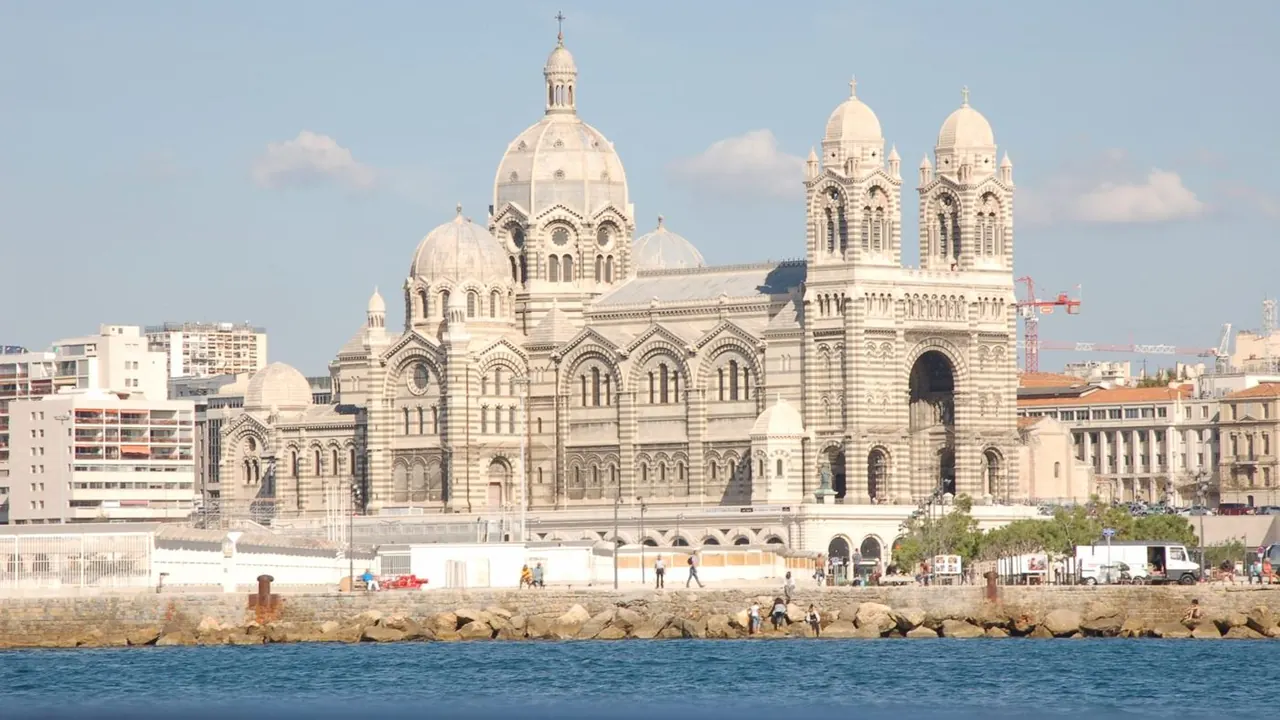
Choose Marseille for a trip built around the sea. The Calanques, the coves of the Corniche and the Prado beaches offer swimming and coastal walking that an inland town cannot match. The food of Noailles and the bars of Cours Julien give the evenings more range. It is a rougher, louder city, so it rewards people who enjoy a working port more than a preserved centre.
Scoreboard
Twelve categories on one fixed scale from 0 to 100. The shaded stretch is the gap between the two.
Your match
Pick a travel style or drag the sliders, and both match scores follow your weighting.
Wins on live music and the arts and culture and sights with your weighting.
Wins on beaches and nightlife with your weighting.
What matters to you?
Category by category
What the scores mean for a trip.
Beaches & swimming
The two are far apart here. Avignon is a river town, and the Rhône is not for swimming. The summer swim is in the Gardon's green pools below the Pont du Gard, half an hour away by car, and the sand at Saintes-Maries-de-la-Mer is a full day out.
In Marseille you can swim every day of the summer. The Prado beaches suit families, the Catalans and the Vallon des Auffes are close to the centre, and the Calanques and Frioul islands have clear water for a half-day outing. The only drawbacks are the mistral and the odd beach closure after heavy rain.
Food & drink
Both cook Provençal food, but Marseille has the wider choice. Avignon's strengths are the produce of Les Halles and the wine country around it, with Châteauneuf-du-Pape and Côtes du Rhône poured by the glass, but there is little food from elsewhere.
Marseille adds the sea and the cooking of everyone who has settled in the port: bouillabaisse in the Corniche harbours, panisses and wood-fired pizza, and the spice shops and grocers of Noailles. Both have tired tourist menus on their main squares and quays, so walk a street or two back.
Culture & sights
Avignon edges ahead because its heritage is all in one place. The Palais des Papes, the cathedral, the broken bridge and the ramparts form one walled ensemble, with the Petit Palais and the Collection Lambert inside it, and two days will cover the lot.
Marseille's history goes back further, to its Greek founding, but it is spread across a working city. Notre-Dame de la Garde stands on its hill, the MuCEM and the forts guard the port, the Vieille Charité is in Le Panier, and Le Corbusier's Cité Radieuse is out in the suburbs. Seeing it takes more travelling, and you get more variety in return.
Nightlife
Marseille is the place for a night out. Students and locals fill Cours Julien and La Plaine until late, the Vieux-Port terraces stay busy after dark, and electronic nights in warehouses and summer rooftop parties add some clubbing. Some central streets feel edgy late at night, so a taxi home is sensible.
Avignon is a town for an aperitif on Place Pie, and its streets are quiet by midnight. Only in July, when festival crowds fill the squares into the small hours, does it come close.
Nature & outdoors
Marseille has more for outdoor people because wild country starts inside the city. The Calanques national park offers coastal hiking, sport climbing, sea kayaking and diving, and Sainte-Victoire and the Sainte-Baume forest are within an hour.
Avignon's landscapes are further out but varied: Mont Ventoux for cyclists, the Luberon's ochre trails, the Alpilles and the flamingos and horses of the Camargue. Most of them need a car. In both, summer heat cuts walking short, and Marseille's hills can close to walkers on days of high fire risk.
Day trips
Both are good bases for Provence, but Avignon is closer to the best of it. Nîmes, Arles, Orange and the Pont du Gard are all within half an hour, and the wine villages around Châteauneuf-du-Pape and the Luberon hill villages are a short drive away.
From Marseille, those Roman sites take an hour or a long day. Its own day trips lean towards the coast and Aix: Cassis under its cliffs, the Bandol wine estates, the harbours of the Côte Bleue, and Aix-en-Provence half an hour away. Each city also makes an easy day trip from the other.
Good for families
Neither city is built for children, and in both, families do best by heading out of town. Avignon is calmer and small enough to cover on foot, with the tablet tour of the Palais, the bridge from the song and the playground on the Rocher des Doms, and river swimming at the Pont du Gard by car.
Marseille gives up the calm but has the sea: gentle water at the Prado beaches, Parc Borély and boat trips to the Château d'If. Its traffic, steep streets and noisy centre make it harder going with a pushchair.
Getting around
Getting around is about equally easy in both, but the two work in different ways. Avignon is a compact walled town where almost everything is within twenty minutes' walk of the central station, so its buses and single tram line are rarely needed. Regional trains run to Arles, Nîmes and Orange, and the TGV station lies a few kilometres south of the walls, a short shuttle train away.
Marseille is a sprawling city with two metro lines, trams, and small ferries across the Vieux-Port and out to the beaches. Its centre is walkable but steep, and buses to the Calanques trailheads get stuck in traffic. In both, the villages need a car.
Shopping & style
Neither is a fashion destination, but Marseille has more to browse. Noailles packs fabrics, teas and North African goods into its narrow streets, Le Panier has santon workshops and green cubes of Marseille soap, and Rue Paradis and La Joliette have the department stores and chains.
Avignon's shopping is smaller and mostly Provençal: printed cottons, lavender and olive wood around Rue des Marchands, with food and wine from Les Halles as the best things to take home. Serious antiques hunting means a trip out to L'Isle-sur-la-Sorgue.
Affordability
Costs are much the same in both: middle of the range for France and well below Paris or the Riviera. The difference is in when rooms get expensive. In Avignon rates jump during the July festival, while Marseille's seafront hotels cost more across July and August.
Day to day, Marseille's cheap street food, low-cost transport and free Calanques walks keep spending down. Avignon has good-value set lunches in its bistros and wine bought from the producers, though touring its countryside usually means paying for a hire car.
Live music & performing arts
Avignon comes out ahead because of July. The Festival d'Avignon stages its major productions in the Cour d'honneur of the Palais des Papes, and the Off fringe puts on well over a thousand shows a day across the town. For the rest of the year, the Opéra Grand Avignon and a dozen small theatres keep up a regular programme.
Marseille offers more evenly through the year but has no single event on that scale. The Opéra, the Théâtre de la Criée and the Friche la Belle de Mai cover opera, drama and dance. The city's hip-hop and Mediterranean music, along with the Fiesta des Suds, give it a popular side that Avignon lacks.
Wellness & relaxation
Avignon is the gentler place to slow down, even though spas in both come down to a few hotels. Its pace is set by long lunches, shaded squares under plane trees and the Rocher des Doms garden in the late afternoon, and many visitors who want rest stay in farmhouse guesthouses with pools among the vineyards. July and a long spell of mistral are the times it stops being restful.
Marseille is louder and denser, with traffic and street noise in most central quarters. It has a few hammams, used mostly by locals, and a long lunch by a Corniche harbour is its way of slowing down. Visitors after real quiet often stay in Cassis and come into the city for the day.
When should you go?
Pick your month. The climate figures are measured averages, not a forecast.
Avignon in July
Marseille in July
Daytime high, °C
Rainfall in the month, mm
Where the figures come from
Avignon has no rain gauge within 25 km of the centre, so its rainfall comes from a gridded climate dataset read at the city rather than from a gauge further away.
Avignon's sunshine is measured 65 km from the centre, at Marseille / Marignane.
Temperature and rainfall are climate normals, averaged over the years shown. Avignon: 2005-2020 (sunshine 1991-2020, rainfall 1991-2020) normals, Avignon / Morières-lès-Avignon (8.6 km from centre). Marseille: 1991-2020 normals, Marseille / Marignane (20.6 km from centre).
The two have almost the same temperatures all year, so the best time to go depends on what you plan to do. Spring and autumn are the best seasons for walking the streets and the countryside: April to early June and late September into October are warm without being tiring. July and August reach about 31°C in both, which makes midday sightseeing hard work. Winters are mild and fairly sunny for the season, with highs around 11°C.
The difference is water. Marseille's sea is warm enough for swimming from June to September and reaches about 22°C in August. Its summers are very dry, and July brings hardly any rain. Avignon is the wetter of the two, especially in autumn, when September can bring 85mm, so an autumn trip there needs some flexibility. Both have long, sunny days from May to August.
Which traveller are you?
For a beach and sun trip, Marseille is the clear choice. It has the Prado beaches, swimming spots along the Corniche and the turquoise inlets of the Calanques. Avignon is inland, and its nearest sand, on the Camargue coast, is a day trip by car.
On a culture and arts trip, Avignon comes out ahead. The UNESCO-listed papal quarter, the ramparts and the Petit Palais are all a short walk apart. Nîmes, Arles and Orange are close by, and every July the town holds a famous theatre festival.
For a food and nightlife trip, Marseille gives you more to work with. It has bouillabaisse in the Corniche harbours, the North African and Armenian food of Noailles and late bars around Cours Julien. Avignon has Provençal bistros, but its streets go quiet by midnight.
Before you go
| Measure | Avignon | Marseille |
|---|---|---|
| Official language | French | French |
| Currency | Euro (EUR) | Euro (EUR) |
| Sockets | CE230 V, 50 Hz | CE230 V, 50 Hz |
| Driving side | Right | Right |
| Time zone | UTC+1, UTC+2 in summer | UTC+1, UTC+2 in summer |
| Emergency number | 112 | 112 |
| Elevation | 10 m | 0 m |
| Main airport | Marseille Provence Airport (MRS)65 km from centre126 non-stop destinations | Marseille Provence Airport (MRS)21 km from centre126 non-stop destinations |
| Public holidays this year | 11 days | 11 days |
By the numbers
| Measure | Avignon | Marseille |
|---|---|---|
| City population | 92,188 | 886,040 |
| People per km² | 1,420 | 3,683 |
| Museums within 10 km | 11 | 27 |
| UNESCO World Heritage sites within 50 km | 6 | 1 |
| Swim season, months above 21 °C | - | 2 months |
Where else could you go?
Every comparison below shares a destination with this one, so you can follow Avignon or Marseille somewhere new.