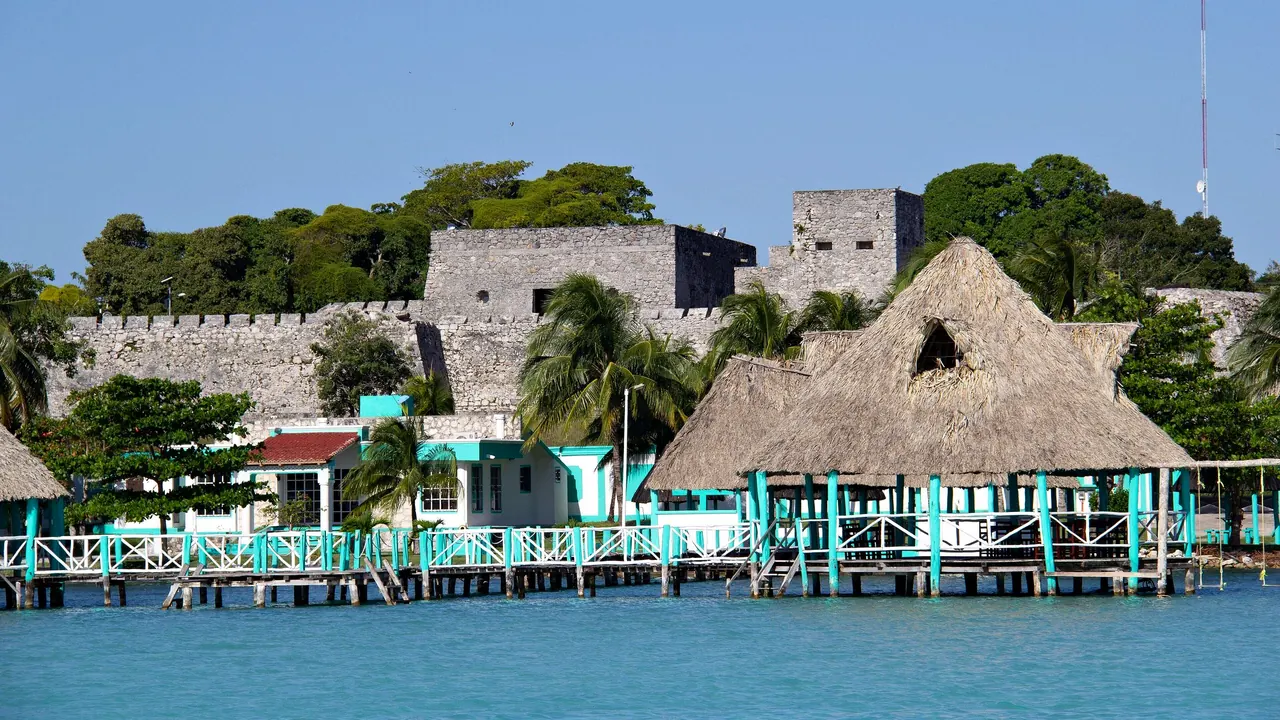
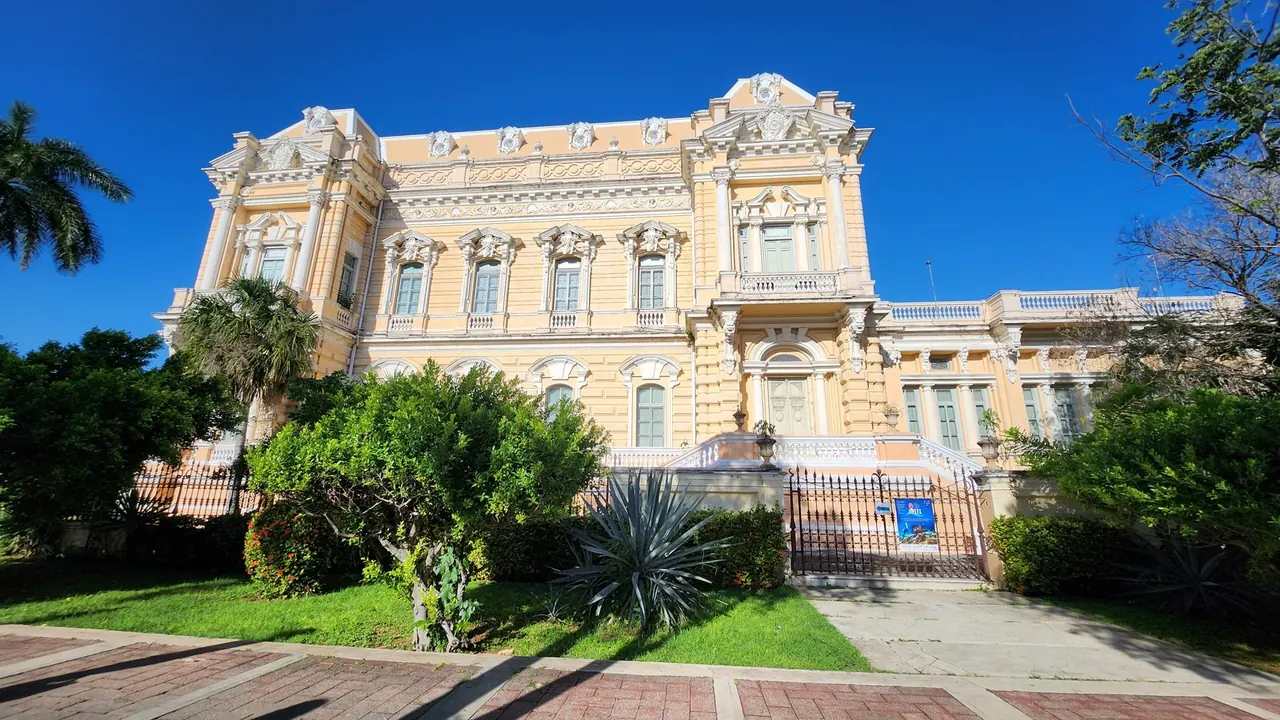
Photos: Bacalar by Gildardo Sánchez, CC BY 2.0, cropped; Merida by Mariposa2723, CC BY 4.0, cropped.
Bacalar or Merida?
Our verdict in twelve categories, each scored against the same fixed benchmark cities, and the climate month by month, so you can choose for your trip.
Choose Bacalar for
- beaches
- wellness
- nature and the outdoors
Bacalar is for travellers whose ideal day starts in the water and ends in a hammock. The lagoon is the whole point: warm, clear and calm enough for anyone to swim, best seen from a kayak at dawn, with a lakeside lodge and its own dock as the base. Come for slow days and quiet evenings, and don't expect much in the way of sights, restaurants or shops.
Choose Merida for
- culture and sights
- live music and the arts
- food and drink
Merida suits the curious traveller who wants a city to explore and a region to explore from it. The colonial centre, the Gran Museo del Mundo Maya and free performances in the squares fill the evenings, the markets serve Yucatecan cooking at its source, and Uxmal, Chichen Itza and Izamal are all within a day's drive. Its swimming is in cenotes and a plain Gulf beach rather than a lagoon, and the heat shapes every plan.
Scoreboard
Twelve categories on one fixed scale from 0 to 100. The shaded stretch is the gap between the two.
Your match
Pick a travel style or drag the sliders, and both match scores follow your weighting.
Wins on beaches and wellness with your weighting.
Wins on culture and sights and live music and the arts with your weighting.
What matters to you?
Category by category
What the scores mean for a trip.
Beaches & swimming
Bacalar has the better swimming, though neither city has a classic beach. Its freshwater lagoon is calm, around 28°C and coloured from pale aqua to deep blue over a white limestone bed, and you swim from wooden docks, hotel jetties and public balnearios, with Cenote Azul and the gentle current at Los Rápidos for variety. What you won't find is sand to lie on or surf.
Merida's sea is at Progreso, 40 minutes north, a wide but plain stretch of Gulf shore with shallow green water and weekend crowds of local families. The swims people remember there are in the cool, clear cenotes inland, which feel quite different from Bacalar's warm open water.
Food & drink
Both towns cook the same Yucatecan dishes, but Merida is where they are made best and in the greatest variety. Beyond cochinita pibil, panuchos and sopa de lima, you find relleno negro, papadzules and queso relleno, cheap breakfasts in the Lucas de Galvez and Santiago markets, and marquesita carts around the squares at night.
In Bacalar the same regional basics come from a few taquerías and cocinas económicas, plus lakeshore kitchens serving fish and ceviche with a view. It is pleasant, but after a few days you will be back at the same tables.
Culture & sights
The gap here is wide. Bacalar's single real sight is the eighteenth-century Fuerte de San Felipe, a fort built against pirates, with a small museum and ramparts over the lagoon. The rest of the town takes an hour to see.
Merida can fill several days. The cathedral of San Ildefonso was built from the stones of Maya temples, and the Casa de Montejo and the murals of the Palacio de Gobierno stand on the same square. The henequen-boom mansions of Paseo de Montejo and the Gran Museo del Mundo Maya are the best introduction to the region before seeing the ruins.
Nightlife
Bacalar goes to bed early. There are a few bars on the square and the shore, drinks in the hostels and the occasional weekend band, because most people are up at dawn to paddle.
Merida comes to life after dark, once the heat breaks. There are mezcal bars and cocktail terraces along Calle 60 and around Santa Lucia, rooftops over the old town, and cantinas where every drink brings small plates of food. A few clubs keep going past midnight at weekends. It is a relaxed, sociable scene rather than a party town, but it is far livelier than Bacalar's.
Nature & outdoors
Bacalar's lagoon gives it the edge. Over 40km of shifting blue water edged with mangroves can be explored by kayak or paddleboard, with sailing trips to the Pirates' Channel and the Bird Island sanctuary, and stromatolites, among the oldest forms of life on earth, in the shallows.
Merida's landscape is mostly underground: the cenotes and caverns around Cuzama and Homun, reached by bicycle or horse-drawn rail cart. A longer outing to Celestun takes you by boat through mangroves to see flamingos. In both places the land is flat, hot and poor for hiking.
Day trips
Merida is the stronger base for the Maya world. Uxmal and the Ruta Puuc sites lie about an hour south, Chichen Itza and Valladolid make a full day east, and Dzibilchaltun, Mayapan and the all-yellow town of Izamal are easy shorter trips, with restored haciendas scattered among them.
From Bacalar the ruins are quieter but less important: Chacchoben in the jungle, the stucco masks of Kohunlich paired with Dzibanché, and Chetumal's museum of Maya culture. From both places a car or a tour makes these trips much easier.
Good for families
Merida is slightly easier with children. The Parque del Centenario has a free zoo and playground, Animaya is a bigger zoo, and the evening squares with balloon sellers suit families. Cenotes and the shallow sea at Progreso add swimming, though the ruins mean long hours in the sun.
Bacalar offers one excellent thing: warm, waveless, often very shallow water, where children can spend whole days floating and jumping off docks. Away from the lagoon there is nothing for them, so it suits a lakeside lodge with its own dock and children old enough to paddle.
Getting around
Merida's numbered street grid makes the centre easy to find your way around, and most sights are a walk from the Plaza Grande, though narrow pavements and the midday heat slow you down. Taxis and ride-hailing cover the rest, and buses reach Chichen Itza, Valladolid and Progreso.
Bacalar's centre is only a few blocks, but the lodges, balnearios and Cenote Azul are spread for kilometres along a shore road with little room for walkers, so you will rely on taxis or a bicycle. In both places a hire car opens up the ruins.
Shopping & style
Merida is where Yucatecan crafts are bought. It has hammocks in every size, guayabera shirts, palm-fibre Panama hats from Becal and embroidered huipiles, sold in the chaotic market streets and in finer galleries in the restored houses of the centre, with malls in the north for everyday brands.
Bacalar has a few stalls near the square selling hammocks, embroidery and beachwear, and little else. If you want a good hammock, buy it in Merida.
Affordability
Merida stretches a budget further. Market meals and street food cost very little, cantina snacks come free with drinks, and many cultural evenings are free. The courtyard boutique hotels cost more but are still fair for what you get.
Bacalar can be just as cheap if you stay in town, with local food, bicycles and shared boat trips costing little. The catch is that the lakeside lodges with private docks, which are why many people come, are priced like the Caribbean coast. In both places car hire and ruin entry fees are the main extra costs.
Live music & performing arts
Merida has a real performing arts scene, built on free shows in its squares through the week: jarana dancers in white embroidered dress, trova trios at the long-running Santa Lucia serenade, and the Mayan ballgame re-enacted before the cathedral. The Teatro Jose Peon Contreras adds the Yucatan Symphony Orchestra and ballet.
Bacalar has none to speak of. The most you can expect is a weekend band on the main square.
Wellness & relaxation
Bacalar is the more restful place. Its days follow the light, with a dawn paddle, a hammock through the heat and a swim at sunset, and many lakeside lodges have no road noise. Yoga, short retreats, massage and the temazcal steam ceremony are offered locally, though there are no large spas.
Merida's slow pace comes from shuttered afternoons and courtyard hotels with plunge pools, and the proper spas are in the restored haciendas outside town. The centre's traffic and the exhausting heat from April to June make it harder to switch off there.
When should you go?
Pick your month. The climate figures are measured averages, not a forecast.
Bacalar in July
Merida in July
Daytime high, °C
Rainfall in the month, mm
Temperature and rainfall are climate normals, averaged over the years shown. Bacalar: 1991-2020 normals, Chetumal, Q. Roo (23.4 km from centre). Merida: 1991-2020 normals, Merida / lic Manuel Crecencio (5.1 km from centre).
Bacalar barely changes temperature through the year. Daytime highs run from about 30°C in December and January to 35°C in August, and the water stays warm enough for a long swim in every month. The real difference between seasons is rain. February to April are the driest and sunniest months, with the lagoon at its clearest for paddling. From May the wet season sets in, peaking at around 207mm in October, with heavy showers and greyer skies.
Merida has bigger swings and more sunshine overall. December to February are the best months for walking the old streets, with highs near 30°C and very little rain. By April and May the dry heat climbs to 37°C, which is too hot for sightseeing after mid-morning, even though those are its sunniest months. The rains come from June to October, a little later than in Bacalar and ending sooner, and the sea at Progreso is warmest in late summer. For a winter or early spring trip, both cities are at their best together.
Which traveller are you?
For a beach and sun trip, Bacalar is the clear choice. Its warm, glassy lagoon in shades of blue, entered from docks and balnearios, is far more memorable than Merida's flat, greenish Gulf shore at Progreso, even if neither has the white-sand Caribbean beach many people imagine.
On a culture and arts trip, Merida wins easily. The cathedral, the Paseo de Montejo mansions and the Gran Museo del Mundo Maya fill the days, and in the evenings there are jarana dancers, trova serenades and the Yucatan Symphony Orchestra. Bacalar has a single fort.
For a food and nightlife trip, choose Merida. Cochinita pibil for breakfast in the Lucas de Galvez market, relleno negro in old townhouse dining rooms, and cantina drinks with free botanas beat Bacalar's handful of lakeshore restaurants and early nights.
Before you go
| Measure | Bacalar | Merida |
|---|---|---|
| Official language | Spanish, Nahuatl, Yucatec Maya | Spanish, Nahuatl, Yucatec Maya |
| Currency | Mexican Peso (MXN) | Mexican Peso (MXN) |
| Sockets | AB127 V, 60 Hz | AB127 V, 60 Hz |
| Driving side | Right | Right |
| Time zone | UTC-5 | UTC-6 |
| Emergency number | 911 | 911 |
| Elevation | 11 m | 12 m |
| Main airport | Chetumal International Airport (CTM)20 km from centre2 non-stop destinations | Manuel Crescencio Rejón International Airport (MID)5 km from centre22 non-stop destinations |
| Public holidays this year | 9 days | 9 days |
By the numbers
| Measure | Bacalar | Merida |
|---|---|---|
| City population | 12,527 | 892,363 |
| People per km² | - | 1,010 |
| Museums within 10 km | 1 | 5 |
| UNESCO World Heritage sites within 50 km | 0 | 0 |
| Swim season, months above 21 °C | 12 months | 12 months |
Where else could you go?
Every comparison below shares a destination with this one, so you can follow Bacalar or Merida somewhere new.
- Valladolid, Mexicovs Merida
- Tulumvs Bacalar
- Akumalvs Bacalar
- Valladolid, Mexicovs Bacalar
- Tulumvs Merida
- Akumalvs Merida