The Bahamas
Exuma
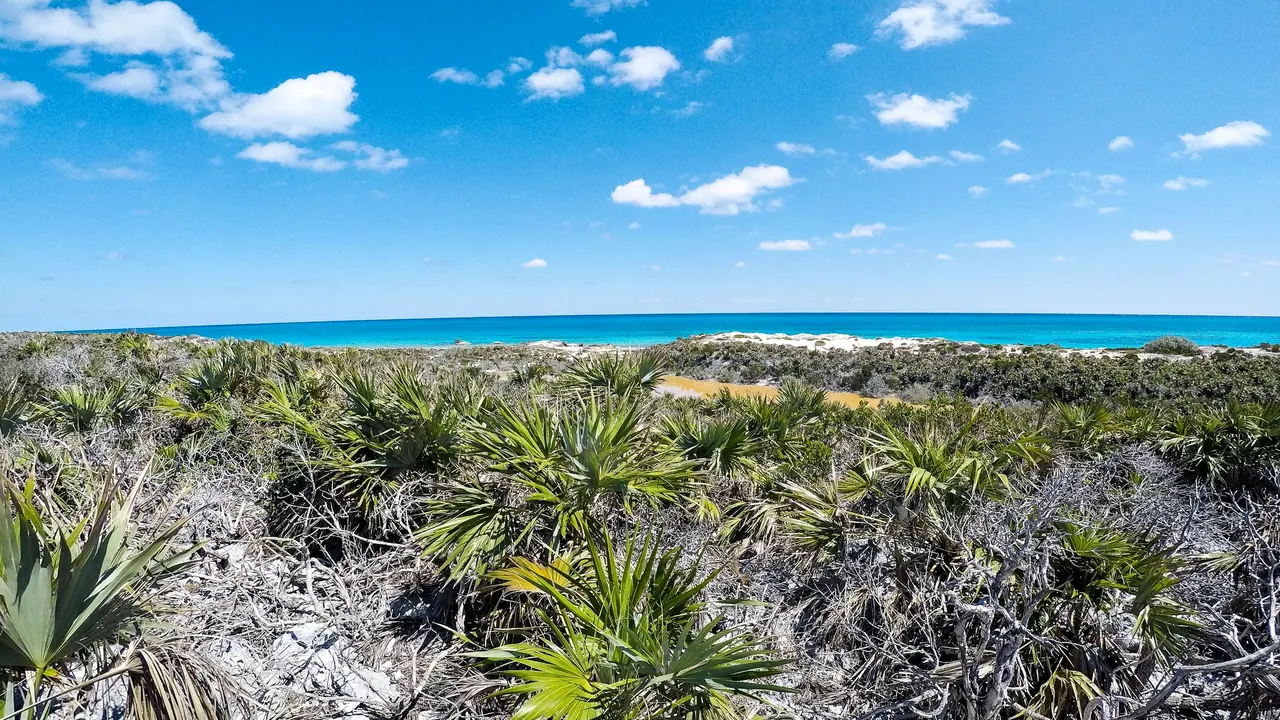
Palm scrub above the sea in the Exuma Cays Land and Sea Park
- Beaches94
- Nature & outdoors74
- Families45
Photo: Craig Stanfill, CC BY-SA 2.0, cropped
Match
33
Every category weighted equally
- Beach & sun42
- Culture & arts23
- Food & nightlife25
- Family trip40
- Outdoors41
- Relax & unwind41
- Shopping & style26
- On a budget31
Exuma in twelve categories
Our verdict on each, scored 0 to 100 against the same fixed benchmark cities, so a score means the same thing on every page.
Beaches & swimming. Scores 94 out of 100.
Food & drink. Scores 32 out of 100.
Culture & sights. Scores 12 out of 100.
Nightlife. Scores 15 out of 100.
Nature & outdoors. Scores 74 out of 100.
Day trips. Scores 20 out of 100.
Good for families. Scores 45 out of 100.
Getting around. Scores 30 out of 100.
Shopping & style. Scores 8 out of 100.
Affordability. Scores 12 out of 100.
Live music & performing arts. Scores 8 out of 100.
Wellness & relaxation. Scores 45 out of 100.
Exuma category by category
Beaches & swimming
94This is the main reason to come. The water across the Exumas is the clear, shallow, many-shaded turquoise that shows up in every photograph of the Bahamas, over powder-white sand that stays cool underfoot. On Great Exuma, Tropic of Cancer Beach on Little Exuma and the long curves near George Town are rarely crowded, and the boat ride across Elizabeth Harbour to Stocking Island brings sheltered beaches on the harbour side and wilder ocean beaches a short walk away. At low tide, sandbars rise out of the water across the cays.
The sea is around 24°C in winter and close to 29°C in late summer, so swimming works all year, though most visitors come between December and May, outside the hurricane season. Shade is natural rather than built, with few beach clubs or sunbed rows, and many beaches have no facilities at all. Visitors bring their own water and cover.
Food & drink
32Eating here means seafood, mostly conch: chopped raw with lime, peppers and onion as conch salad, fried as fritters or cracked, plus grouper, snapper, lobster in season and peas and rice on the side. The most enjoyable meals are at simple shacks and fish-fry stands near George Town and on the beaches, eaten outdoors with a cold Kalik. Beyond that there are hotel restaurants and a handful of independent places, and almost everything arrives by boat, so choice is narrow and menus repeat. Self-caterers shop at small grocery stores with limited fresh produce.
Culture & sights
12There is very little to see in the usual sense. The ruins of Loyalist-era cotton plantations, such as the Hermitage on Little Exuma, the old Loyalist tombs at Rolle Town, the salt-pond beacon at Williams Town and the settlements of Rolleville and Barreterre recall the islands' plantation past. Many families here descend from enslaved Africans who took the Rolle name. George Town has a pink colonial-style administration building and a few churches, including the white Anglican church on its hill above the harbour. Together that makes a pleasant morning's drive at most. There are no museums of note, and history here is something you pass on the road rather than a reason to come.
Nightlife
15Evenings are quiet. Going out means a drink at a beach bar on Stocking Island or near George Town, a weekend fish fry with music, or a hotel bar after dinner, and most places wind down well before midnight. The exception is the National Family Island Regatta in April, when Elizabeth Harbour fills with boats and the town parties for several days. Anyone wanting clubs or late nights should look elsewhere.
Nature & outdoors
74The landscape is water rather than land: a chain of some 365 low cays strung for more than 150km over shallow banks, with the deep blue of Exuma Sound on one side. On land there is scrub, salt ponds and short coastal walks, nothing high. At sea the islands come into their own. The Exuma Cays Land and Sea Park protects reefs, coral gardens and rock iguanas, Thunderball Grotto near Staniel Cay is a cave you snorkel into, and boat trips meet nurse sharks, stingrays and the famous swimming pigs of Big Major Cay.
Sailing, kayaking, kiteboarding, bonefishing on the flats and deep-sea fishing are all first class. The catch is distance: from George Town the park is a full day by fast boat, so a visitor serious about the cays should stay near Staniel Cay or charter a yacht.
Day trips
20Outings here are almost all by boat, and their appeal is the sea and its animals rather than places to visit. Settlements such as Staniel Cay and Black Point on the cays, or Williams Town and the north-end villages on Great Exuma, are small, friendly and quickly seen. There are no historic towns, heritage sites or wine areas within reach, and other Bahamian islands mean a flight. A day out here is a beach, a sandbar or a snorkelling stop.
Good for families
45Calm, shallow water over soft sand makes the beaches ideal for small children, and the islands feel safe and relaxed. The boat trips to see swimming pigs, iguanas and nurse sharks are a highlight for older children. Beyond that nothing is made for families: no attractions, few playgrounds, limited medical care and long, sun-exposed days on boats that toddlers may struggle with. Several of the larger resorts are adults-only, so families usually rent a house or villa on Great Exuma and plan around the beach.
Getting around
30Great Exuma and Little Exuma are joined by a short bridge and run along one main road, the Queen's Highway, so a hire car is the practical way to reach beaches and settlements. Traffic is light and driving is on the left. There are taxis but no useful public transport, and George Town itself is walkable but small. Everything beyond the two main islands needs a water taxi, a boat tour, a charter or a small plane to the airstrip at Staniel Cay, so the most celebrated parts of the island chain take planning and cost.
Shopping & style
8Shopping is minimal. George Town has a straw market under the trees selling woven baskets and hats, a few gift shops and grocery stores, and that is about all. Nobody comes here to shop, and visitors should pack what they need.
Affordability
12This is an expensive place to stay. Almost everything is shipped in, which pushes up groceries and restaurant prices, and accommodation runs from pricey guesthouses to very costly resorts and villas, with little at the budget end. Car hire, water taxis and the boat tours that make the trip are significant extra costs. Renting a house and cooking for part of the stay helps, and the beaches themselves are free.
Live music & performing arts
8There is little to attend. Rake 'n' scrape bands play at fish fries and beach bars now and then, and Junkanoo rushes appear at festival times and around the Regatta, but there are no theatres, concert halls or regular music venues.
Wellness & relaxation
45The pace is the main thing. Days on Great Exuma are slow and quiet, with empty roads and long stretches of shoreline to yourself, and a stay here unwinds people without any effort. Formal wellness is thin: a few resorts have spas and offer massage and yoga, but there is no bathing tradition, no thermal waters and little choice outside the hotels. It suits those who want rest in its simplest form rather than a programme.
Where to stay in Exuma
Most visitors base themselves on Great Exuma, and for a first visit the area around George Town makes the most sense. The town is small and walkable, with the straw market, grocery stores and fish-fry stands close by, and water taxis cross Elizabeth Harbour to the beaches and beach bars of Stocking Island. It suits couples and anyone who wants easy evenings out without needing the car every time.
South over the bridge, Little Exuma and the stretch towards Williams Town are quieter. Tropic of Cancer Beach is close, and the rented houses there suit families and a slow, self-catering stay. The north end of Great Exuma, around Rolleville and Barreterre, is emptier still and suits those who want long shorelines to themselves. From either area you will need a hire car for shopping, meals and other beaches.
Staniel Cay, out among the cays and reached by small plane or boat, is the base for Thunderball Grotto, the swimming pigs and the Exuma Cays Land and Sea Park, which are a full day by boat from George Town. It is tiny and suits snorkellers, sailors and second visits. Many people split their stay, with a few nights there and the rest on Great Exuma, which means one flight or boat transfer between the two.
When should you go?
Pick a month to see what it is like. The climate figures are measured averages, not a forecast.
Exuma in July
Daytime high, °C
Rainfall in the month, mm
The whole year
Shaded against this destination’s own year: the deepest cell is its best month for that figure and the palest its weakest.
Where the figures come from
Exuma has no weather station within reach, so its figures come from a gridded climate model rather than a measured record, and read a broad area rather than one spot.
Temperature and rainfall are climate normals, averaged over the years shown. Exuma: 2001-2020 normals, NASA POWER reanalysis grid, no weather station within 90 km.
Before you go
| Measure | Exuma |
|---|---|
| Official language | English |
| Currency | Bahamian Dollar (BSD) |
| Sockets | AB120 V, 60 Hz |
| Driving side | Left |
| Time zone | UTC-5, UTC-4 in summer |
| Emergency number | 919 |
| Main airport | Exuma International Airport (GGT)7 non-stop destinations |
| Public holidays this year | 11 days |
By the numbers
| Measure | Exuma |
|---|---|
| Population | 6,928 |
| People per km² | 28 |
| Swim season, months above 21 °C | 12 months |
Compare Exuma with
Every comparison with a written verdict behind it.