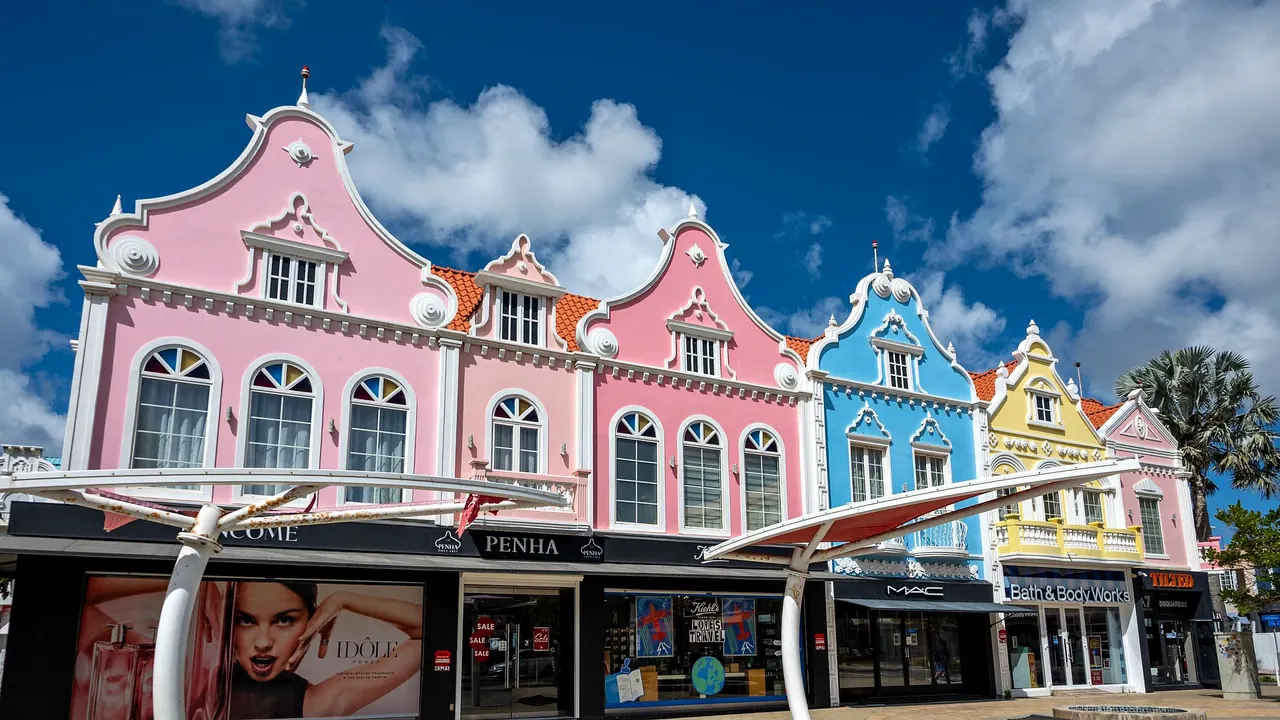
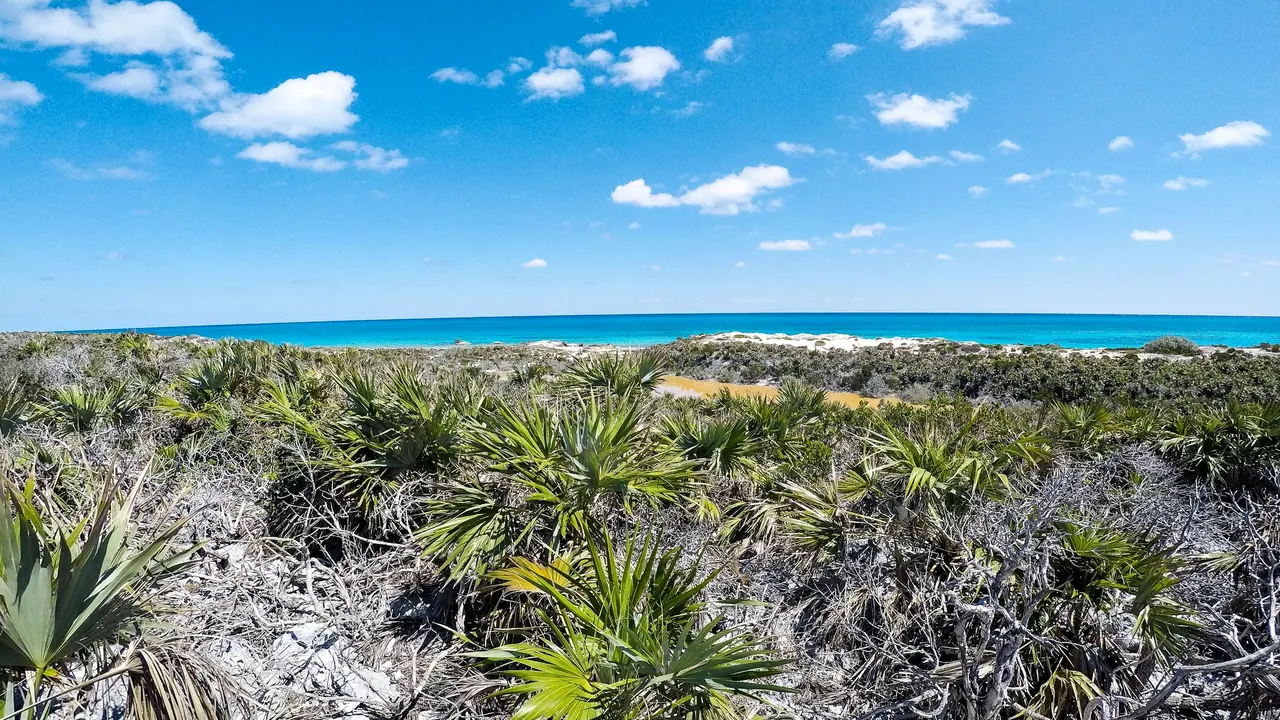
Photos: Aruba by xiquinhosilva, CC BY 4.0, cropped; Exuma by Craig Stanfill, CC BY-SA 2.0, cropped.
Aruba or Exuma?
Our verdict in twelve categories, each scored against the same fixed benchmark cities, and the climate month by month, so you can choose for your trip.
Choose Aruba for
- shopping
- nightlife
- getting around
Aruba suits travellers who want a beach resort with everything close at hand. That means wide sand at Eagle Beach and Palm Beach, restaurants and bars within walking distance, buses into Oranjestad, and calm lagoons and kids' clubs for young children. It is the easier island to arrive on and simply enjoy, and the weather stays dry for most of the year.
Choose Exuma for
- nature and the outdoors
- day trips
- beaches
Choose Exuma if the sea itself is the point and you are happy to give up nightlife, shopping and a choice of restaurants for it. The cays bring emptier beaches, sandbars at low tide, reef snorkelling and boat days among nurse sharks, iguanas and swimming pigs. It rewards people who will hire a car, arrange their boats in advance and enjoy quiet evenings.
Scoreboard
Twelve categories on one fixed scale from 0 to 100. The shaded stretch is the gap between the two.
Your match
Pick a travel style or drag the sliders, and both match scores follow your weighting.
Wins on shopping and nightlife with your weighting.
Wins on nature and the outdoors and day trips with your weighting.
What matters to you?
Category by category
What the scores mean for a trip.
Beaches & swimming
Both islands have outstanding beaches and very calm water, so the choice is about the kind of beach you want. Aruba's are resort beaches, with sunbeds, piers and water-sports stands along Palm Beach, more open space on Eagle Beach, and snorkelling coves at Arashi and Mangel Halto.
Exuma's beaches are emptier and less developed. Tropic of Cancer Beach, Stocking Island and the sandbars that appear at low tide often have no facilities at all, so you bring your own shade and water. In return you get the many shades of turquoise and the sense of having the beach to yourself.
Food & drink
Aruba gives you more choice. The resort strips have steakhouses, seafood grills and tables on the sand, and Oranjestad, Savaneta and San Nicolas serve local dishes such as keshi yena and pastechi. Fish restaurants on jetties along the south coast and the late-night food trucks are the best of it.
On Exuma, meals mostly mean conch, as salad, fritters or cracked, along with grouper and peas and rice. These are best eaten at the shacks and fish-fry stands near George Town. Because almost everything arrives by boat, menus repeat after a few days.
Culture & sights
Neither island is a place to come for sightseeing, but Aruba gives you more to fill a day or two. There is Oranjestad's waterfront of Dutch colonial buildings, the museum in Fort Zoutman, the National Archaeological Museum and the murals in San Nicolas. Out on the island you can visit the gold mill ruins and see the Indigenous drawings in the Arikok caves.
Exuma's past shows mainly in Loyalist plantation ruins such as the Hermitage, the tombs at Rolle Town and the church on the hill above George Town. You can see it all on a morning's drive, and there are no museums.
Nightlife
Aruba has a proper, if relaxed, night out. Beach bars and lounges on the Palm Beach strip fill after dinner, the hotel casinos stay open late, and party buses do the rounds of the bars. Oranjestad has a few more local clubs at weekends.
Exuma winds down early, with a drink on Stocking Island, a weekend fish fry or the hotel bar. The exception is the Regatta week in April, when George Town parties for several days.
Nature & outdoors
Exuma is the stronger choice for nature, and nearly all of it is at sea. The chain of low cays includes protected reefs and coral gardens in the Land and Sea Park, rock iguanas, and Thunderball Grotto, which you snorkel into. Sailing and bonefishing are first class too. The catch is that the park is a full day's boat trip from George Town.
Aruba has more to offer on land, with cactus scrub, the boulders at Ayo and Casibari, and trails, caves and dunes in Arikok National Park. On the water, the steady winds at Hadicurari suit windsurfers and kitesurfers, and divers have the wreck of the SS Antilla.
Day trips
Neither island has much for day trips, but Exuma's outings feel more like real excursions. Boats run to the sandbars and snorkelling stops, out to the swimming pigs, and to small settlements such as Staniel Cay and Black Point.
Aruba's towns, Oranjestad, San Nicolas and Savaneta, are short drives from the hotels, so they fit into an ordinary day rather than making an outing. On both islands, the neighbouring islands need a flight.
Good for families
Aruba makes family life easier. Baby Beach and the sheltered coast give children shallow water, the big resorts have pools and kids' clubs, and smaller attractions such as the butterfly farm, the donkey sanctuary and the submarine trips fill the gaps. English is spoken everywhere.
Exuma's sand and calm water are just as good for small children, and the boat trips to see pigs and sharks delight older ones. Beyond that there is little for children: medical care is limited, several resorts are adults-only, and toddlers may find long days on boats hard going.
Getting around
Aruba is the easier island to get around. Buses link the capital with the main beaches often enough that a stay split between the sand and Oranjestad needs no car at all. When you want to see more, every corner of the island can be reached by road in a short drive. Only the rough tracks inside Arikok call for a four-wheel drive or a guided tour.
On Exuma there is no bus to fall back on, so you will almost certainly need a hire car on the single main road through Great and Little Exuma, and you drive on the left. The cays that most visitors come to see are off the road network entirely. Reaching them means a water taxi, a boat tour or a light aircraft to Staniel Cay, and each of these has to be arranged in advance.
Shopping & style
Aruba at least gives you somewhere to shop. Oranjestad's pedestrian main street and the malls by the harbour sell duty-free watches, jewellery and perfume, and the island's aloe products make easy gifts. On Exuma, shopping amounts to the straw market under the trees in George Town and a few gift shops, so pack everything you need.
Affordability
Both are expensive islands where nearly everything is imported, so neither suits a tight budget. The difference is in where you can save money. On Aruba, public buses, food trucks, local eateries and apartments with kitchens all bring costs down.
Exuma has very little cheap accommodation. The car hire and boat tours that make the trip worthwhile come on top of everything else, so renting a house and cooking for part of the stay is the main way to save.
Live music & performing arts
Aruba has a little more live culture. There are folk music and dance evenings around Fort Zoutman, occasional productions at the Cas di Cultura, and a long Carnival season with tumba competitions and road marches.
On Exuma, the music comes from rake 'n' scrape bands at fish fries and from Junkanoo rushes around festival times and the Regatta. Neither island has a theatre or concert scene to plan evenings around.
Wellness & relaxation
Both islands help you slow down, but in different ways. Aruba offers more pampering, with full-service spas in the Palm Beach and Eagle Beach resorts, adults-only hotels, beach massages and aloe-based treatments, all cooled by the trade wind.
On Exuma, the rest comes from the solitude itself: empty roads, shoreline to yourself and very little to organise. Spas there are limited to a few resorts.
When should you go?
Pick your month. The climate figures are measured averages, not a forecast.
Aruba in July
Exuma in July
Daytime high, °C
Rainfall in the month, mm
Where the figures come from
Aruba has no rain gauge within 25 km of the centre, so its rainfall comes from a gridded climate dataset read at the destination rather than from a gauge further away.
Exuma has no weather station within reach, so its figures come from a gridded climate model rather than a measured record, and read a broad area rather than one spot.
Temperature and rainfall are climate normals, averaged over the years shown. Aruba: 2005-2025 (rainfall 1991-2020) normals, Queen Beatrix Airport (8.5 km from centre). Exuma: 2001-2020 normals, NASA POWER reanalysis grid, no weather station within 90 km.
Aruba is hot and beach-ready in every month, with highs that climb to 33°C in August and September, when the middle of the day is too hot for walking around Oranjestad or Arikok. The island is very dry from February to August. Rain picks up from October to December and peaks at around 76mm in November, though even then it is modest. The sea stays warm all year.
Exuma is milder. In winter the highs sit around 25°C, which is pleasant for walking but leaves the sea at about 24°C, cool enough that some swimmers will notice. From May the water warms through the summer, but the rain builds as well, reaching about 87mm in October, and these months fall within the hurricane season. That makes December to April the most settled stretch there, while Aruba suits a trip at almost any time.
Which traveller are you?
On a family trip with young children, Aruba is the simpler choice. Baby Beach is an almost enclosed lagoon, the resorts have pools and kids' clubs, and the buses and short drives keep travel easy. Exuma offers calm water but little else made for children.
For an outdoors trip, Exuma comes out ahead. The Exuma Cays Land and Sea Park, Thunderball Grotto, sailing, kayaking and bonefishing on the flats make the sea a playground. Aruba has desert hiking in Arikok and excellent kitesurfing, but less underwater.
On a food and nightlife trip, Aruba is clearly better. The Palm Beach strip has beach bars, casinos and a few clubs, and there is Dutch Caribbean cooking to seek out in Oranjestad. On Exuma, evenings are fish fries and quiet bars that close before midnight.
Before you go
| Measure | Aruba | Exuma |
|---|---|---|
| Official language | Dutch, Papiamento | English |
| Currency | Aruban Florin (AWG) | Bahamian Dollar (BSD) |
| Sockets | ABF127 V, 60 Hz | AB120 V, 60 Hz |
| Driving side | Right | Left |
| Time zone | UTC-4 | UTC-5, UTC-4 in summer |
| Emergency number | 911 | 919 |
| Main airport | Queen Beatrix International Airport (AUA)35 non-stop destinations | Exuma International Airport (GGT)7 non-stop destinations |
| Public holidays this year | 12 days | 11 days |
By the numbers
| Measure | Aruba | Exuma |
|---|---|---|
| Population | 106,739 | 6,928 |
| People per km² | 553 | 28 |
| Swim season, months above 21 °C | 12 months | 12 months |
Where else could you go?
Every comparison below shares a destination with this one, so you can follow Aruba or Exuma somewhere new.
- Curaçaovs Aruba
- Bonairevs Aruba
- Eleutheravs Exuma
- Turks and Caicosvs Exuma
- Punta Canavs Aruba
- Puerto Ricovs Aruba