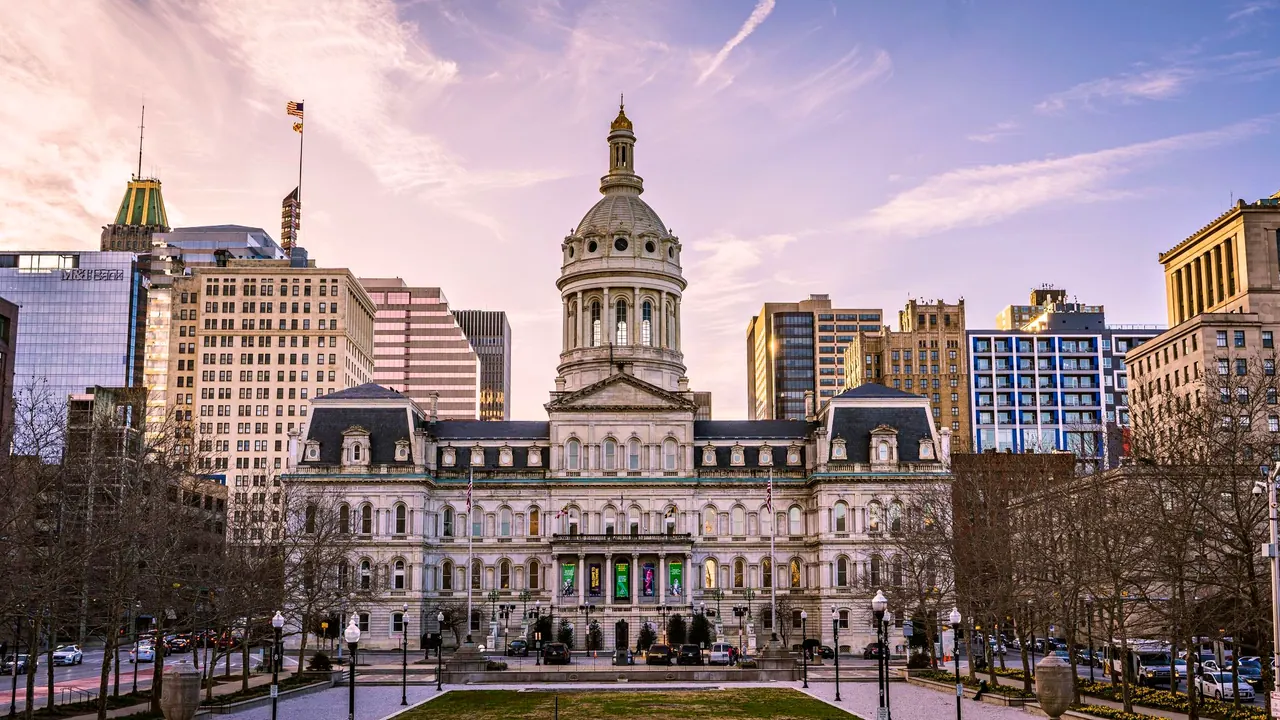
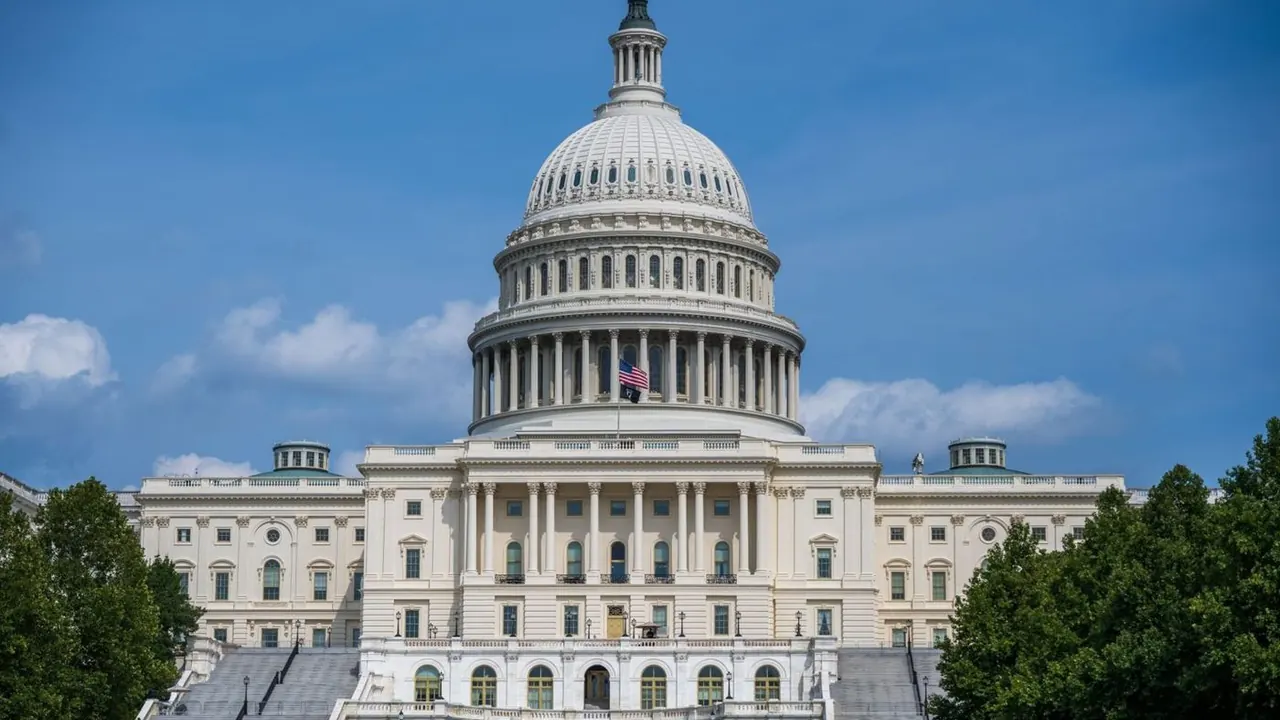
Photos: Baltimore by Styves Exantus, Pexels License; Washington DC by Guohua Song, Pexels License.
Baltimore or Washington DC?
Our verdict in twelve categories, each scored against the same fixed benchmark cities, and the climate month by month, so you can choose for your trip.
Choose Baltimore for
- prices
- beaches
- day trips
Baltimore suits travellers who want an East Coast base with character and a lower hotel bill. Its harbour neighbourhoods, crab houses and rowhouse streets have a strong local identity, and the train puts both Washington and Philadelphia within easy reach for day trips. It works best for a few days of free art museums, waterfront bars and steamed crabs, with a car for the countryside.
Choose Washington DC for
- getting around
- culture and sights
- shopping
Washington DC is the stronger choice for a first visit built around sightseeing. The Smithsonian museums, the National Gallery and the monuments along the Mall can fill a week, the Metro makes them easy to reach, and the theatre, restaurant and bar scenes are broader. Families and culture lovers get more for their time, though rooms cost more.
Scoreboard
Twelve categories on one fixed scale from 0 to 100. The shaded stretch is the gap between the two.
Your match
Pick a travel style or drag the sliders, and both match scores follow your weighting.
Wins on prices and beaches with your weighting.
Wins on getting around and culture and sights with your weighting.
What matters to you?
Category by category
What the scores mean for a trip.
Beaches & swimming
Neither city is a beach destination, but Baltimore comes closer. Sandy Point State Park is about forty minutes away, and the harbour gives the city a waterside feel even though nobody swims in it.
Washington DC is a river city an hour from the small, brackish bay beaches, so for most visitors the only place to swim is a hotel pool. For the Atlantic surf, both cities are about three hours from the Delaware and Maryland shore.
Food & drink
Washington DC eats more widely. Ethiopian restaurants around Shaw and U Street, pupusas in Columbia Heights, grazing at Union Market and serious tasting menus around Logan Circle give it a range Baltimore cannot match.
Baltimore's strength is a clearer identity of its own. A summer crab feast at a paper-covered table, lump crab cakes and snacks from Lexington Market feel more rooted than the corporate steakhouses of downtown Washington, even if the choice beyond them is narrower.
Culture & sights
Baltimore has more to see than its reputation suggests, but Washington DC clearly leads here. Baltimore's highlights are the Matisse works of the Cone Collection, the Walters' Egyptian antiquities and Fabergé, Fort McHenry and the B&O roundhouse, enough for two or three rewarding days. Where it does better is in its streets: the cobbles and brick warehouses of Fells Point and the long rows of marble-stooped houses have more character than Georgetown's quiet Federal-era brick.
Washington DC works on a different scale. The Smithsonian museums along the Mall, the National Gallery's European and American painting, the Capitol, the Library of Congress reading room and the memorials by the Reflecting Pool can fill a full week. Arlington Cemetery adds a sobering half-day across the river.
Nightlife
Baltimore's evenings revolve around taverns. The old waterfront bars of Fells Point, the sports bars and rooftops of Federal Hill and the dive bars of Station North make for a few good nights, but there are few clubs and some quiet streets are best crossed by taxi.
Washington DC offers more variety and runs later. Cocktail bars and dance spots line 14th Street and U Street, Adams Morgan stays rowdy late, and Dupont Circle anchors the LGBTQ+ scene. Early in the week it settles into after-work happy hours.
Nature & outdoors
Washington DC has the better outdoors close at hand. Rock Creek Park runs through the city, the C&O Canal towpath leads out of Georgetown, and the rocky gorge at Great Falls offers climbing and whitewater only half an hour away. Shenandoah's ridges are a realistic day out.
Baltimore's countryside is gentler: the wooded gorges of Patapsco Valley, the trout streams of Gunpowder Falls and the urban forest of Leakin Park. Its real advantage is the water, with sailing on the Chesapeake out of Annapolis and herons and ospreys in the marshes.
Day trips
Baltimore sits in the better position. Washington DC is about an hour south by train and Philadelphia a little more to the north, so two major cities can be visited without a car, while Annapolis and Ellicott City are short drives.
From Washington DC, Philadelphia takes closer to two hours, but some places are much nearer: Old Town Alexandria is a Metro ride away, Mount Vernon is just downriver, and Virginia's Hunt Country wine villages are an easy drive. Gettysburg and Harpers Ferry are within reach of either city by car.
Good for families
Washington DC is easier with children, mainly because so much is free. A family can spend days among the dinosaurs at Natural History and the rockets at Air and Space, visit the National Zoo without paying, and let the children run about on the Mall. Lifts at every Metro station help with buggies.
Baltimore's family attractions sit together around the Inner Harbor. The National Aquarium's shark ring and rainforest, the Science Center and Port Discovery make an easy first couple of days. Beyond the waterfront, though, the zoo and railway museum mean car or taxi journeys through uneven parts of the city.
Getting around
Washington DC is far easier to get around. Its colour-coded Metro reaches most sights, as well as Arlington, Alexandria and the airport, and bike-share docks and riverside paths link the monuments. Georgetown, which has no station, is the main gap.
Baltimore's walkable stretch is its waterfront, from Fells Point to Federal Hill, with water taxis out to Fort McHenry. Beyond that, a single metro line and a light rail line leave Hampden, the art museum and the zoo to buses, taxis or a car.
Shopping & style
Washington DC offers more conventional shopping. Georgetown's M Street mixes chain fashion with boutiques and antiques, CityCenterDC gathers luxury labels, and the Smithsonian shops are good for books and prints.
Baltimore has no luxury street and no department store, so its appeal is quirkier. The vintage shops and local art on Hampden's Avenue, the record and antique shops of Fells Point and an Old Bay souvenir from the market halls make for an afternoon's browsing rather than a shopping trip.
Affordability
Baltimore is the cheaper base, especially for hotels, and many visitors to the capital stay there for that reason. Its two main art museums are free, though meals with tip and frequent taxis still add up.
Washington DC charges heavily for rooms, cocktails and restaurants, and costs rise further in cherry blossom season. What softens the bill is that its biggest sights, from the Smithsonian to the zoo and the Capitol tours, cost nothing, and staying in Arlington cuts the room rate.
Live music & performing arts
Washington DC has the deeper stage. Arena Stage, the Shakespeare Theatre Company, the Folger's Elizabethan playhouse and Ford's Theatre cover everything from new American plays to the classics, and the National Symphony Orchestra and Washington National Opera provide a full classical season. In summer there are lawn concerts at Wolf Trap.
Baltimore's scene is smaller and more independent. It has the symphony at the Meyerhoff, frequent free recitals at the Peabody Institute and touring musicals at the Hippodrome, but no opera company of note. Its small clubs around Station North lean towards indie, punk and experimental music.
Wellness & relaxation
Neither city is a place to unwind, and neither has a spa tradition beyond hotel spas and yoga studios. Washington DC has a slight edge thanks to its calm open spaces: the Tidal Basin early in the morning, the gardens of Dumbarton Oaks and the National Arboretum.
Baltimore's grittier pace leaves less room for rest. A harbour walk or a shady hour in Druid Hill Park is about as calm as it gets, and anyone who wants proper quiet heads out to the Eastern Shore.
When should you go?
Pick your month. The climate figures are measured averages, not a forecast.
Baltimore in July
Washington DC in July
Daytime high, °C
Rainfall in the month, mm
Temperature and rainfall are climate normals, averaged over the years shown. Baltimore: 1991-2020 (sunshine 1971-2000) normals, Baltimore (0.4 km from centre). Washington DC: 1991-2020 (sunshine 1981-2010) normals, Washington National Airport (5 km from centre).
The two cities share almost the same climate, so the calendar is the same for both. May and late September to October are the best months for walking, with mild days around 24°C in May and about 20°C in October. July and August reach 31°C to 32°C with heavy humidity, which makes long walks along the Mall or the harbour tiring. Winters are cold, with highs only in single figures from December to February. Rain falls steadily all year, wettest in summer and early autumn with about 100mm a month in each city.
The bay water near both cities is warmest in August, at about 26°C, and pleasant from July to September. That matters more for Baltimore, which is closer to a swimmable stretch of the Chesapeake. Baltimore gets slightly more sunshine through most of the year, but the difference is small enough that the weather should not decide between them.
Which traveller are you?
On a culture and arts trip, Washington DC is the clear choice. The free Smithsonian museums, the National Gallery and the monuments go much deeper than Baltimore's fine but smaller set of museums, and Arena Stage and the Shakespeare Theatre add evenings of serious drama.
On a tight budget, Baltimore makes more sense. Its hotels cost noticeably less than Washington's, the Baltimore Museum of Art and the Walters are free, and the train to the capital is quick enough to see the Smithsonian in a day without paying to sleep there.
For a short city break, Washington DC is easier. The Metro links the Mall, Arlington and Alexandria without a car, and a weekend fills easily with free museums and memorials. Beyond its walkable harbour, Baltimore needs taxis to reach much of the rest.
Before you go
| Measure | Baltimore | Washington DC |
|---|---|---|
| Currency | US Dollar (USD) | US Dollar (USD) |
| Sockets | AB120 V, 60 Hz | AB120 V, 60 Hz |
| Driving side | Right | Right |
| Time zone | UTC-5, UTC-4 in summer | UTC-5, UTC-4 in summer |
| Emergency number | 911 | 911 |
| Elevation | 10 m | 72 m |
| Main airport | Baltimore/Washington International Thurgood Marshall Airport (BWI)13 km from centre89 non-stop destinations | Ronald Reagan Washington National Airport (DCA)5 km from centre105 non-stop destinations |
| Public holidays this year | 12 days | 11 days |
By the numbers
| Measure | Baltimore | Washington DC |
|---|---|---|
| City population | 585,708 | 689,545 |
| People per km² | 2,457 | 3,896 |
| Museums within 10 km | 27 | 98 |
| UNESCO World Heritage sites within 50 km | 0 | 0 |
| Swim season, months above 21 °C | 3 months | 3 months |
Where else could you go?
Every comparison below shares a destination with this one, so you can follow Baltimore or Washington DC somewhere new.
- Philadelphiavs Baltimore
- Rehoboth Beachvs Baltimore
- Bethany Beachvs Baltimore
- Ocean City, Marylandvs Baltimore
- Rehoboth Beachvs Washington DC
- Bethany Beachvs Washington DC