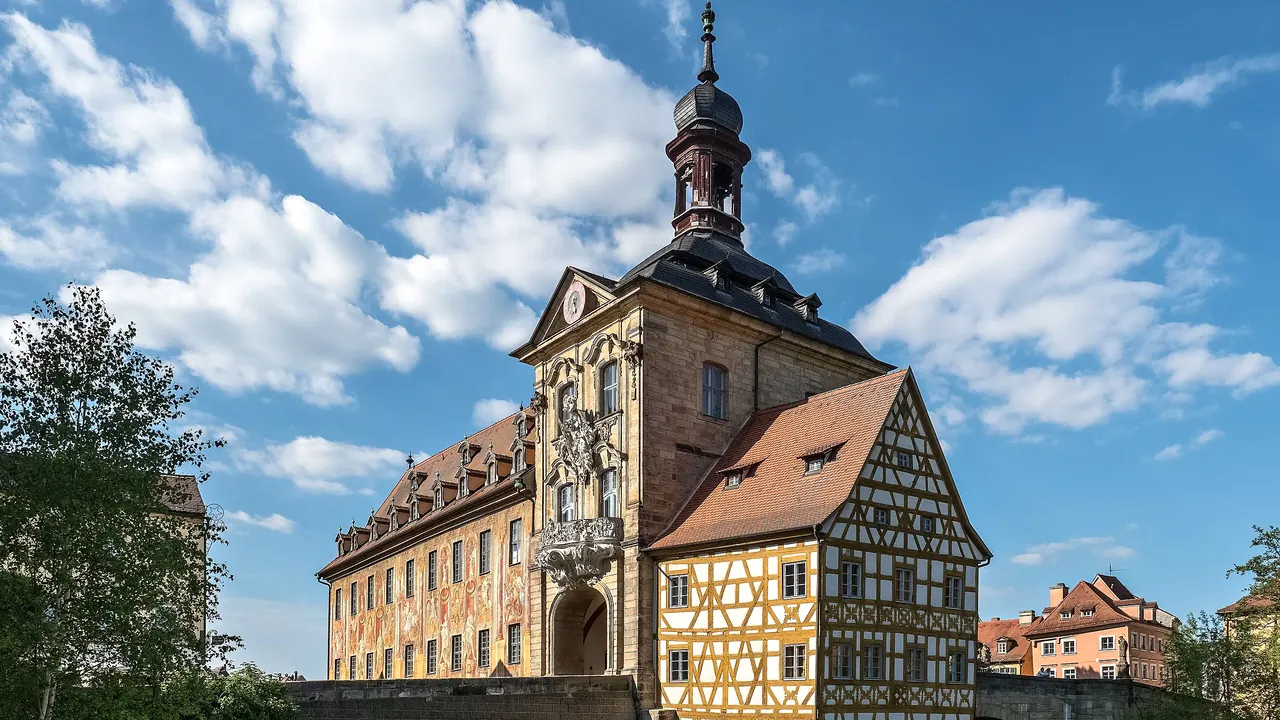
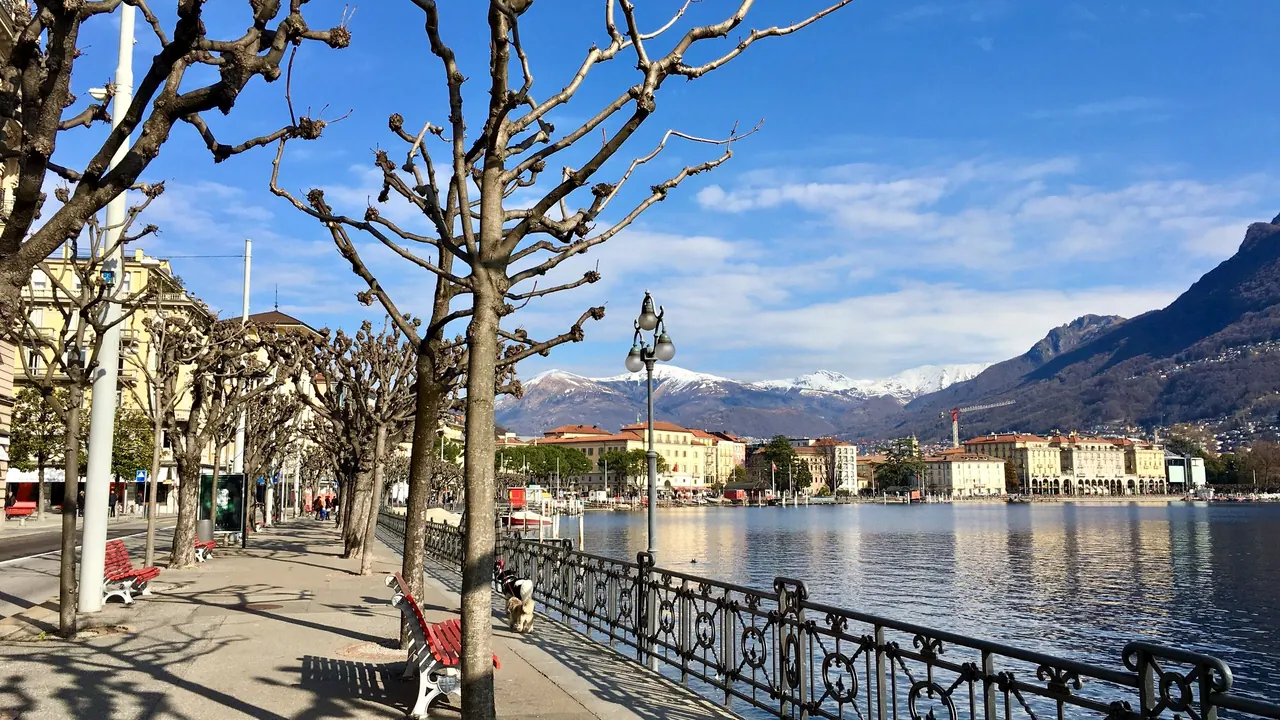
Photos: Bamberg by Ermell, CC BY-SA 4.0, cropped; Lugano by Thomas Woodtli from Zürich, Switzerland, CC BY-SA 2.0, cropped.
Bamberg or Lugano?
Our verdict in twelve categories, each scored against the same fixed benchmark cities, and the climate month by month, so you can choose for your trip.
Choose Bamberg for
- prices
- culture and sights
- food and drink
Bamberg suits travellers who want a historic town to wander and a good table at the end of the day. Its UNESCO-listed old town, cathedral hill and island town hall reward slow walking, the brewery taverns and hillside beer cellars make every evening easy, and costs stay at ordinary German levels. It is also a well-placed base for Nuremberg, Würzburg and Bayreuth by train.
Choose Lugano for
- beaches
- nature and the outdoors
- families
Pick Lugano when the landscape matters more than the monuments. The lake, the funiculars up Monte Brè and San Salvatore and the path to Gandria give it far more to do outdoors, and Milan, Como and Lake Maggiore are all within reach for day trips. Families with young children do better here too, thanks to the lidos and boat rides. The catch is price: every night and every meal costs much more than in Bamberg.
Scoreboard
Twelve categories on one fixed scale from 0 to 100. The shaded stretch is the gap between the two.
Your match
Pick a travel style or drag the sliders, and both match scores follow your weighting.
Too close to call, 1 point apart
Wins on prices and culture and sights with your weighting.
Wins on beaches and nature and the outdoors with your weighting.
What matters to you?
Category by category
What the scores mean for a trip.
Beaches & swimming
Neither city has a coast, but Lugano at least has a proper swimming lake. From June to early September its lidos at the mouth of the Cassarate, at Castagnola and at Paradiso offer lawns, decks and ladders into water that warms up well in high summer, and boats run to smaller lake baths in the villages.
Bamberg has the river bathing spot in the Hain park, a few gravel-pit lakes and the town pools. That is fine for cooling off on a hot afternoon, but not something to plan a day around.
Food & drink
Bamberg is the better place to eat and drink, as long as beer and pork appeal. With its dense cluster of small breweries, smoky Rauchbier poured from wooden barrels and summer evenings at the hillside Bierkeller, it has a food culture with real character, served with Schäufele and dumplings.
Lugano's answer is the grotto, with polenta, braised meats and Ticino Merlot at granite tables in the hills. These taverns are charming, but the choice in town is narrow and expensive, and many visitors save their serious meals for Italy. Neither city offers much international cooking.
Culture & sights
Here Bamberg is well ahead. Its whole old town came through the war intact and is UNESCO-listed. On foot you can take in the four-towered cathedral with the Bamberg Horseman, the Neue Residenz, the frescoed town hall on its island, Little Venice, Michaelsberg Abbey and the market gardeners' quarter.
Lugano has a pleasant arcaded centre around Piazza della Riforma, views from San Lorenzo, Luini's Passion fresco and the art collection split between LAC and Palazzo Reali. It is enjoyable, but you can see it in a day, while Bamberg rewards a longer stay.
Nightlife
Neither is a place for a big night out, but Bamberg has more going on after dark. Brewery taverns fill up after work, the student bars of the Sand quarter stay open late during term, and summer evenings stretch out in the beer cellars.
Lugano's evenings are smarter and end earlier: an aperitivo on the lakefront, a long dinner, maybe a cocktail bar, and a quiet town before midnight. Anyone who wants to go clubbing heads for Nuremberg from Bamberg and for Milan from Lugano.
Nature & outdoors
Lugano's setting is in another league. Steep wooded mountains drop into the lake, funiculars climb Monte Brè and San Salvatore, a rack railway goes up Monte Generoso, and the Verzasca and Maggia valleys are about an hour away. You can walk to Gandria in the morning and paddle on the lake in the afternoon.
Bamberg's countryside is gentle. Franconian Switzerland, with its limestone valleys and rock towers, lies to the east, the Steigerwald beech forest to the west, and river cycle paths link the village breweries. It is pleasant rolling country, but not scenery people travel for.
Day trips
Both make good bases, but from Lugano you can go further and cross a border. Milan's cathedral and The Last Supper are just over an hour away and Como about half an hour. Bellinzona's castles, Lake Maggiore with the Borromean Islands, Bergamo's upper town and the boat to Morcote could fill the rest of a week.
Bamberg's strength is Franconia by rail. Nuremberg, Würzburg's Residence, Coburg and Bayreuth are each about an hour or less away, and Vierzehnheiligen is closer still. The list is rich in towns and palaces but has less variety of scenery than Lugano's.
Good for families
Lugano gives children more to do, almost all of it outdoors. There are swimming and slides at the lidos, boat trips, the funiculars, the Generoso rack railway, the playgrounds of Parco Ciani and the Swiss miniature park at Melide. It suits younger children best.
Bamberg is calm and safe. It has the Hain park, rowing boats on the Regnitz, a leisure pool for wet days and beer gardens where children roam between the tables, but the sights are mostly churches. In both towns the steep climbs make pushing a pushchair hard work.
Getting around
Bamberg is the simpler town to move around. The island town, the cathedral hill and Little Venice are minutes apart on foot, bikes suit the flat lower town, and trains run on across Franconia. The drawbacks are the steep cobbled climbs and a station that is a fair walk from the old town.
Lugano edges ahead because its slopes come with machinery. A short funicular links the high station to the old town, lake boats call at the shore villages, and mountain railways climb to the summits, all tied into the Swiss rail network. You won't need a car in either town.
Shopping & style
Lugano has the better shopping, mainly because of Via Nassa, an arcaded street of Swiss watchmakers, jewellers and Italian fashion houses. There is also the designer outlet village at Mendrisio near the border. Even so, the choice is limited, and serious shoppers go to Milan.
Bamberg's pedestrian streets are mostly chain stores, with some bookshops and antique dealers. Its best buys are things to eat and drink: produce from the market gardens and bottled smoked beer.
Affordability
Cost is where the two differ most. Bamberg has ordinary Western European prices kept modest by Franconian habits: cheap beer, filling tavern meals, reasonable hotel rates for most of the year and almost nothing to spend on transport.
In Lugano, hotels, meals, wine, boats and mountain railways all come at full Swiss prices. Grotti, set lunches and the free regional transport included with hotel stays help a little, but a week there costs far more than in Bamberg.
Live music & performing arts
Both are small cities built around one serious orchestra. The Bamberg Symphony has a real international reputation and plays in its concert hall on the Regnitz. The ETA Hoffmann Theatre stages drama, and organ and choral concerts are held in the cathedral. For opera, the Bayreuth Festival is the nearby outing.
Lugano gathers almost everything at LAC, home to the Orchestra della Svizzera italiana, with theatre and dance mostly in Italian. In summer it adds open-air music, above all the free Estival Jazz concerts in Piazza della Riforma. Opera lovers go to La Scala in Milan.
Wellness & relaxation
Neither city has a bathing tradition of its own, and in both the calm comes from the pace of life. In Bamberg that means mornings by the river and long afternoons in the beer gardens, with the warm brine pools of Bad Staffelstein half an hour away by train for proper thermal bathing.
Lugano's version centres on the lake: the lidos, benches in Parco Ciani, long grotto lunches and a mild, sunny shore. The spas are in the large hotels, and there is an indoor pool and sauna complex near Rivera.
When should you go?
Pick your month. The climate figures are measured averages, not a forecast.
Bamberg in July
Lugano in July
Daytime high, °C
Rainfall in the month, mm
Temperature and rainfall are climate normals, averaged over the years shown. Bamberg: 1991-2020 normals, Bamberg (2.8 km from centre). Lugano: 1991-2020 normals, Lugano (1.2 km from centre).
Bamberg has a short, clear season. From May to September, days of about 20°C to 26°C and moderate rain suit walking the seven hills and sitting out in the beer cellars. July is the warmest month and also the wettest, though never by much. Winter is cold, grey and dark, with highs of only a few degrees and very little sunshine, so the town is at its best in the warmer half of the year.
Lugano is a few degrees milder all year and far sunnier in winter, so a December stroll under its arcades is more pleasant than one in Bamberg. Its drawback is rain: from April to November it gets roughly three times Bamberg's rainfall, and May is the wettest month of all. July and August, close to 27°C, are the months for lake swimming, though they can be humid. Spring and autumn are better for hiking between the wet spells.
Which traveller are you?
On a trip on a tight budget, Bamberg is the clear choice. Cheap local beer, filling brewery-tavern meals and an old town you can cover on foot keep costs low. In Lugano, hotels, dinners, boats and mountain railways all come at Swiss prices.
For an outdoors trip, Lugano wins easily. Funiculars and a rack railway take you up Monte Brè, San Salvatore and Monte Generoso, the ridge from Lema to Tamaro makes a fine day hike, and you can paddle on the lake. Bamberg has gentle cycle paths and woodland.
On a culture and arts trip, Bamberg gives you far more. The whole old town is UNESCO-listed, with the four-towered cathedral, the Bamberg Horseman and the town hall in the river, and the Bamberg Symphony plays its home season there. Lugano's sights fit into a single day.
Before you go
| Measure | Bamberg | Lugano |
|---|---|---|
| Official language | German | French, German, Italian, Romansh |
| Currency | Euro (EUR) | Swiss Franc (CHF) |
| Sockets | CF230 V, 50 Hz | CJ230 V, 50 Hz |
| Driving side | Right | Right |
| Time zone | UTC+1, UTC+2 in summer | UTC+1, UTC+2 in summer |
| Emergency number | 112 | 112 |
| Elevation | 262 m | 283 m |
| Main airport | Nuremberg Airport (NUE)46 km from centre56 non-stop destinations | Milan Malpensa International Airport (MXP)46 km from centre208 non-stop destinations |
| Public holidays this year | 12 days | 15 days |
By the numbers
| Measure | Bamberg | Lugano |
|---|---|---|
| City population | 77,218 | 63,495 |
| People per km² | 1,414 | 837 |
| Museums within 10 km | 11 | 17 |
| UNESCO World Heritage sites within 50 km | 1 | 5 |
Where else could you go?
Every comparison below shares a destination with this one, so you can follow Bamberg or Lugano somewhere new.
- Comovs Lugano
- Nurembergvs Bamberg
- Milanvs Lugano
- Bergamovs Lugano
- Rothenburg ob der Taubervs Bamberg
- Zermattvs Lugano