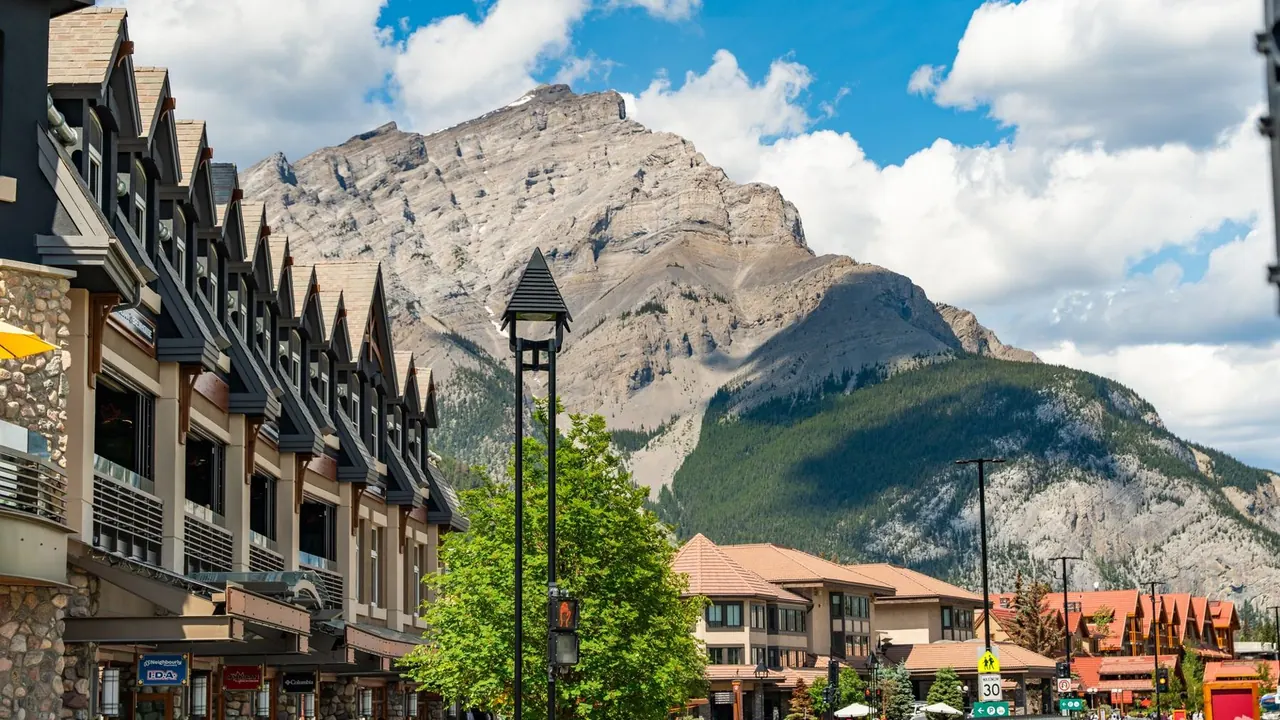
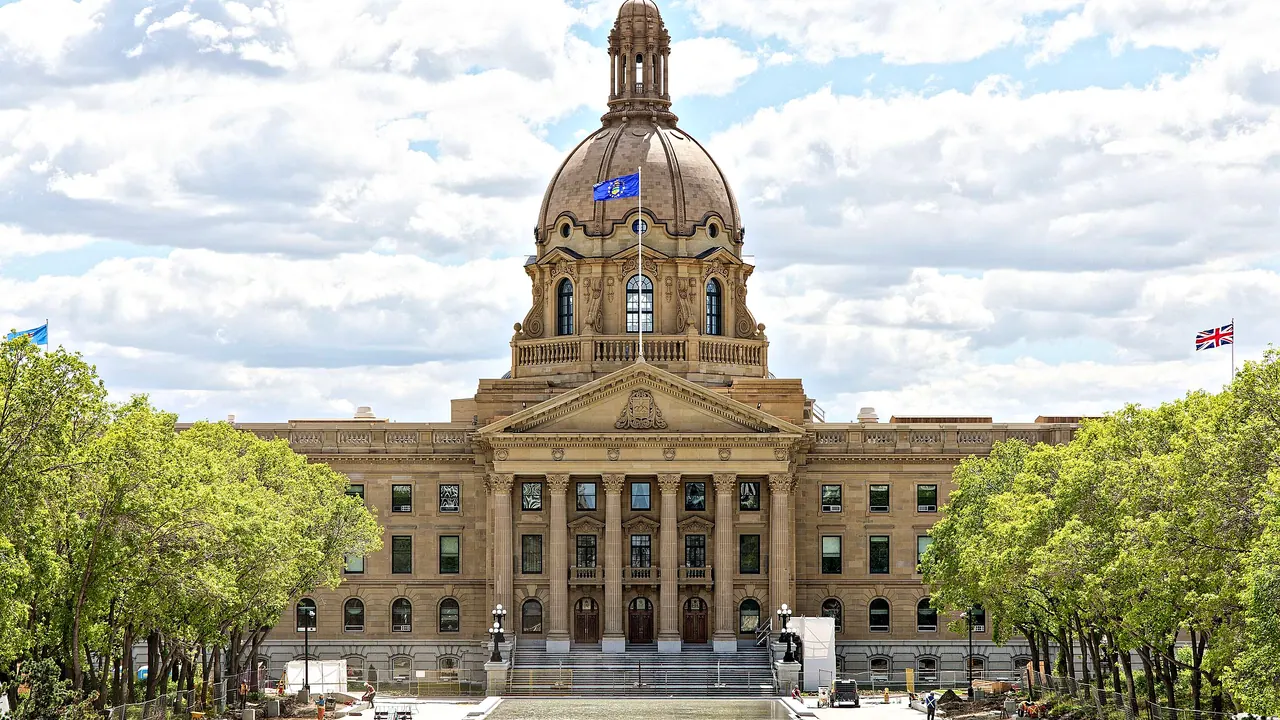
Photos: Banff by bryan pascual, Pexels License; Edmonton by D. Benjamin Miller, CC0.
Banff or Edmonton?
Our verdict in twelve categories, each scored against the same fixed benchmark cities, and the climate month by month, so you can choose for your trip.
Choose Banff for
- nature and the outdoors
- wellness
- getting around
Banff is for travellers who want the Rockies on the doorstep: hikers, skiers, wildlife watchers and anyone happy to end the day in a hot spring. The town is small and easy to walk, and the landscape is the whole point. In return you accept high prices and a modest choice of restaurants and bars.
Choose Edmonton for
- prices
- live music and the arts
- shopping
Edmonton suits a city trip that costs less, especially in summer when the Fringe and the folk festival are on. It has more museums, food, stages and shopping, and West Edmonton Mall keeps children busy in any weather. Its outdoors, though, is a river valley rather than mountains, and a car makes life much easier.
Scoreboard
Twelve categories on one fixed scale from 0 to 100. The shaded stretch is the gap between the two.
Your match
Pick a travel style or drag the sliders, and both match scores follow your weighting.
Too close to call, 2 points apart
Wins on nature and the outdoors and wellness with your weighting.
Wins on prices and live music and the arts with your weighting.
What matters to you?
Category by category
What the scores mean for a trip.
Beaches & swimming
Neither city has beaches, and swimming works differently in each. Banff's lakes are fed by glaciers and stay cold, so shallow Johnson Lake on an August afternoon is about the only real swim. The warm water that matters there is the hot springs.
Edmonton's swimming lakes, such as Pigeon, Wabamun and Sylvan, have sandy strips but are an hour or more away and can close for algae in late summer. The indoor wave pool at West Edmonton Mall is the more reliable swim in any weather.
Food & drink
Both rely on Alberta beef, but Edmonton adds the variety Banff lacks. It has Ukrainian perogies and cabbage rolls, Vietnamese, Ethiopian and Lebanese kitchens out on the arterial roads, the Old Strathcona Farmers' Market, and Whyte Avenue and 124 Street for an evening of eating with some choice.
Banff feeds hungry hikers with bison, elk, fondue and pub plates along Banff Avenue, and the grand hotels do more ambitious cooking. There is no market and little range, though. Neither place is worth travelling to for the food alone.
Culture & sights
Edmonton has the more substantial sightseeing. The Royal Alberta Museum with its First Nations galleries, the Art Gallery of Alberta, the domed Legislature above the river and the living-history streets of Fort Edmonton Park take about two days to see.
Banff's sights are fewer and all tell one story, the story of the park itself: the Cave and Basin, where Canada's national parks began, the castle-like Banff Springs Hotel, the Whyte Museum and the Buffalo Nations Luxton Museum. They make a good rainy day, but one day is all they need.
Nightlife
Edmonton has more choice after dark. There are student pubs and small clubs on Whyte Avenue, cocktail lounges and sports bars around the arena on game nights, and wine bars on 124 Street. Banff's nightlife is a few pubs and dance bars on Banff Avenue, full of seasonal workers and skiers. They are cheerful and a short walk apart but much the same every night, and quieter still in spring and autumn.
Nature & outdoors
This is the biggest difference between them. Banff sits inside a national park, with Cascade Mountain at the end of the main street and elk on the lawns. Lake Louise and Moraine Lake are within easy reach, the Icefields Parkway runs north past glaciers, and there are three ski areas in winter.
Edmonton's river valley is a fine green corridor with over 150km of trails and beavers along the banks, and Elk Island's bison and dark skies are close by. Beyond those, the land is flat farmland, and the Rockies at Jasper are about four hours away.
Day trips
Neither city is a good base for touring towns, and the trips on offer are quite different. From Banff, almost every outing is into the mountains, with relaxed Canmore twenty minutes away and Calgary's museums and Heritage Park within a couple of hours. Edmonton's best trips are the Ukrainian Cultural Heritage Village and the vintage machines of the Reynolds-Alberta Museum, while Jasper and the Drumheller badlands need an overnight stay.
Good for families
Both work well for children, in different ways. Banff entertains them with the outdoors: elk by the roadside, the Sulphur Mountain gondola, the Johnston Canyon boardwalk, and ski school and skating in winter. It has nothing built specially for children, though.
Edmonton has exactly that. It offers the wave pool, roller coasters and sea lions of West Edmonton Mall, the TELUS World of Science, the Valley Zoo and Fort Edmonton Park's steam train, and much of it can be enjoyed through the deep cold. In both places, a family with a car has an easier time.
Getting around
Banff is easier to manage without a car from day to day. The town is a flat twenty-minute walk from end to end, and Roam Transit buses and the summer Parks Canada shuttles reach the gondola, Lake Minnewanka and Lake Louise. The Icefields Parkway and Yoho still call for a car or a tour.
Edmonton is spread out. The LRT and the High Level Bridge link downtown, Old Strathcona and the university, and the pedways help in winter. The mall and Fort Edmonton Park are slow to reach by bus, though, so most visitors end up driving or using ride-hailing.
Shopping & style
Edmonton has far more shopping: the hundreds of chain stores in West Edmonton Mall, record and vintage shops on Whyte Avenue, and boutiques and galleries along 124 Street. Banff Avenue offers outdoor outfitters, fudge and moose-and-maple souvenirs, and its galleries of Indigenous art and mountain painting have the best things to take home. Neither has luxury fashion or a market district.
Affordability
Edmonton is much easier on a budget. Hotel rooms are moderately priced outside the festival weeks and big hockey nights, car hire is reasonable, and the river valley and many summer festivals are free.
Banff is expensive because the park limits building, so rooms are scarce and steep in summer and over New Year. The gondola, lift passes, tours and park pass add up too. Its trails and lakes cost nothing beyond the pass, and staying in Canmore or camping brings the bill down.
Live music & performing arts
Banff's stage life comes down to one institution, the Banff Centre for Arts and Creativity on the slopes of Tunnel Mountain, whose theatres put on concerts and dance mostly in summer, plus the Mountain Film and Book Festival that gathers adventurers and filmmakers each autumn. The rest of the time, live music means a band in a pub, so check the programme before you travel.
A theatre lover will find far more to choose from in Edmonton. In August the Fringe fills the small venues of Old Strathcona with hundreds of shows, and the Folk Music Festival takes over a hillside in Gallagher Park. Through the rest of the year, the Citadel Theatre, the Winspear Centre and the Jubilee Auditorium keep drama, symphony concerts, opera and ballet going.
Wellness & relaxation
Banff was built on hot springs. An evening soak in the open-air Upper Hot Springs pool on Sulphur Mountain, ideally with snow falling, is a real pleasure, though it is a single pool that gets crowded. The grand hotels' spas add mineral pools and treatments.
Edmonton has no springs of its own. Relaxing there means a few Nordic-style spas with saunas and cold plunges, mostly reached by car, along with quiet walks in the river valley or an afternoon among the plants in the Muttart Conservatory.
When should you go?
Pick your month. The climate figures are measured averages, not a forecast.
Banff in July
Edmonton in July
Daytime high, °C
Rainfall in the month, mm
Temperature and rainfall are climate normals, averaged over the years shown. Banff: 1991-2020 normals, Banff (2 km from centre). Edmonton: 1991-2020 normals, University Of Alberta Metabolic Centre (2.5 km from centre).
Both have short, mild summers and long, hard winters. July is the warmest month in each, around 23°C in Banff and 25°C in Edmonton. That is comfortable for hiking and walking the streets but never really beach weather, and only a few weeks of high summer suit a lake swim in either place. Banff's rain is spread fairly evenly through the warm months, with June the wettest. Edmonton's rain comes heavily in July, at 104mm.
From November to March both sit near or below freezing, with midwinter highs around -5°C. In Banff that means ski season and the best time for its hot springs. In Edmonton it pushes life indoors to the mall and the downtown pedways. September is a good shoulder month in both at about 17°C, and in autumn the larches around Banff turn gold.
Which traveller are you?
On an outdoors trip, Banff wins easily. Trails start at the edge of town, Lake Louise, Johnston Canyon and the Icefields Parkway are within reach, and winter adds three ski areas. Edmonton's river valley is pleasant, but the mountains are four hours away.
For a trip on a tight budget, Edmonton is the sensible choice. Rooms are moderately priced, car hire is reasonable and many festivals and trails cost nothing, whereas Banff's scarce rooms, lift passes and resort-priced meals add up quickly.
On a culture and arts trip, Edmonton gives you more to fill both days and evenings: the Royal Alberta Museum and the Art Gallery of Alberta by day, then the Citadel Theatre, the symphony or the August Fringe. Banff's museums and stages fill about a day.
Before you go
| Measure | Banff | Edmonton |
|---|---|---|
| Official language | French, English | French, English |
| Currency | Canadian Dollar (CAD) | Canadian Dollar (CAD) |
| Sockets | AB120 V, 60 Hz | AB120 V, 60 Hz |
| Driving side | Right | Right |
| Time zone | UTC-7, UTC-6 in summer | UTC-7, UTC-6 in summer |
| Emergency number | 911 | 911 |
| Elevation | 1,400 m | 645 m |
| Main airport | Calgary International Airport (YYC)109 km from centre102 non-stop destinations | Edmonton International Airport (YEG)25 km from centre52 non-stop destinations |
| Public holidays this year | 13 days | 13 days |
By the numbers
| Measure | Banff | Edmonton |
|---|---|---|
| City population | 8,305 | 1,010,899 |
| People per km² | 1,730 | 1,316 |
| Museums within 10 km | 4 | 13 |
| UNESCO World Heritage sites within 50 km | 0 | 0 |
Where else could you go?
Every comparison below shares a destination with this one, so you can follow Banff or Edmonton somewhere new.