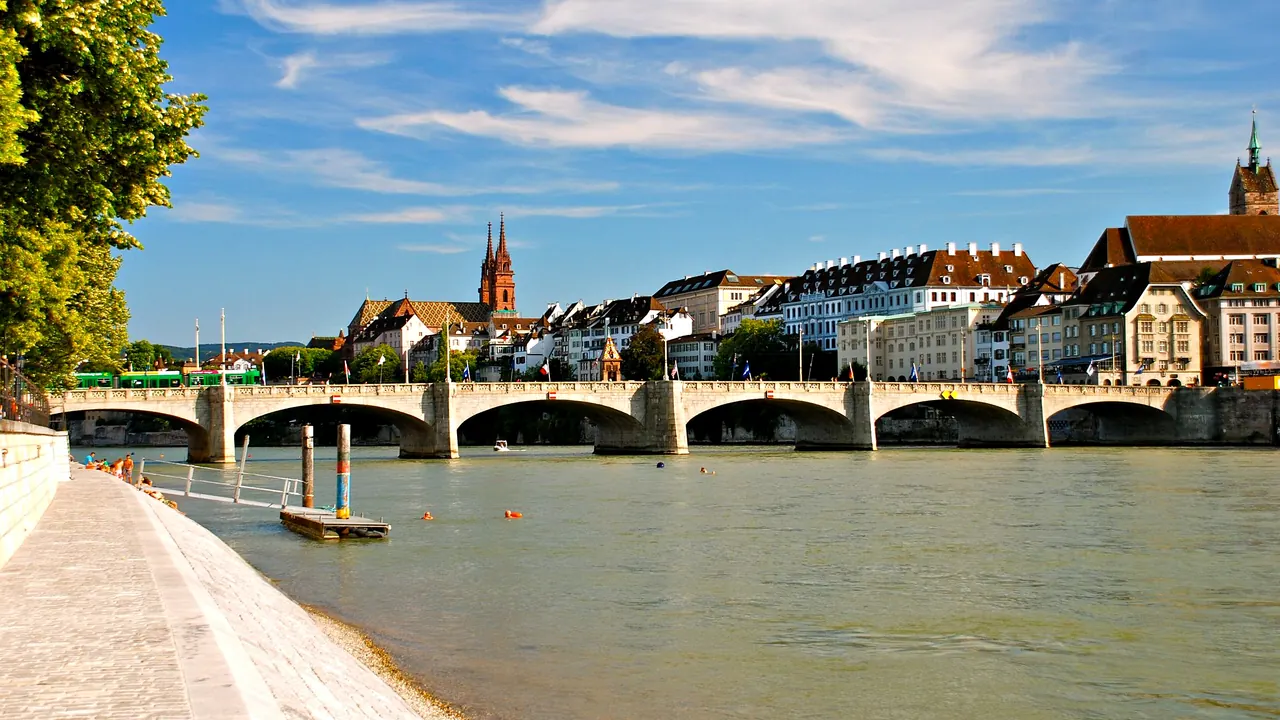
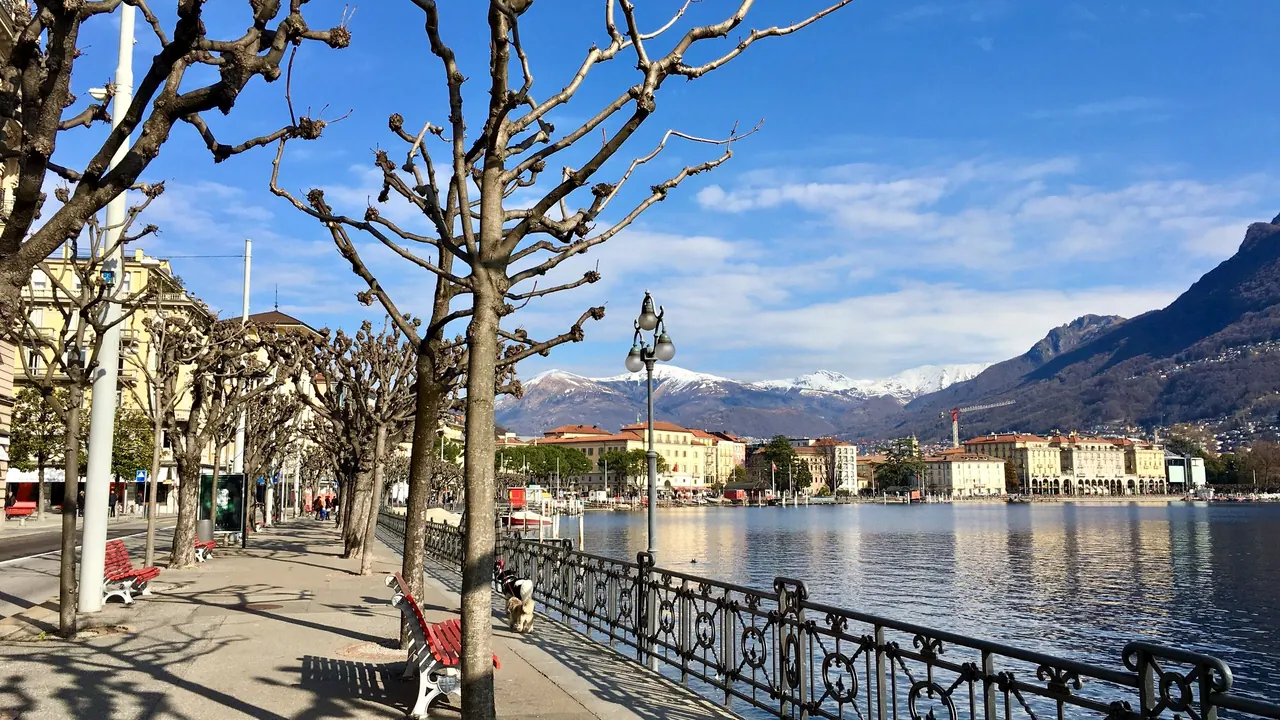
Photos: Basel by Lucazzitto, CC BY-SA 3.0, cropped; Lugano by Thomas Woodtli from Zürich, Switzerland, CC BY-SA 2.0, cropped.
Basel or Lugano?
Our verdict in twelve categories, each scored against the same fixed benchmark cities, and the climate month by month, so you can choose for your trip.
Choose Basel for
- culture and sights
- live music and the arts
- nightlife
Basel is the choice for a city trip built around art, architecture and easy rail travel. It has a museum collection far larger than its size suggests, a serious opera and concert life, flat streets and trams that make getting anywhere simple. It also opens on to France and Germany for day trips. Choose it if you want full days indoors and out, with the Rhine as a summer bonus.
Choose Lugano for
- nature and the outdoors
- beaches
- prices
Lugano suits travellers who come for the setting rather than the sights. Its lake, mountains and funiculars make walking, boating and lido afternoons the heart of the stay, with long grotto lunches and an Italian-speaking ease in between. The town itself is seen in a day and goes quiet early, so it rewards people who want to be outdoors and slow down.
Scoreboard
Twelve categories on one fixed scale from 0 to 100. The shaded stretch is the gap between the two.
Your match
Pick a travel style or drag the sliders, and both match scores follow your weighting.
Wins on culture and sights and live music and the arts with your weighting.
Wins on nature and the outdoors and beaches with your weighting.
What matters to you?
Category by category
What the scores mean for a trip.
Beaches & swimming
Neither city has a beach, but Lugano makes swimming much easier. Its lidos at the Cassarate mouth and along the shore towards Paradiso and Castagnola have lawns, wooden decks, pools and ladders into still lake water that warms to about 23°C. Boats also run to small village bathing spots around the lake.
Basel's swimming is the Rhine itself. You walk upstream on the Kleinbasel bank, put your clothes in a waterproof bag and drift back past the old town. It is memorable, but the current is strong, so it is for confident adults rather than a relaxed afternoon for everyone.
Food & drink
You will eat well in both, and both are expensive for what you get. The cooking differs in character. Basel borrows from its neighbours, with Alsatian tarte flambée, Baden wines and Swiss-German comfort food, plus a small fine-dining tier and the Markthalle for casual meals.
Lugano's best eating is in the grotti, rustic taverns in the hills and lakeside villages serving polenta, braised meats and local Merlot under chestnut trees. In both places, locals cross the border for cheaper meals: from Basel to Alsace and Baden, from Lugano to Italy.
Culture & sights
There is a wide gap here. Basel has enough for three or four full days: Holbein and the Old Masters at the Kunstmuseum, the Fondation Beyeler's Renzo Piano building in Riehen, the Tinguely by the river and the architect-designed Vitra campus over the German border. Its red sandstone Münster and guild-house lanes up to the Spalentor make the old town worth walking too.
Lugano is pleasant but slight. The arcaded Lombard streets around Piazza della Riforma, Luini's Passion fresco in Santa Maria degli Angioli and the art collection at LAC fill one unhurried day.
Nightlife
Neither city is for big nights out, but Basel has more going on. In summer, people drink on the riverside steps by the Kleinbasel buvettes until late. The streets around the Kaserne and Rheingasse have bars all year, and a few clubs in old harbour and industrial buildings play electronic music at weekends. Fasnacht, starting at four in the morning, turns the city into three days of drums and lanterns.
Lugano's evenings are an aperitivo under the arcades and a long dinner, and the town is usually quiet before midnight. Its young people go to Milan.
Nature & outdoors
Lugano's scenery is right on its doorstep. Funiculars climb from the edge of town to Monte Brè and San Salvatore, the path to Gandria follows the shore, and the rack railway up Monte Generoso and the ridge walk from Monte Lema to Monte Tamaro make full hiking days. The Verzasca and Maggia valleys are about an hour away.
Basel's outdoors is gentler and further out. The Jura, the Black Forest and the Vosges are all within reach for marked walks, and flat Rhine paths are good for cycling into Germany and France. The city itself sits on level ground with no mountain views.
Day trips
Both are superb bases, but they point in different directions. From Basel, fast trains reach three countries: Colmar and the Alsace wine villages, Strasbourg, Freiburg, and Lucerne, Bern and Zurich, with Roman Augusta Raurica close by.
From Lugano, the day trips are lakes and Italian cities. Milan and Como are close, Bergamo's upper town and the Borromean Islands on Lake Maggiore are within reach, and Bellinzona's castles are a short ride north. Lake boats add villages such as Morcote, which have no equivalent in Basel.
Good for families
Both are safe, calm places with children, and neither has much built for them. Basel's draws are mainly indoor and in town: the Zolli zoo near the station, the Natural History and toy museums for wet days, current-pulled ferries, and Europa-Park an hour away. The Rhine is too strong for small children, and the trams take prams easily.
Lugano's fun is on the water and the slopes. There are lido slides, boat rides to villages, funiculars and the Generoso rack railway, and the Swiss landmarks in miniature at Melide. But the town's steep streets are hard work with a pushchair, and there is no zoo.
Getting around
Basel is the easier city to move around. It is flat, both banks of the Rhine are walkable, and green trams run everywhere, some lines across the borders into Germany and France. River ferries add a pleasant way across, and the main station connects you to three rail networks.
Lugano's centre is small, but everything climbs. A funicular links the hilltop station to the old town, and buses cover the hillside districts. The lake boats and mountain railways are part of the fun, but expect more uphill walking than you would in Basel.
Shopping & style
Neither city is worth the trip for shopping, and they are about level on how much there is. The difference is in the kind of shop. Basel is the more everyday and the more independent of the two: chains and chocolatiers on the main streets, small design and interiors shops in the quieter lanes, and a Christmas market around the Münster that makes December the best month to browse. The cheaper German high street is a short tram ride away.
Lugano is narrower and more upmarket. The porticoes of Via Nassa are lined with watchmakers, jewellers and Italian fashion houses for a wealthy crowd, and if you want designer labels at lower prices you go to the outlet village towards Mendrisio. For real range, each city sends you over the border, to Germany from Basel and to Milan from Lugano.
Affordability
Both are among the costliest places you could choose, and there is little to separate them. Hotels, meals and drinks are priced at Swiss levels, and hotel guests in both get free local transport. Basel's rooms become scarce during big trade fairs such as Art Basel, and many visitors stay across the border in France or Germany.
In Lugano, the savings come from grotti and set lunches, and from eating in Italian lakeside towns on day trips. There is no cheap way to stay in Lugano itself.
Live music & performing arts
Basel has the deeper stage scene. Theater Basel puts on opera, ballet and drama with a reputation for bold productions, and the Stadtcasino's fine hall is home to two orchestras. There is also a strong early-music tradition and a jazz school that keeps small venues busy. Its season runs from autumn to early summer.
Lugano's arts life centres on LAC, with the Orchestra della Svizzera italiana and theatre mostly in Italian. Its strength comes in summer, when Estival Jazz fills Piazza della Riforma with free concerts, just as Basel's halls go quiet.
Wellness & relaxation
Basel has better access to real bathing. The saline thermal baths at Rheinfelden are about twenty minutes away, the German spa towns of Badenweiler and Bad Krozingen are just over the border, and Baden-Baden is possible as a longer day out.
Lugano has no thermal springs. Relaxing there means slow mornings under the arcades, afternoons on a lido or in Parco Ciani, and long grotto lunches. For pools and saunas you rely on hotel spas or the indoor complex near Rivera. It is a lovely place to unwind, but not for taking the waters.
When should you go?
Pick your month. The climate figures are measured averages, not a forecast.
Basel in July
Lugano in July
Daytime high, °C
Rainfall in the month, mm
Temperature and rainfall are climate normals, averaged over the years shown. Basel: 1991-2020 (sunshine 1961-1990) normals, Basel / Binningen (1.9 km from centre). Lugano: 1991-2020 normals, Lugano (1.2 km from centre).
Both cities are at their best from June to early September, when river and lake swimming are possible and afternoons reach about 26°C in Basel and 27°C in Lugano. Lugano is a touch warmer all year, but it is also much wetter. From April to November its rain falls in large amounts, peaking at around 178mm in May, while Basel's wettest month brings about half that. Lugano also has far more sunshine, so its rain tends to come in heavy spells between bright days rather than as long grey stretches. For hiking there, spring and autumn are the most comfortable, because high summer can feel close and humid.
Winter is where the two differ most. Basel is cold and dull from November to February, with very little sun, which suits museums and concert halls more than walking. Lugano stays a few degrees milder and gets roughly twice Basel's winter sunshine, so a dry, clear day on the lakefront is a real possibility even in January.
Which traveller are you?
For a culture and arts trip, Basel is clearly the better pick. The Kunstmuseum, Fondation Beyeler, Museum Tinguely and Vitra campus could fill several days, and Theater Basel and the Stadtcasino keep the evenings full. Lugano's sights take a single day.
On an outdoors trip, Lugano wins. Funiculars lift you straight from town to Monte Brè and San Salvatore, the Gandria lakeside path and the Lema to Tamaro ridge are on the doorstep, and kayaks are easy to hire. Basel's hills are a train ride away.
For a beach and sun trip, Lugano is the better bet, although neither has sand. Its lidos have lawns, decks and calm, warmer lake water, and it gets far more sunshine. Basel's Rhine float is fun but suits strong swimmers only.
Before you go
| Measure | Basel | Lugano |
|---|---|---|
| Official language | French, German, Italian, Romansh | French, German, Italian, Romansh |
| Currency | Swiss Franc (CHF) | Swiss Franc (CHF) |
| Sockets | CJ230 V, 50 Hz | CJ230 V, 50 Hz |
| Driving side | Right | Right |
| Time zone | UTC+1, UTC+2 in summer | UTC+1, UTC+2 in summer |
| Emergency number | 112 | 112 |
| Elevation | 247 m | 283 m |
| Main airport | EuroAirport Basel–Mulhouse–Freiburg (BSL)7 km from centre112 non-stop destinations | Milan Malpensa International Airport (MXP)46 km from centre208 non-stop destinations |
| Public holidays this year | 10 days | 15 days |
By the numbers
| Measure | Basel | Lugano |
|---|---|---|
| City population | 176,329 | 63,495 |
| People per km² | 7,378 | 837 |
| Museums within 10 km | 61 | 17 |
| UNESCO World Heritage sites within 50 km | 2 | 5 |
Where else could you go?
Every comparison below shares a destination with this one, so you can follow Basel or Lugano somewhere new.