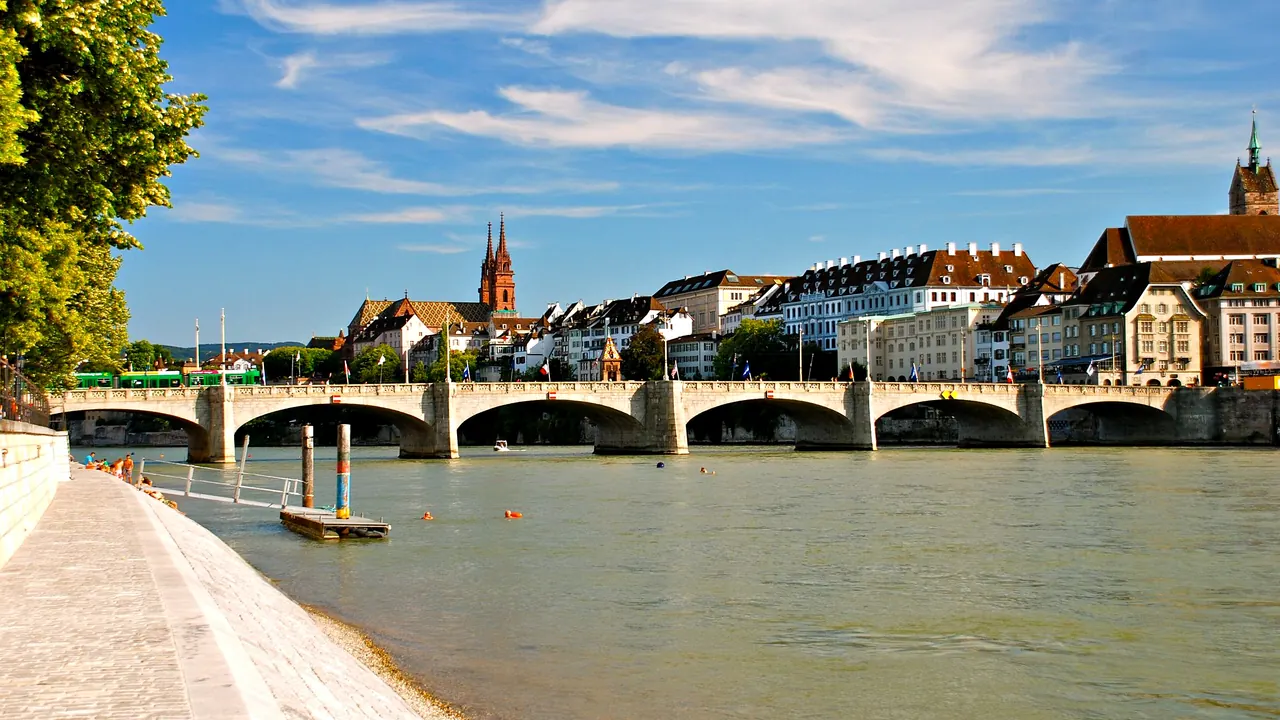
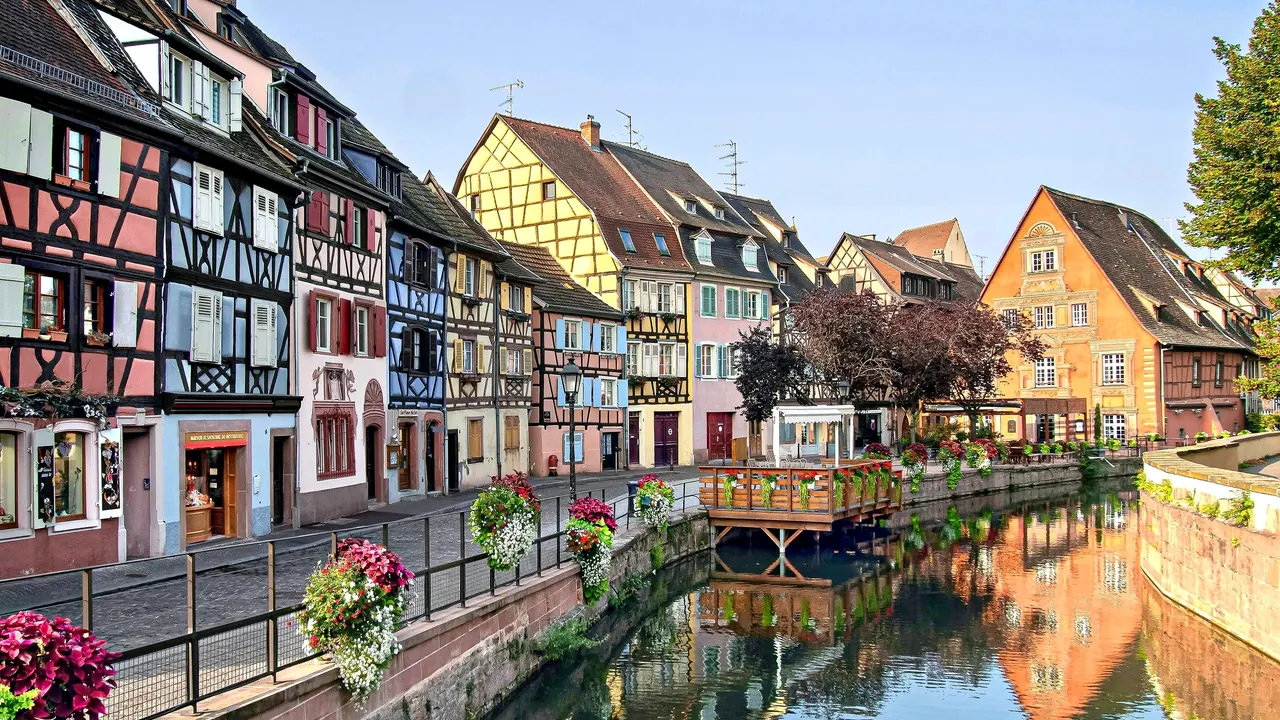
Photos: Basel by Lucazzitto, CC BY-SA 3.0, cropped; Colmar by Rolf Kranz, CC BY-SA 4.0, cropped.
Basel or Colmar?
Our verdict in twelve categories, each scored against the same fixed benchmark cities, and the climate month by month, so you can choose for your trip.
Choose Basel for
- live music and the arts
- beaches
- getting around
Basel is the choice for a traveller who wants a proper city on a small scale. It has major art museums, an opera house with a name well beyond Switzerland, trams that cross into two other countries, and a summer river that the whole town swims in. It suits a culture-led trip of several days, or a base for rail day trips that needs no car, provided the budget can take Swiss prices.
Choose Colmar for
- prices
- food and drink
- nature and the outdoors
Colmar is better for anyone who wants to eat, drink and walk through Alsace itself rather than visit it from over the border. The half-timbered old town is lovely, the winstubs and wine cellars are on the doorstep, and the vineyards and Vosges ridges begin just outside town. It costs a good deal less than Basel, and evenings are quiet. It works best with a car or bicycle, for a slower couple who care more about wine and villages than concerts or bars.
Scoreboard
Twelve categories on one fixed scale from 0 to 100. The shaded stretch is the gap between the two.
Your match
Pick a travel style or drag the sliders, and both match scores follow your weighting.
Wins on live music and the arts and beaches with your weighting.
Wins on prices and food and drink with your weighting.
What matters to you?
Category by category
What the scores mean for a trip.
Beaches & swimming
Neither town is a beach destination, but Basel has something real to offer in summer. Locals pack their clothes into swim bags, walk upstream along the Kleinbasel bank and float back past the Münster on the current. The gravel banks and old bathing huts make it a proper summer scene, as long as you are a confident swimmer.
Colmar has nothing like it. Swimming there means a municipal pool or a drive up to one of the small lakes in the Vosges valleys.
Food & drink
Colmar eats better, partly because it is where the food comes from. Wood-panelled winstubs serve baeckeoffe, choucroute and munster cheese from the valleys just above town. Riesling and Gewurztraminer come from slopes you can see from the streets, and the covered market by the Lauch is a fine place to graze. The weak spot is the tired menus on the most photographed lanes.
Basel cooks carefully, but much of its cooking is borrowed from Alsace and Baden, and everyday meals feel dear for what arrives. Its strengths are a small fine-dining tier and casual stops such as the Markthalle. Many Basel locals cross into Alsace to eat, which says a good deal about this pair.
Culture & sights
Basel has more to see. The Kunstmuseum's Holbeins and Old Masters, Renzo Piano's Beyeler building in Riehen, the Tinguely by the river and the Vitra campus over the German border add up to three or four full days. Its architecture also runs from the red sandstone Münster to buildings by Herzog & de Meuron.
Colmar's appeal is more concentrated. The old town survives as one painted, half-timbered whole, from the Maison Pfister to the canals of Petite Venise. The Unterlinden Museum holds a single overwhelming masterpiece, Grünewald's Isenheim Altarpiece. Two days does it justice.
Nightlife
Basel is livelier after dark, if only modestly. On summer nights people drink on the steps by the riverside buvettes of Kleinbasel. Bars cluster around the Kaserne and the Rheingasse, and a few clubs in old harbour buildings play electronic music at weekends. For three days in late winter, Fasnacht turns the whole city into a pre-dawn procession of drums and piccolos.
In Colmar, a night out usually means a long dinner and one more glass of Alsace wine on a terrace. The streets empty early, and anyone wanting clubs takes the train to Strasbourg.
Nature & outdoors
Colmar is closer to the landscape. Waymarked paths lead through the vines between wine villages within half an hour. Higher up, the Munster and Kaysersberg valleys climb to the Route des Crêtes, the ridge road past the Hohneck and the Grand Ballon, with views to the Black Forest. Autumn harvest is the best time, and a car helps a lot.
Basel has more choice but keeps it at a greater distance. The Jura begins just south of town and the Black Forest summits are about an hour away. The flat Rhine paths make easy car-free cycling into France and Germany.
Day trips
Both are excellent bases, and each lists the other among its outings. The difference is in how you travel. From Basel, fast trains reach Lucerne, Bern, Zurich, Freiburg and Colmar itself in about an hour each, so a week of trips across three countries needs no car.
From Colmar, the prizes are closer but scattered. Eguisheim, Riquewihr, Kaysersberg and the ridge-top castle of Haut-Koenigsbourg are only a few kilometres apart, but buses between them are thin, so a car or bicycle does the work. Strasbourg is only half an hour away by train.
Good for families
Children are equally well served, in different ways. In Basel the best thing is right in town. The Zolli is a short walk from the station, the Natural History Museum covers a wet morning, and the ferries pulled across the Rhine by the current delight small children, all reachable by tram with a pram.
Colmar has boat rides through Petite Venise and storks on its rooftops, but its real treats lie outside town. The macaques of the Montagne des Singes and the stork and otter park at Hunawihr need a car. From either town, Europa-Park is about an hour's drive.
Getting around
Basel is far simpler without a car. Green trams cover the city and run on into Germany and France, hotel guests ride free, and the main station connects in three directions.
Colmar's compact centre is easy on foot, and trains to Strasbourg and Mulhouse are quick. Once you head into the wine villages or the Vosges, though, buses run too rarely to rely on, and most visitors hire a car or bike.
Shopping & style
Basel offers a bit more, with Swiss watches, jewellery and chocolatiers along Freie Strasse and small design shops in the Spalenberg lanes. Colmar's shopping is almost all regional: wine bought from the producer, Soufflenheim pottery, kougelhopf moulds and printed table linen. Both towns put on pretty Christmas markets, and neither is a place for serious fashion.
Affordability
This is the widest gap between the two. Basel is very expensive, from rooms and meals to drinks and museum tickets, and during trade fairs such as Art Basel rooms become hard to find. Free tram travel for hotel guests and cheaper meals over the border only soften the bill.
Colmar costs what a French provincial town does. Set lunches, wine and village tastings are fair value, though rooms in the old town climb steeply in summer and during the Christmas markets.
Live music & performing arts
Basel has a real season from autumn to early summer. Theater Basel stages bold opera, ballet and drama, the Stadtcasino hosts its orchestras in a hall with fine acoustics, and early-music concerts and jazz clubs fill in the gaps.
Colmar has a small Italian-style theatre and visits from the Opéra national du Rhin, but its calendar is built around a classical festival in July, an autumn jazz festival and the wine fair concerts. For a serious evening of music outside those weeks, Colmar's audiences travel to Basel.
Wellness & relaxation
Neither town has a bathing tradition of its own, but Basel has spa culture within easy reach. The saline thermal baths at Rheinfelden are twenty minutes away, and Badenweiler, Bad Krozingen and Baden-Baden lie over the German border.
Colmar's relaxation is of a quieter kind: canal-side evenings once the day-trippers leave, long lunches and slow walks through the vines. Beyond hotel spas, it has no proper bathing.
When should you go?
Pick your month. The climate figures are measured averages, not a forecast.
Basel in July
Colmar in July
Daytime high, °C
Rainfall in the month, mm
Temperature and rainfall are climate normals, averaged over the years shown. Basel: 1991-2020 (sunshine 1961-1990) normals, Basel / Binningen (1.9 km from centre). Colmar: 1991-2020 normals, Ihringen (21.1 km from centre).
The two towns are only about 60km apart and share almost the same climate, so the choice between them barely depends on the season. Both are cold and grey from November to February, with daytime highs around 6°C. That suits museums and Christmas markets more than long walks. Spring warms quickly, and May is the wettest month in both, wetter in Basel at 96mm. Colmar sits in the rain shadow of the Vosges and is a little drier all year round.
High summer peaks at 26°C to 27°C in both towns, warm enough for strolling but rarely too hot. In Basel those are the weeks for floating down the Rhine, from about June to early September. Colmar gets slightly more sunshine in July and August, while Basel has a touch more in autumn and winter. September and October are pleasant in both places, and in the vineyards around Colmar they are the finest months of the year.
Which traveller are you?
For a culture and arts trip, Basel is the stronger pick. The Kunstmuseum, the Fondation Beyeler and the Vitra campus give it several days of serious art. Theater Basel and the Stadtcasino fill the evenings with opera and orchestral concerts, which Colmar only offers in festival weeks.
On a trip on a tight budget, Colmar is the clear choice. In Basel even a simple lunch, a drink or a museum ticket comes at Swiss prices. Colmar charges French provincial rates, and sleeping in a nearby wine village rather than the old town keeps rooms within reach.
For a relaxing and wellness trip, Basel makes the better base. Warm mineral pools and saunas are a short train ride away, and its slow Sundays by the river suit doing nothing at all. Colmar is restful too, but its calm comes from the canals and vineyards, not from the water.
Before you go
| Measure | Basel | Colmar |
|---|---|---|
| Official language | French, German, Italian, Romansh | French |
| Currency | Swiss Franc (CHF) | Euro (EUR) |
| Sockets | CJ230 V, 50 Hz | CE230 V, 50 Hz |
| Driving side | Right | Right |
| Time zone | UTC+1, UTC+2 in summer | UTC+1, UTC+2 in summer |
| Emergency number | 112 | 112 |
| Elevation | 247 m | 185 m |
| Main airport | EuroAirport Basel–Mulhouse–Freiburg (BSL)7 km from centre112 non-stop destinations | EuroAirport Basel–Mulhouse–Freiburg (BSL)55 km from centre112 non-stop destinations |
| Public holidays this year | 10 days | 11 days |
By the numbers
| Measure | Basel | Colmar |
|---|---|---|
| City population | 176,329 | 66,970 |
| People per km² | 7,378 | 1,006 |
| Museums within 10 km | 61 | 9 |
| UNESCO World Heritage sites within 50 km | 2 | 3 |
Where else could you go?
Every comparison below shares a destination with this one, so you can follow Basel or Colmar somewhere new.