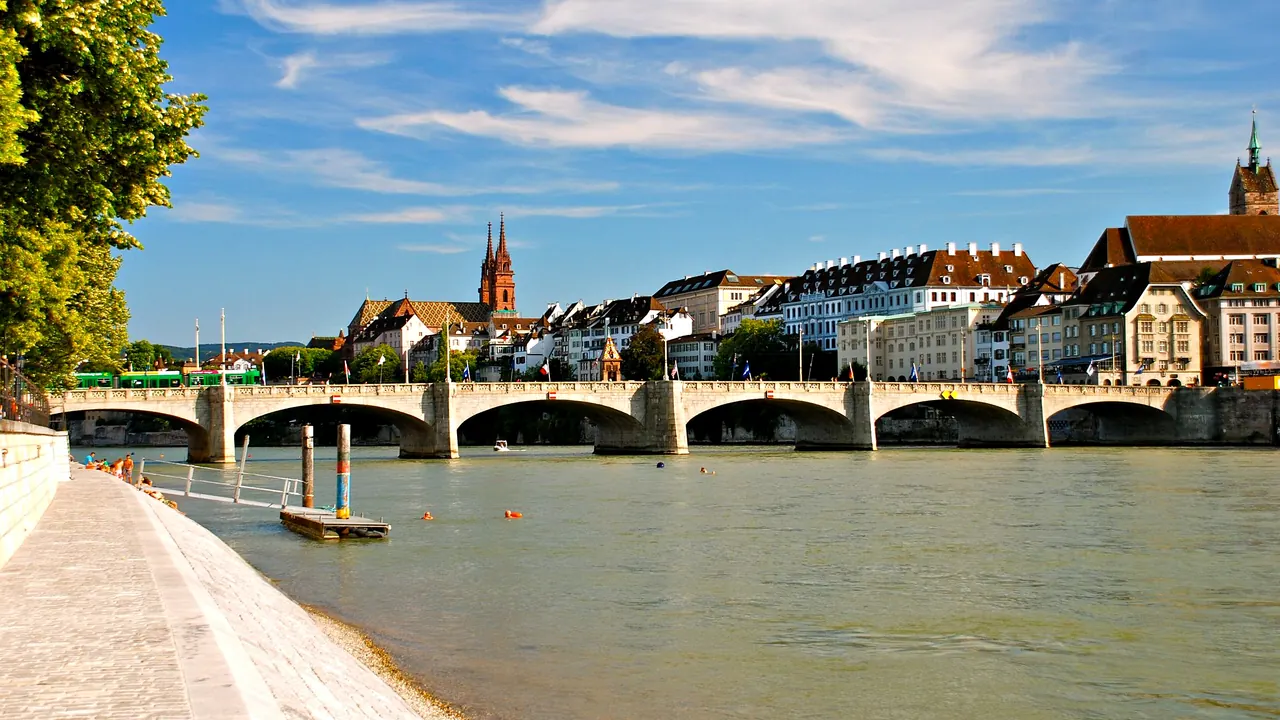
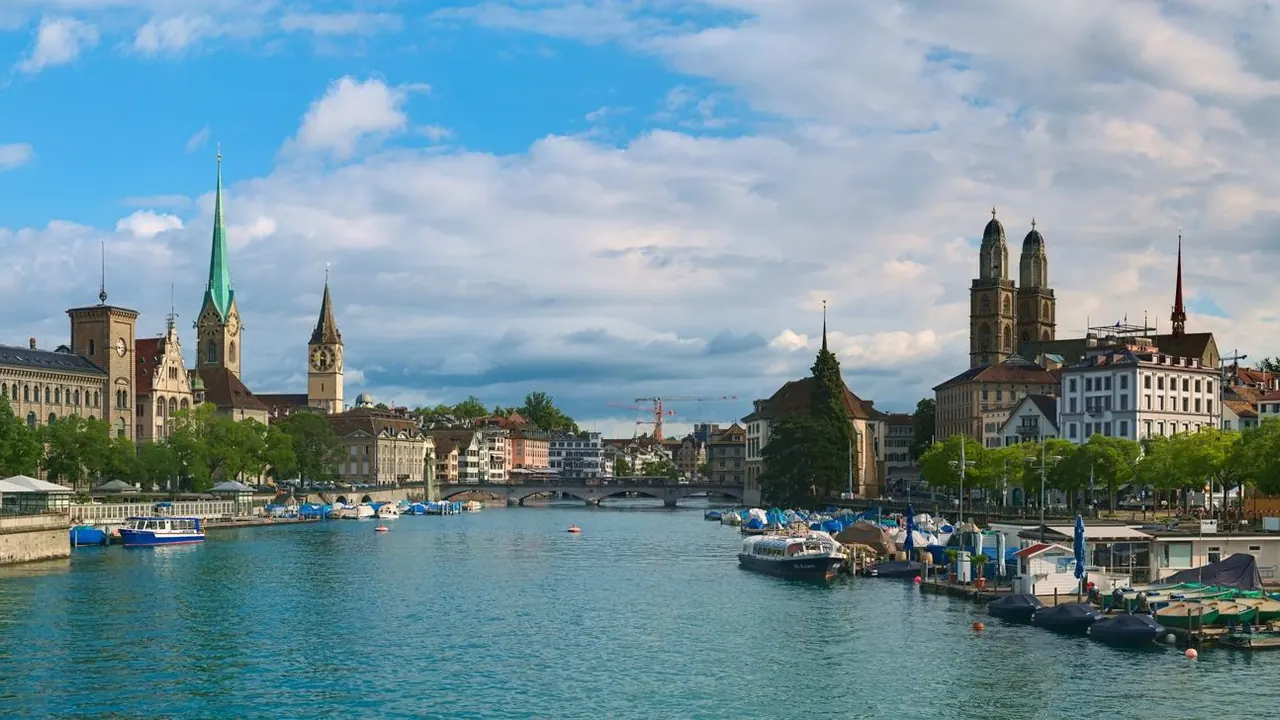
Photos: Basel by Lucazzitto, CC BY-SA 3.0, cropped; Zurich by Daniel Kraft, CC BY-SA 3.0, cropped.
Basel or Zurich?
Our verdict in twelve categories, each scored against the same fixed benchmark cities, and the climate month by month, so you can choose for your trip.
Choose Basel for
- culture and sights
- prices
- day trips
Basel is the better choice for travellers who come for art and want a quiet base. Its museums are well beyond what a city this size usually has, from the Kunstmuseum to the Fondation Beyeler and the Vitra campus. Because it sits on the borders of France and Germany, you can be in Alsace or the Black Forest within the hour. The evenings are calm and the riverside is relaxed, and crossing the border for a meal takes a little of the sting out of Swiss prices.
Choose Zurich for
- nightlife
- shopping
- nature and the outdoors
Zurich suits travellers who want more going on outside the museums. The lake has lidos and boats, the real Alps are about an hour away, and the clubs of Kreis 4 and 5 keep going until morning. It is also the stronger city for families, shoppers heading for Bahnhofstrasse and anyone who wants opera and ballet at the Opernhaus. Be ready for prices that are, if anything, even higher than in Basel.
Scoreboard
Twelve categories on one fixed scale from 0 to 100. The shaded stretch is the gap between the two.
Your match
Pick a travel style or drag the sliders, and both match scores follow your weighting.
Wins on culture and sights and prices with your weighting.
Wins on nightlife and shopping with your weighting.
What matters to you?
Category by category
What the scores mean for a trip.
Beaches & swimming
Neither city has sand, but Zurich is the better place for a summer swim. Its clean lake has wooden bathing houses and lawned lidos at Utoquai, Mythenquai and Tiefenbrunnen. It also has the Letten river baths on the Limmat and historic baths right in the old town, so you can choose between calm water and a current.
In Basel, swimming means the Rhine. You walk upstream along the Kleinbasel bank and float back past the Münster with your clothes in a waterproof bag. It is a memorable thing to do, but the current is strong, so it is for confident swimmers rather than anyone who just wants a gentle dip.
Food & drink
The two cities eat about equally well, but the food is different in kind. Zurich has more of its own dishes: veal Geschnetzeltes with rösti, fondue in wood-panelled guild-house taverns and the Paradeplatz tea rooms famous for Luxemburgerli. The casual, international places are in Kreis 4 and 5.
Basel borrows from its neighbours, so expect tarte flambée from Alsace and wines from Baden. It does better on markets, with the Markthalle and the market on Marktplatz, which are just what Zurich lacks. For a cheaper meal you can also eat in the wine villages across the border.
Culture & sights
Basel is the stronger choice for museums. The Kunstmuseum has Holbein and one of the world's oldest public collections, the Fondation Beyeler shows modern art in its Renzo Piano building, and the Tinguely and Vitra museums add design and kinetic sculpture. Buildings by Herzog & de Meuron sit among the guild houses of the Spalenberg, and the city is worth three or four days.
Zurich's highlights are fewer but still worth seeing: the Kunsthaus, the Swiss National Museum, the Museum Rietberg, the Chagall windows in the Fraumünster and the Grossmünster, where the Swiss Reformation began. Two or three days covers them.
Nightlife
Zurich is far the livelier city at night. Electronic music runs deep there, with clubs in Zurich West and Kreis 4 and 5 open until morning at weekends, and Langstrasse's late crowds and kebab counters. In August the Street Parade fills the lake shore.
Basel's nights are quieter: drinks on the riverside steps of the Kleinbasel bank, bars around the Kaserne and a few clubs in old harbour buildings. The one time Basel outdoes Zurich is Fasnacht, when the city stays up for three days of drums and lanterns.
Nature & outdoors
Zurich has the more dramatic landscape. The Glarus Alps stand at the end of the lake, the Uetliberg is a short train ride from the centre, and Rigi, Pilatus and ski areas such as Flumserberg are close enough for a day out.
Basel's surroundings are gentler but varied: the wooded Jura to the south, the Black Forest summits above 1,400m and the Vosges hills of Alsace, with flat Rhine paths for cycling into two countries. The Alps are a couple of hours away, so Basel suits walkers and cyclists rather than people who want high mountains.
Day trips
Both cities are excellent bases for day trips, and both reach Lucerne, Bern and the Rhine Falls easily. The difference is direction. From Basel you cross borders, to Colmar and the Alsace wine villages, Strasbourg's cathedral and Freiburg's minster, with Roman Augusta Raurica a quarter of an hour away.
Zurich looks inward, into Switzerland and towards Lake Constance. Its options include St Gallen's abbey library, the painted houses of Stein am Rhein, Rapperswil by boat up the lake and the Baroque abbey of Einsiedeln.
Good for families
Zurich offers children more. Its zoo has the Madagascar rainforest hall and the elephant park, the lake lidos have shallow areas and lawns for summer afternoons, and the Technorama science centre and Lucerne's Swiss Museum of Transport make easy outings by train.
Basel has the Zolli, one of Europe's best zoos, and the little Rhine ferries that small children love. Beyond those the list soon runs out, and the river is too strong for young swimmers. Its one advantage is Europa-Park, the big theme park about an hour's drive away in Germany, which Zurich has no match for.
Getting around
Getting around is effortless in both, with walkable old towns, dense tram networks and no need for a car. Zurich's strength is how well everything fits together: one ticket covers trams, S-Bahn trains, funiculars, the Uetliberg railway and the lake boats, and the airport is a short train ride away.
Basel has its own advantages. Hotel guests get free local transport, some tram lines run into Germany and France, and the current-driven ferries are a pleasant way to cross the river. The airport, though, is reached by bus.
Shopping & style
Zurich is the shopping city of the two. Bahnhofstrasse runs from the station to the lake past watchmakers, jewellers and long-established department stores, and the railway viaduct arches in Zurich West hold design shops and a covered food market.
Basel is tidier and smaller, with Freie Strasse and Gerbergasse for chains and watches and the Spalenberg lanes for craft and design. Its best moment is the Christmas market around the Münster, and many locals do their everyday shopping across the border in Germany.
Affordability
Both are among the most expensive places in Europe to visit, and neither will stretch a budget. Basel is slightly easier on the wallet. Hotel guests travel free, and a short tram ride takes you to cheaper meals and shops in Germany and France, or to a cheaper bed across the border, though rooms become scarce and costly during big trade fairs.
In Zurich, saving means supermarket lunches, picnics by the lake, the free public lidos and a visitor card that bundles transport with museum entry.
Live music & performing arts
Zurich has the deeper stage scene. The Opernhaus on the lake shore is one of Europe's leading opera houses, the Tonhalle Orchestra plays in a restored nineteenth-century hall, and the Rote Fabrik covers jazz, indie and electronic acts. Summer brings the Theater Spektakel and open-air film to the lake.
Basel is serious for its size, with Theater Basel's bold productions under one roof, the Sinfonieorchester at the Stadtcasino and a strong early-music tradition. Its season, however, goes quiet in July and August.
Wellness & relaxation
Zurich has a slight edge because you can bathe within the city. There are thermal pools in the stone vaults of the old Hürlimann brewery, and in winter the wooden lake houses become saunas with cold plunges. The Swiss spa town of Baden is about twenty minutes away.
Basel has nothing comparable in town. It makes up for that with a slower pace, the saline baths at Rheinfelden twenty minutes away and the German spa towns of southern Baden, such as Badenweiler and Bad Krozingen, just over the border.
When should you go?
Pick your month. The climate figures are measured averages, not a forecast.
Basel in July
Zurich in July
Daytime high, °C
Rainfall in the month, mm
Temperature and rainfall are climate normals, averaged over the years shown. Basel: 1991-2020 (sunshine 1961-1990) normals, Basel / Binningen (1.9 km from centre). Zurich: 1991-2020 normals, Zurich Town / Ville. (2.2 km from centre).
The two cities follow the same calendar, and June to early September is the season for both. That is when the water is warm enough to swim, Basel in the Rhine and Zurich in its lake and the Limmat, and when the evenings are long enough to spend outdoors. Basel is the slightly warmer and drier of the two. Its summer highs reach about 26°C against 24°C in Zurich, it gets more sunshine, and its wettest summer months bring around 93mm against 126mm in Zurich. In both cities May to August is the rainiest stretch, usually as showers rather than days of rain.
Spring and early autumn are mild and good for walking the old towns and for day trips, though by October the sunshine drops off, more quickly in Zurich. Winters are cold, with highs of about 5°C in both and short, grey days. Zurich's December is especially dim, so winter visits there are best planned around the mountains, which often sit in sunshine above the fog.
Which traveller are you?
On a culture and arts trip, Basel keeps an art lover busy for longer, from Old Masters to modern design, some of it just over the German border. Zurich's galleries fit into a shorter stay, and its churches and history carry more of the weight.
For a food and nightlife trip, pick Zurich, especially at a weekend, when its dance-music crowd stays out until dawn. Outside summer and Fasnacht, Basel's evenings end early, and its cheaper dinners are across the border in Alsace.
On an outdoors trip, Zurich puts snow-capped peaks and winter skiing within an hour's train ride, with the lake at the end of the street. From Basel the hills are rolling and wooded, and real height means a couple of hours on the train.
Before you go
| Measure | Basel | Zurich |
|---|---|---|
| Official language | French, German, Italian, Romansh | French, German, Italian, Romansh |
| Currency | Swiss Franc (CHF) | Swiss Franc (CHF) |
| Sockets | CJ230 V, 50 Hz | CJ230 V, 50 Hz |
| Driving side | Right | Right |
| Time zone | UTC+1, UTC+2 in summer | UTC+1, UTC+2 in summer |
| Emergency number | 112 | 112 |
| Elevation | 247 m | 408 m |
| Main airport | EuroAirport Basel–Mulhouse–Freiburg (BSL)7 km from centre112 non-stop destinations | Zürich Airport (ZRH)9 km from centre226 non-stop destinations |
| Public holidays this year | 10 days | 10 days |
By the numbers
| Measure | Basel | Zurich |
|---|---|---|
| City population | 176,329 | 440,935 |
| People per km² | 7,378 | 5,016 |
| Museums within 10 km | 61 | 63 |
| UNESCO World Heritage sites within 50 km | 2 | 1 |
Where else could you go?
Every comparison below shares a destination with this one, so you can follow Basel or Zurich somewhere new.