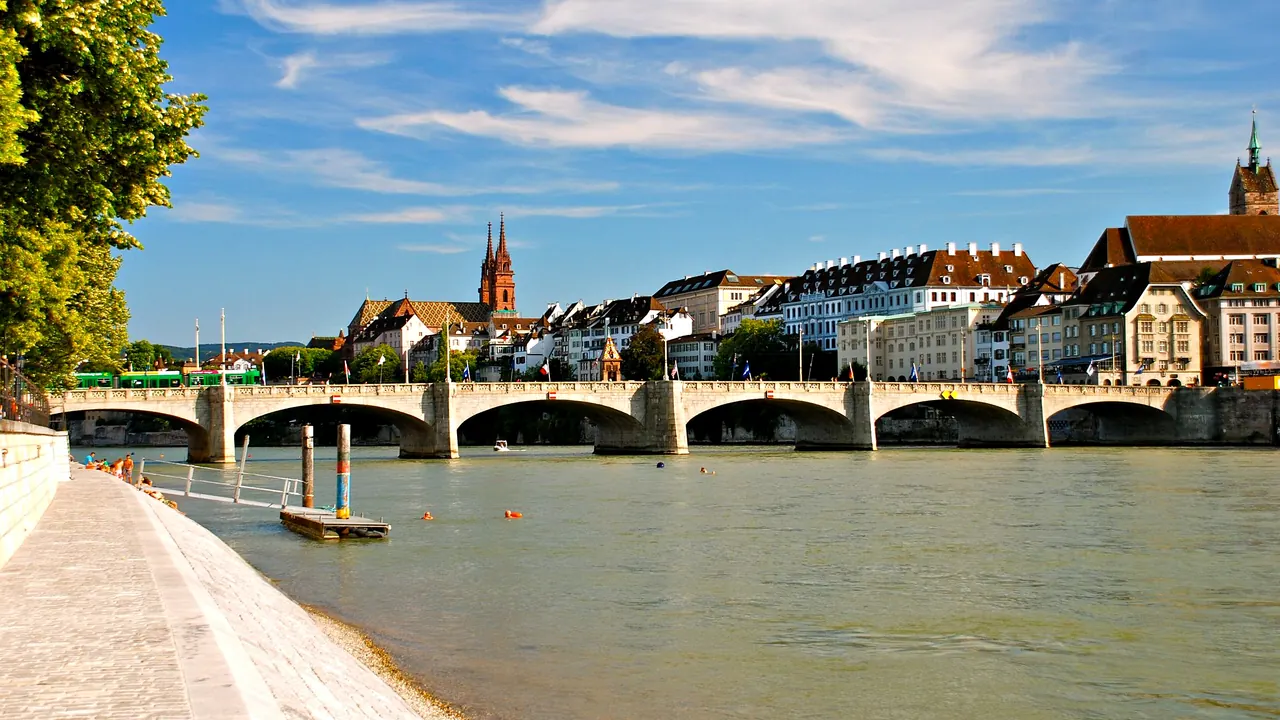
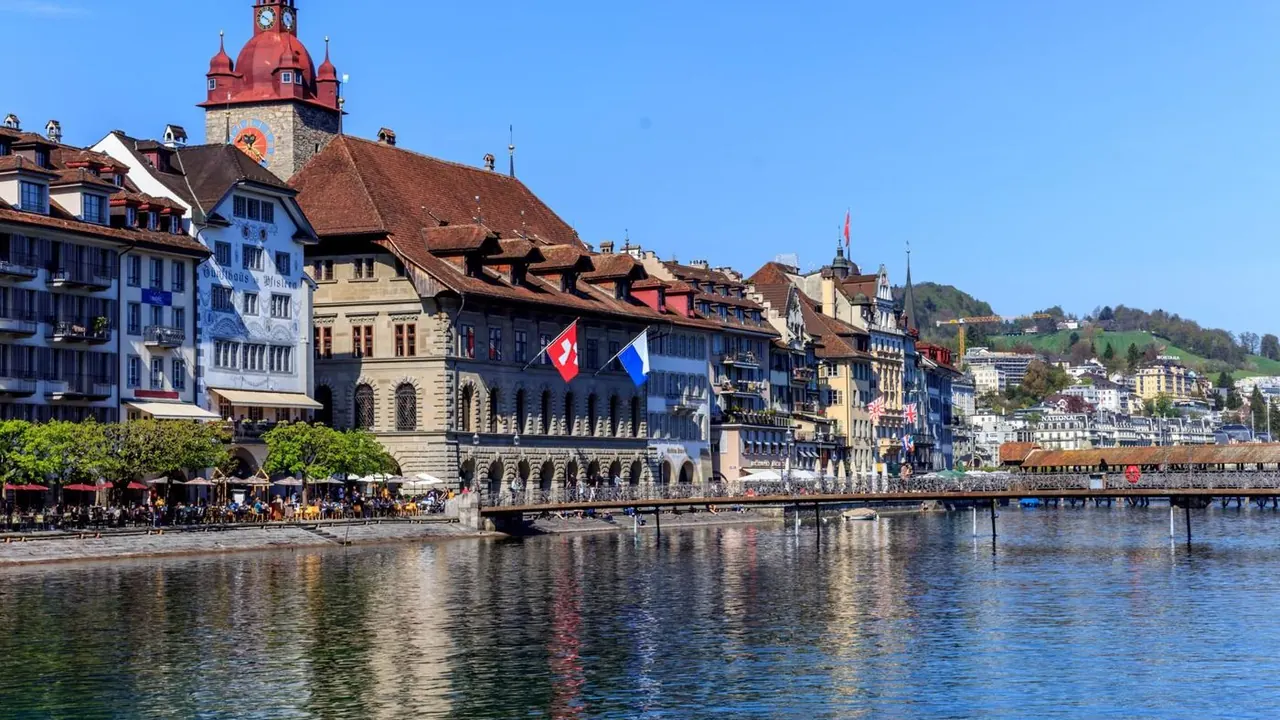
Photos: Basel by Lucazzitto, CC BY-SA 3.0, cropped; Lucerne by ILOVESwitzerland, Pexels License.
Basel or Lucerne?
Our verdict in twelve categories, each scored against the same fixed benchmark cities, and the climate month by month, so you can choose for your trip.
Choose Basel for
- food and drink
- culture and sights
- nightlife
Basel is the better choice for travellers who come for art and want a base that opens on to three countries. Its museums run from Holbein at the Kunstmuseum to the Fondation Beyeler and the Vitra campus. The trams and trains take you into Alsace and the Black Forest without a car, and there is a little more to eat and drink in the evenings. It suits a long weekend of galleries, old-town walks and border-hopping.
Choose Lucerne for
- nature and the outdoors
- families
- live music and the arts
Lucerne is for people who want mountains outside the window. Pilatus, Rigi and the lake steamers are part of the daily routine, so a stay here means cogwheel trains, ridge walks and slow afternoons on the water rather than museum days. The town itself is small and quiet. In late summer the Lucerne Festival gives classical music lovers a strong extra reason to come.
Scoreboard
Twelve categories on one fixed scale from 0 to 100. The shaded stretch is the gap between the two.
Your match
Pick a travel style or drag the sliders, and both match scores follow your weighting.
Too close to call, 1 point apart
Wins on food and drink and culture and sights with your weighting.
Wins on nature and the outdoors and families with your weighting.
What matters to you?
Category by category
What the scores mean for a trip.
Beaches & swimming
Neither city has a beach, and both rely on a short summer of freshwater swimming. The difference is in the water. In Basel you float down the Rhine past the old town on a strong current, which is exhilarating but only sensible for confident swimmers.
In Lucerne you swim in a calm, clean lake from the Lido, the old wooden lake baths or the lawns at Ufschötti, with mountains behind you. That makes it the gentler choice for mixed groups.
Food & drink
Basel eats better, largely thanks to its neighbours. Alsatian tarte flambée and Baden wines share the menus with Swiss-German cooking, there is a small, high-quality fine-dining tier, and the Markthalle is a good casual stop. The wine villages across the border are close enough for lunch.
Lucerne serves solid Swiss comfort food: Chügelipastete, fondue, rösti and lake perch in wood-panelled taverns. The range is narrow, though, and many places near the Chapel Bridge cater to tour coaches.
Culture & sights
Basel is the stronger city for culture, with far more depth. The Kunstmuseum's Old Masters, the Fondation Beyeler, the Tinguely and the Vitra campus just over the border make it a genuine art destination. Add the red sandstone Münster and the Spalenberg lanes, and three or four days pass easily.
Lucerne has the more famous postcard images, such as the Chapel Bridge, the Water Tower and the Lion Monument, along with the Musegg towers and a fine Picasso and Klee collection. Still, a day or two covers it.
Nightlife
Neither city is built for a big night out, but Basel offers more to do. In summer the riverside kiosks on the Kleinbasel bank stay busy late, the Kaserne area and the streets off the Rheingasse have bars all year, and a few clubs in old harbour and industrial buildings play electronic music at weekends.
Lucerne's evenings mostly mean a drink by the water after dinner, and the lakefront empties by midnight. Both towns break out at Fasnacht, though Basel's version famously begins with lanterns and drums at four in the morning.
Nature & outdoors
Here Lucerne pulls well ahead. The mountains rise straight from the lake: you can ride a cogwheel railway up Pilatus, walk the ridges of Rigi or reach the snow on Titlis in about an hour. Steamers link it all, and winter brings skiing and sledging, although low cloud can hide the views.
Basel's countryside is gentler but close. The Jura, the Black Forest and the Vosges are all within an hour for hiking, and the flat Rhine paths make easy cycling into Germany and France. It suits walkers and cyclists rather than anyone after Alpine drama.
Day trips
Basel has the wider reach because it sits on two borders. Colmar and the Alsace wine villages, Strasbourg, Freiburg and the Black Forest are all easy by train, along with Bern, Zurich, Lucerne itself and the Roman ruins at Augusta Raurica.
Lucerne's trips stay inside Switzerland, but they are good ones. The lake boats run to the Rütli meadow and Altdorf, the trains reach Zug, Einsiedeln and Bern, and a scenic line crosses the Brünig Pass to Interlaken. The two cities are about an hour apart, so each makes an easy outing from the other.
Good for families
Both are small, safe and easy with children, and neither has a long list of attractions made for them. In Basel the main draw is the Zolli, one of Europe's best zoos. The natural history and toy museums cover wet mornings, the current-pulled ferries delight small children, and Europa-Park is about an hour away by car.
Lucerne's big day out is the Swiss Museum of Transport, and the rest is the journeys themselves: steamers, cogwheel trains and the summer toboggan run on Pilatus. These depend on the weather, and with no zoo, rainy days run short sooner than in Basel.
Getting around
Getting around is effortless in both cities, and you will not need a car in either. Basel runs on a dense network of green trams, some of which cross into Germany and France, and hotel guests travel free on local transport.
Lucerne is small enough to do mostly on foot, with the station, the boat piers and the Old Town side by side. Its real strength is that the same integrated tickets carry you on up the lake and into the mountains.
Shopping & style
Shopping is limited in both, and the offer differs mainly in kind. Basel has the broader spread, with Freie Strasse for watches and chains, small design shops on Spalenberg and a pretty Christmas market around the Münster.
Lucerne is dominated by the large watch houses on Schwanenplatz and souvenir shops selling army knives and cuckoo clocks, with little fashion. In both cities the obvious things to take home are chocolate and, in Basel, Läckerli biscuits.
Affordability
Both are very expensive Swiss cities, and neither can be done cheaply. Basel has more ways to soften the bill: free local transport for hotel guests, cheaper meals and shops a tram ride away in Germany and France, and the option of staying across the border. Rooms become scarce during big trade fairs.
In Lucerne, the mountain railways and cable cars that make the trip worthwhile take a large share of the budget. Swiss travel passes and lakeside picnics help a little.
Live music & performing arts
The two are broadly level, but their calendars differ. Basel offers a steady season from autumn to early summer, with Theater Basel's bold opera and ballet, the Sinfonieorchester at the Stadtcasino and a strong early-music tradition. It goes quiet in July and August.
Lucerne peaks just when Basel pauses. The Lucerne Festival brings the world's leading orchestras to Jean Nouvel's lakefront hall in late summer. Outside those weeks its programme is pleasant but thinner.
Wellness & relaxation
Basel has a slight edge for proper bathing. The saline thermal baths at Rheinfelden are about twenty minutes away, and the German spa towns of southern Baden, such as Bad Krozingen and Badenweiler, are an easy add-on, with Baden-Baden within reach for a longer day.
Lucerne's best soak is Mario Botta's mineral bath high on the Rigi, about an hour away by boat and train. Otherwise its calm comes from steamer rides and lakeside strolls, although the Old Town is crowded around midday.
When should you go?
Pick your month. The climate figures are measured averages, not a forecast.
Basel in July
Lucerne in July
Daytime high, °C
Rainfall in the month, mm
Where the figures come from
Lucerne has no rain gauge within 25 km of the centre, so its rainfall comes from a gridded climate dataset read at the city rather than from a gauge further away.
Lucerne's sunshine is measured 42 km from the centre, at Zurich Town / Ville..
Temperature and rainfall are climate normals, averaged over the years shown. Basel: 1991-2020 (sunshine 1961-1990) normals, Basel / Binningen (1.9 km from centre). Lucerne: 2005-2025 (sunshine 1991-2020, rainfall 1991-2020) normals, Emmen (4.2 km from centre).
Both cities are at their best from June to early September, when the river in Basel and the lake in Lucerne are warm enough to swim in and the evenings are long. Basel runs slightly warmer, at around 26°C in July against 24°C. It is also noticeably drier. Lucerne's summer rain is heavy, about 141mm a month in July and August against 93mm in Basel, and the mountains can sit in cloud for days. Spring and early autumn are pleasant for walking the streets in both, and Basel gets a little more sunshine all year round.
Winter is cold and grey in both cities, with highs of only a few degrees from December to February. Basel is the drier of the two at that time of year, which makes it the easier city for a winter museum break. Lucerne makes more sense in winter if you have come for snow, because Titlis and the slopes above the lake are open for skiing and sledging.
Which traveller are you?
On an outdoors trip, Lucerne is the clear pick. Pilatus, Rigi, the Stanserhorn and the glacier on Titlis are all within easy reach, and lake steamers let you put boat, rail and hike together in a single day without a car.
For a culture and arts trip, Basel has much more depth. The Kunstmuseum, the Fondation Beyeler, the Museum Tinguely and the Vitra Design Museum will easily fill three or four days, while Lucerne's famous bridge and monuments take only one or two.
On a food and nightlife trip, Basel is the better of two modest options. It borrows Alsatian and Baden cooking, it has the Markthalle and wine villages over the border, and in summer people drink by the Rhine until late. Lucerne is quiet by midnight.
Before you go
| Measure | Basel | Lucerne |
|---|---|---|
| Official language | French, German, Italian, Romansh | French, German, Italian, Romansh |
| Currency | Swiss Franc (CHF) | Swiss Franc (CHF) |
| Sockets | CJ230 V, 50 Hz | CJ230 V, 50 Hz |
| Driving side | Right | Right |
| Time zone | UTC+1, UTC+2 in summer | UTC+1, UTC+2 in summer |
| Emergency number | 112 | 112 |
| Elevation | 247 m | 436 m |
| Main airport | EuroAirport Basel–Mulhouse–Freiburg (BSL)7 km from centre112 non-stop destinations | Zürich Airport (ZRH)49 km from centre226 non-stop destinations |
| Public holidays this year | 10 days | 12 days |
By the numbers
| Measure | Basel | Lucerne |
|---|---|---|
| City population | 176,329 | 86,234 |
| People per km² | 7,378 | 2,963 |
| Museums within 10 km | 61 | 14 |
| UNESCO World Heritage sites within 50 km | 2 | 1 |
Where else could you go?
Every comparison below shares a destination with this one, so you can follow Basel or Lucerne somewhere new.