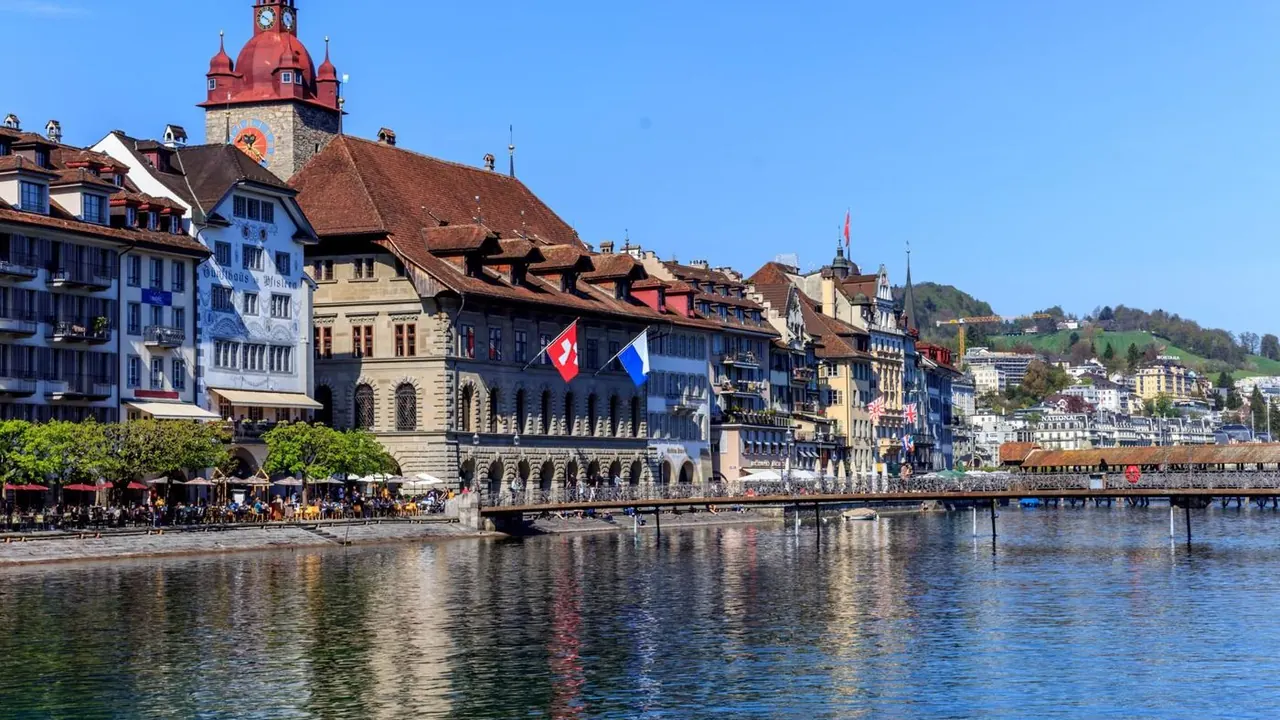
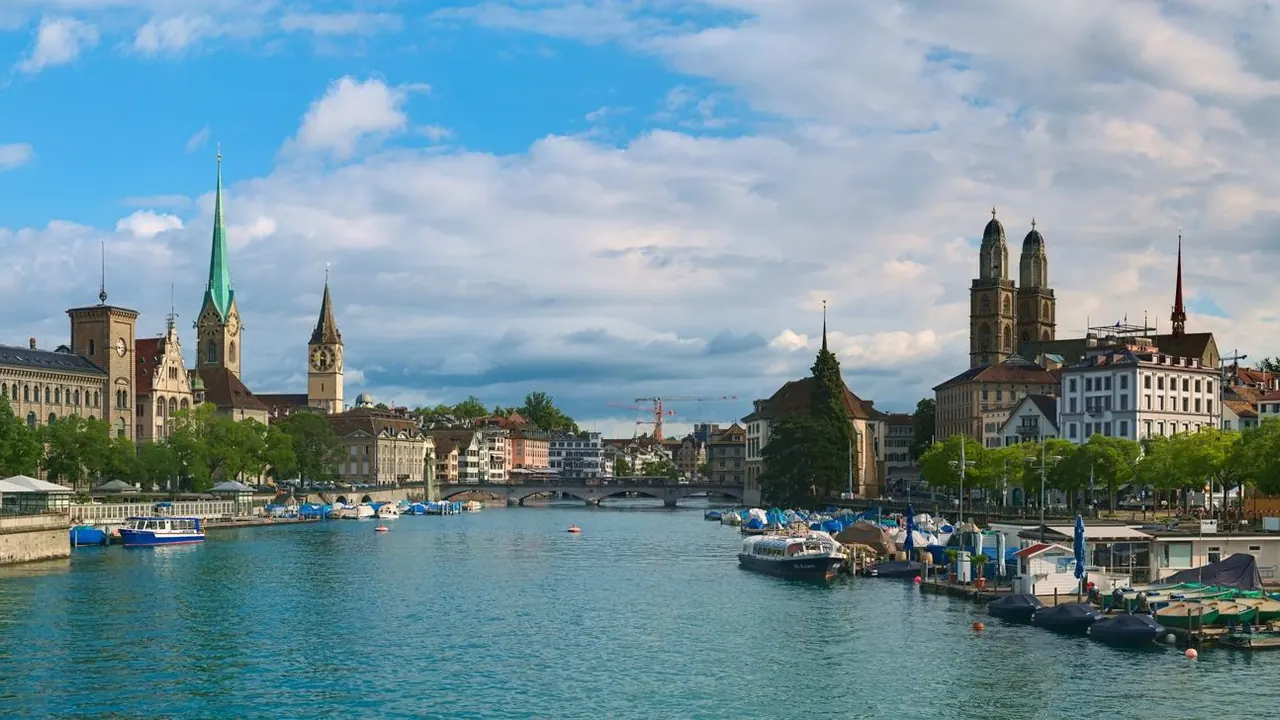
Photos: Lucerne by ILOVESwitzerland, Pexels License; Zurich by Daniel Kraft, CC BY-SA 3.0, cropped.
Lucerne or Zurich?
Our verdict in twelve categories, each scored against the same fixed benchmark cities, and the climate month by month, so you can choose for your trip.
Choose Lucerne for
- nature and the outdoors
- prices
Choose Lucerne if the mountains are the point of the trip. Pilatus and Rigi rise almost from the shore, the paddle steamers leave from beside the station, and one day can take in a boat, a cogwheel railway and a ridge walk without a car. The town itself is small and handsome and goes quiet early. That suits couples and walkers far better than anyone hoping for late bars or long shopping afternoons.
Choose Zurich for
- nightlife
- shopping
- food and drink
Zurich is the better base for a fuller city trip. It has the wider food scene, a serious club culture in Kreis 4 and 5, Bahnhofstrasse for shopping, and a zoo and lake lidos that keep children busy. The Alps are still about an hour away and its trains reach more of the country, so a city stay here gives up less of the mountains than you might expect.
Scoreboard
Twelve categories on one fixed scale from 0 to 100. The shaded stretch is the gap between the two.
Your match
Pick a travel style or drag the sliders, and both match scores follow your weighting.
Wins on nature and the outdoors and prices with your weighting.
Wins on nightlife and shopping with your weighting.
What matters to you?
Category by category
What the scores mean for a trip.
Beaches & swimming
Neither city has sand. In both you swim from lawns, piers and wooden bathing houses during a short summer. Zurich offers more of it: lidos on both shores at Utoquai, Mythenquai and Tiefenbrunnen, historic baths right in the old town, and river swimming at Letten, where people let the current carry them downstream. Its lake also runs a degree or two warmer in high summer.
Lucerne's swimming is simpler. There is the Lido, the old lake baths and the grass at Ufschötti, all with mountains behind, plus small bathing spots in the villages on the boat routes. It makes a pleasant dip after a hike rather than a summer pastime in its own right.
Food & drink
Both cities cook in the same Swiss tradition of veal and cream: Chügelipastete in Lucerne, Geschnetzeltes with rösti in Zurich, and fondue and raclette in the guild houses of each. Zurich has more range on top of that, with casual and international cooking around Langstrasse, a solid fine-dining tier, and the old tea rooms on Paradeplatz for chocolate and Luxemburgerli.
Lucerne's choice is narrower, and many tables near the Chapel Bridge serve the coach-tour crowds. Its best meals are lake perch or whitefish and a long sit on a terrace by the Reuss. You will pay heavily in both cities.
Culture & sights
The two are evenly matched, but the sightseeing feels different. Lucerne's strength is its townscape and monuments: the Chapel Bridge and Water Tower, the climbable towers of the Musegg Wall, and the Lion Monument carved into its cliff. The Rosengart Collection's Picasso and Klee are the art highlight, and a day or two covers the lot.
Zurich is more of a museum city. The Kunsthaus, the Swiss National Museum and the Museum Rietberg can fill whole mornings, and the Altstadt adds the Grossmünster, where the Swiss Reformation began, and Chagall's windows in the Fraumünster. Allow two or three days.
Nightlife
This is where the two cities differ most. Zurich has a real electronic music scene, with clubs in Kreis 4 and 5 and the old industrial halls of Zurich West running until morning at weekends, and the Street Parade taking over the lake shore every August. In summer the night moves outdoors to bars in the bathing houses and along the Limmat.
Lucerne's evenings are pubs, wine bars and a few cocktail bars near the station, and the lakefront is mostly empty by midnight. The exception is Fasnacht, when the whole town stays out in costume until dawn.
Nature & outdoors
Lucerne sits among the mountains, while Zurich looks at them across its lake. From Lucerne you can ride the world's steepest cogwheel railway up Pilatus to 2,128m, take Europe's oldest mountain railway onto Rigi or the open-top cable car up the Stanserhorn, and steamers link it all into one day.
Zurich's own outdoors is gentler: lakeside promenades, the forest trails of the Uetliberg and the ridge walk along the Albis. Rigi, Pilatus and ski areas such as Flumserberg are about an hour away, which is close, but each trip is a separate outing.
Day trips
Both sit on the heart of the Swiss rail network, and each makes an easy day out from the other. Zurich reaches further in more directions: the Rhine Falls and painted Stein am Rhein to the north, Konstanz on Lake Constance, St Gallen's abbey library, and Rapperswil and the old spa town of Baden close by.
Lucerne's best outing is its own lake. Boats run past Weggis and Vitznau to the Rütli meadow and Altdorf, the setting of the William Tell story. Bern and Basel are under an hour away, and the scenic line over the Brünig Pass leads to Interlaken.
Good for families
Zurich is the easier city with children. The zoo, with its indoor Madagascar rainforest and elephant park, gives a reliable full day whatever the weather. The lake lidos have shallow areas and lawns, and the Technorama science centre is twenty minutes away by train.
Lucerne has the Swiss Museum of Transport, which is outstanding but is also an easy outing from Zurich. Beyond it there are the Glacier Garden and the wildlife park at Goldau. Much of the fun is cogwheel trains and steamers, and those depend on clear skies and add up in cost.
Getting around
Both are among the simplest places in Europe to travel without a car, and both use integrated Swiss tickets. Zurich goes further: its trams reach every neighbourhood, the Uetliberg line and funiculars are on the same ticket, and the airport is a short train ride from the main station.
Lucerne works mostly on foot. The station, the boat piers and the Old Town sit together on the lakefront, and the mountain trips start from there. Combining boat, rail and cable car takes some reading of the connections, but they are dependable.
Shopping & style
Watches are the speciality in both, but Zurich has much more beyond them. Bahnhofstrasse runs from the station to the lake past fashion houses and long-established department stores. The Niederdorf adds boutiques and antique shops, and the arches of the old railway viaduct in Zurich West hold design shops and a covered food market.
In Lucerne, shopping means the large watch and jewellery houses on Schwanenplatz, plus army knives, chocolate and cuckoo clocks for the tour groups. There are few fashion labels, and the main streets are soon done.
Affordability
Both are very expensive, and neither can be made into a budget trip. The difference is where the money goes. In Lucerne the mountain railways and cable cars take a large share of the budget, because they are the reason to come.
In Zurich, hotels, casual meals and drinks are among the costliest anywhere. In both, picnics from the supermarket by the lake and a Swiss travel pass help, and Zurich's free public lidos and drinking fountains save a little more.
Live music & performing arts
The two are close, but the calendar works differently. Lucerne revolves around its festival. In late summer the Lucerne Festival brings the world's leading orchestras to Jean Nouvel's lakefront hall, famous for its sound, and the rest of the year has the steadier programme of a small city.
Zurich plays all year. There is opera and ballet at the Opernhaus, the Tonhalle Orchestra in its restored nineteenth-century hall and the Schauspielhaus for German-language theatre. Jazz, indie and touring bands play at the Rote Fabrik and in Kreis 4 and 5.
Wellness & relaxation
Zurich has more real bathing. Its thermal bath fills the stone vaults of an old brewery and has a rooftop pool over the city. In the colder months the wooden bathing houses on the lake and the Limmat open as saunas with cold dips between sessions, and the hot springs of Baden are twenty minutes away.
Lucerne has no baths of its own. The best soak is Mario Botta's mineral bath on the Rigi, about an hour away by boat and cogwheel train. The city's restfulness comes from quiet evenings, lakeside promenades and long, idle steamer rides.
When should you go?
Pick your month. The climate figures are measured averages, not a forecast.
Lucerne in July
Zurich in July
Daytime high, °C
Rainfall in the month, mm
Where the figures come from
Lucerne has no rain gauge within 25 km of the centre, so its rainfall comes from a gridded climate dataset read at the city rather than from a gauge further away.
Lucerne's sunshine is measured 42 km from the centre, at Zurich Town / Ville..
Temperature and rainfall are climate normals, averaged over the years shown. Lucerne: 2005-2025 (sunshine 1991-2020, rainfall 1991-2020) normals, Emmen (4.2 km from centre). Zurich: 1991-2020 normals, Zurich Town / Ville. (2.2 km from centre).
The two cities share one climate, and the figures are identical for both, so the month you travel will not decide between them. Summer is the main season. From June to August daytime highs reach 22-24°C, warm enough for a lake swim, and July has the most sun, about 225 hours. It is also the wettest part of the year, with up to 124mm a month from May to August, so plan for some wet days. May and September are the most comfortable months for long walks, and April and October are cool but fine for sightseeing.
From November to February highs sit around 7°C and the days are short and grey, with December getting barely 43 hours of sunshine. That is cold for wandering the streets. In winter Lucerne's appeal shifts to the snow on the peaks above the lake, while Zurich leans on its museums, stages and indoor life.
Which traveller are you?
On an outdoors trip, Lucerne is the stronger choice. Pilatus, Rigi and the Stanserhorn begin almost at the edge of town, lake steamers connect the trailheads, and Titlis has glacier snow all year. From Zurich, the same peaks are always a longer day out.
For a food and nightlife trip, go to Zurich. The casual and international places around Langstrasse add range to the guild-house classics, and the clubs of Zurich West stay open until morning at weekends. Most evenings in Lucerne end with a quiet drink by the river.
On a shopping trip, Zurich has much more to offer. Bahnhofstrasse has fashion houses and department stores alongside the watchmakers, and the viaduct arches in Zurich West hold design shops. Lucerne's shopping is mostly watches and souvenirs around Schwanenplatz.
Before you go
| Measure | Lucerne | Zurich |
|---|---|---|
| Official language | French, German, Italian, Romansh | French, German, Italian, Romansh |
| Currency | Swiss Franc (CHF) | Swiss Franc (CHF) |
| Sockets | CJ230 V, 50 Hz | CJ230 V, 50 Hz |
| Driving side | Right | Right |
| Time zone | UTC+1, UTC+2 in summer | UTC+1, UTC+2 in summer |
| Emergency number | 112 | 112 |
| Elevation | 436 m | 408 m |
| Main airport | Zürich Airport (ZRH)49 km from centre226 non-stop destinations | Zürich Airport (ZRH)9 km from centre226 non-stop destinations |
| Public holidays this year | 12 days | 10 days |
By the numbers
| Measure | Lucerne | Zurich |
|---|---|---|
| City population | 86,234 | 440,935 |
| People per km² | 2,963 | 5,016 |
| Museums within 10 km | 14 | 63 |
| UNESCO World Heritage sites within 50 km | 1 | 1 |
Where else could you go?
Every comparison below shares a destination with this one, so you can follow Lucerne or Zurich somewhere new.