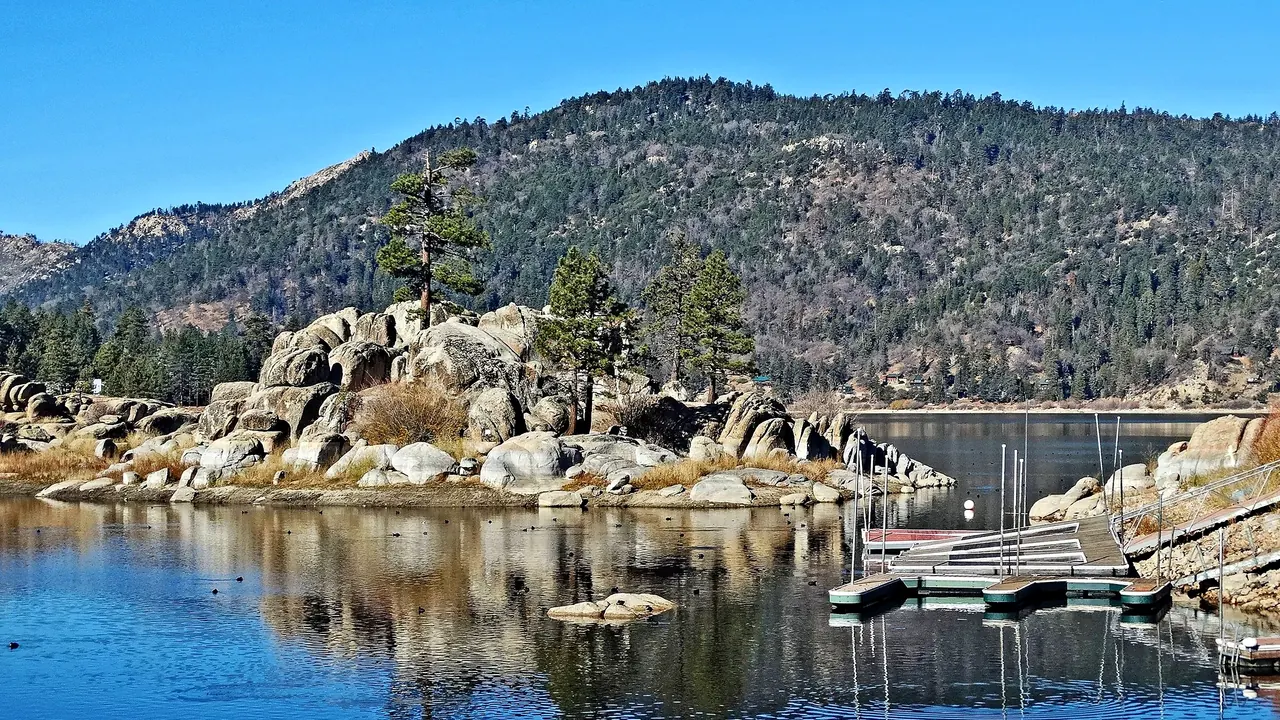
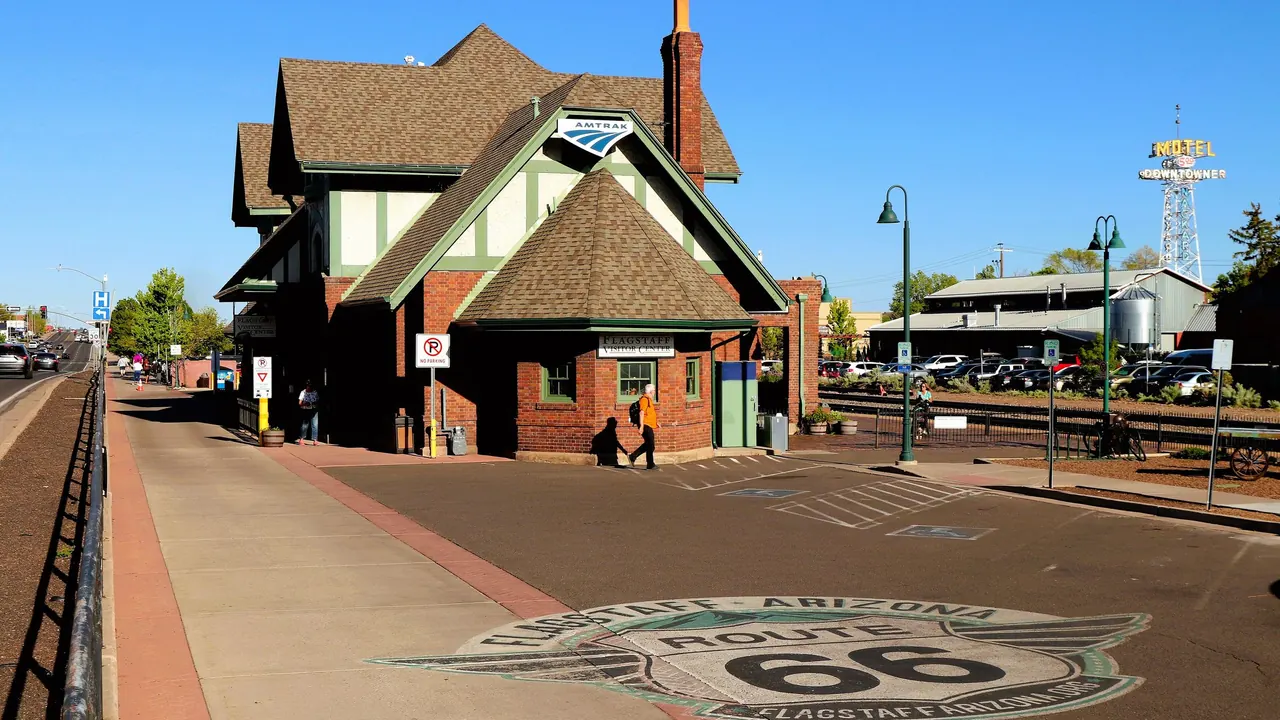
Photos: Big Bear Lake by inkknife_2000, CC BY-SA 2.0, cropped; Flagstaff by Thank You (25 Millions) views, CC BY 2.0, cropped.
Big Bear Lake or Flagstaff?
Our verdict in twelve categories, each scored against the same fixed benchmark cities, and the climate month by month, so you can choose for your trip.
Choose Big Bear Lake for
- beaches
- wellness
Big Bear Lake suits a trip built around a cabin, a lake and a short drive from the Southern California cities. It works best for families and groups who want snow play and beginner skiing in winter, or kayaks, paddleboards and fishing in summer, with a hot tub and a wood stove at the end of the day. Expect little beyond the mountain itself: the evenings are quiet and there is almost nothing to visit indoors.
Choose Flagstaff for
- culture and sights
- day trips
- nightlife
Flagstaff is the better choice for travellers who want a bigger region to explore and a real town to come back to. The San Francisco Peaks and the pine forest are on the doorstep, while the Grand Canyon, Sedona and ancient pueblo sites are all within driving range. The Lowell Observatory, the Museum of Northern Arizona and a walkable downtown full of brewery taprooms give it evenings and rainy days that Big Bear cannot match.
Scoreboard
Twelve categories on one fixed scale from 0 to 100. The shaded stretch is the gap between the two.
Your match
Pick a travel style or drag the sliders, and both match scores follow your weighting.
Wins on beaches and wellness with your weighting.
Wins on culture and sights and day trips with your weighting.
What matters to you?
Category by category
What the scores mean for a trip.
Beaches & swimming
Neither town is a place for a beach vacation, but Big Bear Lake at least has water at its door. You can swim from rocky shores and sandy patches on summer afternoons, and the supervised swim beach at Meadow Park is the obvious spot with children. Most time on the lake is spent in kayaks, on paddleboards or in boats.
Flagstaff has no lake for bathing at all. Swimming means driving down Oak Creek Canyon to Slide Rock and the creek pools, which are cold, slippery and crowded at weekends.
Food & drink
Both serve the casual food of a mountain town, but Flagstaff has a little more to offer. Its craft breweries in the historic downtown and Southside are a real draw, and New Mexican cooking, green chile and Navajo tacos give its menus some regional character.
Big Bear sticks to log-cabin breakfasts, burgers, pizza and barbecue, with brewpubs and a few lakeside tables, and many visitors cook in their rented cabins. Neither town is worth choosing for its food.
Culture & sights
This is one of the biggest gaps between the two. Big Bear has the Discovery Center, a small history museum and the remains of the 1860s gold rush in Holcomb Valley, and visitors do not come for much more.
Flagstaff has a short but strong list. The Lowell Observatory on Mars Hill, the Museum of Northern Arizona's collection of Native American art, the Riordan Mansion and the railroad-era brick downtown on Route 66 fill a day or two, and the Sinagua ruins and cliff dwellings nearby add more.
Nightlife
Neither has clubs, but Flagstaff has a night out of sorts. Taprooms, cocktail bars and old Route 66 saloons sit close together downtown and in the Southside, and university students liven up term-time weekends.
In Big Bear, evenings mean a beer at a brewpub, some après-ski near the slopes in winter, then a fire in the cabin. Nothing stays open late.
Nature & outdoors
Both are true mountain bases, and Flagstaff has the edge in scale and variety. It sits below the volcanic San Francisco Peaks, surrounded by a vast ponderosa forest, with Sunset Crater's lava flows to the north and the red rock of Sedona and the Grand Canyon's South Rim within driving range. Its dark skies are a draw of their own.
Big Bear's strength is the lake. Two ski areas sit right above town, the summer slopes become bike trails, and the water fills with sailing boats and kayaks. The Pacific Crest Trail and the San Gorgonio Wilderness give it plenty of serious hiking too.
Day trips
Flagstaff has far more within reach. Sedona and Jerome, Walnut Canyon, Wupatki, Montezuma Castle, the railway from Williams to the Grand Canyon and the Hopi mesas make for a varied week of outings, though all of them need a car.
From Big Bear, winding roads make most outings slow. Lake Arrowhead, the orchards of Oak Glen and Riverside's Mission Inn are the realistic choices, and most visitors simply stay on the mountain.
Good for families
Both work well with children, in slightly different ways. Big Bear is built around family days out: sledding hills, beginner ski lessons, the alpine zoo's rescued bears and bobcats, an alpine slide and pedal boats, with a roomy cabin to come home to.
Flagstaff appeals more to curious children, with telescope evenings at the observatory, dinosaurs at the museum, rope courses in the pines and the steam-era train to the Grand Canyon. Expect longer drives between outings. Altitude and cold nights affect both.
Getting around
In both towns you will need a car. Big Bear's Village is easy on foot and a trolley reaches the ski areas, but the cabins are scattered through hilly forest, and the steep highways up may need snow chains and crawl on busy weekends.
Flagstaff's downtown and Southside are walkable, its urban trails make cycling practical, and long-distance trains stop in town. Still, the peaks, the monuments and the Grand Canyon all lie beyond its local buses.
Shopping & style
Flagstaff has a reason to browse: Navajo rugs, Hopi kachina carvings, pottery and turquoise jewellery from downtown galleries, the museum shop and trading posts, along with bookshops and outdoor gear. It is worth buying from established dealers or directly from artists.
Big Bear's Village offers an hour of fudge shops, bear souvenirs, antiques and ski and lake gear, and little else.
Affordability
Neither is a budget choice, but Flagstaff is somewhat easier on the wallet. Chain motels along Route 66 keep a basic stay within reach, and brewery meals are reasonable, though the car hire, fuel and park fees add up.
Big Bear can be economical for a group sharing a cabin midweek and cooking for themselves. Winter weekends and school vacations bring much higher rates, plus lift tickets and equipment hire.
Live music & performing arts
Flagstaff has a modest but genuine calendar. The symphony orchestra and the university's music school play on campus, the restored Orpheum Theater books touring bands, and community theatre runs through the year.
Big Bear offers little more than local productions at its small arts centre, free summer concerts by the lake and the Bavarian bands of its autumn Oktoberfest.
Wellness & relaxation
Both are slow mountain towns without hot springs or a bathing tradition, so the difference lies in where you unwind. In Big Bear it is the cabin itself, with its private hot tub, wood stove and deck among the pines, though busy winter weekends break the calm.
Flagstaff's appeal is cool pine-scented evenings and bright stars. For proper spa treatments or yoga, visitors drive about an hour down to Sedona's resorts.
When should you go?
Pick your month. The climate figures are measured averages, not a forecast.
Big Bear Lake in July
Flagstaff in July
Daytime high, °C
Rainfall in the month, mm
Where the figures come from
Big Bear Lake has no rain gauge within 25 km of the centre, so its rainfall comes from a gridded climate dataset read at the city rather than from a gauge further away.
Flagstaff has no rain gauge within 25 km of the centre, so its rainfall comes from a gridded climate dataset read at the city rather than from a gauge further away.
Temperature and rainfall are climate normals, averaged over the years shown. Big Bear Lake: 2014-2025 (rainfall 1991-2020) normals, Big Bear City (5 km from centre). Flagstaff: 1991-2020 normals, Flagstaff / Fort Tuthill (7.4 km from centre).
Both towns sit high in the mountains, so winters are cold, with daytime highs only a few degrees above freezing from December to February. Snow is the main draw in those months. Big Bear Lake gets most of its precipitation then, with well over 130mm in February, which feeds the ski slopes but can make the mountain roads slow. Flagstaff's winters are drier, but there is still plenty of snow on the peaks. Spring warms slowly in both, and April is still cool for long days outdoors.
Summer is when the two differ most. Big Bear is reliably dry from June to September, with highs around 26°C in July, warm enough for a quick swim in the lake and ideal for hiking and boating. Flagstaff is just as warm, but the monsoon brings afternoon storms in July and August, at around 60mm a month, so hikes there are best started early. September and October are pleasant in both, with clear, mild days and the aspens turning on the Flagstaff peaks.
Which traveller are you?
On a family trip with young children, Big Bear Lake is the easier choice. Snow, the lake and the rescued animals are all minutes from the cabin, so little of the day goes on the road. Flagstaff suits older, curious children better, but the drives are longer.
For an outdoors trip, Flagstaff has the wider range. Big Bear Lake is ideal if your days revolve around one mountain and its lake. From Flagstaff, each day can bring a different landscape: volcanic peaks, canyon rims or red rock.
On a culture and arts trip, Flagstaff is the only real option. Big Bear Lake fills an afternoon at most. Flagstaff has enough in town for two full days, and its Native American heritage, both ancient and living, carries the interest out across the plateau.
Before you go
| Measure | Big Bear Lake | Flagstaff |
|---|---|---|
| Currency | US Dollar (USD) | US Dollar (USD) |
| Sockets | AB120 V, 60 Hz | AB120 V, 60 Hz |
| Driving side | Right | Right |
| Time zone | UTC-8, UTC-7 in summer | UTC-7 |
| Emergency number | 911 | 911 |
| Elevation | 2,058 m | 2,106 m |
| Main airport | Ontario International Airport (ONT)67 km from centre28 non-stop destinations | Flagstaff Pulliam Airport (FLG)7 km from centre2 non-stop destinations |
| Public holidays this year | 13 days | 12 days |
By the numbers
| Measure | Big Bear Lake | Flagstaff |
|---|---|---|
| City population | 5,046 | 76,831 |
| People per km² | 299 | 464 |
| Museums within 10 km | 1 | 1 |
| UNESCO World Heritage sites within 50 km | 0 | 0 |
Where else could you go?
Every comparison below shares a destination with this one, so you can follow Big Bear Lake or Flagstaff somewhere new.
- Sedonavs Flagstaff
- Palm Springsvs Big Bear Lake
- Palm Desertvs Big Bear Lake
- Anaheimvs Big Bear Lake
- Laguna Beachvs Big Bear Lake
- Newport Beachvs Big Bear Lake