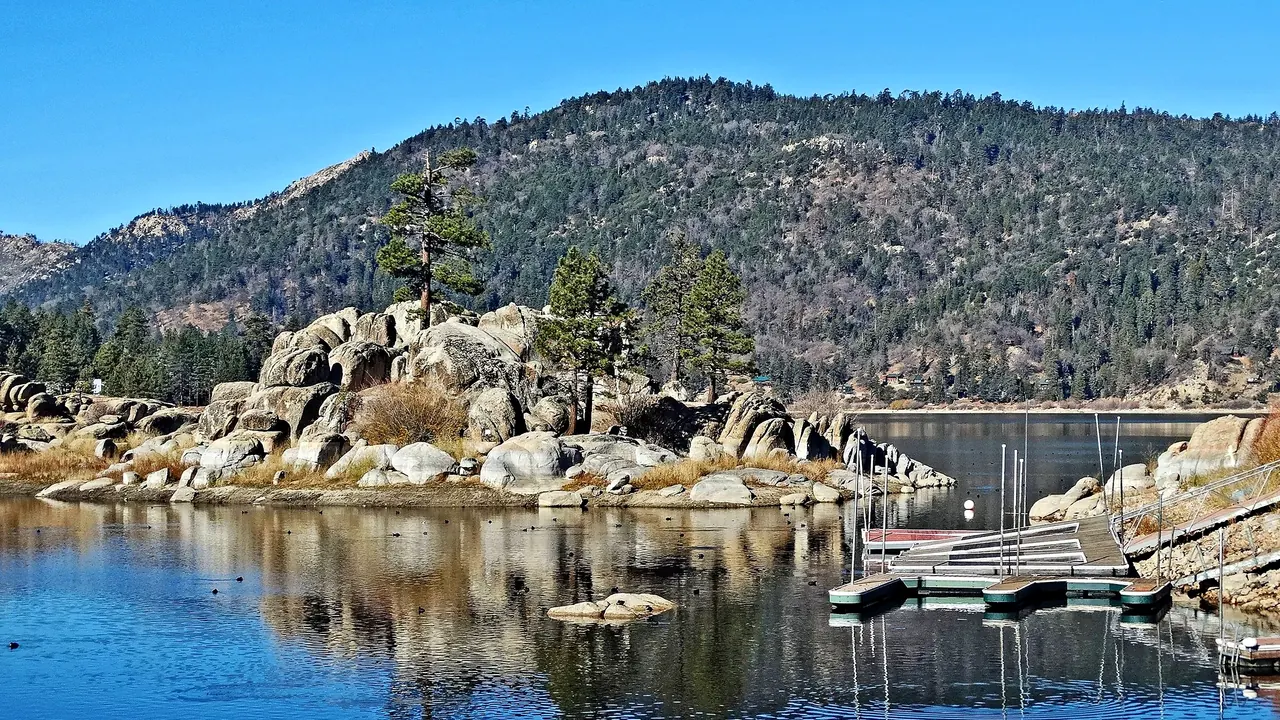
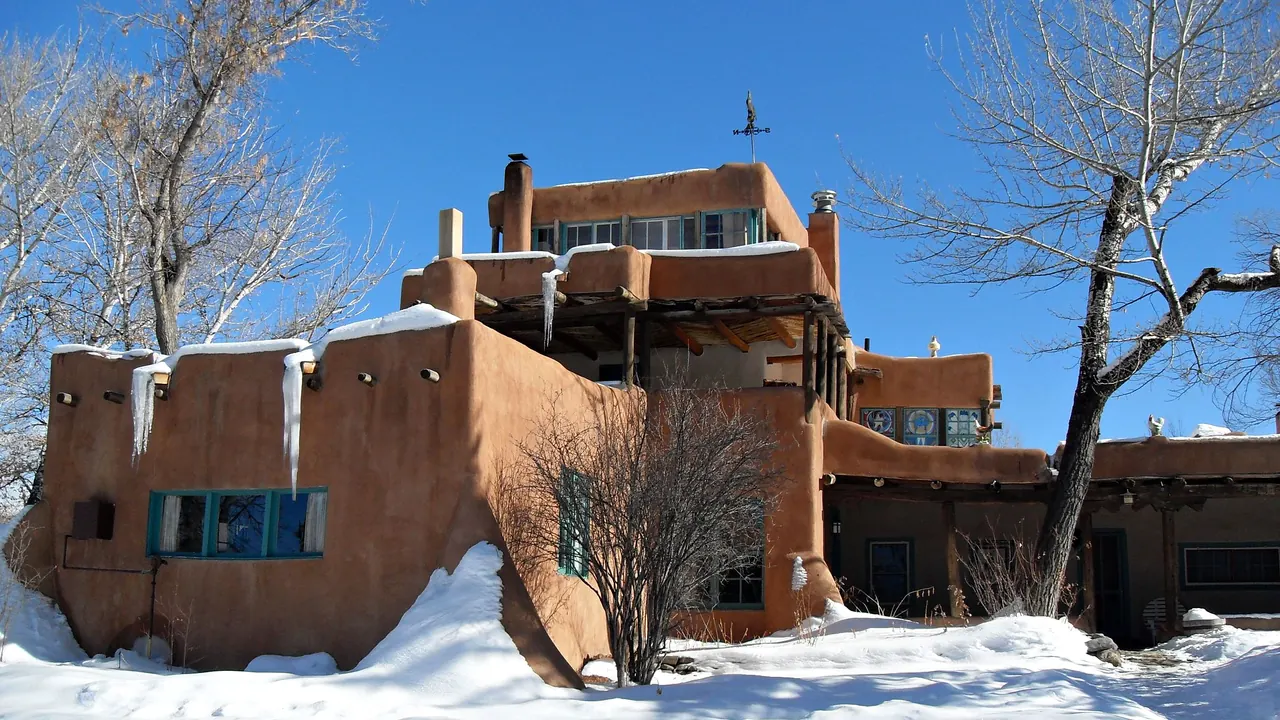
Photos: Big Bear Lake by inkknife_2000, CC BY-SA 2.0, cropped; Taos by PhictureGal, CC BY-SA 3.0, cropped.
Big Bear Lake or Taos?
Our verdict in twelve categories, each scored against the same fixed benchmark cities, and the climate month by month, so you can choose for your trip.
Choose Big Bear Lake for
- families
- beaches
- getting around
Big Bear Lake is the easier choice for families and for anyone who wants a cabin, a lake and some snow without much planning. Sledding hills, beginner ski lessons, the alpine zoo and summer pedal boats keep children busy. The Village is walkable, and a swim at Meadow Park is at least possible in high summer. It suits a weekend of simple outdoor days rather than a trip with an itinerary.
Choose Taos for
- culture and sights
- day trips
- shopping
Taos rewards travellers who want the mountains with a strong sense of place. Taos Pueblo, the Ranchos church and the art-colony museums give it a history that Big Bear lacks, and its chile-heavy New Mexican kitchen is worth eating your way through. Ojo Caliente and the gorge hot springs also make it the better place to unwind. Add the High Road to Santa Fe and the steeper skiing up at the ski valley, and it suits adults planning a fuller week.
Scoreboard
Twelve categories on one fixed scale from 0 to 100. The shaded stretch is the gap between the two.
Your match
Pick a travel style or drag the sliders, and both match scores follow your weighting.
Wins on families and beaches with your weighting.
Wins on culture and sights and day trips with your weighting.
What matters to you?
Category by category
What the scores mean for a trip.
Beaches & swimming
Neither is a beach destination, but at Big Bear Lake you can at least swim. In July and August the lake is cool but swimmable, and the supervised beach at Meadow Park gives families one safe spot. The rest of the mostly rocky shore has a few sandy patches and granite outcrops.
Taos has nothing like it. The Rio Grande is for rafting rather than swimming, the alpine lakes stay cold, and a hotel pool or a hot spring is the closest you will get to a dip.
Food & drink
Taos has a regional kitchen and Big Bear does not. Red and green chile, posole, carne adovada and blue-corn dishes give meals in Taos a real local identity, and the horno-baked bread from the Pueblo is something you can only eat there.
At Big Bear, food is about big portions after a day outdoors: diner breakfasts, burgers, barbecue and brewpubs, and many visitors cook in their cabins. Neither town has much variety, but only in Taos is eating part of the reason to go.
Culture & sights
This is where the two differ most. Taos has a UNESCO-listed pueblo that has been lived in for about a thousand years, the buttressed adobe church at Ranchos de Taos, and a cluster of small art-colony museums and historic homes that fill two or three days.
Big Bear has the Discovery Center, a small history museum and the gold-rush remains of Holcomb Valley along a dirt-road drive, and its chalet-style Village is modern. Culture is a side note there.
Nightlife
Both towns are quiet after dark, and neither has clubs or anything open late. Big Bear's evenings rely on après-ski pubs in the Village and the cabin hot tub. Taos has a little more character, with margaritas in old adobe hotel bars off the plaza and the occasional saloon band.
Nature & outdoors
Both are serious mountain bases, and the difference is in the terrain. Big Bear centres on its lake and pine forest. It has modest, reliable skiing backed by plenty of snowmaking, then kayaks, paddleboards, fishing and mountain-bike trails in summer, with the Pacific Crest Trail and San Gorgonio close by.
Taos is bigger and wilder. The ski valley is known for steep, demanding runs, Wheeler Peak and the alpine lakes draw summer hikers, and the Rio Grande gorge adds whitewater rafting and rim walks across open sagebrush country. Choose Big Bear for the water and gentle slopes, Taos for harder skiing and wider landscapes.
Day trips
Taos is the far better base for excursions. Santa Fe by way of the High Road, past old village churches and the sanctuary at Chimayó, makes a full and varied day, and O'Keeffe country at Abiquiu and Ghost Ranch is a little over an hour away.
From Big Bear, winding mountain roads slow every outing. Lake Arrowhead and the Oak Glen orchards are pleasant and Riverside's Mission Inn is worth a look, but most visitors simply stay up the mountain.
Good for families
Big Bear is set up for children in a way Taos is not. Snow-play hills, beginner lessons, the alpine zoo, the summer slide, mini-golf and go-karts give families an easy list of things to do, and roomy cabins help.
Taos suits families who like the outdoors, with a well-regarded ski school, gentle river floats, horse riding and a recreation centre pool. But nothing there is made for children, and nearly every outing involves a drive.
Getting around
You need a car in both, but Big Bear relies on it a little less. The Village is walkable, and a local bus and a seasonal trolley reach the ski areas and parts of the lakeshore, though the steep highways up can slow to a crawl or require snow chains in winter.
Taos spreads its sights across a wide valley, from the Pueblo to the gorge bridge and the ski valley. Most visitors arrive after a drive of about two and a half hours from Albuquerque, so a hire car is part of the trip from the start.
Shopping & style
Taos has real shopping if your taste runs to art and craft. The galleries around the plaza and Kit Carson Road, the turquoise and silver jewellery, the Rio Grande weaving and the micaceous pottery bought from makers at the Pueblo can keep collectors busy for days.
Big Bear's few Village blocks of fudge shops, bear souvenirs and outdoor outfitters make for a pleasant hour and little more.
Affordability
Neither is cheap, and in both the season decides the bill. Big Bear can be economical midweek for a group sharing a cabin and cooking, but winter weekends bring sharp rate rises and lift-ticket costs. Taos has fairly priced motels and New Mexican diners, offset by resort rates at historic inns and the near-certain cost of a hire car, with spring and late autumn the gentlest times on the budget.
Live music & performing arts
Taos has more worth seeing, though most of it happens at set times of year. The Pueblo's feast-day dances, such as San Gerónimo in late September, can be watched under strict rules, and a summer chamber music festival brings serious classical concerts.
At Big Bear, live performance means a community arts centre, free lakeside concerts in summer and the Bavarian bands of its autumn Oktoberfest.
Wellness & relaxation
Taos is the better place to slow down. Ojo Caliente's historic outdoor pools of different mineral waters are within an hour, primitive hot springs lie beside the Rio Grande at the bottom of the gorge, and yoga studios and retreat centres draw on the valley's spiritual reputation.
Big Bear offers a private hot tub on a cabin deck and a few day spas, which is restful midweek. But there are no springs, and the crowds on winter weekends break the calm.
When should you go?
Pick your month. The climate figures are measured averages, not a forecast.
Big Bear Lake in July
Taos in July
Daytime high, °C
Rainfall in the month, mm
Where the figures come from
Big Bear Lake has no rain gauge within 25 km of the centre, so its rainfall comes from a gridded climate dataset read at the city rather than from a gauge further away.
Taos has no rain gauge within 25 km of the centre, so its rainfall comes from a gridded climate dataset read at the city rather than from a gauge further away.
Temperature and rainfall are climate normals, averaged over the years shown. Big Bear Lake: 2014-2025 (rainfall 1991-2020) normals, Big Bear City (5 km from centre). Taos: 2006-2020 (rainfall 1991-2020) normals, Taos / Los Cordovas (10.5 km from centre).
Big Bear Lake has a wet winter and an almost rainless summer. From December to February heavy rain and snow arrive, with up to 135mm a month, which suits the ski slopes but makes the mountain roads harder going. May to October is dry, and June to September is the time for hiking, biking and the lake, with highs around 26°C in July. Only July and August are warm enough to make a swim tempting.
Taos is drier through the year and swings further between the seasons. Winter days are colder than at Big Bear, with highs around 4°C but little precipitation, while June and July reach about 29°C. Its wettest spell comes in summer rather than winter: afternoon thunderstorms bring about 47mm in August, so mornings are best for long hikes then. May, September and October are the most comfortable months for walking the plaza and the gorge rim.
Which traveller are you?
For a culture and arts trip, Taos is the clear pick. Taos Pueblo, the Ranchos de Taos church, the Harwood and Millicent Rogers museums and a day on the High Road to Santa Fe fill a week, while Big Bear offers little beyond a small history museum.
On a family trip with young children, Big Bear Lake works better. Snow-play areas, beginner ski lessons, the alpine zoo, the summer slide and pedal boats are all built for children, and cabins with kitchens make the logistics simple. Taos has nothing comparable made for children.
For a relaxing and wellness trip, Taos has the edge. Its historic mineral pools at Ojo Caliente, primitive hot springs in the Rio Grande gorge, yoga studios and retreat centres go well beyond Big Bear, where unwinding mostly means a cabin hot tub.
Before you go
| Measure | Big Bear Lake | Taos |
|---|---|---|
| Currency | US Dollar (USD) | US Dollar (USD) |
| Sockets | AB120 V, 60 Hz | AB120 V, 60 Hz |
| Driving side | Right | Right |
| Time zone | UTC-8, UTC-7 in summer | UTC-7, UTC-6 in summer |
| Emergency number | 911 | 911 |
| Elevation | 2,058 m | 2,124 m |
| Main airport | Ontario International Airport (ONT)67 km from centre28 non-stop destinations | Santa Fe Municipal Airport (SAF)99 km from centre5 non-stop destinations |
| Public holidays this year | 13 days | 13 days |
By the numbers
| Measure | Big Bear Lake | Taos |
|---|---|---|
| City population | 5,046 | 6,474 |
| People per km² | 299 | 415 |
| Museums within 10 km | 1 | 4 |
| UNESCO World Heritage sites within 50 km | 0 | 1 |
Where else could you go?
Every comparison below shares a destination with this one, so you can follow Big Bear Lake or Taos somewhere new.
- Palm Springsvs Big Bear Lake
- Palm Desertvs Big Bear Lake
- Santa Fevs Taos
- Anaheimvs Big Bear Lake
- Laguna Beachvs Big Bear Lake
- Newport Beachvs Big Bear Lake