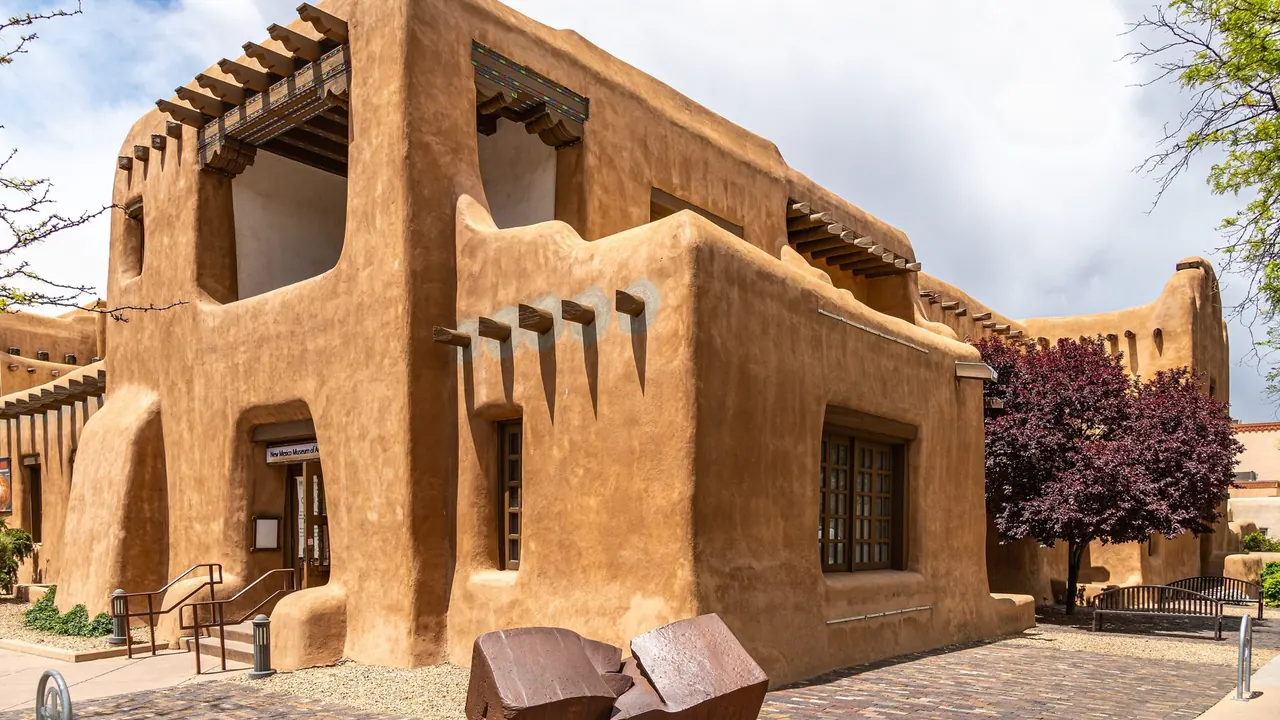
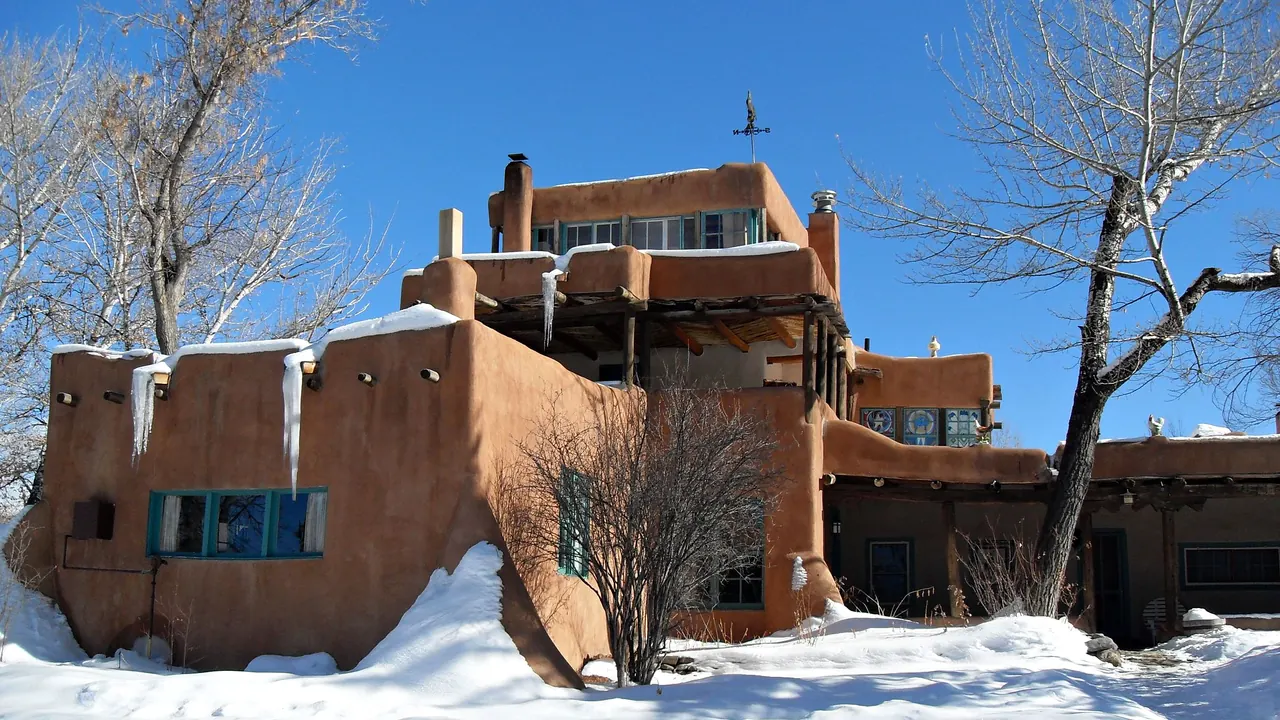
Photos: Santa Fe by dconvertini, CC BY-SA 2.0, cropped; Taos by PhictureGal, CC BY-SA 3.0, cropped.
Santa Fe or Taos?
Our verdict in twelve categories, each scored against the same fixed benchmark cities, and the climate month by month, so you can choose for your trip.
Choose Santa Fe for
- live music and the arts
- food and drink
- getting around
Santa Fe is the better choice for a trip built around museums, galleries, long dinners and a night at the opera. It has more to eat, more to buy and more to see, and the Plaza, Canyon Road and the Railyard are all a short walk apart. That means a few days without much driving still feel full.
Choose Taos for
- prices
- nature and the outdoors
- wellness
Travellers who come mainly for the mountains, the light and the pueblo will be happier in Taos. It is smaller and quieter than Santa Fe and a little easier on the budget. Taos Ski Valley, Wheeler Peak and the Rio Grande Gorge are all close by, and Taos Pueblo, a community lived in for about a thousand years, is at the heart of a stay. Expect to drive everywhere and to finish your evenings early.
Scoreboard
Twelve categories on one fixed scale from 0 to 100. The shaded stretch is the gap between the two.
Your match
Pick a travel style or drag the sliders, and both match scores follow your weighting.
Wins on live music and the arts and food and drink with your weighting.
Wins on prices and nature and the outdoors with your weighting.
What matters to you?
Category by category
What the scores mean for a trip.
Beaches & swimming
Neither town has a beach, and swimming is no reason to choose either one. From Santa Fe, the nearest options are Abiquiu Lake, about an hour north, or a float on the Rio Grande. In Taos the river is for rafting and the mountain lakes stay cold, but a hot spring beside the river at the bottom of the gorge is an unusual stand-in for a swim.
Food & drink
Both towns cook the same northern New Mexican food: chile, posole, carne adovada and sopaipillas. The real difference is range. Santa Fe has fine dining that is unusual for a town its size, old adobe dining rooms around the Plaza and the long-running farmers' market in the Railyard. Together they make several days of eating worthwhile.
Taos serves the classics with real conviction in family-run places along the road to Ranchos, and bread from the ovens at the Pueblo is a local touch Santa Fe lacks. Beyond a few ambitious kitchens and après-ski dining, though, there is much less to explore.
Culture & sights
Santa Fe has more to see. It was founded as a Spanish colonial capital in 1610, and the Palace of the Governors, the cathedral and the Loretto Chapel stand around the Plaza. Its museums, including the Museum of International Folk Art and the O'Keeffe Museum, are far better than a town this size would suggest.
Taos has fewer sights, but one of real weight. Taos Pueblo is a World Heritage Site and still a living community. The town also has the buttressed church at Ranchos de Taos. Its museums, from the Harwood to the Fechin House, are small art-colony collections that add to what Santa Fe offers rather than rival it.
Nightlife
Neither town is the place for a big night, but Santa Fe has a little more going on. It has rooftop bars facing the sunset over the Jemez Mountains, breweries around the Railyard and livelier summer evenings on the Plaza, and for clubs Albuquerque is an hour's drive away. Taos is quieter still: a margarita in a hotel bar, a brewery taproom or a saloon with a band. Its liveliest moments are the winter après-ski evenings at the ski valley.
Nature & outdoors
Both towns sit under the Sangre de Cristo Mountains, with skiing, aspen forest and big skies close by, so the difference is in character. In Santa Fe, trails start at the edge of town and the Pecos Wilderness lies beyond the ski area. To the west are desert mesas, Valles Caldera and the red cliffs around Abiquiu.
Taos is the more alpine and adventurous base. Its ski valley is known for steep, demanding runs, and in summer the same valley leads up Wheeler Peak, at 4,013m. The Rio Grande Gorge, a few kilometres west of town, offers rim walks, mountain biking and whitewater rafting through the Taos Box.
Day trips
Santa Fe sits in the middle of the region, and that gives it the edge. Bandelier, Los Alamos, Pecos, the Turquoise Trail and Albuquerque are all within easy reach, and Taos itself makes a classic outing by the High Road.
From Taos, many of the same places are further away. The High Road and Abiquiu work well, but Bandelier becomes a long day of about two hours each way. The towns on the Enchanted Circle are pleasant rather than essential.
Good for families
Santa Fe has a little more for children. There is a children's museum, the toys and miniatures in the folk art collection, and a few immersive art spaces for an afternoon indoors.
Taos has nothing built for children, so its appeal to families is outdoors: a well-regarded ski school, gentle river floats, horse riding and a public pool. In both towns the altitude tires young children for the first day or two, and both suit older children better.
Getting around
Santa Fe is the easier of the two without a car. The Plaza, the downtown museums, Canyon Road and the Railyard are all within about twenty minutes' walk of each other, and the Rail Runner train links the town to Albuquerque. You will still want a car for Museum Hill, the mountains and the pueblos.
In Taos, the walkable part is just the plaza and a few streets around it. The Pueblo, the gorge bridge, the ski valley and Ranchos de Taos are spread across a wide valley. Most visitors fly into Albuquerque and drive about two and a half hours, so a hire car comes with the trip.
Shopping & style
Both towns sell art and craft rather than fashion, but Santa Fe does it on a much larger scale. Native American artists sell jewellery and pottery under the portal of the Palace of the Governors, and galleries crowd Canyon Road and the Railyard. In summer, the Indian Market, the Spanish Market and the International Folk Art Market draw collectors from far away.
Taos is a smaller version with its own specialities: micaceous pottery, Rio Grande weaving and carved santos. You can also buy directly from the makers at the Pueblo. For most visitors, an afternoon is enough.
Affordability
Neither town is cheap, but Santa Fe is the harder on the wallet. Hotels around the Plaza charge resort prices, especially during the summer markets, the opera season and Christmas, and restaurants and galleries are priced for well-off visitors.
Taos costs less. Its simple motels and casual diners are fairly priced, and spring and late autumn, between the ski and summer seasons, are the cheapest times to go. In both towns a hire car adds to the cost of the whole stay.
Live music & performing arts
Here Santa Fe is clearly ahead, at least in summer. The Santa Fe Opera, performing in an open-sided theatre as the sun sets over the desert, is reason enough to plan a trip around. It is joined by a chamber music festival, a long tradition of flamenco and touring shows at the historic Lensic theatre.
Taos has a summer chamber music festival too. Its most memorable performances, though, are the traditional dances at Taos Pueblo on feast days such as San Gerónimo in late September, which visitors watch quietly and without cameras. Beyond those, live music mostly means local bands in bars.
Wellness & relaxation
Both towns can reach Ojo Caliente, the historic mineral springs that lie between them, about fifty minutes from Taos and an hour from Santa Fe. Santa Fe's own draw is a set of outdoor soaking tubs among the pines on the road to the ski area, modelled on a Japanese onsen. It also has plenty of spas, yoga studios and healers, though most of the soaking happens outside the centre.
Taos has the slight edge for a restful stay. Its primitive hot springs sit beside the Rio Grande at the bottom of the gorge. You reach them on foot, and they are best in the cooler months. The valley is also quieter than anywhere in Santa Fe, with retreat centres, the silence of the plateau and evenings that end even earlier, so slowing down takes little effort.
When should you go?
Pick your month. The climate figures are measured averages, not a forecast.
Santa Fe in July
Taos in July
Daytime high, °C
Rainfall in the month, mm
Where the figures come from
Santa Fe's station stands 199 m below the city centre, so the centre is likely a little cooler than the figures say.
Santa Fe has no rain gauge within 25 km of the centre, so its rainfall comes from a gridded climate dataset read at the city rather than from a gauge further away.
Taos has no rain gauge within 25 km of the centre, so its rainfall comes from a gridded climate dataset read at the city rather than from a gauge further away.
Temperature and rainfall are climate normals, averaged over the years shown. Santa Fe: 1991-2020 normals, Santa Fe / Cieneguilla (12.4 km from centre). Taos: 2006-2020 (rainfall 1991-2020) normals, Taos / Los Cordovas (10.5 km from centre).
Both towns sit at around 2,100m, so their years follow the same pattern: cold, dry winters, a hot June, and a wetter spell from July to September, when afternoon storms build over the mountains. Neither has a beach season to plan around. Santa Fe is the warmer town for most of the year, reaching about 31°C in June and July against 29°C in Taos. In March, though, Taos is briefly the milder of the two. Santa Fe also gets more of the summer rain, around 61mm in August.
For walking streets and trails, May and October are the best months in both towns. Days are mild and dry, and in autumn the aspens turn gold. September is still warm and pleasant, but it brings the last of the summer storms, so mornings are the time for longer walks. From June to August, afternoons are too hot for uphill walking at this altitude. Winter is ski season. Taos is the colder town, at about 4°C by day in December and January, while Santa Fe stays a little milder for wandering around the Plaza.
Which traveller are you?
On a culture and arts trip, Santa Fe is the stronger choice. Museum Hill, the O'Keeffe Museum and the galleries of Canyon Road give it more depth. In summer the opera and the chamber music festival add evenings that Taos cannot match.
For a food and nightlife trip, Santa Fe again comes out ahead, though neither town stays up late. It adds fine dining and the Railyard farmers' market to the red-or-green classics. Its rooftop bars and breweries offer a little more than the taprooms of Taos.
On a trip on a tight budget, Taos is the gentler of the two. Simple motels and family-run New Mexican diners keep costs down, especially in spring and late autumn. Still, neither town is cheap, and in both a hire car adds to the bill.
Before you go
| Measure | Santa Fe | Taos |
|---|---|---|
| Currency | US Dollar (USD) | US Dollar (USD) |
| Sockets | AB120 V, 60 Hz | AB120 V, 60 Hz |
| Driving side | Right | Right |
| Time zone | UTC-7, UTC-6 in summer | UTC-7, UTC-6 in summer |
| Emergency number | 911 | 911 |
| Elevation | 2,134 m | 2,124 m |
| Main airport | Santa Fe Municipal Airport (SAF)12 km from centre5 non-stop destinations | Santa Fe Municipal Airport (SAF)99 km from centre5 non-stop destinations |
| Public holidays this year | 13 days | 13 days |
By the numbers
| Measure | Santa Fe | Taos |
|---|---|---|
| City population | 87,505 | 6,474 |
| People per km² | 645 | 415 |
| Museums within 10 km | 10 | 4 |
| UNESCO World Heritage sites within 50 km | 0 | 1 |
Where else could you go?
Every comparison below shares a destination with this one, so you can follow Santa Fe or Taos somewhere new.
- Telluridevs Taos
- Colorado Springsvs Taos
- Telluridevs Santa Fe
- Aspenvs Taos
- Breckenridgevs Taos
- Copper Mountainvs Taos