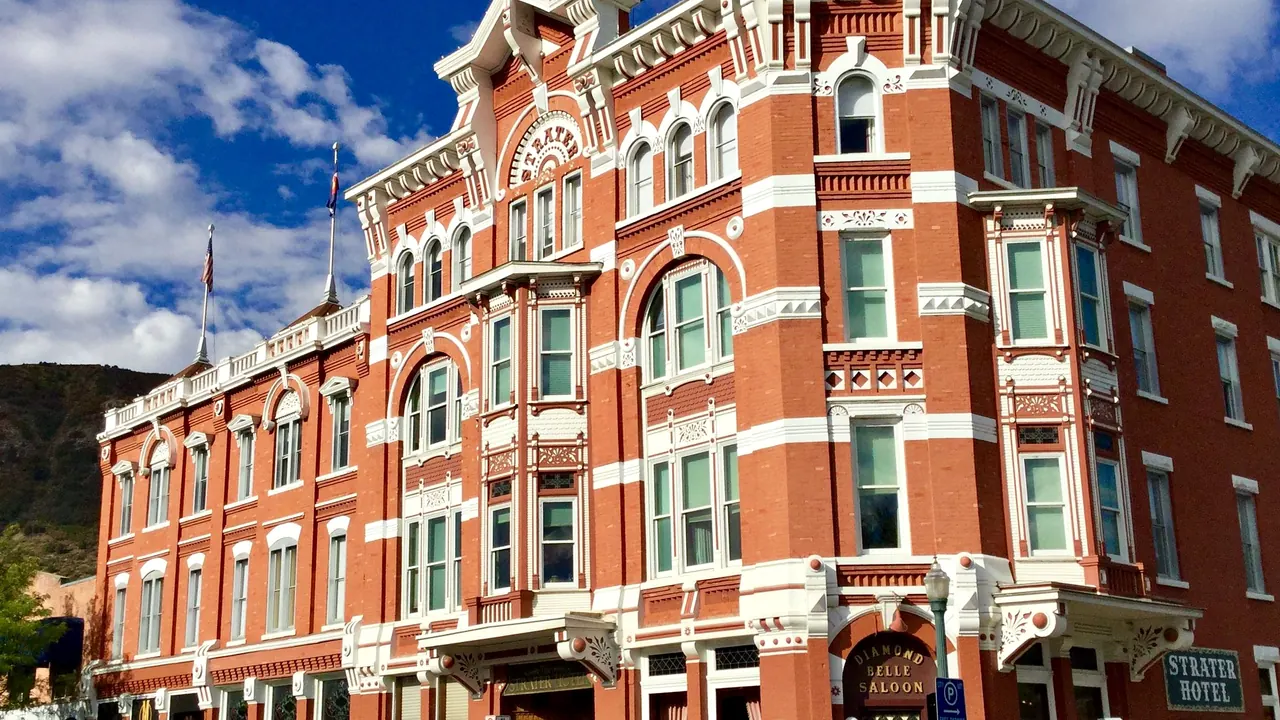
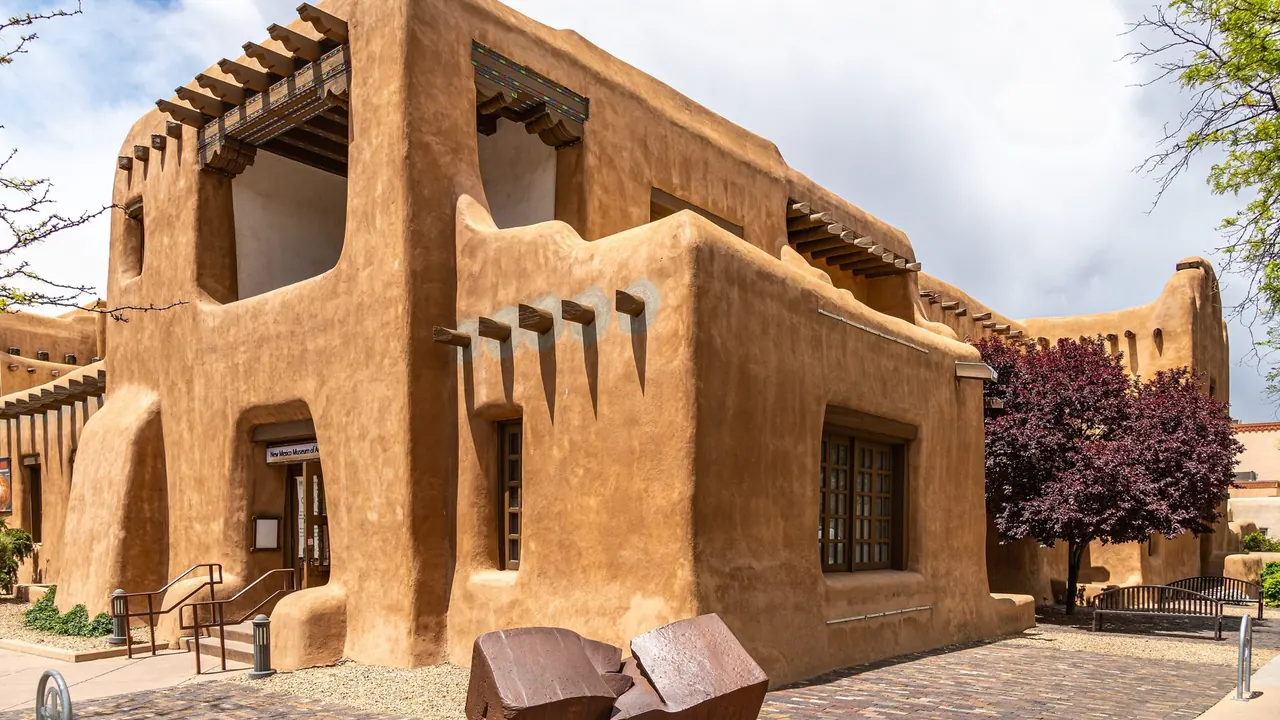
Photos: Durango, Colorado by Adeledstarr, CC BY-SA 4.0, cropped; Santa Fe by dconvertini, CC BY-SA 2.0, cropped.
Durango, Colorado or Santa Fe?
Our verdict in twelve categories, each scored against the same fixed benchmark cities, and the climate month by month, so you can choose for your trip.
Choose Durango, Colorado for
- families
- nature and the outdoors
- prices
Durango is the pick for travellers who measure a vacation in trails, rivers and snow. The San Juan Mountains begin at the edge of town and the Animas runs through the middle of it. The steam train and Mesa Verde give families days out that children remember. It is also slightly kinder to the budget, as long as you accept quiet evenings and a town whose own sights take only an afternoon.
Choose Santa Fe for
- culture and sights
- shopping
- live music and the arts
If you want the mountains as a backdrop to something else, Santa Fe is the better choice. It offers a four-century-old adobe capital, museums and galleries far beyond its size, a cuisine of its own and an opera festival under the desert sky. It suits adults and older children who enjoy art and history, and the Sangre de Cristo foothills still put good hiking within easy reach.
Scoreboard
Twelve categories on one fixed scale from 0 to 100. The shaded stretch is the gap between the two.
Your match
Pick a travel style or drag the sliders, and both match scores follow your weighting.
Wins on families and nature and the outdoors with your weighting.
Wins on culture and sights and shopping with your weighting.
What matters to you?
Category by category
What the scores mean for a trip.
Beaches & swimming
Neither is a place for a beach day, since both sit high and far inland. Durango keeps the water closer, with inner tubes floating the Animas right through the centre and Lake Nighthorse just outside town. In Santa Fe a swim usually means a hotel pool, and Abiquiu Lake or the Rio Grande make an outing of an hour or so.
Food & drink
Santa Fe has the more distinctive table. New Mexican cooking, with red or green chile, blue corn and posole, is a cuisine in its own right. It is served in old adobe rooms around the Plaza, and the town adds a fine-dining tier and one of the country's oldest farmers' markets in the Railyard.
Durango eats well in a simpler way: green-chile plates, steaks, big breakfasts and some careful cooking with Colorado lamb and trout. Its real strength is beer, with more craft taprooms than a town its size usually has. Neither offers much cooking from further afield.
Culture & sights
Santa Fe is far richer for sightseeing. The adobe streets, the Palace of the Governors on the Plaza, the old chapels and the folk art and Native American collections on Museum Hill easily fill two or three days. Canyon Road and the O'Keeffe Museum add art on top.
Durango's history is younger and narrower. It is a railway town founded in 1880, and its heart is the steam locomotives, the roundhouse museum and the Victorian brick main street. The college's Southwestern collection is worth seeing, but a morning covers the town, and its great ancient sites lie out at Mesa Verde.
Nightlife
Both are early towns where dancing barely exists and the streets are quiet before midnight. The difference is the setting. A Durango evening means a pint in a brewery taproom or an old saloon with a piano player, among cyclists and rafters. In Santa Fe it means a long dinner, then a margarita on a rooftop facing the sunset over the Jemez Mountains, with Albuquerque an hour away for anyone wanting more.
Nature & outdoors
Both have serious mountains at the edge of town, but Durango's give active travellers more. The San Juans reach above 4,000m in the Weminuche Wilderness. Singletrack starts from the streets, the Colorado Trail begins just north, rafters run the Animas through the centre, and a full ski resort is half an hour away.
Santa Fe makes up some of the gap with variety. The Sangre de Cristo foothills and the Pecos Wilderness give alpine hiking, and to the west lies desert country: the red cliffs around Abiquiu, the grassland of Valles Caldera and the Rio Grande Gorge.
Day trips
Both are bases for exploring the ancestral Puebloan country by car, and Santa Fe has the slightly longer list. The High Road runs through old Spanish villages to Taos Pueblo, which has been lived in for a thousand years. In other directions lie Bandelier's cliff dwellings, Los Alamos, Pecos and O'Keeffe's Ghost Ranch.
Durango has fewer outings, but one of them is among the finest in the region: the cliff dwellings of Mesa Verde. The steam train up the Animas canyon to Silverton, the ruins at Aztec and the springs at Pagosa round out a full week.
Good for families
Durango is the easier choice with children. The steam train, tubing and gentle rafting on the river, and the summer ziplines and alpine coaster at the ski resort make it feel like an outdoor playground. Mesa Verde's ladders turn history into an adventure.
Santa Fe is just as safe and relaxed, but its days revolve around galleries and long dinners. A children's museum, the toys at the folk art museum and Bandelier's ladders help, though it suits older children best. In both towns the altitude can tire small children at first.
Getting around
Both centres are compact, and both need a hire car beyond them. Santa Fe's walkable core is larger, linking the Plaza, Canyon Road, the downtown museums and the Railyard, and the Rail Runner train reaches Albuquerque without a car. Durango's centre is a fifteen-minute stroll along Main Avenue with a good riverside path for walkers and cyclists, but trailheads, the ski area and Mesa Verde all mean driving.
Shopping & style
Santa Fe is one of the country's serious places to buy Native American and Southwestern art. Artists sell silver, turquoise and pottery directly under the portal of the Palace of the Governors. Canyon Road and the Railyard are thick with galleries, and the summer Indian, Spanish and Folk Art markets draw collectors from far away.
Durango's Main Avenue is a smaller version of this, with turquoise and rugs among Western boots and souvenirs, plus outdoor shops for bike and fishing gear. Neither town has fashion or luxury shopping.
Affordability
Neither is cheap, and both need a hire car, but Durango is a little easier on the wallet. It costs less than Colorado's famous ski towns, and rooms are cheaper in spring and late autumn. Santa Fe prices its Plaza hotels, restaurants and galleries for a well-off crowd, especially during the markets and the opera, although staying out on Cerrillos Road helps.
Live music & performing arts
Santa Fe has much the stronger stage, centred on its summer opera. Performances in the open-sided theatre start as the sun sets over the desert, and the festival is known for new and rarely staged works. A chamber music festival, a long flamenco tradition and touring shows at the historic Lensic add to it.
Durango's offer is smaller and folksier: a summer classical festival, the college concert hall, a Victorian melodrama and a chuckwagon supper show. Both are quiet in winter, Durango more so.
Wellness & relaxation
For unwinding the two are evenly matched, in different ways. In Durango you soak in mineral pools after exercise, with spring-fed pools just north of town and Pagosa Springs and Ouray further out. Santa Fe has a more cultivated slow-living side: onsen-style tubs in the pines, plenty of spas, yoga studios and healers for its size, and the historic springs at Ojo Caliente an hour north.
When should you go?
Pick your month. The climate figures are measured averages, not a forecast.
Durango, Colorado in July
Santa Fe in July
Daytime high, °C
Rainfall in the month, mm
Where the figures come from
Durango, Colorado has no weather station within reach, so its figures come from a gridded climate model rather than a measured record, and read a broad area rather than the city itself.
Santa Fe's station stands 199 m below the city centre, so the centre is likely a little cooler than the figures say.
Santa Fe has no rain gauge within 25 km of the centre, so its rainfall comes from a gridded climate dataset read at the city rather than from a gauge further away.
Temperature and rainfall are climate normals, averaged over the years shown. Durango, Colorado: 1991-2020 normals, TerraClimate 4 km grid at the town, no weather station within 90 km. Santa Fe: 1991-2020 normals, Santa Fe / Cieneguilla (12.4 km from centre).
Both towns sit high, so they follow a similar pattern: cold winters with highs around 5°C, a mild spring, and hot summer middays best avoided for long walks. Santa Fe runs a degree or two warmer through most of the year and is much drier from autumn to spring. July and August bring afternoon storms there, with about 60mm a month. Durango's wet spell is gentler and comes slightly later, peaking in August and September, while June is its driest month at only 12mm.
For hiking, riding and the river, Durango is at its best from June to September, ending with the aspens turning in late September. For walking the Plaza, galleries and day trips, Santa Fe is most comfortable in May, September and October, when days are warm without the midsummer heat of about 31°C. In winter both towns are mainly for skiing.
Which traveller are you?
For a culture and arts trip, Santa Fe is the clear choice. Four centuries of adobe architecture, Museum Hill, Canyon Road's galleries and the summer opera fill several days, while Durango's railway sights and Victorian main street take a morning.
On an outdoors trip, Durango edges ahead. The San Juans give higher peaks, mountain-bike singletrack from town, the Colorado Trail and rafting through the centre, with skiing half an hour north. Santa Fe hikes well, but Durango is the stronger base for biking and river sports.
On a family trip with young children, Durango works better. A steam train, river tubing, summer ziplines and Mesa Verde's ladders keep children busy. Santa Fe, built around galleries and long dinners, suits older children with a real interest in history.
Before you go
| Measure | Durango, Colorado | Santa Fe |
|---|---|---|
| Currency | US Dollar (USD) | US Dollar (USD) |
| Sockets | AB120 V, 60 Hz | AB120 V, 60 Hz |
| Driving side | Right | Right |
| Time zone | UTC-7, UTC-6 in summer | UTC-7, UTC-6 in summer |
| Emergency number | 911 | 911 |
| Elevation | 1,988 m | 2,134 m |
| Main airport | Durango La Plata County Airport (DRO)18 km from centre4 non-stop destinations | Santa Fe Municipal Airport (SAF)12 km from centre5 non-stop destinations |
| Public holidays this year | 12 days | 13 days |
By the numbers
| Measure | Durango, Colorado | Santa Fe |
|---|---|---|
| City population | 19,071 | 87,505 |
| People per km² | 739 | 645 |
| Museums within 10 km | 2 | 10 |
| UNESCO World Heritage sites within 50 km | 1 | 0 |
Where else could you go?
Every comparison below shares a destination with this one, so you can follow Durango, Colorado or Santa Fe somewhere new.
- Telluridevs Durango, Colorado
- Taosvs Santa Fe
- Albuquerquevs Santa Fe
- Moabvs Durango, Colorado
- Taosvs Durango, Colorado
- Aspenvs Durango, Colorado